

JUST IN: Kenya approves sweeping payroll reforms, AI strategy and major infrastructure investments
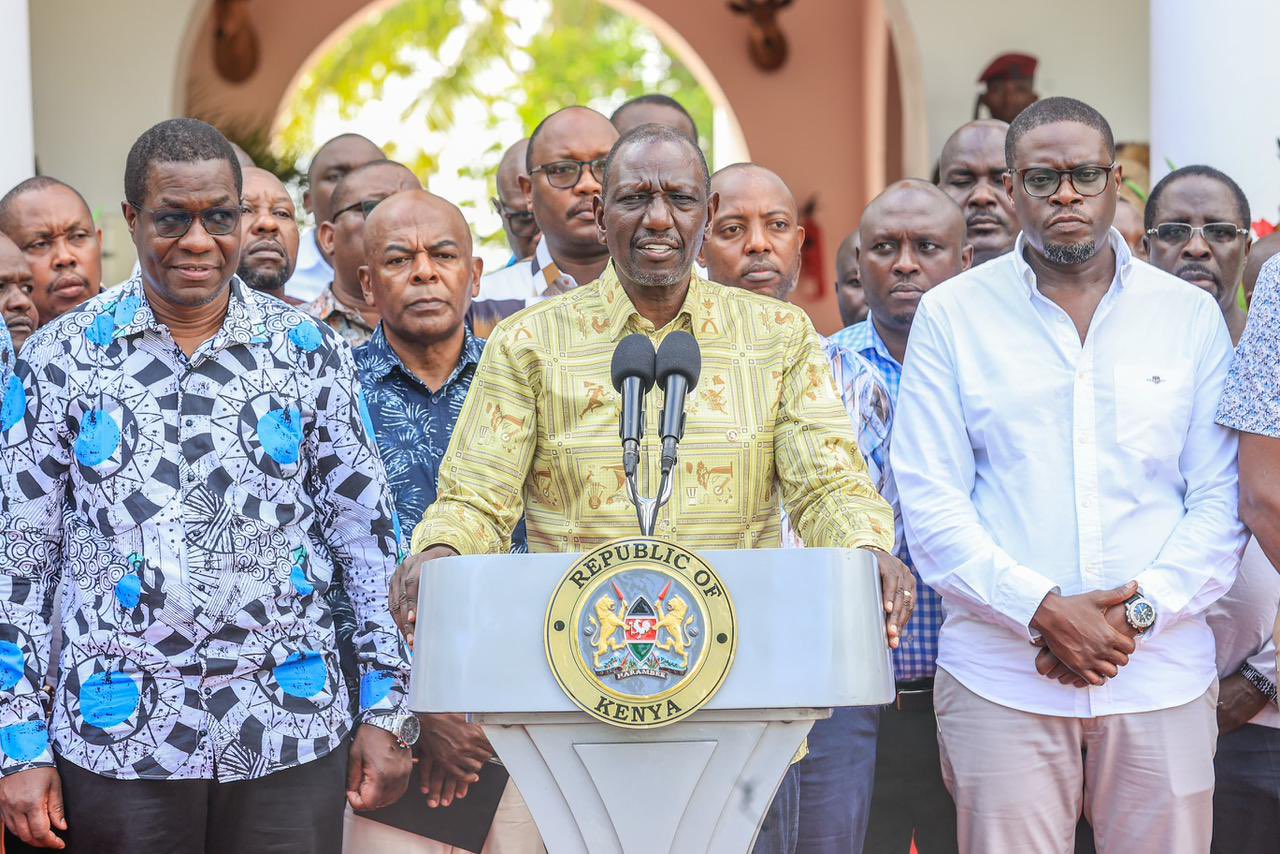
NAIROBI, Kenya (NPA) — Kenya’s Cabinet has approved far-reaching reforms to eliminate payroll fraud, strengthen public financial management, accelerate digital transformation and boost infrastructure development as part of a broad agenda to improve governance and stimulate economic growth.
The decisions were taken during a Cabinet meeting chaired by President William Ruto at State House, Nairobi, on Tuesday.
A major highlight of the meeting was the approval of a comprehensive government-wide payroll reform programme following an audit that uncovered suspected payroll irregularities amounting to KSh6.2 billion in just 12 of the country’s 53 state departments.

According to the Cabinet, the audit exposed unauthorised alterations to payroll records, irregular salary payments, weak oversight of statutory deductions and fragmented payroll management systems.
To address the irregularities, the Cabinet directed the Directorate of Criminal Investigations (DCI) to investigate the suspected fraud, dismantle criminal networks manipulating government payroll systems, verify payroll identification numbers, recover stolen public funds and prosecute all those found culpable.
The government also approved a nationwide payroll audit covering all remaining ministries, departments, agencies and state corporations.
Under the reforms, all public institutions will migrate to a revamped Integrated Human Resource and Payroll System, while cybersecurity will be strengthened through enhanced data validation, payroll cleansing, disaster recovery systems and integration with other public financial management platforms.
As part of efforts to reduce government expenditure, the Cabinet froze the leasing or hiring of additional office space pending a nationwide audit of public office utilisation.
Authorities also approved a programme to renovate existing government offices to improve efficiency and service delivery.
In another landmark decision, the Cabinet established a Standing Cabinet Committee on Artificial Intelligence to coordinate Kenya’s national AI strategy and position the country as a regional leader in the responsible development and adoption of artificial intelligence.
The committee will oversee AI-driven innovation, productivity, public service delivery, job creation and inclusive economic growth while ensuring appropriate governance and regulatory safeguards.
Complementing Kenya’s digital economy agenda, the Cabinet approved the National Business Process Outsourcing (BPO) Policy to position the country as a leading global outsourcing destination.
The government said the policy is expected to create thousands of quality jobs for young people, attract international investment and enable Kenya to capture a larger share of the global BPO market, projected to exceed KSh68 trillion by 2030.
The Cabinet also established an Ad Hoc Cabinet Committee on El Niño Preparedness and Response, chaired by Deputy President Kithure Kindiki, to coordinate national preparations for the moderate to strong El Niño rains forecast later this year.
The committee will oversee flood mitigation measures, evacuation planning, drainage clearance, reinforcement of vulnerable roads and bridges, deployment of emergency equipment and medical supplies, farmer advisories and the establishment of a contingency fund for disaster response.
On infrastructure, the Cabinet approved several strategic investments, including the KSh26 billion Judicial Performance Improvement Project Phase II, to be implemented in partnership with the World Bank.
The project includes the construction of a new Supreme Court complex, a dedicated Court of Appeal, a consolidated tribunals and Judiciary administration complex, and a modern Kenya Judiciary Academy to improve access to justice and enhance investor confidence.
The government also approved an additional KSh16.6 billion to complete the flagship Mwache Multipurpose Dam Project in Kwale County.
Once completed, the dam will supply 186,000 cubic metres of water daily to Mombasa and Kwale counties, helping to address chronic water shortages, support irrigation, strengthen climate resilience and provide a reliable water supply for millions of residents.
Cabinet equally approved additional financing for the Modogashe-Samatar and Rhamu-Mandera road sections under the 750-kilometre Isiolo-Mandera corridor to improve connectivity, boost trade and strengthen regional integration across northern Kenya and the Horn of Africa.
In the health sector, the government approved the KSh7.8 billion second phase of the Kenya-Austria Mother and Child – Our Future Project, alongside the Mother and Child Lifeline Initiative, to modernise maternal and neonatal healthcare at Kenyatta National Hospital.
The initiatives are expected to expand specialised healthcare services, strengthen the health workforce and improve outcomes for mothers and newborns.
The Cabinet also approved the Kenya Children Policy 2025, the Protection Against Domestic Violence (Amendment) Bill 2026 and the report of the Presidential Technical Working Group on Gender-Based Violence and Femicide to strengthen support for survivors and improve protection for women, children and vulnerable families.
To boost industrialisation, the government endorsed the KSh5.8 billion Leather Value Chain Development Support Project, expected to create up to 120,000 jobs while unlocking the sector’s estimated KSh120 billion economic potential.
It also adopted the National Cotton, Textile and Apparels Policy to revive cotton production, expand textile manufacturing and attract private investment.
On the international front, the Cabinet approved Kenya’s hosting of the Secretariat of the Alliance of African Multilateral Financial Institutions, reinforcing Nairobi’s position as a leading African financial and diplomatic hub.
It also authorised negotiations on a long-term Economic Partnership for Shared Development with China to expand trade, investment and market access for Kenyan exports, while endorsing the ratification of several international agreements covering migrant workers, wildlife conservation and regional partnerships.
Ghana, UK review bilateral ties ahead of Mahama’s official visit

Nigeria, Ethiopia deepen cooperation on trade and investment

World Bank upgrades Africa growth outlook, says AI could boost jobs and productivity
Uganda vaccinates more than 8.2 million children in Measles-Rubella Campaign
NCDC heightens vigilance after imported Ebola case confirmed in Kenya
Eswatini says three third-country nationals voluntarily return home
NAFDAC DG advocates stronger continental cooperation on food safety
AU Commission Chairperson congratulates Abiy Ahmed on re-election
- Tinubu commissions NRS Headquarters, says new tax reforms will drive prosperity
- Tinubu assures investors of regulatory stability as Ogun, DP World sign $7bn port, SEZ MoUs
- Climate change anxiety is rising — and so is the willingness to act on it
- Ohaukwu LG Chairman Ituma breaks ground for modern diagnostic centre, blood bank
- Baseball boosts TBS, NFL gives ESPN a kick and streamers love ‘Squid’
Community Discussion