

JUST IN: Dangote refinery explains fuel pricing, says more reductions expected as crude costs fall
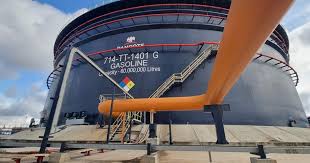
LAGOS, Nigeria (NPA) — Dangote Petroleum Refinery and Petrochemicals has defended its petroleum pricing strategy amid growing public concern over the cost of fuel, explaining that domestic pump prices cannot immediately reflect declines in international crude oil prices because of the time lag between crude procurement and refining.
In a statement issued on Thursday, the refinery said it remains committed to ensuring Nigerians benefit from favourable market conditions through fair, responsible and sustainable pricing of petroleum products.
The clarification comes amid mounting calls for further reductions in fuel prices following the sharp decline in global crude oil prices after the ceasefire agreement between the United States and Iran.

According to the company, it has already reduced the ex-depot price of Premium Motor Spirit (PMS), popularly known as petrol, by more than ₦200 per litre since May 30, 2026.
It added that the ex-depot price of Automotive Gas Oil (AGO), also known as diesel, has been cut by ₦300 per litre, while Jet A1 aviation fuel has recorded a cumulative reduction of ₦520 per litre over the same period.
The refinery said the reductions were implemented despite continuing to process crude oil purchased when international oil prices were significantly higher than current levels.
“These reductions demonstrate our commitment to passing on cost efficiencies to consumers while maintaining the operational and financial sustainability of domestic refining,” the company said.
Dangote Refinery explained that petroleum product prices do not move in tandem with daily fluctuations in international crude oil benchmarks because crude oil is typically purchased several weeks or months before refining.
It noted that most crude supply contracts are based on monthly average pricing mechanisms rather than prevailing spot market prices.
As a result, the petroleum products currently being supplied to the Nigerian market are largely produced from crude inventories acquired at substantially higher prices.
According to the refinery, the average landed cost of crude processed in May stood at approximately 124.80 US dollars per barrel, while the average for June was 95.25 US dollars per barrel, compared with the current international benchmark price of about 71.01 US dollars per barrel.
The company also explained that its crude purchases are not based solely on the widely reported Brent benchmark price.
Instead, it said, its feedstock is acquired using a pricing formula based on Dated Brent plus applicable market premiums, freight and logistics costs, resulting in higher landed costs than headline international quotations.
Despite the elevated procurement costs, the refinery said it deliberately absorbed a substantial portion of the increase rather than transferring the full burden to consumers.
According to the company, the decision was aimed at promoting market stability, easing inflationary pressures and protecting Nigerians from the extreme volatility experienced in global energy markets.
It argued that petroleum prices in Nigeria remain lower than those in neighbouring countries, even after accounting for taxes.
The refinery disclosed that the latest ₦50 per litre reduction announced this week represents the fourth cut in petrol prices within one month, bringing cumulative reductions to more than ₦200 per litre.
It stressed that its pricing decisions are based on actual production economics and inventory costs rather than short-term movements in international oil prices.
Dangote Refinery further highlighted the strategic importance of domestic refining, saying its current production capacity is sufficient to meet Nigeria’s fuel demand.
The company said increased local refining has strengthened the country’s energy security, reduced dependence on imported petroleum products, conserved foreign exchange and improved price stability for consumers and businesses.
Looking ahead, the refinery expressed optimism that fuel prices would continue to moderate as lower-cost crude cargoes gradually replace higher-priced inventories in its production cycle.
It, however, noted that further reductions would depend on favourable conditions in the international oil market.
“Our objective remains unchanged: to supply high-quality, internationally compliant petroleum products at competitive prices while strengthening Nigeria’s energy security, supporting economic growth and ensuring the long-term sustainability of Africa’s largest refinery,” the statement said.
The company thanked Nigerians for their continued support and reiterated its commitment to building a stable, efficient and globally competitive downstream petroleum industry that serves the interests of consumers, businesses and the nation.


Peter Obi faults Tinubu’s one-month petrol discount, calls policy ‘reactive and confused’

JUST IN: Tinubu says World Bank report shows Nigeria’s economic reforms are working

JUST IN: Tinubu responds to commuters, highlights efforts to reduce transport costs

Fitch revises Nigeria’s credit outlook to positive, affirms ‘B’ rating

World Bank upgrades Africa growth outlook, says AI could boost jobs and productivity

Ardova takes Customer Service Week campaign to B2B customers

Etihad Airways, Ibom Air sign interline agreement connecting Nigeria to global network
JUST IN: NRS warns public against fraudulent recruitment notice
- Tinubu commissions NRS Headquarters, says new tax reforms will drive prosperity
- Tinubu assures investors of regulatory stability as Ogun, DP World sign $7bn port, SEZ MoUs
- Climate change anxiety is rising — and so is the willingness to act on it
- Ohaukwu LG Chairman Ituma breaks ground for modern diagnostic centre, blood bank
- Baseball boosts TBS, NFL gives ESPN a kick and streamers love ‘Squid’
Community Discussion