

Fitch revises Nigeria’s credit outlook to positive, affirms ‘B’ rating

ABUJA, Nigeria (NPA) — Fitch Ratings has revised Nigeria’s credit outlook to Positive from Stable while affirming the country’s Long-Term Issuer Default Ratings at ‘B’, citing economic reforms, rising foreign exchange reserves and easing inflation.
The Federal Ministry of Finance announced the development in a statement dated October 10, 2026, signed by Taiwo Oyedele, Minister of Finance and Coordinating Minister of the Economy.
According to the ministry, Fitch’s decision, made on October 9, reflects the agency’s increased confidence that Nigeria’s economic reform momentum will be sustained. A Positive Outlook indicates that a rating upgrade may follow if current trends continue.

The ministry said Fitch highlighted greater flexibility in the naira, disinflation and faster-than-expected growth in foreign exchange reserves as key factors behind the improved outlook.
Nigeria’s gross external reserves stood at $54.9 billion on September 25, 2026, up from $32 billion in mid-April 2024. The ministry attributed the increase to stronger portfolio inflows, higher export receipts and remittances, and greater formalisation of foreign exchange transactions.
Fitch also projected a current account surplus of 6.4 per cent of gross domestic product (GDP) in 2026, saying stronger reserves had improved Nigeria’s ability to withstand external shocks.
Fitch Projects 4.3% Economic Growth
The ratings agency forecasts Nigeria’s real GDP growth at 4.3 per cent in 2026, up from 4 per cent in 2025, with growth expected to remain above 4 per cent in 2027 and 2028, driven largely by non-oil activity.
The ministry said crude oil production had met Nigeria’s OPEC target of 1.5 million barrels per day since May 2026. It added that increased domestic refining was reducing the country’s reliance on imported refined petroleum products and easing demand for foreign exchange.
Average inflation is projected to fall to 15.4 per cent in 2026, less than half its 2024 level, according to the statement.
Tax Reforms, Debt and Banking Sector
Fitch also expects Nigeria’s tax reforms to increase non-oil revenue relative to GDP.
The agency projects general government debt to average 32 per cent of GDP between 2026 and 2028, below the ‘B’ rating category median of 56 per cent.
It also recognised Nigeria’s liquid domestic debt market and the ongoing bank recapitalisation exercise, noting that many banks have capital adequacy ratios above 20 per cent.
The Ministry of Finance said all three major international credit rating agencies had taken positive rating actions on Nigeria in 2026.
S&P Global Ratings upgraded Nigeria to ‘B’ from ‘B-’ in May, while Moody’s Ratings revised the country’s outlook to Positive in August. Separately, FTSE Russell returned Nigeria to Frontier Market status with effect from September 21, 2026.
The ministry described the developments as evidence of an increasingly favourable assessment of Nigeria’s economic reform programme.
Government Reaffirms Reform Commitment
The ministry said Fitch’s decision reflected reforms implemented under President Bola Tinubu, including the removal of the petrol subsidy, exchange-rate unification and tax reforms.
It added that the government’s medium-term ambition was to put Nigeria on a path towards investment-grade credit ratings.
According to the statement, the reforms are intended to reduce the cost of capital, attract private investment and support large-scale job creation.
However, the government acknowledged that significant challenges remained, including inflation above levels in peer countries, low government revenue relative to the size of the economy and high debt-servicing costs.
The ministry said its reform programme was designed to address these constraints.
It reaffirmed its commitment to maintaining a transparent, market-reflective foreign exchange regime, improving revenue collection through the implementation of new tax laws, strengthening fiscal governance and debt management, and supporting economic diversification.
The government also pledged to focus on translating macroeconomic stability into broader improvements in living standards through food security, job creation, human development and support for small businesses.
The ministry said Fitch had identified sustained disinflation, continued reform implementation, stronger external reserves and increased non-oil revenue mobilisation as factors that could support further positive rating action.

JUST IN: Tinubu says World Bank report shows Nigeria’s economic reforms are working
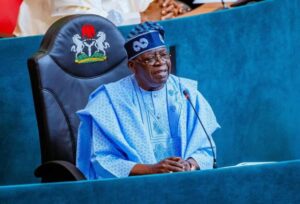
JUST IN: Tinubu responds to commuters, highlights efforts to reduce transport costs

World Bank upgrades Africa growth outlook, says AI could boost jobs and productivity
NDB approves $395m for Hyderabad elevated transport corridor
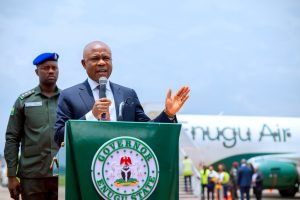
Mbah reaffirms commitment to tourism, transport as Enugu Air launches Douala route

Tinubu hails US-Nigeria agreement to unlock $700bn mineral wealth

Tinubu assures investors of regulatory stability as Ogun, DP World sign $7bn port, SEZ MoUs

Ebonyi fertilizer company revives local production of NPK formulations
- Tinubu commissions NRS Headquarters, says new tax reforms will drive prosperity
- Tinubu assures investors of regulatory stability as Ogun, DP World sign $7bn port, SEZ MoUs
- Climate change anxiety is rising — and so is the willingness to act on it
- Enugu government accuses opposition of plot to import thugs ahead of 2027 elections
- Baseball boosts TBS, NFL gives ESPN a kick and streamers love ‘Squid’
Community Discussion