

FG approves ₦17 billion community-based taskforce to drive grassroots development under Health Ministry
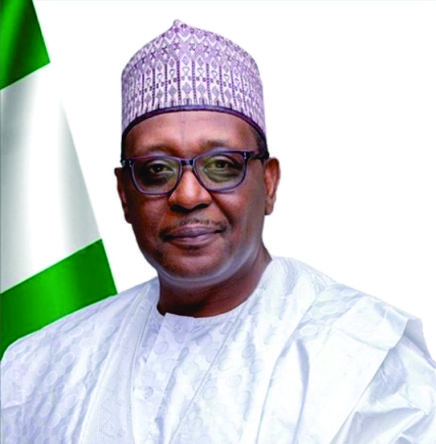
ABUJA, Nigeria (NPA) — The Federal Government has approved the establishment of a Community-Based National Social Action Fund Taskforce to accelerate socio-economic development across Nigeria’s 8,804 wards.
The initiative, endorsed by President Bola Ahmed Tinubu, will deploy locally driven interventions tailored to community needs. Each ward will engage a verified community-based organisation or association to implement priority projects.
According to a statement by Ado Bako, Assistant Director of Information and Public Relations in the Health Ministry, the approval builds on earlier reforms, including the creation of the Social Action Fund in September 2023 and the Community-Based Procurement Platform approved in January 2026. The platform allows community organisations to deliver projects valued up to ₦50 million.

The President has approved a project timeline beginning March 1, 2026, with delivery expected by December 2026. A Programme Management Unit will be housed in the Sector-Wide Approach Coordination Office of the Federal Ministry of Health and Social Welfare to oversee implementation.
To support the initiative, the Ministry of Finance and the Office of the Accountant-General of the Federation have been directed to release ₦17 billion into a ring-fenced special intervention account for implementation, monitoring, communication, and accountability.
Coordinating Minister of Health and Social Welfare, Prof. Muhammad Ali Pate, described the initiative as a shift toward locally driven service delivery. “This approach places communities at the centre of development. By enabling each ward to identify and implement its priority needs, we are unlocking practical solutions that directly improve livelihoods and strengthen service delivery where it matters most,” he said.
Interventions may include nutrition support, provision of essential health commodities such as micronutrients and therapeutic foods, and minor infrastructure improvements in schools, health facilities, and sanitation systems.
The Taskforce will be chaired by Prof. Pate and include the Ministers of Finance, Humanitarian Affairs, State for Health and Social Welfare, State for Humanitarian Affairs, and the Permanent Secretary of the Health Ministry. Other members are the Director-General of the Bureau of Public Procurement, the Director-General of the Budget Office, the Chairman of the Independent Corrupt Practices and Other Related Offences Commission (ICPC), and a National Coordinator.
In a related development, President Tinubu has approved the upgrade of the National Tuberculosis and Leprosy Training Centre (NTBLTC), Zaria, to the National Institute of Public Health and Infectious Diseases.
The upgrade, aligned with the Renewed Hope Agenda, aims to strengthen Nigeria’s capacity for disease surveillance, emergency preparedness, and rapid response. The Institute will serve as a multidisciplinary hub for public health training, research, and workforce development, expanding access to advanced learning and enhancing readiness to manage infectious disease threats.
Ohaukwu LG Chairman Ituma breaks ground for modern diagnostic centre, blood bank

Lagos Government urges residents to prioritise mental health, check on others
Ohaukwu LG Chairman applauds Nwifuru over free health screening, surgery
Uganda vaccinates more than 8.2 million children in Measles-Rubella Campaign

NCDC heightens vigilance after imported Ebola case confirmed in Kenya
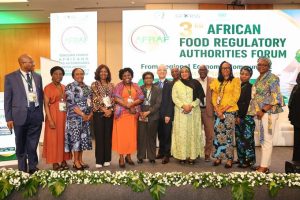
NAFDAC DG advocates stronger continental cooperation on food safety
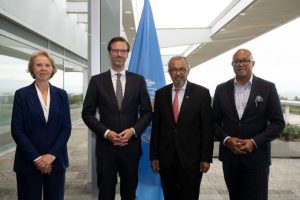
WHO, Netherlands strengthen partnership on Ebola, global health security and emergency response
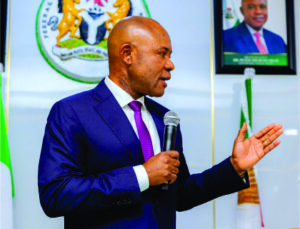
ESUTH gets N500m surgical upgrade as Mbah pushes for top-tier medical excellence
- Tinubu commissions NRS Headquarters, says new tax reforms will drive prosperity
- Tinubu assures investors of regulatory stability as Ogun, DP World sign $7bn port, SEZ MoUs
- Climate change anxiety is rising — and so is the willingness to act on it
- Ohaukwu LG Chairman Ituma breaks ground for modern diagnostic centre, blood bank
- Baseball boosts TBS, NFL gives ESPN a kick and streamers love ‘Squid’
Community Discussion