

Equatorial Guinea government resigns after missing development targets
MALABO, Equatorial Guinea (NPA) — Equatorial Guinea’s government has resigned en bloc after admitting it achieved less than 10 per cent of its development and service delivery targets, exposing deep-rooted governance and economic challenges in the Central African nation.
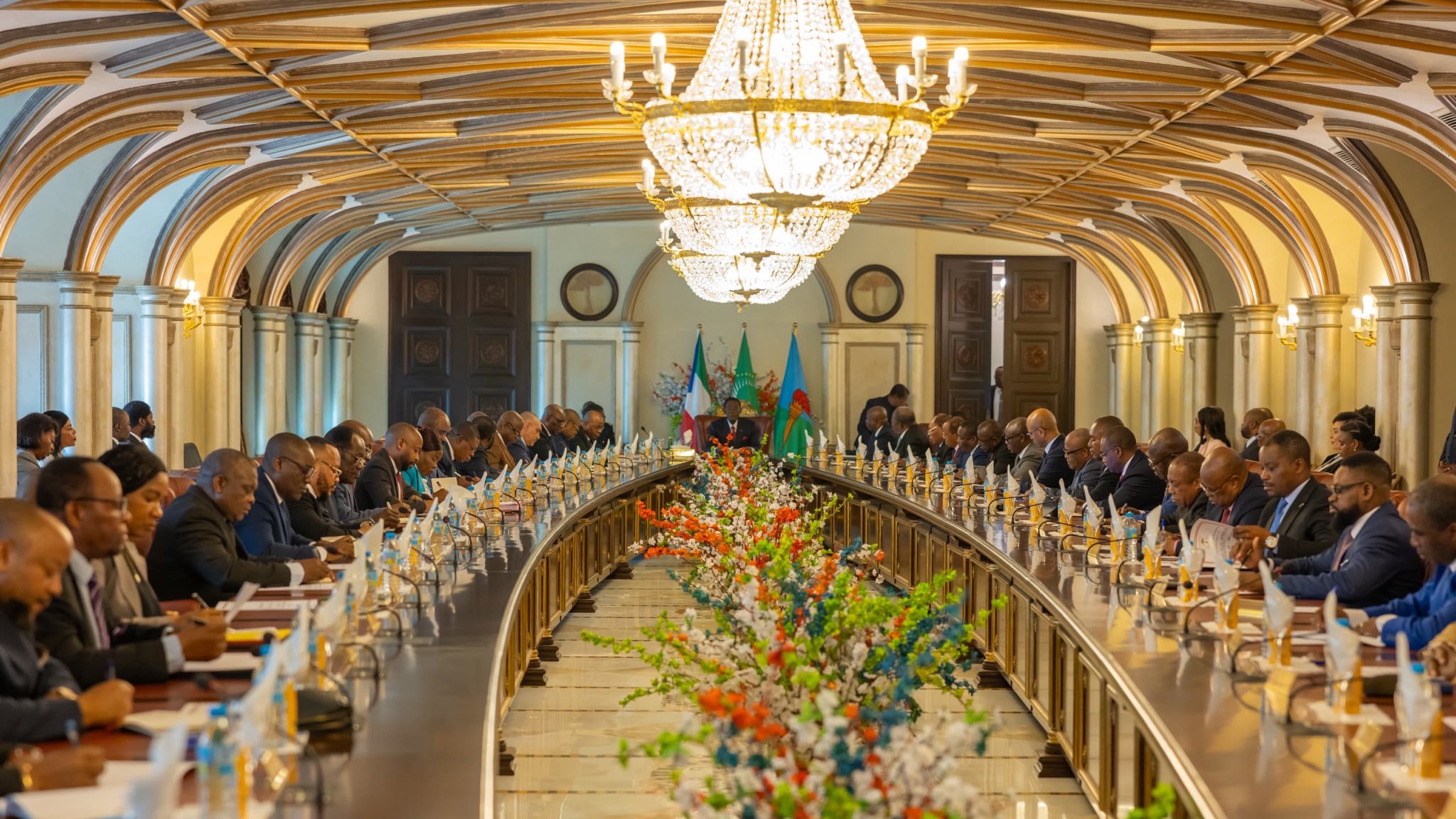
The mass resignation was announced during an extraordinary session of the Council of Ministers in Malabo.
According to an official statement, Prime Minister Manuel Osa Nsue Nsua, who is responsible for Administrative Coordination, formally presented the resignation of all members of the Executive Council to President Teodoro Obiang Nguema Mbasogo.

Vice-President Teodoro Nguema Obiang Mangue, who presided over the session, said the decision followed a review of the government’s performance, which revealed that key objectives had largely not been met.
He stressed that public office must be measured by results, noting that substantial public resources had been committed to government programmes without corresponding outcomes.
The resignation is seen as one of the most significant political developments in Equatorial Guinea in recent years and comes amid growing concerns over governance, economic diversification, and public service delivery.
Despite being one of sub-Saharan Africa’s largest oil producers, Equatorial Guinea continues to face major development challenges.
The country’s economy remains heavily dependent on hydrocarbons, which account for more than 70 per cent of gross domestic product and about 90 per cent of export earnings, leaving it vulnerable to fluctuations in global energy markets.
Although recent infrastructure and gas projects have provided modest economic growth, efforts to diversify into sectors such as agriculture, fisheries, tourism, and manufacturing have progressed slowly.
Government officials indicated that the unmet targets covered key sectors, including public administration reforms, infrastructure development, economic growth, and the delivery of essential public services.
Analysts say the government’s performance reflects broader structural issues affecting the country, including limited private sector development, weak institutional capacity, and governance concerns.
Despite its relatively high per-capita income, Equatorial Guinea continues to record poor outcomes in education, healthcare, and income distribution, with many citizens seeing little benefit from the country’s oil wealth.
While significant investments have been made in roads, airports, and housing projects, critics argue that development has been concentrated in urban areas, leaving many rural communities underserved.
The country has also faced persistent criticism from transparency and governance organisations over issues relating to corruption, accountability, and public sector efficiency.
Observers say the resignation of the entire cabinet signals an attempt by the country’s leadership to reset government performance and restore public confidence amid mounting economic and social pressures.
It remains unclear when a new cabinet will be constituted or whether the reshuffle will be accompanied by broader reforms aimed at addressing the underlying challenges confronting the oil-rich nation.
Ghana, UK review bilateral ties ahead of Mahama’s official visit

Nigeria, Ethiopia deepen cooperation on trade and investment

World Bank upgrades Africa growth outlook, says AI could boost jobs and productivity

Uganda vaccinates more than 8.2 million children in Measles-Rubella Campaign

NCDC heightens vigilance after imported Ebola case confirmed in Kenya

Eswatini says three third-country nationals voluntarily return home

NAFDAC DG advocates stronger continental cooperation on food safety
AU Commission Chairperson congratulates Abiy Ahmed on re-election
- Tinubu commissions NRS Headquarters, says new tax reforms will drive prosperity
- Tinubu assures investors of regulatory stability as Ogun, DP World sign $7bn port, SEZ MoUs
- Climate change anxiety is rising — and so is the willingness to act on it
- Ohaukwu LG Chairman Ituma breaks ground for modern diagnostic centre, blood bank
- Baseball boosts TBS, NFL gives ESPN a kick and streamers love ‘Squid’
Community Discussion