Category: Technology

  • 12 years after, MTN Nigeria suspends Xtratime service

    12 years after, MTN Nigeria suspends Xtratime service

    LAGOS, Nigeria — 17 April 2026 (NPA) — MTN Nigeria Communications Plc has announced the suspension of its Xtratime service, which previously allowed customers to borrow airtime or data with repayment automatically deducted from their next recharge. The company cited compliance with new government lending regulations as the reason for the stoppage of the service launched in 2014.

    In a statement issued Thursday and signed by Uto Ukpanah, FCIS, Company Secretary, MTN notified the Nigerian Exchange Limited and the investing public that the airtime and data credit advance service has been temporarily halted.

    The suspension, according to the statement, follows the implementation of the Digital, Electronic, Online or Non-Traditional Consumer Lending Regulations, 2025, which introduced stricter compliance and licensing requirements for providers of digital or non-traditional consumer credit services.

    MTN assured customers that, in the interim, they will continue to have access to alternative digital channels for airtime and data purchases.

    On the potential impact to its financial performance, the company stated that given the scale of the service within its overall revenue mix, it does not expect the temporary suspension to materially affect earnings or profitability.

    “We are closely monitoring customer behaviour and usage trends and will provide an update on any quantified impact in our Q1 2026 results,” the statement concluded.

  • DBI, ITU Partner to strengthen digital skills and broadband development in Nigeria

    DBI, ITU Partner to strengthen digital skills and broadband development in Nigeria

    ABUJA, Nigeria — 14 April 2026 (Agency Report) — The Digital Bridge Institute (DBI) has announced a strategic partnership with the International Telecommunication Union (ITU) aimed at advancing digital skills and expanding broadband infrastructure across Nigeria.

    DBI President and CEO David Daser made the disclosure on Monday in Abuja at the opening of a five-day advanced training programme on fibre optic infrastructure, supported by the European Union under the Global Gateway Initiative. The workshop, themed “Strategic Fibre Optics Infrastructure Deployment and Regulatory Management,” is designed to equip participants with competencies in planning, deploying, and regulating fibre optic networks.

    Daser explained that DBI hosts both the ITU Academy Training Centre and the Digital Transformation Centre in Nigeria, aligning with the country’s digital economy agenda and the UN Sustainable Development Goals. He said the programme covers national broadband strategy, regulatory frameworks, infrastructure sharing, compliance monitoring, and risk management.

    “The training adopts global best practices, combining expert-led instruction with practical exercises, case studies, and continuous assessment through the ITU Academy platform,” Daser noted, adding that it also serves as a platform for knowledge exchange and international collaboration.

    Ghazi Mabrouk, Project Officer at ITU’s Capacity and Skills Development Division, highlighted the importance of diversity among participants, saying it enriches discussions and promotes shared learning. He noted that DBI is one of ITU’s 14 Academic Training Centres worldwide, with the organisation delivering over 150 courses annually.

    “This is the first face-to-face training we are hosting with DBI, and participants have the unique privilege to be part of it,” Mabrouk said.

    Delegates from government institutions, regulatory bodies, and industry are attending the programme, which underscores a shared vision of inclusive digital transformation and sustainable broadband expansion.

  • Over 2,100 PhD candidates compete for PTDF overseas scholarships

    Over 2,100 PhD candidates compete for PTDF overseas scholarships

    ABUJA, Nigeria — 14 April 2026 (Agency Report) — The Petroleum Technology Development Fund (PTDF) has begun the second phase of interviews for its 2026/2027 Overseas Scholarship Scheme (OSS), with 2,102 PhD applicants shortlisted nationwide.

    Speaking at the Abuja screening centre, Dr. Bello Mustapha, Deputy General Manager for Education and Training, said the exercise follows MSc interviews conducted earlier across four centres. Abuja alone accounts for 912 candidates scheduled over five days.

    Mustapha explained that the selection process adheres to the Federal Character principle, ensuring candidates compete within their states of origin, with merit determining final outcomes. He added that the number of successful awardees will depend on budgetary provisions.

    While the UK remains a destination for MSc scholars, Mustapha noted that the PhD programme now operates under a split-site arrangement, allowing candidates to spend part of their study abroad in partner universities. Other participating countries include Malaysia, Germany, and France.

    The PTDF received more than 30,000 applications for MSc and PhD programmes, from which about 5,800 were shortlisted for interviews.

    A delegation from the Federal Character Commission (FCC), led by State Coordinator John Uchara and Commissioner Eugene Aleba, monitored the process to ensure transparency and fairness. Uchara commended PTDF’s compliance with federal character principles and stressed the importance of inclusiveness in national opportunities.

    Panelist Prof. Bashir Aliyu of Modibbo Adama University, Yola, described the quality of candidates as impressive, noting strong academic and research potential. He said the panel evaluates academic background, research capacity, and the relevance of proposed PhD work to national development, with emphasis on innovation and potential impact.

    Candidates expressed optimism about the opportunity. Chemical engineer Tanko Fwadwabea highlighted his proposed research on blue hydrogen production to add value to Nigeria’s natural gas resources while reducing carbon emissions. Returning applicant Cornelia Collins-Onoha, a geosciences researcher, said her study focuses on antimicrobial-resistant genes in aquatic environments affected by oil pollution, stressing its importance for environmental sustainability and public health.

    The PTDF reaffirmed its commitment to a transparent selection process, with robust verification mechanisms in place to ensure only credible candidates are chosen.

  • Federal Government to deliver 480MW Abeokuta substation by December

    Federal Government to deliver 480MW Abeokuta substation by December

    ABUJA, Nigeria, 9 April 2026 (Agency Report) — The Federal Government has announced that the new 480‑megawatt Abeokuta substation under construction in Ogun State will be completed and inaugurated by December.

    Managing Director and Chief Executive Officer of FGN Power Company, Mr Kenny Anuwe, gave the assurance on Thursday during an inspection of the project at Toolu community in Obafemi Owode Local Government Area. He reaffirmed the government’s commitment to improving the electricity supply nationwide, noting that President Bola Tinubu’s administration is investing heavily in power infrastructure to address longstanding challenges.

    Anuwe disclosed that resources have been committed to upgrading five brownfield substations in Abeokuta, Ayede, Offa, Onitsha and Sokoto under Phase One, expected to add about 986 megawatts to the national grid. He added that over 1,000 megawatts have already been injected through mobile substations and transformers under the Presidential Power Initiative.

    “The new facility, which complements the existing substation, will add 480 megawatts to the grid and improve electricity supply across the state. Civil works will be completed between June and July, followed by electrical installations, with commissioning scheduled for December,” Anuwe said. He commended President Tinubu for providing resources and urged contractors to sustain momentum.

    Chief Technical Officer of FGN Power Company, Mr Ebenezer Fapounda, explained that the project would upgrade capacity from 132kV to 330kV, reducing load shedding and addressing supply shortfalls from Ikeja West to Ogun.

    Project Manager for Siemens Energy, Mr Yusuf Mayhaja, assured that work is progressing as planned, while Project Director Mr Eli Akiki expressed confidence in timely completion, stressing that the company remains committed to delivering and inaugurating the substation before the end of 2026.

  • From Legon to the moon: President Mahama celebrates Christina Koch’s historic Artemis II Mission

    From Legon to the moon: President Mahama celebrates Christina Koch’s historic Artemis II Mission

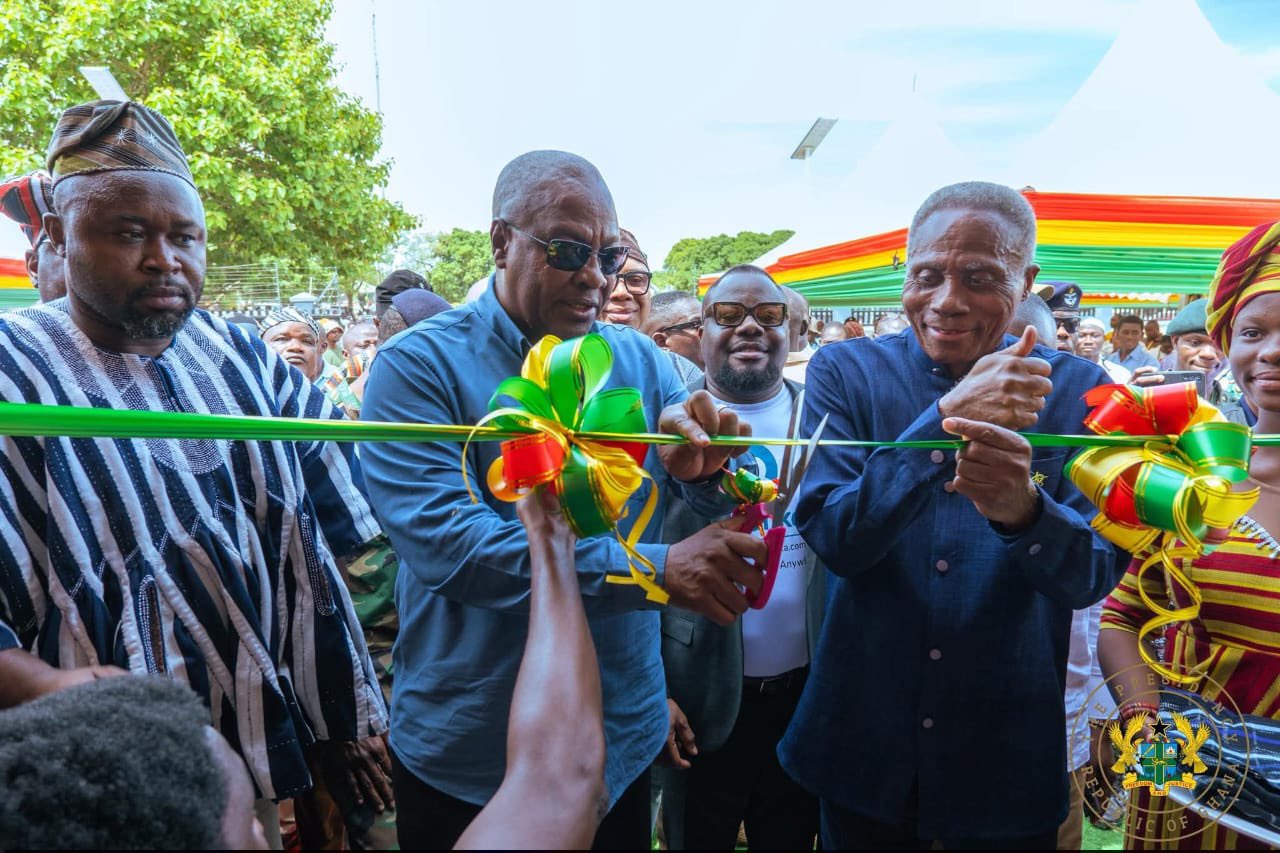
    ACCRA, Ghana, 9 April 2026 (NPA) — Ghanaian President John Dramani Mahama has hailed Christina Koch, the only woman on the historic Artemis II mission to the Moon, who once studied as an exchange student at the University of Ghana during the 1999/2000 academic year.

    In a statement titled “From the Lecture Halls of Legon to the Moon: Celebrating Christina Koch”, President Mahama joined the University of Ghana and the nation in celebrating NASA astronaut Christina Koch’s groundbreaking role in the mission.

    Mahama recalled Koch’s time at Legon as more than a brief visit, noting that she immersed herself in Ghanaian culture and heritage. By studying subjects such as the History of Ghana, the History of Africa, Rural Sociology, Music, and even Twi for Beginners, she built what he described as “a foundation of global citizenship right here in Accra.”

    He praised her symbolic gesture of hoisting the Ghanaian flag in outer space, calling it “a deeply touching moment for every Ghanaian” and a reminder that “no matter how far one travels, even into the vastness of space, the friendships made and the lessons learned stay with you.”

    “Christina’s journey from the classrooms of the University of Ghana to the frontiers of space exploration serves as a powerful inspiration to every young Ghanaian,” Mahama said. “It reminds us that our educational institutions continue to produce and shape global leaders who break barriers and reach for the stars.”

    The President wished the entire Artemis II crew godspeed on their return journey to Earth, expressing hope that their success would inspire generations across Ghana, Africa, and the world to believe that “there is no height that is insurmountable.”

    “Ghana is proud of you!” he concluded.

  • SWEDD Empowered young women driving change through skills and jobs in West and Central Africa

    SWEDD Empowered young women driving change through skills and jobs in West and Central Africa

    INTERNATIONAL, April 6, 2026 (NPA) — From potential to skills and real jobs, young women across Western and Central Africa are reshaping their futures through training and employment opportunities provided by the Sub-Saharan Africa Women’s Empowerment and Demographic Dividend project (SWEDD/SWEDD+).

    Since its inception in 2015, the initiative has reached nearly 3 million women and adolescent girls, linking education, skills development, and access to health services with real economic pathways. More than 255,000 participants have acquired practical skills and transitioned into stable employment, showing how investment in women’s education and workforce participation strengthens families, communities, and local economies.

    Across the region, stories of transformation abound. In Benin, Angelique and Odette, who left school early due to financial hardship, were trained in solar photovoltaic installation through SWEDD. Today, they work with a private company, installing solar panels and bringing renewable energy to rural villages. “Now we’re motivated and earning money to support our families. We’re happy to bring solar energy to the villages,” Angelique said, her pride evident.

    Harmelle, also from Benin, faced similar challenges after leaving school at 14 and becoming a widow at a young age. With her twin sister, she joined a SWEDD entrepreneurship program in snail farming. The training and starter kit provided not only income but also stability. “When I started farming, there were difficulties, but then we began earning money, and everyone was better off,” she recalled.

    In Chad, Djogoita pursued midwifery, inspired by her father’s service as a police officer. Her training now allows her to provide essential maternal and child health services. “When they bring me a pregnant woman or a child, I can use the knowledge I gained to help them,” she said proudly, highlighting the confidence and purpose her new role has given her.

    These individual stories reflect a broader shift. While about 40% of young women in West and Central Africa remain outside school, training, or employment, SWEDD+ is changing trajectories by expanding opportunities, building confidence, and strengthening institutional capacity for equal rights.

    The World Bank Group emphasizes that investing in women is one of the smartest economic bets for powering local economies. By equipping young women with relevant skills and connecting them to jobs, programs like SWEDD+ turn human potential into productive employment that fuels inclusive and sustainable growth.

    As the activities marking the International Women’s Month wind down, the voices of Angelique, Odette, Harmelle, and Djogoita is a remind that Africa’s future resilience is already taking shape — one empowered young woman at a time, trained, employed, and determined to drive change in her community.

  • WHO marks World Health Day 2026 with call to ‘Stand with Science’

    WHO marks World Health Day 2026 with call to ‘Stand with Science’

    INTERNATIONAL, April 6, 2026 (NPA) — The World Health Organization (WHO) has urged governments, institutions, and individuals worldwide to recommit to science and collaboration as the foundation for stronger health systems, launching its year‑long campaign under the theme: “Together for health. Stand with science.”

    The campaign coincides with World Health Day 2026 and the anniversary of WHO’s founding on April 7, 1948. WHO highlighted how scientific progress and international cooperation have transformed human health over the past century, citing a 40 percent reduction in maternal mortality since 2000 and a more than 50 percent drop in deaths among children under five.

    “Science is one of humanity’s most powerful tools for protecting and improving health,” said WHO Director‑General Tedros Adhanom Ghebreyesus. “Vaccines, penicillin, germ theory, MRI machines and the mapping of the human genome are just some of the achievements that science has delivered that have saved lives and transformed health for billions of people.”

    WHO emphasized that scientific breakthroughs are most effective when widely adopted. Advances such as modern anesthesia, global immunization campaigns, and early screening technologies have democratized access to lifesaving care, even in resource‑limited settings. For example, immunization efforts over the past 50 years have saved more than 154 million children, with the measles vaccine alone preventing over 90 million deaths.

    The organization also pointed to its role in coordinating global responses to health crises, including the rapid identification of the SARS virus in 2003 and the promotion of alcohol‑based hand rubs in 2009, which became critical during the COVID‑19 pandemic. WHO continues to set global standards on air quality and drinking water safety to protect communities from respiratory diseases and cholera.

    In line with this year’s theme, WHO and the G7 Presidency of France will convene a One Health Summit in Lyon from April 5–7, bringing together heads of state, scientists, and community leaders. WHO will also host the Global Forum of its Collaborating Centres from April 7–9, with representatives from over 800 institutions in more than 80 countries.

    “Science transforms uncertainty into understanding and reveals the pathways to protect and heal our communities,” said WHO Chief Scientist Dr. Sylvie Briand. “Today, we must stand together with science so that our collaboration is sustained, supported and enhanced for the better health of generations to come.”

  • Igbinedion University wins Huawei ICT contest, qualifies for global final

    Igbinedion University wins Huawei ICT contest, qualifies for global final

    EDO, NIGERIA, April 6, 2026 (NPA) — Igbinedion University, Okada (IUO), Edo State, has emerged overall winner in Sub-Saharan Africa at the Huawei ICT Competition, securing a place in the global final to be held in China.

    The announcement was made in a statement by the university’s Deputy Director of Public Relations, Mr. Lucky Eboh, on Saturday in Benin. He explained that IUO clinched the grand prize in the Network Track category, which tests participants on communication networks, routing, switching, cybersecurity, and emerging technologies such as 5G and cloud integration.

    Eboh noted that the university outperformed competitors from across the region, marking a significant milestone as IUO is the only private Nigerian university to reach this stage of the competition. The victory qualifies the team to represent Nigeria against top-performing institutions from Asia-Pacific, Europe, the Americas, and other regions.

    Organised annually by Huawei in partnership with universities and UNESCO’s International Bureau of Education (UNESCO-IBE), the competition focuses on building practical digital skills in networking, cloud computing, artificial intelligence, and other emerging technologies.

    The Vice-Chancellor of IUO, Prof. Lawrence Ezemonye, described the achievement as a reflection of Nigeria’s evolving ICT talent landscape, with private institutions increasingly driving digital innovation. He attributed the success to sustained investment in ICT training and strategic partnerships, including the establishment of Huawei ICT Academies to bridge the gap between classroom learning and industry demands.

    “With the global final ahead, the team is expected to compete against the best young tech talents worldwide, positioning Nigeria once again on the global ICT map,” Ezemonye said.

  • Iran’s internet blackout hits record 37 days, deepens uncertainty

    Iran’s internet blackout hits record 37 days, deepens uncertainty

    MIDDLE EAST, April 5, 2026 (NPA) — Iran’s internet blackout has become the longest nation-scale shutdown ever recorded, now in its 37th consecutive day after 864 hours, according to NetBlocks. The disruption has triggered severe social and economic consequences, cutting off communication among citizens, families, and communities, while blocking access to vital information and limiting the ability to organize or express dissent.

    Education has been hampered as students and teachers lose access to online platforms, and healthcare services reliant on telemedicine have been restricted. The blackout has also isolated the population from the global community, fuelling uncertainty and reducing transparency.

    Economically, the shutdown has damaged businesses dependent on online transactions, banking, and international trade. Small enterprises and freelancers who rely on digital platforms for income have been hit hardest, losing clients and revenue during the prolonged outage.

    Foreign investors view the blackout as a sign of instability, discouraging investment and weakening growth. Overall, the blackout not only suppresses freedom of expression but also undermines economic resilience and development.

    As of filing this report, Iranian authorities have yet to communicate when or how the internet blackout will end.

  • From vanity to value: The real secret behind winning Nigeria’s mobile audience

    From vanity to value: The real secret behind winning Nigeria’s mobile audience

    OPINION, April 4, 2026 (NPA) —Nigeria is undeniably a mobile-first market, but that does not mean every company should rush to build its own app. Too often, strategies confuse access with appetite, or downloads with loyalty.

    Users will only keep an app if it delivers consistent, practical value. In Nigeria, where data costs are high, storage space is limited, and attention is fiercely contested, an app that fails to solve a recurring problem quickly becomes disposable.

    This is the real challenge for corporates considering streaming platforms. The issue is not whether an app looks modern or impressive, but whether it offers enough ongoing value to justify a permanent place on someone’s phone. For most companies, the honest answer is still “not yet.” Without strong, regular, exclusive content, branded streaming apps risk becoming expensive digital monuments—ambitious in appearance but rarely part of everyday life.

    Social media, by contrast, is already woven into the daily rhythm of Nigerian society. It is where people discover, discuss, learn, watch, argue, laugh, compare, and share. For many brands, social handles are not a weakness but the most realistic starting point.

    Still, social platforms are borrowed ground. They provide reach, visibility, and conversation, but they do not give brands full control over their audience, data, or long-term distribution. The smarter approach is layered: use social media for discovery and relevance; YouTube and video platforms for depth and repeat viewing; WhatsApp for direct connection, community, and service; then link all of these back to an owned destination—whether a website, content hub, membership platform, or lighter digital environment under the brand’s control. In this model, content works harder and audience relationships last longer.

    Ultimately, content matters more than the platform. Corporates should focus less on polished self-promotion and more on useful, human, repeatable value. Audiences respond to content that helps them do something, understand something, avoid something, or feel part of something. That means practical explainers, behind-the-scenes access, customer stories, live conversations, thought leadership, short how-to videos, and programming built around real interests and real problems.

    The lesson is clear: build the audience before you build the app. And when the time comes, ensure the app delivers a service—not just a screen.