Category: Politics

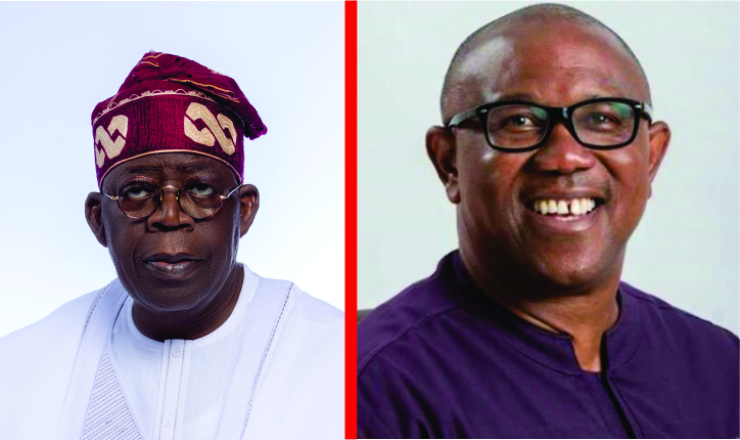
  • JUST IN: Obi seeks delay in state police implementation until after 2027 elections

    JUST IN: Obi seeks delay in state police implementation until after 2027 elections

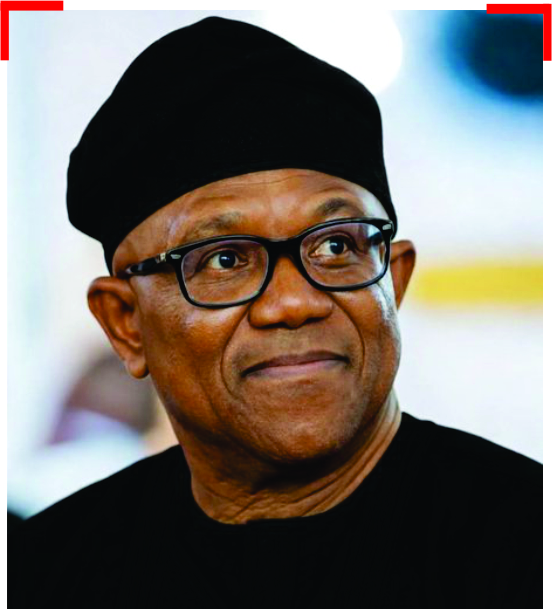
    ABUJA, Nigeria — Presidential candidate of the Nigeria Democratic Congress (NDC), Mr Peter Obi, has called for the postponement of the implementation of state police until after the 2027 general election, despite describing the recent constitutional amendment as a commendable step towards strengthening Nigeria’s security architecture.

    Obi, a longstanding advocate of decentralised policing and the proponent of the “A New Nigeria Is Possible” movement, said the legislation establishing state police was passed through a process that lacked adequate public participation and legislative scrutiny, raising concerns about its potential political misuse.

    In a statement on Friday, Obi said the passage of the State Police Bill by the National Assembly represented a significant legislative milestone in addressing a longstanding demand by many Nigerians.

    “For years, many of us, alongside security experts and regional stakeholders, have consistently argued that a highly centralised policing structure is fundamentally unsuitable for a country as vast, diverse, and complex as Nigeria. However, the legislative and constitutional implementation appears shaky and raises legitimate concerns,” he said.

    According to him, the process should have involved broader community participation, noting that policing ought to be more visible at the local government and community levels.

    “The mechanism for passing the law appears highly disorganised, with no public hearing on such a sensitive issue. Indeed, the rush to enact the law without proper legislative procedures fuels suspicion among many observers about the political motives behind it,” he added.

    The former Anambra State governor said the major concern was not the operational framework of state police but the possibility of political abuse by state governors.

    “There is a widespread, justifiable fear that state police forces could become instruments in the hands of governors. The suspicion is that a state-controlled police force could be weaponised to suppress political rivals, disrupt opposition rallies, and manipulate elections,” Obi said.

    He stressed that for state policing to serve as a genuine security solution rather than a political tool, the law must establish independent oversight mechanisms.

    “For state policing to evolve from a risky political gamble into a genuine security solution, the law must not only permit states to establish police forces but also clearly provide for independent oversight bodies, such as state Police Service Commissions that are entirely free from executive influence, to ensure that policing serves the public interest rather than the interests of the ruling elite,” he said.

    Obi argued that recent political developments had not inspired confidence that the system would be insulated from abuse.

    “Going by what Nigerians have seen so far, there is no guarantee that this administration can resist the temptation to take advantage of state policing to influence the 2027 general election by proxy.

    “In view of that possibility and the danger it poses to the polity, it is necessary to defer its implementation until after the general election,” he said.
  • U.S. urges DRC, Rwanda to fully implement Peace Accord

    U.S. urges DRC, Rwanda to fully implement Peace Accord

    LONDON, United Kingdom (NPA) — The United States has welcomed the continued commitment of the Democratic Republic of the Congo (DRC) and Rwanda to resolving longstanding tensions through peaceful dialogue, urging both countries to fully implement the Washington Accords without delay.

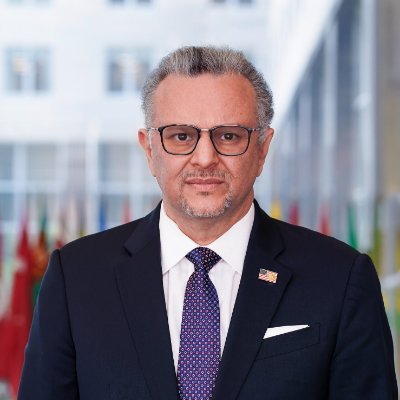
    In a statement on Wednesday, U.S. Senior Advisor for Arab and African Affairs, Massad Boulos, called on all parties to maintain momentum in implementing the peace agreement, including Rwanda’s commitment to withdraw its forces from eastern DRC and the Congolese government’s pledge to neutralise the Democratic Forces for the Liberation of Rwanda (FDLR).

    Boulos also acknowledged the contributions of Qatar, the African Union and other international partners in supporting the peace process.

    “Sustained engagement, confidence-building measures and the faithful implementation of agreed commitments remain essential to securing lasting peace, stability and prosperity in the Great Lakes region,” he said.

    The statement followed the sixth meeting of the Joint Oversight Committee (JOC) on the Peace Agreement between the DRC and Rwanda, held in London on June 24.

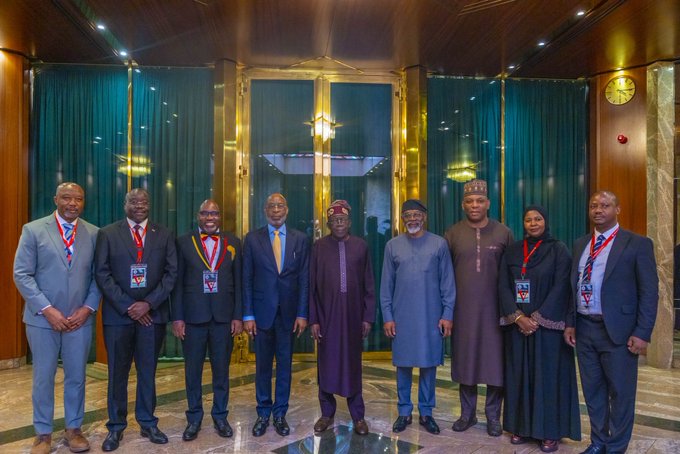
    The meeting brought together representatives of the DRC, Rwanda, the United States, Qatar, Togo, acting as the African Union mediator, and the African Union Commission.

    The committee expressed concern over the renewed fighting in eastern DRC, the impact of drone strikes on civilians and the worsening humanitarian situation, including the ongoing Ebola outbreak.

    Participants agreed on the urgent need to strengthen the ceasefire and accelerate implementation of the peace agreement signed by both countries on June 27, 2025.

    During the meeting, the DRC updated members on efforts to neutralise the FDLR, while Rwanda provided details of the ongoing disengagement of its forces and the lifting of defensive measures.

    Both countries reaffirmed their commitment to fully implement the peace accord, de-escalate tensions—particularly around Minembwe—and use their influence to support peace on the ground.

    They also agreed to support the rapid deployment of the Expanded Joint Verification Mechanism Plus (EJVM+) to verify compliance with commitments under the Washington Accords.

    The two governments pledged to strengthen intelligence sharing through the Joint Security Coordination Mechanism, support ongoing peace negotiations between the DRC and AFC/M23 under the Doha process, and refrain from hostile rhetoric capable of undermining the implementation of the agreement.

    The DRC and Rwanda expressed appreciation to the United States, Qatar, Togo and the African Union Commission for their continued support to the peace process and thanked the United Kingdom for hosting the meeting.

    The next meeting of the Joint Security Coordination Mechanism is scheduled to take place within the next 15 days.

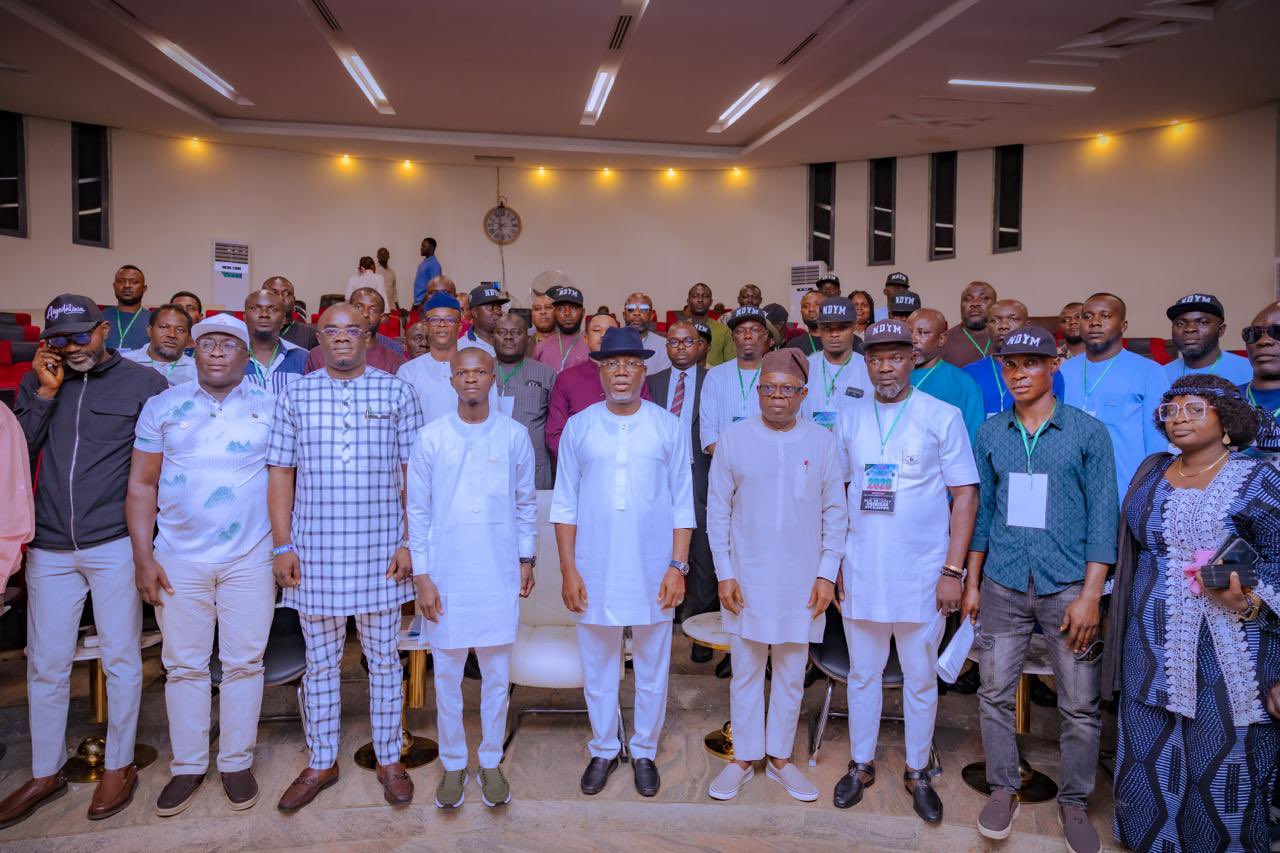
  • Ondo Governor unveils 1,000 forest guard jobs for youths

    Ondo Governor unveils 1,000 forest guard jobs for youths

    AKURE, Nigeria (NPA) — Ondo State Governor Lucky Orimisan Aiyedatiwa has reaffirmed his administration’s commitment to youth empowerment, announcing the recruitment of 1,000 young people into the Ondo State Forest Guard to strengthen security across the state.

    The governor made the announcement during a meeting with members of the Ondo State Youth Parliament, where he also pledged to appoint more youths into government positions.

    Aiyedatiwa said applicants for the Forest Guard recruitment must be below the age of 39 and assured that successful candidates would receive adequate training, welfare and protection.

    He urged the Youth Parliament to nominate only responsible and qualified individuals for the exercise.

    The governor also approved the provision of a utility bus for the Youth Parliament and pledged government support for the completion of the Ondo State Youth Policy Document.

    He called on young people to remain vigilant and support efforts to improve security by promptly reporting suspicious activities within their communities.

    “Whenever you see something, say something,” Aiyedatiwa said.

    Speaking at the meeting, the Commissioner for Youth and Sports Development, Henry Omoyofunmi, commended the governor’s commitment to youth development, citing recent employment opportunities created in the health sector and other government agencies.

    Leaders of the Ondo State Youth Parliament also applauded the governor for promoting inclusive governance, expanding opportunities for young people and supporting the state’s participation in the Nigeria Youth Parliament.

    The meeting was attended by the Deputy Governor, senior government officials and local government chairmen.

    The forest guard recruitment followed rising insecurity in Nigeria after the abduction of schoolchildren and teachers in Oyo State.

    Osun State has also expanded its forest guard unit to help tackle the violence troubling parts of the southwest.

  • BREAKING: Sowore rejects DSS account of courtroom incident, accuses agency of misleading public

    BREAKING: Sowore rejects DSS account of courtroom incident, accuses agency of misleading public

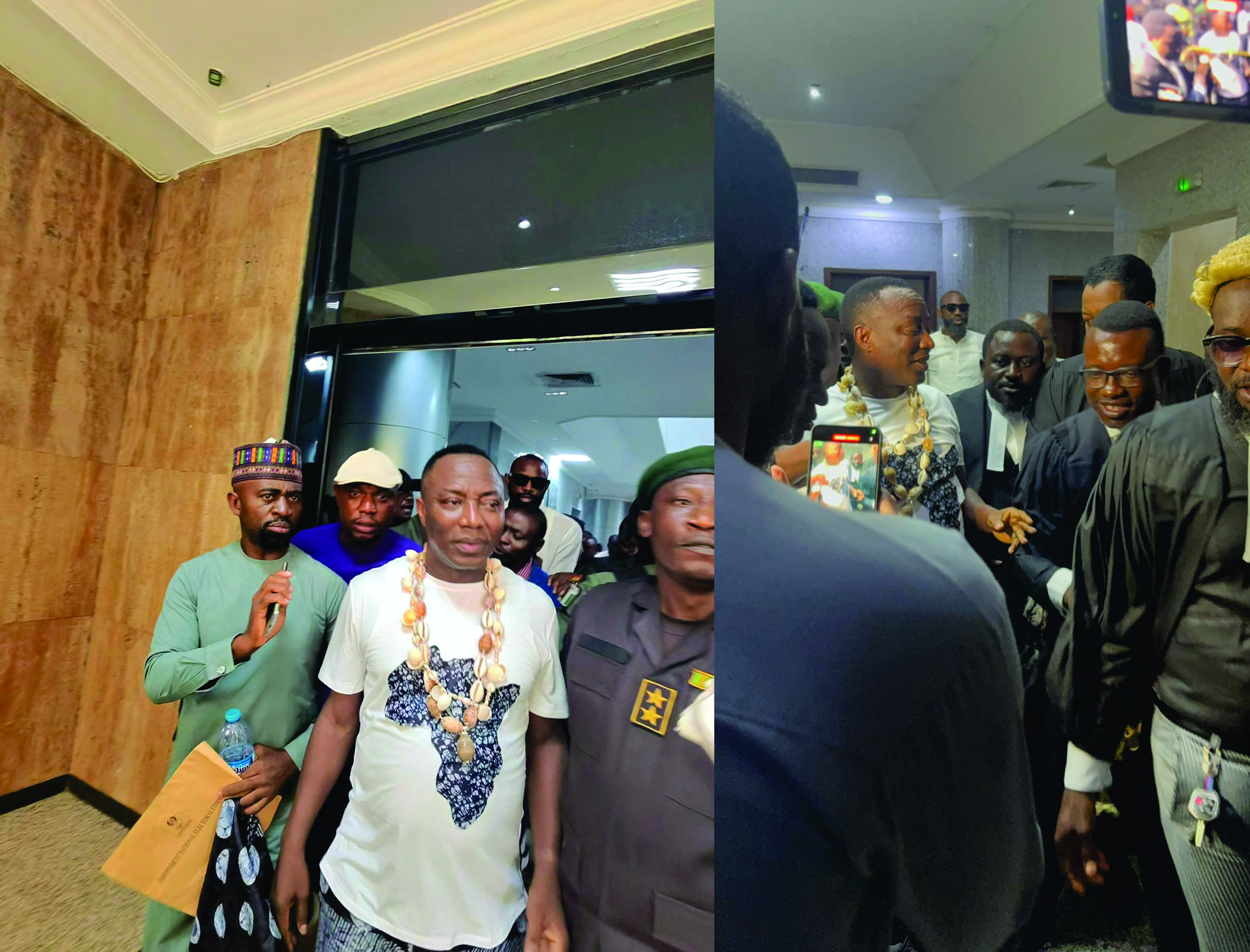
    ABUJA, Nigeria (NPA) — Activist and African Action Congress (AAC) presidential candidate, Omoyele Sowore, has rejected the Department of State Services (DSS) account of events surrounding his remand by a Federal High Court in Abuja, accusing the agency of orchestrating his alleged harassment and unlawful detention within the court premises.

    In a statement issued on Wednesday, Sowore dismissed the DSS claim that it had launched an investigation into the conduct of operatives involved in the incident, describing the move as an attempt to mislead the public.

    According to him, the operation was allegedly planned and coordinated by senior officials of the agency.

    “The claim that they are investigating those who assaulted and unlawfully held me hostage is an insult to intelligence,” Sowore said.

    He alleged that DSS operatives harassed him from the Kuje Correctional Centre to the Federal High Court and later took control of parts of the court premises, intimidating lawyers and members of the public.

    Sowore further claimed that the operation was frustrated by the presence of supporters gathered outside the court complex.

    The activist maintained that he would continue to challenge what he described as abuse of power and suppression of dissent.

    “The struggle for justice, accountability and genuine democracy remains undiminished,” he said.

    However, the DSS, in a statement issued by its Deputy Director of Public Relations and Strategic Communications, Favour Dozie, said the Director-General of the agency had ordered an immediate investigation into allegations involving its operatives during the incident.

    The agency said public concerns followed scenes showing Sowore in an altercation with an official of the Nigerian Correctional Service and a subsequent confrontation involving DSS personnel.

    According to the DSS, the case against Sowore originated from social media posts made in August 2025 in which he allegedly described President Bola Ahmed Tinubu as “a criminal.”

    The agency said it initially sought a retraction through a formal letter rather than arresting him, in line with its policy of resolving such matters through lawful and non-coercive means.

    It noted that when no retraction was made, charges were filed under Section 24 of the Cybercrimes (Prohibition, Prevention, etc.) Amendment Act, 2024, seeking judicial interpretation of the legality of the statements.

    The DSS stressed that Sowore was granted bail on self-recognition at the commencement of the trial, a decision it neither opposed nor challenged.

    According to the agency, the circumstances that led to the revocation of his bail and subsequent remand were strictly the result of court proceedings and not actions taken by the service.

    “The issues that led to his bail revocation and remand were entirely premised on court processes, as the Service neither arrested nor opposed his bail,” the DSS said.

    The agency reaffirmed its commitment to professionalism, civility and adherence to the rule of law in the discharge of its responsibilities.

    Sowore was remanded in Kuje Correctional Centre following proceedings before a Federal High Court in Abuja, a development that has generated reactions from rights groups and political figures across the country, including the presidential candidate of the Nigeria Democratic Congress (NDC), Mr Peter, who described the development as an affront on democracy.

  • JUST IN: Tinubu highlights Nigeria’s youth potential, welcomes Mastercard’s training for 5 million businesses

    JUST IN: Tinubu highlights Nigeria’s youth potential, welcomes Mastercard’s training for 5 million businesses

    ABUJA, Nigeria (NPA) — President Bola Ahmed Tinubu has assured global investors that Nigeria’s youthful, tech‑savvy population remains the nation’s greatest asset, capable of integrating seamlessly into the global economy.

    Receiving Mastercard’s Global Chief Executive Officer, Michael Miebach, at the State House on Tuesday, the President welcomed the company’s proposal to train five million businesses and equip them with digital skills.

    He emphasised that ongoing reforms have repositioned Nigeria’s economy to empower youths and small enterprises, noting that the formalisation of the informal sector will unlock opportunities for investment, employment, and growth.

    Tinubu praised Mastercard’s longstanding presence in Nigeria, describing the firm as a trusted partner in financial management. He highlighted the importance of payment platforms for small and medium‑scale businesses and assured continued government support for initiatives that strengthen inclusivity and digital participation.

    Finance Minister Taiwo Oyedele underscored that reforms in credit and payment systems align with Mastercard’s work in Nigeria, pointing to the digitisation of government services and the registration of over 10,000 informal businesses daily. He stressed that Nigeria’s large youth population and fintech ecosystem present vast opportunities for global firms.

    Miebach reaffirmed Mastercard’s commitment, citing the prevention of $200 million in fraud, facilitation of $2 billion in foreign exchange, and support for SMEs.

    He announced plans to empower 40 million small businesses with digital skills through a three‑year programme, alongside the establishment of a Cyber Centre of Excellence to address emerging risks.

    The meeting concluded with both sides pledging deeper collaboration to drive Nigeria’s digital economy, expand financial inclusion, and strengthen resilience in the global market.

  • Sowore’s detention threatens democracy, says Peter Obi

    Sowore’s detention threatens democracy, says Peter Obi

    ABUJA, Nigeria (NPA) — Presidential candidate of the Nigeria Democratic Congress (NDC), Mr Peter Obi, has condemned the remand of activist and African Action Congress (AAC) presidential candidate, Omoyele Sowore, at the Kuje Correctional Centre, describing the development as a dangerous setback for Nigeria’s democracy.

    In a statement titled “Sowore Being Sent to Prison: A Dangerous Regression for Our Democracy,” Obi expressed concern over a Federal High Court ruling ordering Sowore’s remand pending further proceedings in his case.

    The former Anambra State governor said while the judiciary remains the ultimate arbiter of justice, authorities must guard against any perception that state institutions are being used to suppress dissent, restrict press freedom or shrink civic space.

    “A thriving democracy does not survive on the silencing of opposing voices. It is anchored on the robust protection of fundamental human rights, especially the freedoms of expression and peaceful assembly as guaranteed by the Constitution,” Obi said.

    According to him, Nigeria’s current economic and security challenges require inclusive dialogue and nation-building rather than actions that could deepen tensions.

    “When we begin to treat critics, activists and journalists as threats to the state rather than partners in promoting accountability, we risk sliding towards authoritarianism,” he said.

    Obi urged relevant authorities to ensure strict adherence to the rule of law and guarantee Sowore’s constitutional rights.

    He also called for security and judicial institutions to remain impartial in the administration of justice.

    “We cannot build a New Nigeria if we continue to undermine the democratic institutions designed to protect the rights of all citizens,” he added.

    Meanwhile, Amnesty International has also criticised Sowore’s remand, calling on the Federal Government to release the activist and withdraw all charges against him.

    The rights organisation described the development as a threat to freedom of expression and civic participation in Nigeria.

  • British High Commission commends peaceful Ekiti poll, warns against vote trading ahead of 2027 elections

    British High Commission commends peaceful Ekiti poll, warns against vote trading ahead of 2027 elections

    ABUJA, Nigeria (NPA) — The British High Commission has commended voters in Ekiti State for their peaceful participation in the June 20 2026, governorship election, congratulating Governor Abiodun Abayomi Oyebanji of the All Progressives Congress (APC) on his re‑election.

    In a statement issued on June 22, the Commission praised the Independent National Electoral Commission (INEC), security agencies, and other stakeholders for the orderly conduct of the poll—the first major election under the Electoral Act 2026. British observers noted strong collaboration between INEC officials and security operatives, which helped ensure a largely peaceful process.

    However, the observers reported that some polling units were inaccessible to voters with disabilities and urged authorities to improve inclusivity ahead of the 2027 general elections.

    They also cited delays with the Bimodal Voter Accreditation System (BVAS) and instances of vote trading, warning that such practices undermine public confidence in the democratic process.

    The Commission encouraged all stakeholders to apply lessons from Ekiti in upcoming elections, including Osun State’s off‑cycle vote, and reaffirmed the UK’s commitment to supporting Nigeria’s democratic institutions and inclusive governance.

    It concluded by congratulating Governor Oyebanji and expressing readiness to strengthen the partnership between the United Kingdom and Ekiti State.

  • BREAKING: PRP dismisses claims Kwankwaso hijacked party positions ahead of 2027

    BREAKING: PRP dismisses claims Kwankwaso hijacked party positions ahead of 2027

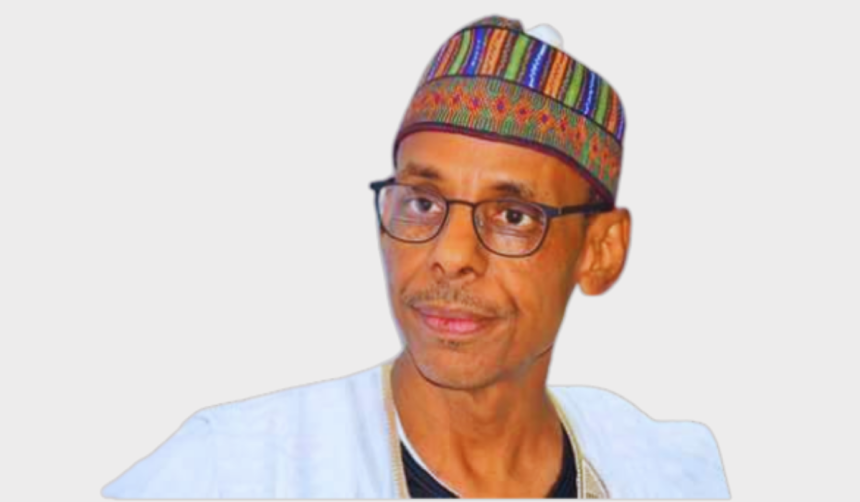
    ABUJA, Nigeria (NPA) — Chairman of the Peoples Redemption Party (PRP), Dr Hakeem Baba-Ahmed, has dismissed allegations that the presidential candidate of the Nigeria Democratic Congress (NDC), Senator Rabiu Musa Kwankwaso, secured 69 party nomination forms for his allies ahead of the 2027 general election.

    Baba-Ahmed made the clarification during an appearance on the Arise Television Morning Show on Tuesday, describing the claim as false and baseless.

    “This is completely false. There is no way Kwankwaso could have bought 69 forms. The person who made the claim, the party does not know him,” he said.

    According to him, all aspirants who sought elective positions under the party followed due process, including registration, participation in primaries and compliance with party guidelines.

    “As far as the PRP is concerned, forms were sold to everyone. They registered, contested and went through primaries,” he added.

    The PRP chairman also revealed that discussions were held with Peter Obi and Kwankwaso regarding a possible alliance ahead of the 2027 elections.

    “They came to the party. We spent some time discussing whether they could join the PRP. Eventually, they decided the party could not meet their needs and they moved on,” he said.

    Baba-Ahmed blamed the Independent National Electoral Commission (INEC) for some of the challenges the party experienced, alleging that delays in uploading the party’s information on the electoral body’s portal created setbacks.

    Despite the challenges, he expressed confidence in the party’s prospects.

    “We are a very healthy party, and we believe our chances are very bright,” he said.

    On complaints by some party members over the outcome of the primaries, Baba-Ahmed said internal investigations found no wrongdoing and noted that dissatisfaction was not unusual in competitive political contests.

    Looking ahead to the 2027 elections, he said the PRP would focus on presenting solutions to Nigeria’s economic and security challenges rather than engaging in debates over regional power rotation.

    “We are going to engage Nigerians and explain how we can reverse the current trajectory. The PRP has the capacity and intention to expose the weaknesses of this administration and offer a credible alternative,” he said.

    The party chairman said the PRP would unveil its manifesto within the next three weeks, outlining its plans for economic reforms, restructuring and national security.

    Addressing the issue of insecurity, Baba-Ahmed said a PRP-led government would adopt a multi-pronged strategy, combining military action with dialogue where necessary.

    “We will fight those killing Nigerians. Those willing to talk will be engaged based on the damage they have caused the country. We will explore all options. It is not negotiable that Nigeria should live with insecurity,” he said.

  • JUST IN: Presidency dismisses Obi’s call for Tinubu’s resignation as ‘childish’

    JUST IN: Presidency dismisses Obi’s call for Tinubu’s resignation as ‘childish’

    ABUJA, Nigeria (NPA) — The Presidency has dismissed a call by the presidential candidate of the Nigeria Democratic Congress (NDC), Peter Obi, for President Bola Ahmed Tinubu to resign, describing it as “childish,” anti-democratic and disconnected from Nigeria’s realities.

    In a statement titled “Obi’s Call for President Tinubu’s Resignation Childish and an Unwarranted Distraction,” Special Adviser to the President on Information and Strategy, Bayo Onanuga, said Obi’s comparison of Nigeria’s situation with the resignation of British Prime Minister Keir Starmer was misplaced.

    According to Onanuga, Nigeria operates a presidential system with fixed terms, unlike the parliamentary system in the United Kingdom.

    “Obi should wait until the next presidential election to know what Nigerians think of Tinubu’s government. Attempting to pressure the President out of office through social media is off the mark and anti-democratic,” he said.

    The Presidency argued that recent electoral victories recorded by the All Progressives Congress (APC) in Ekiti State and several senatorial by-elections reflected growing public support for President Tinubu and his administration.

    Responding to Obi’s criticism of insecurity, Onanuga said the administration inherited long-standing security challenges but had made measurable progress through intensified military operations, deployment of technology and increased investments in security.

    He said thousands of terrorists had been neutralised, while hundreds of kidnapped victims had been rescued across the country.

    On the economy, the Presidency rejected Obi’s claim that Nigeria was in its “worst possible condition,” citing improvements in revenue generation, foreign reserves, oil production and investor confidence.

    According to Onanuga, Nigeria’s foreign reserves have surpassed $50 billion, oil production has increased to about 1.8 million barrels per day, while government revenue is projected to exceed N30 trillion this year.

    He also highlighted gains in infrastructure development, including the Lagos-Calabar Coastal Highway and Sokoto-Badagry Highway projects, as well as reforms in the education and energy sectors.

    The Presidency further accused Obi of misrepresenting Tinubu’s campaign promises on electricity, insisting that the administration had taken significant steps to improve power supply through the Electricity Act, prepaid meter deployment and off-grid energy projects.

    While acknowledging the challenges posed by the high cost of living, Onanuga attributed part of the pressure to global economic disruptions, including tensions in the Middle East and their impact on commodity prices.

    “Leadership is about confronting challenges and delivering solutions. President Tinubu remains focused on reforms, economic stability, security and laying the foundation for a more prosperous Nigeria,” he said.

    The response followed Obi’s call for Tinubu’s resignation over what he described as “monumental failure in governance.”

    In a statement titled “Owning Up to Leadership Failures and Political Responsibility,” Obi argued that worsening insecurity, economic hardship, unreliable electricity supply and declining public welfare justified the President’s resignation.

    The former Anambra State governor said Tinubu had failed to fulfil key campaign promises and urged him to take responsibility in the same way he had demanded former President Goodluck Jonathan’s resignation in 2015 over insecurity and economic challenges.

    Obi maintained that accountability in public office requires leaders to accept responsibility for failure, arguing that such a step would strengthen democratic governance and public trust.

  • SERAP to Tinubu: Free Sowore, drop all charges

    SERAP to Tinubu: Free Sowore, drop all charges

    ABUJA, Nigeria (NPA) — The Socio‑Economic Rights and Accountability Project (SERAP) has urged President Bola Ahmed Tinubu’s government to immediately and unconditionally release journalist Omoyele Sowore and drop all charges of criminal defamation and cybercrimes against him, insisting he is detained solely for the peaceful exercise of his human rights.

    A Federal High Court in Abuja on Monday ordered Sowore’s remand at the Kuje Correctional Centre pending the hearing of his application challenging the revocation of his bail. The court issued the order after dismissing his bid to have the presiding judge recuse himself from the case on grounds of alleged bias.

    SERAP expressed concern over what it described as an escalating crackdown on freedom of expression, peaceful assembly, association, and media freedom, as well as the growing disregard for the rule of law by Nigerian authorities. The group said: “Authorities must stop weaponising criminal defamation and cybercrime laws to target journalists, bloggers, human rights defenders and activists, and stop detaining them solely for doing their jobs.”

    The core of the case between Sowore and the Department of State Services (DSS) centres on his prosecution for alleged criminal defamation tied to social media posts in which he reportedly described President Tinubu as “a criminal.”

    Tensions escalated after a court revoked his bail and ordered his remand in Kuje, but DSS operatives forcefully seized him in court, sparking outrage over disobedience of judicial orders.