Category: Investigation

  • US Congressional Committee Calls for Disarmament of Fulani Militias to Address Religious Violence in Nigeria, Other Measures

    US Congressional Committee Calls for Disarmament of Fulani Militias to Address Religious Violence in Nigeria, Other Measures

    WASHINGTON, U.S. (NPA): A United States congressional committee tasked by President Donald Trump to investigate allegations of widespread violence against Christians in Nigeria has submitted its recommendations to the White House.

    In a report released Monday by Congressman Riley Moore, the committee endorsed the redesignation of Nigeria as a Country of Particular Concern (CPC), citing what it described as systematic attacks on Christian communities.

    The committee, which included Chairman Tom Cole and members of the House Appropriations Committee, stated: “Nigeria is the deadliest place in the world to be a Christian. Christians face ongoing violent attacks from well-armed Fulani militias and terrorist groups, resulting in tens of thousands of deaths, the destruction of churches and schools, and widespread kidnappings. Blasphemy laws in northern states are used to silence dissent, target minorities, and justify convictions without due process.”

    Key Recommendations

    The report outlined several measures aimed at curbing violence and strengthening bilateral cooperation between the United States and Nigeria:

    • Bilateral Agreement: Establish a binding accord to protect vulnerable Christian communities, counter jihadist activity, expand economic cooperation, and address regional influence from China and Russia.
    • Humanitarian Assistance: Co-fund donor-supported aid programs, including faith-based initiatives, prioritizing internally displaced persons (IDPs) and underserved communities.
    • Security in the Middle Belt: Deploy capable security forces to prevent attacks and kidnappings, ensure rapid response, and hold negligent officials accountable.
    • Land and Resettlement: Expel armed groups from confiscated farmland, enable displaced communities to return, and rebuild infrastructure to reduce reliance on aid and boost agricultural productivity.
    • Disarmament of Militias: Implement measures to reduce and eliminate violence by armed Fulani militias, including disarmament programs to curb illicit weapons while safeguarding legitimate self-defense for farmers.
    • Counter-Terrorism Cooperation: Expand joint operations to combat foreign terrorist organizations, including the provision of defense equipment and intelligence-sharing.
    • Economic Safeguards: Address destabilizing practices such as illegal mining operations allegedly linked to foreign actors funding militias.
    • Visa Restrictions & Legal Reform: Maintain visa bans on perpetrators of religious violence, repeal blasphemy laws, and review sharia-based criminal codes in northern Nigeria.
    • Trade Measures: Consider restrictions on cattle exports to regional markets as leverage to compel disarmament of armed herdsmen.
  • Nigeria Accused of Paying Billions in Ransom to Boko Haram for Release of Schoolchildren — AFP

    Nigeria Accused of Paying Billions in Ransom to Boko Haram for Release of Schoolchildren — AFP

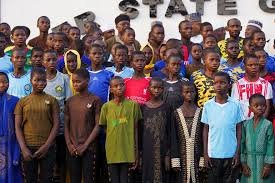
    LAGOS, NIGERIA (NPA): Agence France-Presse (AFP) has reported that the Nigerian government allegedly paid millions of dollars in ransom to Boko Haram to secure the release of more than 230 children and staff abducted from a Catholic boarding school in November. Intelligence sources cited by AFP claim that, as part of the deal, two senior Boko Haram commanders were also freed.

    According to AFP, the ransom money was flown by helicopter to Boko Haram’s stronghold in Gwoza, Borno State, near the Cameroon border, and handed over to militant commander Ali Ngulde. Due to poor communications in the remote area, Ngulde reportedly crossed into Cameroon to confirm receipt of the funds before the first group of 100 children was released.

    The mass abduction at St. Mary’s Boarding School in Papiri, Niger State, on November 21 triggered widespread outrage across Nigeria. While dozens of children managed to escape, the remaining captives were freed two weeks later following negotiations led by National Security Adviser Nuhu Ribadu. The Nigerian government has consistently denied paying ransom to terrorist groups, reiterating its stance after the Papiri incident.

    Boko Haram, founded in northeastern Nigeria in 2002, began as a religious movement opposing Western-style education and secular governance. Over time, it transformed into a violent insurgency responsible for mass abductions, attacks on schools, and widespread displacement. The group seeks to establish an Islamic state governed by Sharia law, rejecting democracy and secular institutions. Though splinter factions such as the Islamic State West Africa Province (ISWAP) have emerged, Boko Haram’s core objective remains the destabilization of Nigeria’s secular governance.

    Here’s a rewritten version of your report section, expanded to about two hundred words:

    The Nigerian government has not yet issued an official response to the recent AFP report. However, its stance on matters of national security remains consistent and firm. Authorities continue to emphasize that ransom payments to terrorist groups are strictly against policy, reiterating that such actions only serve to embolden criminal networks and undermine broader counterterrorism efforts. Instead, the government has pledged to intensify its strategies for combating terrorism, focusing on renewed vigour in both military operations and intelligence-driven approaches.

  • Newpost Africa Relaunches, Reaffirms Commitment to World-Class Journalism

    Newpost Africa Relaunches, Reaffirms Commitment to World-Class Journalism

    LAGOS, NIGERIA (NPA): Nigerian media organisation Newpost Africa Media Publishing® (Newpost Africa) has announced its return following a successful restructuring process. The relaunch underscores the company’s renewed commitment to delivering journalism of the highest standards—anchored in integrity, balance, and diversity.

    Positioning itself as “Nigeria’s independent, world-class media organisation”, Newpost Africa emphasized its founding principles of strict editorial neutrality, an uncompromising stance against propaganda, and reporting that informs without bias or distortion. The organisation stressed that credible journalism is indispensable to democratic societies and informed citizenship.

    In a statement issued on February 22, 2026, Newpost Africa encouraged stakeholders and readers to actively engage with its mission. “By sharing perspectives and experiences, you contribute to a platform that values truth, dialogue, and collective responsibility in shaping the public record,” the statement read.

    Driven by a team of seasoned professionals and supported by a global network of journalists and writers, Newpost Africa said it is well-positioned to deliver timely coverage of rapidly evolving stories with speed, clarity, and analytical depth—while maintaining accuracy and editorial discipline.

    Its editorial focus remains firmly on Nigeria and the African continent, ensuring accountability from policymakers, institutions, and power brokers. At the same time, the organisation pledged to continue reporting on international developments that shape Africa’s place in the global context.

    The relaunch, according to the statement, is not merely a return but a reaffirmation of purpose and a strategic commitment to excellence in journalism. “This relaunch is a reaffirmation of our mission to uphold the highest standards of journalism and to serve as a trusted voice in Nigeria, Africa, and beyond,” the organisation noted.

  • Seven NSCDC Officers Missing After Boko Haram Ambush

    Seven NSCDC Officers Missing After Boko Haram Ambush

    Seven officers of the Nigeria Security and Civil Defence Corps (NSCDC), a paramilitary agency in the country that protects lives and property, and safeguards critical national infrastructure, have been declared missing following an attack by suspected Boko Haram militants.

    In a statement, NSCDC spokesperson, DCC Afolabi Babawale, said the attack on the officers happened on Monday in the Farin-Kasa area of Chukun Local Government Area, Kaduna State when the operatives were inspecting the National Grid installation from Shiroro in Niger State. He further explained that, due to the recent increase in attacks on power lines that have plunged the country into darkness, the nine officers and 71 others who were ambushed had been deployed to police the power infrastructure in the area.  

    He also disclosed that “as they patrolled vulnerable areas, the officers “encountered stranded expatriates near Dagwachi Village and allowed them to join the convoy for safety. Unbeknownst to the team, over 200 armed Boko Haram militants had laid a deadly ambush from a hilltop, ready to unleash a torrent of gunfire on the unsuspecting convoy.”

    “Determined and resourceful, the NSCDC operatives fought back valiantly, managing to neutralise over 50 insurgents during the exchange. However, the chaos left seven officers unaccounted for, prompting an urgent search in the bush for their whereabouts. Those who sustained injuries are currently receiving medical treatment.”

    The NSCDC Commandant-General, Ahmed Audi, who praised his men for their gallantry and service to the nation, described that attack as cowardly against personnel committed to the nation’s defence and protection of critical national infrastructures.

    Recall that reports of suspected Boko Haram militants allegedly occupying a swathe of territory and making an incursion into a military training ground in Niger State, which was denied by the Nigeria Military, made rounds in the media recently. This recent attack by the Islamic militant group, officially known as Jamā’at Ahl as-Sunnah lid-Da’wah wa’l-Jihād, adds to their internationally acclaimed notoriety for its brutal tactics, including mass kidnappings, bombings, and assassinations since 2002. Despite efforts by regional and international forces to combat the group, Boko Haram remains a significant threat in Nigeria and across the Sahel region.