Category: Investigation

  • BREAKING: UN declares transatlantic slave trade the gravest crime against humanity

    BREAKING: UN declares transatlantic slave trade the gravest crime against humanity

    UNITED NATIONS (NPA) — March 25, 2026—The United Nations General Assembly today passed a historic resolution declaring the trafficking of enslaved Africans and the transatlantic slave trade as the gravest crime against humanity. The resolution, published by the UN Media Liaison Unit (MALU), was sponsored by more than 50 countries and underscores the enduring impact of slavery and colonialism on Africans and people of African descent worldwide.

    The resolution reaffirms the principles of the UN Charter, the Universal Declaration of Human Rights, and international covenants prohibiting slavery. It recalls historic milestones, including the Durban Declaration, the International Decade for People of African Descent, and the Ark of Return memorial at UN Headquarters, while stressing that slavery’s legacies persist in structural racism, inequality, and underdevelopment.

    Delegates emphasized that the transatlantic slave trade represented “a profound rupture in human history,” involving the forced capture, commodification, and transportation of millions of Africans over four centuries. The resolution highlights the exceptional brutality and systemic nature of racialized chattel enslavement, noting its codification in laws such as the Barbados Slave Code and the French Code Noir, which legally defined Africans as property.

    The Assembly condemned slavery as “the most inhumane and enduring injustice against humanity” and declared that crimes related to the trafficking of enslaved Africans are violations of jus cogens norms, not subject to statutory limitations. It affirmed that grave crimes generate continuing obligations until addressed through truth, justice, and reparations.

    The resolution calls on Member States to engage in inclusive dialogue on reparatory justice, including formal apologies, restitution, compensation, rehabilitation, and guarantees of non-repetition. It urges the restitution of cultural properties and artifacts taken during slavery and colonialism, and encourages international cooperation to promote cultural rights for present and future generations.

    The Assembly also requested the UN Secretary-General to strengthen coordination on remembrance, education, and research related to slavery and its legacies, and to report back at the 82nd session on progress made. Regional organizations such as the African Union and Caribbean Community were invited to collaborate on frameworks for reparatory justice and reconciliation.

    By passing this resolution today, the General Assembly reaffirmed its collective commitment to historical justice, healing, and sustainable peace. It stressed that addressing the legacies of slavery is essential to combating systemic racism and ensuring dignity and equality for Africans and people of African descent across the globe.
  • Independent panel exposes corruption, violence in Nigerian Correctional Service

    Independent panel exposes corruption, violence in Nigerian Correctional Service

    ABUJA, NIGERIA (NPA) — March 25, 2026: An Independent Investigative Panel on alleged corruption and other violations within the Nigeria Correctional Service (NCoS) has presented its findings to stakeholders in Abuja.

    The panel, established by the Minister of Interior, Dr. Olubunmi Tunji-Ojo, began its presentation on Tuesday at the opening of a two-day stakeholders’ engagement.

    Tunji-Ojo commended the panel for its professionalism and diligence in investigating allegations of corruption, abuse of power, torture, cruelty, and inhumane treatment in correctional facilities. He explained that the panel was set up following serious allegations of misconduct after the arrest of Idris Olarenwaju, popularly known as Bobrisky.

    The minister noted that the findings revealed systemic challenges requiring urgent reforms, including corruption, operational inefficiencies, poor welfare conditions, human rights concerns, and institutional gaps.

    “Officers found culpable will face appropriate disciplinary and legal consequences in line with existing laws and regulations,” he said.

    He stressed that the meeting was not a ceremonial exercise but an opportunity for reflection and constructive dialogue.

    “Effective collaboration among stakeholders is essential for sustainable reform. Your insights and recommendations will guide the implementation of the panel’s findings,” Tunji-Ojo added.

    He emphasized that reforming correctional centres must go beyond sanctions to strengthening institutions, improving standards, enhancing officer training, and aligning facilities with international best practices.

    Attorney-General of the Federation and Minister of Justice, Lateef Fagbemi, praised the initiative, describing NCoS as central to criminal justice administration.

    “Any shadow of corruption or abuse of power within its walls strikes at the very core of our social contract,” he said.

    Fagbemi highlighted the importance of legislative frameworks such as the Nigerian Correctional Service Act 2019 in addressing systemic challenges and ensuring transparency, accountability, and compliance with human rights standards.

    NCoS Controller-General, Sylvester Nwakuche, welcomed the panel’s work, stressing that accountability—not condemnation—was the goal.

    “The findings, even if difficult, must be confronted. The service is not defined by its failures but by its response to them,” he said.

    He added that most officers serve with professionalism and sacrifice, and urged that the misconduct of a few should not overshadow the dedication of the majority.

  • Russian hacker sentenced to over six years in U.S. prison, returns $9.1M

    Russian hacker sentenced to over six years in U.S. prison, returns $9.1M

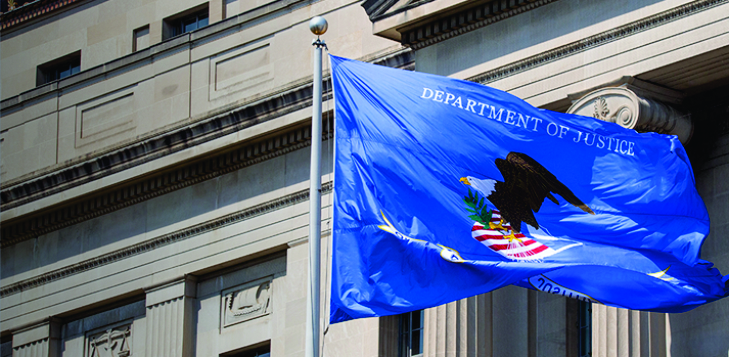
    INTERNATIONAL (NPA) — March 24, 2026 — A court in the Southern District of Indiana has sentenced Russian citizen Aleksei Volkov to 81 months in prison for assisting major cybercrime groups, including the Yanluowang ransomware gang, in attacks against U.S. companies and organisations.

    Volkov, 26, of St. Petersburg, Russia, acted as an “initial access broker,” specialising in breaking into corporate computer networks and selling that access to ransomware operators. His activities facilitated dozens of attacks across the United States, causing more than $9 million in actual losses and $24 million in intended losses. He was indicted in both Indiana and Pennsylvania, arrested in Rome, Italy, and extradited to the U.S., where he pleaded guilty to multiple charges.

    Court documents show Volkov exploited vulnerabilities to gain unauthorized access, which his co‑conspirators then used to deploy ransomware. Victims’ data was encrypted, business operations disrupted, and ransom demands made in cryptocurrency — sometimes in the tens of millions of dollars. In some cases, victims paid, while in others their stolen data was leaked online. Volkov received a share of the ransom proceeds.

    On November 25, 2025, Volkov pleaded guilty to six counts, including identity theft, trafficking in access information, conspiracy to commit computer fraud, and money laundering. He admitted to hacking networks, stealing data, and dividing ransom payments with co‑conspirators. He agreed to pay restitution of at least $9.1 million and forfeit equipment used in his crimes.

    The case was prosecuted by attorneys from the Justice Department’s Criminal Division, the Southern District of Indiana, and the Eastern District of Pennsylvania, with support from the FBI and international partners. The Justice Department’s Office of International Affairs coordinated with Italian authorities to secure Volkov’s arrest and extradition.

  • Delta Police condemn Ozoro sexual assaults, arrest key suspects

    Delta Police condemn Ozoro sexual assaults, arrest key suspects

    ASABA, NIGERIA (NPA) — March 20, 2026 — The Delta State Police Command has strongly condemned alleged sexual assaults committed under the guise of enforcing local festival practices in Ozoro Town, Isoko North Local Government Area.

    In a statement issued Friday, Police Public Relations Officer SP Bright Edafe described the circulating videos of young women being assaulted as “disturbing” and stressed that such acts are “criminal, inhumane, and a grave violation of fundamental rights and dignity.”

    According to the statement, the Commissioner of Police, CP Aina Adesola, immediately ordered an investigation after receiving the videos, which led to the arrest of the chief organiser, Chief Omorede Sunday, along with four other suspects. The case has been transferred to the State Criminal Investigation Department (SCID) for further inquiry.

    Police said tactical and investigative teams have been deployed to identify and prosecute all individuals involved. The Command urged victims and witnesses to come forward with information, assuring that all reports will be treated with strict confidentiality.

    “The Delta State Police Command condemns this development in totality and assures that all those involved in these reprehensible acts will be arrested and prosecuted in accordance with the law,” the statement read.

    The Commissioner appealed to residents to remain calm, vigilant, and law‑abiding, while reaffirming the Command’s commitment to protecting lives, safeguarding rights, and maintaining public order.

    /

  • Former bank CEO pleads guilty to $25m fraud and sanctions evasion

    Former bank CEO pleads guilty to $25m fraud and sanctions evasion

    INTERNATIONAL (NPA) — March 20, 2026 — The former Chief Executive Officer of Nodus International Bank, a Puerto Rican international bank, has pleaded guilty to leading a multimillion‑dollar fraud scheme and conspiring to evade U.S. sanctions against Venezuela.

    According to the U.S. Department of Justice, Tomás Niembro Concha, 64, of Miami, Florida, admitted to siphoning at least $24.9 million from Nodus Bank between 2017 and 2023. Prosecutors said Niembro and co‑conspirators concealed illegal investments and loans that benefited him and the bank’s chairman, Juan Ramirez, ultimately contributing to the bank’s collapse in 2023.

    Niembro and Ramirez allegedly caused Nodus Bank to invest $11 million in a Miami lender, then redirected the funds for personal use. They also induced the bank to buy 47 promissory notes worth $25.3 million from a company they jointly owned, again diverting the proceeds. Regulators later placed the bank into liquidation after uncovering the sham transactions.

    In addition to fraud, Niembro admitted to violating U.S. sanctions by secretly arranging prohibited financial dealings with a Venezuelan national linked to state‑owned oil company PDVSA. The scheme involved foreclosing on a property in New York, then illegally reselling it through a front company to the sanctioned individual.

    Niembro pleaded guilty to conspiracy to commit wire fraud and conspiracy to violate the International Emergency Economic Powers Act (IEEPA). Each charge carries a maximum penalty of 20 years in prison. Sentencing is scheduled for June 8, 2026, with Niembro agreeing to forfeit at least $16.9 million.

    U.S. officials stressed that the case demonstrates accountability at the highest corporate levels. “Corporate titles don’t place anyone above the law,” said IRS Special Agent Ron Loecker. Prosecutors added that the crimes undermined financial integrity and national security.

  • Five members of sex trafficking ring sentenced to 120 years in prison

    Five members of sex trafficking ring sentenced to 120 years in prison

    INTERNATIONAL (NPA) — March 19, 2026 — Sentences have been handed down in the case against a group that trafficked seven individuals, including two minors. Five defendants were sentenced today to nearly 120 years in prison for their roles in a violent sex trafficking ring led by Kimani Jones, 32, also known as Statik. Jones received 54 years, while his father, Tremayne Lambert, 50, also known as Bayrock, was sentenced to 30 years. Both men, from Montgomery, Alabama, were convicted after a five‑day trial in October 2025. The court ordered Jones and Lambert to pay $1,010,926.50 and $510,850 in restitution, respectively.

    Three co‑defendants who pleaded guilty were also sentenced. Joseph Keon Bowe, 39, of Notasulga, Alabama, received 235 months in prison and must pay $3,200 in restitution. Daryle Gardner, 32, of Marbury, Alabama, was sentenced to 195 months and ordered to pay $5,000. Aleecia Scott, 30, of Dothan, Alabama, was sentenced to 36 months of probation and ordered to pay $1,000.

    “Today’s lengthy sentences reflect the heinous conduct of the defendants, who abused numerous women and girls for years,” said Assistant Attorney General A. Tysen Duva. Acting U.S. Attorney Kevin Davidson added, “We hope these sentences provide justice for the victims and send a clear message that we will relentlessly pursue traffickers.”

    Evidence showed Jones ran the operation for five years, forcing women and girls into commercial sex through violence and abuse. He rented hotel rooms, posted online ads, dictated where victims lived, and set daily earning quotas. He used intimidation, firearms, and drug addiction to maintain control. Victims were beaten, sexually assaulted, and threatened, including one minor dragged by the throat and others struck so severely they suffered broken bones and teeth.

    Lambert enforced rules and monitored victims, while Bowe, Gardner, and Scott acted as enforcers and drivers. Jones was convicted of multiple counts of sex trafficking of minors and adults, while Lambert was convicted of three counts of sex trafficking.

    The case was investigated by Homeland Security Investigations and Alabama law enforcement agencies, and prosecuted by the Justice Department’s Human Rights and Special Prosecution Section.

  • Belgian aristocrat ordered to stand trial over Patrice Lumumba assassination

    Belgian aristocrat ordered to stand trial over Patrice Lumumba assassination

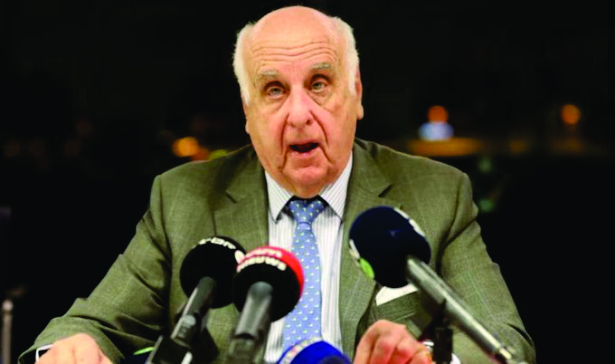
    BRUSSELS, BELGIUM (NPA) — March 18, 2026 — Étienne Davignon, a 93-year-old former Belgian diplomat and aristocrat, has been ordered by a Brussels court to face trial over the assassination of Congo’s first prime minister and anti-colonial icon, Patrice Lumumba, in 1961.

    Lumumba, who became prime minister upon Congo’s independence from Belgium on June 24, 1960, was ousted in September of the same year amid political turmoil. Just months later, on January 16, 1961, he was brutally killed by a Belgian-backed secessionist rebel group in Katanga, an event that has long symbolised the violent legacy of colonial interference in Africa.

    Davignon is the only surviving member of a group of 10 Belgian officials accused of complicity in Lumumba’s murder by the late leader’s family. His trial is expected to reignite debate over Belgium’s colonial past and its responsibility in the destabilisation of Congo during its early years of independence.

  • One dead in Virginia university shooting being investigated as terrorism

    One dead in Virginia university shooting being investigated as terrorism

    LAGOS, NIGERIA (NPA) — March 12, 2026 — FBI Director Kash Patel has confirmed that an armed individual opened fire at Old Dominion University in Norfolk, Virginia, leaving one person dead and two others wounded.

    The shooter, whose identity has not been disclosed, was subdued and killed after a group of students bravely intervened. Their actions, alongside the swift response of law enforcement, helped contain the situation.

    In a statement on Thursday, Patel said the FBI is investigating the incident as an act of terrorism. “Earlier today, an armed individual opened fire at Old Dominion University, leaving one person dead and two others wounded. The shooter is now deceased, thanks to a group of brave students who stepped in and subdued him – actions that undoubtedly saved lives along with the quick response of law enforcement.”

    He added that the FBI’s Joint Terrorism Task Force is working closely with local authorities and providing all necessary resources. Patel urged prayers for the victims, their families, and the Old Dominion University community.

  • ECOWAS Court pledges to protect women’s rights through effective justice delivery

    ECOWAS Court pledges to protect women’s rights through effective justice delivery

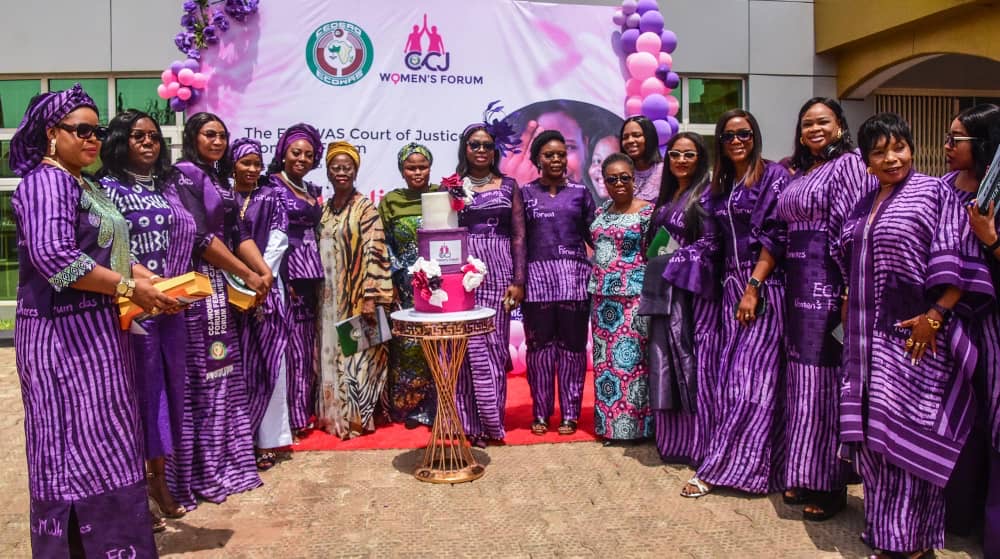
    Lagos, Nigeria (NPA) —March 10, 2026 — The ECOWAS Court of Justice has pledged its commitment to ensuring the protection of the rights of women and girls across the West African sub-region through effective justice delivery.

    President of the Court, Justice Ricardo Gonçalves, made the pledge at the 2026 International Women’s Day celebration organised by the ECOWAS Court’s Women’s Forum on Monday in Abuja.

    The News Agency of Nigeria (NAN) reports that the event, which is celebrated on March 8 yearly, was sub-themed: “Break the Silence, End Gender-Based Violence Now.”

    “As we celebrate our women and their invaluable contributions to the achievements of the court, we also reaffirm our collective commitment to delivering justice, advancing the rule of law, ending violence and discrimination, and creating a future where every woman and girl in the ECOWAS region can thrive in safety and dignity.

    “We pledge to continue taking actions through our judgments, our outreach programmes, and our collaborative partnerships with member states and other stakeholders, to be able to build a region where justice and protection of the rights of women and girls is not an aspiration but a lived reality.

    “At the ECOWAS Court of Justice, we recognise that the protection of women and girls’ rights within the ECOWAS space is central to the advancement of justice, upholding human dignity, fostering inclusive development, and strengthening our community,” he said.

    According to him, the event’s sub-theme resonates deeply with the mission of the court and the past strides it has made in advancing the rule of law and protecting fundamental rights across West Africa.

    He said this year’s global theme: “Rights, Justice,  Action For All Women and Girls,” was a reminder that women are both participants in the pursuit and pillars of strength within the court.

    The court’s president said that the giant strides made by the court over the years reflected the court’s unwavering belief that the rights of women and girls must be protected, and justice must serve all without distinction.

    Gonçalves, represented by Mrs Marie Saine, the Court’s Acting Deputy Chief Registrar, stressed that protecting the rights of women and girls within the ECOWAS sub-region was central to justice advancement.

    “Through our jurisprudence, we have upheld fundamental rights of women and girls, challenged discrimination, and provided remedies for victims of sexual and gender-based violence and inequality.

    “These groundbreaking decisions have not only delivered justice to individuals but also set important legal precedents that reinforce the dignity and protection of women and girls throughout the region.

    “They have also contributed to the development of regional human rights jurisprudence, influenced national policies, and triggered cultural and legal reforms,” he said.

    He maintained that justice must be accessible and action must be taken to ensure that every woman and girl in West Africa can live free from discrimination and all forms of gender-based violence and be empowered to contribute fully to society.

    According to him, gender-based violence is not only a violation of human rights, but also a barrier to equality, justice, and sustainable development.

  • International Women’s Day: women hold just 64% of legal rights afforded to men worldwide — UN Women

    International Women’s Day: women hold just 64% of legal rights afforded to men worldwide — UN Women

    POLITICS (NPA) — March 8, 2026 — As the world commemorates International Women’s Day 2026, UN Women has raised alarm over the persistent global gap in legal rights between men and women.

    In a statement on Saturday, the agency revealed that women currently hold only 64% of the legal rights afforded to men worldwide. This means that, on average, women are entitled to just two-thirds of the protections and opportunities guaranteed to men under the law.

    UN Women, the United Nations entity dedicated to gender equality and women’s empowerment, urged global leaders to confront structural barriers to justice, including discriminatory laws, weak legal protections, harmful practices, and entrenched social norms that undermine the rights of women and girls.

    The agency further noted that conflict and instability exacerbate these inequalities, leaving women and girls more vulnerable to violence, exclusion, and discrimination. Reports of violations have emerged from Nigeria’s northeast, northwest, and north-central regions, where insurgent groups such as Boko Haram and ISWAP, alongside banditry, have displaced communities and subjected women to abuse. The ongoing war in Sudan was also highlighted as a flashpoint for widespread violations of women’s rights in Africa.

    In Nigeria, UN Women continues to push for gender equality by addressing violence against women, promoting women’s political participation, and supporting economic empowerment initiatives. However, progress remains slow, with women holding only 3.9% of parliamentary seats. The agency has warned that democracy itself is at risk if women remain excluded from decision-making processes.

    Nigeria also faces high rates of gender-based violence, with one in three women aged 15–49 experiencing physical or sexual abuse. Harmful practices such as female genital mutilation (FGM) persist, further eroding women’s rights.

    Beyond advocacy, UN Women’s programs in Nigeria include initiatives on economic empowerment, health, and social issues, with a particular focus on combating HIV/AIDS and supporting women’s access to education and vocational training.