Category: Health

  • Nwifuru Urges Federal Government to Establish Additional Medical Facility in Ebonyi State

    Nwifuru Urges Federal Government to Establish Additional Medical Facility in Ebonyi State

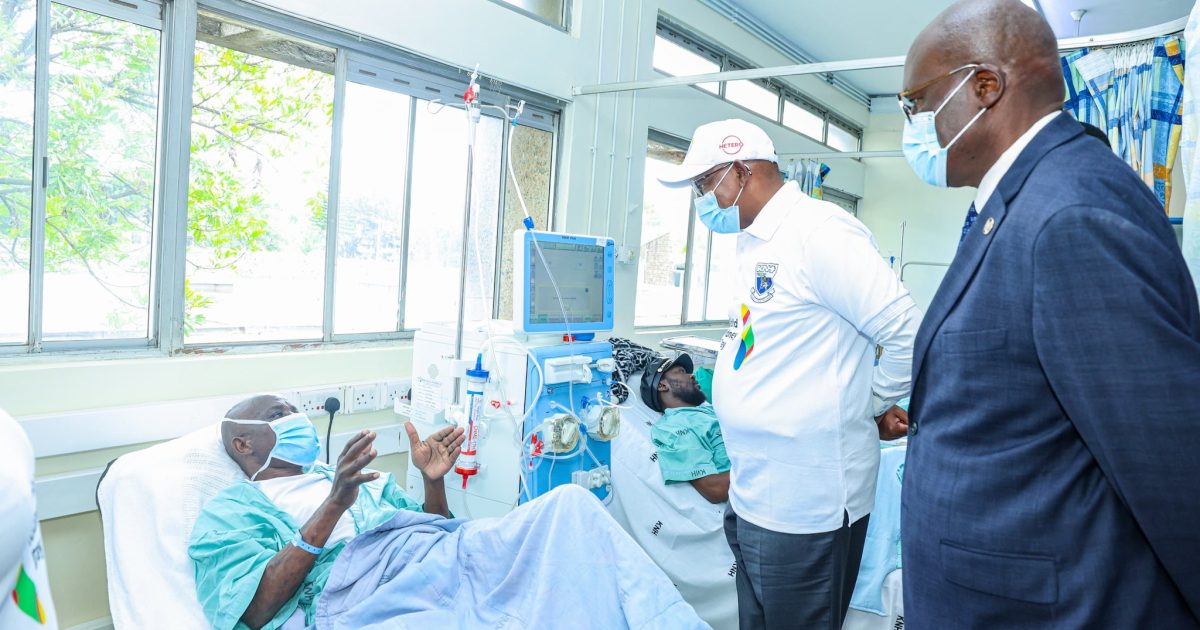
    ABAKALIKI, NIGERIA (NPA): Ebonyi State Governor, Rt. Hon. Francis Ogbonna Nwifuru, has called on the Federal Government to establish an additional federal medical centre in the state.

    Speaking on February 26, 2026, at the new Government House in Abakaliki during a working visit by the Permanent Secretary of the Federal Ministry of Health and Social Welfare, Daju Kachollom S. (mni), and her team, Nwifuru emphasized that the existing Alex Ekwueme Federal University Teaching Hospital Abakaliki is overstretched, as it serves not only Ebonyi but the wider South East region. He stressed the need for another facility to meet the growing healthcare demands of the population.

    According to a statement from the governor, the visit also featured the flag-off of cancer screening for 1,000 participants under the National Cancer Society’s South East Zonal Programme, as well as the foundation-laying ceremony for a new Oncology Centre. Nwifuru described these initiatives as “critical steps in strengthening access to specialized healthcare services for our people.”

    He further urged the Federal Government to consider upgrades and expansion of the Alex Ekwueme Teaching Hospital to enhance its capacity and efficiency.

    Governor Nwifuru’s administration is guided by the Ebonyi State People’s Charter of Needs, a governance framework that prioritizes citizen input over political patronage. The Charter focuses on social welfare and poverty reduction, infrastructure development, education and healthcare improvements, and transparency in justice sector reforms. Framed as a “Divine Mandate Consolidation and Continuity” strategy, it seeks to build on past governance while setting new standards for inclusive development, positioning Ebonyi State as a model for participatory governance in Nigeria.

  • United States and Congo Announce $1.2 Billion Health Partnership

    United States and Congo Announce $1.2 Billion Health Partnership

    KINSHASA, CONGO (NPA) — The governments of the United States and the Democratic Republic of Congo have signed a new $1.2 billion agreement aimed at strengthening health systems and tackling major diseases.

    Under the partnership, Washington will provide up to $900 million over the next five years to support programs addressing HIV/AIDS, tuberculosis, malaria, maternal and child health, and other infectious diseases. Congo has pledged to increase its domestic health spending by $300 million during the same period.

    The deal is part of a broader U.S. initiative to establish bilateral health agreements across Africa. According to the State Department, 19 such partnerships have been signed to date. Officials say the new framework is designed to promote self-sufficiency and streamline funding, replacing older arrangements previously managed by the U.S. Agency for International Development.

    The announcement comes amid wider debate over U.S. global health policy. The Africa Centers for Disease Control and Prevention has raised concerns about provisions in some agreements that require countries to share sensitive pathogen data with Washington as a condition for funding. On Wednesday, negotiations with Zimbabwe collapsed after its government rejected such requirements.

    It remains unclear whether similar data-sharing clauses are included in the Congo agreement.

  • NAFDAC Issues Public Alert on Aptamil Infant Milk Over Contamination Risk

    NAFDAC Issues Public Alert on Aptamil Infant Milk Over Contamination Risk

    LAGOS, NIGERIA (NPA) — The National Agency for Food and Drug Administration and Control (NAFDAC) has warned consumers about potential health risks associated with certain batches of Aptamil, Cow & Gate First Infant Milk, and Follow-on Milk Formula produced by Danone Nutricia. The agency cited possible contamination with cereulide toxin, a heat-stable peptide produced by Bacillus cereus that can cause severe food poisoning.

    In a Public Alert (No. 08/2026) issued on February 25, NAFDAC confirmed that Danone Nutricia has recalled several batches of the affected products manufactured in Ireland and Hungary, which were distributed across the European Union, the United Kingdom, and other countries.

    The agency stressed that the recall does not affect Aptamil Infant Formula manufactured specifically for Nigeria, which complies with Codex standards and remains safe for consumption.

    NAFDAC clarified that not all Danone Nutricia products registered in Nigeria are impacted, but urged consumers to verify product details below and registration numbers to avoid purchasing unapproved, harmful items.

    The regulator added that Danone Nutricia had proactively blocked the affected consignments at its Nigerian warehouses as a precautionary measure. However, it remains unclear whether any of the recalled products have already reached retail outlets in the country.

    Cereulide toxin, linked to emetic food poisoning, is resistant to heat and cooking processes. Outbreaks are often associated with improperly stored starchy foods, but contamination in infant formula raises heightened public health concerns.

  • Crisis Response: EU-project Delivers New Veterinary Clinic to Katsina Government

    Crisis Response: EU-project Delivers New Veterinary Clinic to Katsina Government

    KATSINA, NIGERIA (Agency Report): Mercy Corps, a Non – Governmental Organisation, on Wednesday, handed over a newly constructed Veterinary Clinic and a rehabilitated structure in Danmusa Local Government Area (LGA), to the Katsina State Government.

    The project, which included a 20,000-litre capacity upgraded solar-powered borehole, was executed under the European Union-funded Conflict Prevention, Crisis Response and Resilience (CPCRR) project.

    The initiative is being implemented in collaboration with the International Organisation for Migration (IOM), and the Centre for Democracy and Development (CDD).

    Speaking during the event, the Commissioner for Livestock and Animal Husbandry in Kastina State, Prof Ahmed Bakori, commended Mercy Corps and its partners on such commitment to support  peace and development in the state.

    While praising the state government for restoring peace and stability, the said project would improve livestock services and the welfare of farmers who depend on animal health services for  livelihood.

    Bakori buttressed that improved security in the state had enabled development partners to implement meaningful interventions in communities affected earlier.

    He said, “Recently, Gov. Dikko Radda was in South Africa to explore strategies for boosting livestock production and strengthening the livestock value chain in line with the government’s economic development agenda.”

    In his remarks, Mercy Corps Senior Programme Manager, Mr Philip Ikita, expressed satisfaction with the timely and successful implementation of the project in Danmusa.

    He stated that although Mercy Corps began its operations in the state in 2023, security challenges had initially prevented the organisation from accessing some areas, including Danmusa.

    Ikita said that the project would improve access to essential services, strengthen livelihoods, and contribute to sustaining peace in the community.

    “The project involves the upgrade of a veterinary clinic from a two-room structure into a fully functional six-office facility, embarked on to strengthen livestock healthcare services in the area.

    “The programme builds on the success of the Conflict Mitigation and Community Reconciliation (CMCR) project and seeks to promote long-term peace and stability in Northwest Nigeria.

    “It works across 48 communities in Zamfara and Katsina States, addressing the root causes of conflict, enhancing community resilience, and strengthening socio-economic recovery,” he said.

    Also, the District Head of Danmusa, Ahmadu Abubakar, expressed appreciation to Mercy Corps and its partners for the intervention, describing the projects as timely and beneficial.

    Earlier, the Chairman of Danmusa LGA, Ibrahim Na-Mama, represented by his Deputy, Musa Muhammad, expressed appreciation for the projects, assuring that the council would support efforts to safeguard them. (NAN).

  • NAPTIP Responds to Allegations of Child Sexual Abuse in Nigerian Daycare Centres

    NAPTIP Responds to Allegations of Child Sexual Abuse in Nigerian Daycare Centres

    LAGOS, NIGERIA (NPA): The National Agency for the Prohibition of Trafficking in Persons (NAPTIP) has issued a public statement reaffirming its statutory responsibility to investigate cases of sexual abuse and human trafficking.

    The announcement follows widespread online debate in Nigeria over allegations of child sexual abuse in daycare facilities, including accusations, counter-accusations, and subsequent recantations.

    In its statement released Tuesday, NAPTIP said: “We are closely monitoring recent public discussions and concerns regarding alleged incidents of child sexual abuse and misconduct in daycare settings across Nigeria. The Agency remains committed to thoroughly investigating credible reports.”

    The agency urged members of the public to provide verifiable information, stating: “We kindly request anyone with factual evidence, direct knowledge, or personal experience related to these matters to contact us confidentially via direct message or email at info@naptip.gov.ng.”

    Earlier, Newpost Africa reported that Nigerian police had arrested a TikTok user, Mirabel, after she raised allegations of rape, which she later recanted and publicly apologised for, admitting the claims were false. READ HERE

  • LASG Commends JOHESU for Suspending Strike, Appreciates Residents’ Patience

    LASG Commends JOHESU for Suspending Strike, Appreciates Residents’ Patience

    LAGOS, NIGERIA (NPA): The Lagos State Government has welcomed the decision of the Joint Health Sector Unions (JOHESU) to suspend their recent strike, which had disrupted healthcare services across state-owned hospitals. Officials described the move as “a demonstration of goodwill and shared responsibility toward safeguarding public healthcare in Nigeria’s commercial capital.”

    The Commissioner for Establishments and Training, Mr. Afolabi Ayantayo, speaking after a meeting between government representatives and union executives, commended JOHESU for embracing dialogue and constructive engagement. He noted that both parties agreed to sustain discussions while the union convenes its congress to formally communicate resolutions and restore normalcy in public healthcare facilities.

    Ayantayo reaffirmed the government’s commitment to addressing JOHESU’s demands for improved welfare benefits within established regulations and agreed timelines. He stressed that the administration remains dedicated to equitable treatment, better working conditions, and sustainable welfare programs for health sector employees.

    The Commissioner also expressed gratitude to the Lagos State House of Assembly, the Nigeria Labour Congress (NLC), and the Trade Union Congress (TUC) for their roles in facilitating the resolution. He extended appreciation to residents for their patience, understanding, and cooperation during the strike, assuring the public of uninterrupted access to quality healthcare services going forward.

    JOHESU in Lagos had joined a nationwide strike earlier in 2026, which lasted about 84 days. The industrial action severely affected public hospitals, leading to disrupted services, increased workload on doctors, patient suffering and delays, heightened public health concerns, and economic strain as families turned to costly private healthcare while public hospitals lost revenue. The strike also strained trust between health workers and government authorities.

  • Newpost Africa Relaunches, Reaffirms Commitment to World-Class Journalism

    Newpost Africa Relaunches, Reaffirms Commitment to World-Class Journalism

    LAGOS, NIGERIA (NPA): Nigerian media organisation Newpost Africa Media Publishing® (Newpost Africa) has announced its return following a successful restructuring process. The relaunch underscores the company’s renewed commitment to delivering journalism of the highest standards—anchored in integrity, balance, and diversity.

    Positioning itself as “Nigeria’s independent, world-class media organisation”, Newpost Africa emphasized its founding principles of strict editorial neutrality, an uncompromising stance against propaganda, and reporting that informs without bias or distortion. The organisation stressed that credible journalism is indispensable to democratic societies and informed citizenship.

    In a statement issued on February 22, 2026, Newpost Africa encouraged stakeholders and readers to actively engage with its mission. “By sharing perspectives and experiences, you contribute to a platform that values truth, dialogue, and collective responsibility in shaping the public record,” the statement read.

    Driven by a team of seasoned professionals and supported by a global network of journalists and writers, Newpost Africa said it is well-positioned to deliver timely coverage of rapidly evolving stories with speed, clarity, and analytical depth—while maintaining accuracy and editorial discipline.

    Its editorial focus remains firmly on Nigeria and the African continent, ensuring accountability from policymakers, institutions, and power brokers. At the same time, the organisation pledged to continue reporting on international developments that shape Africa’s place in the global context.

    The relaunch, according to the statement, is not merely a return but a reaffirmation of purpose and a strategic commitment to excellence in journalism. “This relaunch is a reaffirmation of our mission to uphold the highest standards of journalism and to serve as a trusted voice in Nigeria, Africa, and beyond,” the organisation noted.

  • FG Moves to Establish Armed Forces Medical College

    FG Moves to Establish Armed Forces Medical College

    ABUJA, NIGERIA (Agency Report): The Federal Government says it has advanced plans to establish the Armed Forces College of Medicine and Health Sciences (AFCOM&HS) to strengthen military healthcare services.

    This is contained in a statement made available to newsmen on Saturday in Abuja by Folasade Boriowo, Director, Press and Public Relations, Federal Ministry of Education.

    Boriowo said the initiative would also address manpower shortages within the Armed Forces and expand Nigeria’s overall medical training capacity.

    She quoted the Minister of Education, Dr Tunji Alausa, as disclosing this development at a high-level meeting with the Minister of Defence, retired Gen. Christopher Musa, and other stakeholders.

    In attendance at the meeting were the Minister of State for Education, Prof. Suwaiba Ahmad and the Minister of State for Defence, Dr Bello Matawalle.

    Alausa said the proposed college aligned with the Federal Government’s reform agenda, particularly efforts to strengthen Science, Technology, Engineering, Mathematica and Medical Sciences Education’.

    He said the college would provide a structured and sustainable pipeline of military-trained doctors, surgeons, trauma specialists, emergency response medics and allied health professionals.

    According to him, Nigeria faces a growing shortage of medical professionals amid a population of over 240 million people.

    He said the country had a deficit of about 340,000 doctors, stressing the need for scalable and innovative training models.

    Alausa said the ministry had doubled annual medical school admissions from about 5,000 to nearly 10,000.

    He added that projections were underway to increase the figure to about 19,000 annually in the coming years.

    The minister said the new college would form a critical component of the expansion strategy.

    He said in compliance with the Federal Government’s seven-year moratorium on new tertiary institutions, the Nigerian Defence Academy would establish the college within its existing framework.

    According to him, the institution will be located in Lagos State and linked to accredited federal and military hospitals for clinical trainings.

    Alausa said trainings would be anchored at designated military medical facilities, including the 68 Nigerian Army Reference Hospital and the 661 Nigerian Air Force Hospital in Lagos.

    He said medical cadets would undergo an eight-year programme comprising six years of academic training, one year of military training and one year of housemanship.

    The minister said the graduates would be equipped with medical expertise, discipline, leadership skills and operational readiness for military service.

    He added that a Technical Working Group had been constituted to ensure regulatory compliance and quality assurance.

    According to him, its members include representatives of the Ministries of Education and Defence, the Nigerian Defence Academy and relevant professional and regulatory bodies.

    He said the objective was to ensure that admissions commence by October or November 2026.

    Alausa expressed appreciation to President Bola Tinubu for his support for human capital development and national security.

    He reaffirmed the ministry’s commitment to working with its defence and regulatory partners to deliver the initiative in compliance with the extant national standards and global best practices. (NAN).

  • Lassa Fever Claims 70 Lives in Nigeria in 2026 — NCDC

    Lassa Fever Claims 70 Lives in Nigeria in 2026 — NCDC

    ABUJA, NIGERIA (NPA): The Director-General of the Nigeria Centre for Disease Control and Prevention (NCDC), Dr. Jide Idris, has confirmed that Lassa fever, a viral haemorrhagic illness endemic in West Africa, has killed 70 people in Nigeria since the beginning of 2026.

    Speaking at a press briefing in Abuja on Friday, Idris disclosed that as of February 15, 2026, Nigeria had recorded 1,469 suspected cases, 318 confirmed infections, and 70 deaths, representing a 22 percent case fatality rate (CFR).

    According to the NCDC, five states — Ebonyi (southeast), Edo (south), Bauchi (northeast), Ondo (southwest), and Taraba (northeast) — account for 91 percent of all confirmed cases nationwide.

    Dr. Idris highlighted several obstacles hampering the national response. He criticized some state governments for failing to provide adequate support, noting that many have not allocated funds for awareness campaigns or community engagement.

    “In many cases, no funding is provided at the state level for robust awareness activities. This has made it difficult to carry out risk communication and community engagement, which are critical in changing behavior in highly affected communities,” he said.

    He also raised concerns about substandard treatment centers, reports of patients absconding, and excessive fees charged by some facilities. In addition, he pointed to shortages of Personal Protective Equipment (PPE), inadequate infection prevention and control (IPC) practices, and weak data reporting mechanisms at state and facility levels.

    To strengthen containment, the NCDC has deployed National Rapid Response Teams to eight states — Bauchi, Ondo, Taraba, Edo, Plateau, Benue, and Jigawa — with plans to expand further. The agency has also distributed laboratory testing supplies, medical countermeasures, and PPEs across its national network.

    The Incident Management System (IMS) has been activated to coordinate the national response, alongside weekly National Lassa Fever Emergency Operations Centre (EOC) meetings.

    Dr. Idris urged state governments to intensify active case searches and contact tracing, scale up community risk communication, address treatment cost barriers, and enforce IPC practices across all health facilities. He emphasized the need for stronger coordination among state teams to avoid rivalry and ensure a unified response.

  • Ifunanya Nwangene, Nigerian Singer Who Died of Snakebite, Laid to Rest

    Ifunanya Nwangene, Nigerian Singer Who Died of Snakebite, Laid to Rest

    ENUGU, NIGERIA — The remains of rising Nigerian singer Ifunanya Nwangene were laid to rest in her hometown in Nkanu East Local Government Area of Enugu State. Her death on January 31, 2026, after a snakebite in her Abuja apartment, sent shockwaves through Nigeria’s entertainment industry.

    According to reports, Nwangene was rushed to hospitals, including the Federal Medical Centre, but was unable to access life-saving antivenom. Her tragic passing has reignited debate over Nigeria’s struggling healthcare system, long plagued by poor funding, corruption, and inadequate drug availability.

    Observers note that the incident underscores the impact of the ongoing “Japa” syndrome, where medical professionals leave Nigeria in search of better opportunities abroad, further straining the country’s health sector.

    In response, the Nigerian Senate leadership has directed hospitals nationwide to stock antivenoms to prevent similar tragedies. However, questions remain over how effectively such a directive can be enforced, given systemic challenges.