Category: Europe-Asia

  • Netanyahu vows continued strikes in Iran war, claims killing of two nuclear scientists

    Netanyahu vows continued strikes in Iran war, claims killing of two nuclear scientists

    MIDDLE EAST (NPA) — March 23, 2026 — Israeli Prime Minister Benjamin Netanyahu on Monday held discussions with United States President Donald Trump regarding the ongoing war involving the US, Israel, and the Islamic Republic of Iran.

    Netanyahu revealed that the talks focused on consolidating the “tremendous achievements” made by Israel and the US in the conflict, while exploring additional strategies to secure their war objectives in a framework that protects the vital interests of both nations.

    In a televised broadcast, on Monday, monitored by Newpost Africa, Netanyahu stressed that diplomatic engagements would not deter Israel from continuing military operations in Iran and Lebanon.

    “We are crushing the missile program and the nuclear program, and continuing to inflict severe blows on Hezbollah,” he declared. “Just days ago, we eliminated two more nuclear scientists — and the hand is still outstretched.”

    The Prime Minister emphasised that Israel’s security priorities remain unchanged, regardless of the outcome of ongoing US talks with Iran. He insisted that Israel would safeguard its national interests under any scenario, reinforcing his government’s resolve to maintain pressure on Tehran and its allies.

    Observers note that Netanyahu’s remarks underscore Israel’s determination to pursue a hardline military approach while simultaneously engaging in high‑level diplomatic coordination with Washington. The statement also highlights the dual track of Israel’s strategy: combining battlefield operations with international negotiations to secure long‑term security guarantees.

  • Trump pauses military strikes on Iran for five days as talks begin

    Trump pauses military strikes on Iran for five days as talks begin

    MIDDLE EAST (NPA) — March 23, 2026 — U.S. President Donald Trump’s “peace through strength” mantra may be showing results, following his announcement on Monday via his Truth Social account that the United States and Iran have, over the past two days, begun what he described as “very good and productive conversations” aimed at achieving a complete resolution of hostilities in the Middle East.

    Trump clarified that, based on the tenor and tone of these in-depth, detailed, and constructive discussions — which are expected to continue throughout the week — he has instructed the Department of War to postpone any planned military strikes against Iranian power plants and energy infrastructure for five days. He stressed that the pause is conditional on the success of ongoing meetings and negotiations.

    The statement, reproduced in full, reads: “I AM PLEASED TO REPORT THAT THE UNITED STATES OF AMERICA, AND THE COUNTRY OF IRAN, HAVE HAD, OVER THE LAST TWO DAYS, VERY GOOD AND PRODUCTIVE CONVERSATIONS REGARDING A COMPLETE AND TOTAL RESOLUTION OF OUR HOSTILITIES IN THE MIDDLE EAST. BASED ON THE TENOR AND TONE OF THESE IN DEPTH, DETAILED, AND CONSTRUCTIVE CONVERSATIONS, WHICH WILL CONTINUE THROUGHOUT THE WEEK, I HAVE INSTRUCTED THE DEPARTMENT OF WAR TO POSTPONE ANY AND ALL MILITARY STRIKES AGAINST IRANIAN POWER PLANTS AND ENERGY INFRASTRUCTURE FOR A FIVE DAY PERIOD, SUBJECT TO THE SUCCESS OF THE ONGOING MEETINGS AND DISCUSSIONS. THANK YOU FOR YOUR ATTENTION TO THIS MATTER! PRESIDENT DONALD J. TRUMP.”

    The announcement comes amid heightened tensions in the Middle East, where the conflict involving the United States, Israel, and Iran has destabilised oil markets and damaged critical civilian infrastructure. Trump’s decision to delay strikes is being interpreted as a cautious step toward de-escalation, while leaving open the possibility of military action should talks fail.

  • Pakistan and Iraq urge dialogue to ease Middle East tensions

    Pakistan and Iraq urge dialogue to ease Middle East tensions

    INTERNATIONAL (NPA) — March 23, 2026 — Pakistan and Iraq have jointly stressed that dialogue and adherence to international law remain essential for ensuring peace, security, and stability in the Middle East and beyond. This was part of a phone discussion held between Pakistan’s Deputy Prime Minister and Foreign Minister, Senator Mohammad Ishaq Dar, and Iraq’s Deputy Prime Minister and Foreign Minister, Fuad Hussein, on the prevailing regional situation.

    In a statement released Monday by Pakistan’s Ministry of Foreign Affairs (@ForeignOfficePk), both leaders expressed deep concern over the ongoing escalation in the region and its wider implications for global stability.

    The statement reads in part: “DPM/FM underscored the need for collective efforts to de-escalate tensions and prevent further instability, emphasising that dialogue and adherence to international law remain essential for ensuring peace, security, and stability in the region and beyond.”

    The call comes amid mounting tensions in the Middle East, driven by the ongoing conflict involving the United States, Israel, and Iran. The crisis has already had far-reaching consequences, including volatility in global oil prices and damage to critical civilian infrastructure across the region.

    Both ministers reaffirmed their countries’ commitment to working with regional and international partners to promote peace and stability. They emphasised that constructive engagement, rather than confrontation, is the only viable path forward to prevent further humanitarian and economic fallout.

  • IAEA Conference opens in Vienna on Safe Transport of Nuclear and Radioactive Material

    IAEA Conference opens in Vienna on Safe Transport of Nuclear and Radioactive Material

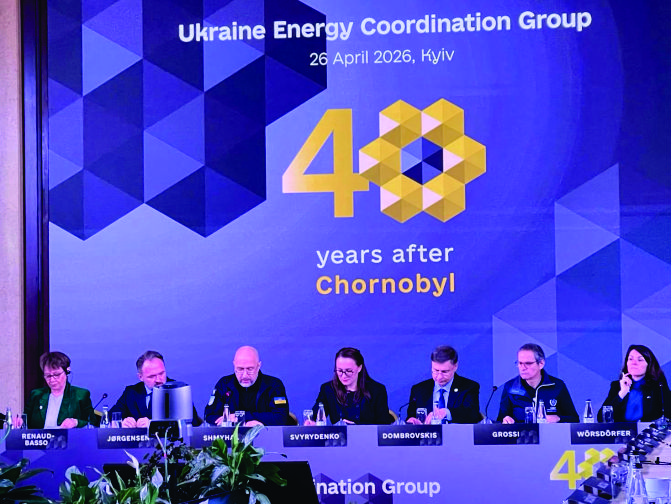
    VIENNA, AUSTRIA (NPA) — March 23, 2026 — The International Atomic Energy Agency (IAEA) has opened its International Conference on the #SafeSecureTransport of Nuclear and Radioactive Material today in Vienna, Austria. The global gathering brings together policymakers, regulators, industry leaders, technical experts, and international organisations to examine how to strengthen the safe and secure transport of nuclear and radioactive material worldwide.

    In his opening remarks, IAEA Director General Rafael Mariano Grossi emphasised that for more than six decades, the global transport system has ensured the safe and secure movement of these materials across borders. He noted that changing conditions — from evolving security threats to new technologies and growing demand — mean the international community cannot afford to rest on past achievements.

    Grossi highlighted that around 15 million packages containing nuclear or radioactive material are transported each year, with about 95 per cent unrelated to nuclear power. These shipments play vital roles in medicine, agriculture, research, and industry. He stressed that as nuclear energy and radiopharmaceutical use expand, transport volumes will only increase.

    The Director General pointed out that denials and delays in shipments remain a systemic problem requiring systemic solutions. He underscored that strong international cooperation, coupled with the essential role of the private sector, will be key to ensuring timely and secure delivery. Grossi reaffirmed the IAEA’s commitment to supporting countries in getting life-saving materials where they are needed, safely and on time.

    Other industry organisations participating in the event include the National Nuclear Regulator of South Africa and Thailand’s Office of the Higher Education Commission (OHEC). Their involvement reflects the broad international collaboration necessary to address both technical and regulatory challenges in nuclear and radioactive material transport.

  • Albanese and Singapore’s Wong unite to safeguard fuel supplies as Middle East conflict rages

    Albanese and Singapore’s Wong unite to safeguard fuel supplies as Middle East conflict rages

    INTERNATIONAL (NPA) — March 23, 2026 — Australian Prime Minister Anthony Albanese on Monday held talks with Singapore’s Prime Minister Lawrence Wong, who also serves as Minister for Finance and Member of Parliament for Marsiling, about strengthening cooperation to secure the fuel Australia needs with its international partners and longstanding friends.

    Albanese, in a statement, noted that he and the Singaporean leader agreed to support the flow of essential goods, including petroleum oils such as diesel, and liquefied natural gas between the two countries. He emphasised: “We’ll keep working closely as we deal with the impacts of the conflict in the Middle East. We’re working with partners around the world to make sure fuel keeps moving to where it’s needed most.”

    According to Albanese, overseas conflict is disrupting global supply chains, and Australia is taking proactive steps to manage the impacts domestically. 

    In a related effort, the Prime Minister also met with Dr Fatih Birol of the International Energy Agency to discuss strategies for working with trading partners to secure fuel supply. The ongoing war in the Middle East — involving the United States, Israel, and Iran — and the closure of the vital Strait of Hormuz has created significant instability in international oil markets.

    Australia consumes around 1.1 million barrels of oil per day, or approximately 33 million barrels per month, underscoring the importance of ensuring steady imports and reliable supply lines during this period of global uncertainty. The move by the Prime Minister is seen as a critical step in navigating a difficult period and safeguarding national energy security.

  • Kim Jong Un reappointed to North Korea’s top policy body

    Kim Jong Un reappointed to North Korea’s top policy body

    INTERNATIONAL (NPA) — March 23, 2026 — North Korea’s Supreme Leader Kim Jong Un has been reappointed as president of the State Affairs Commission, according to reports from the country’s state-run media.

    This latest reappointment underscores Kim’s continued dominance over the nation’s political structure and decision-making processes. It marks the third consecutive time he has been chosen to lead the commission since its establishment in 2016, when it was created as the country’s highest policy guidance body.

    The State Affairs Commission plays a central role in shaping North Korea’s domestic and foreign policy, and Kim’s repeated appointments highlight his firm grip on power and the enduring influence of his leadership within the government framework.

  • Iranian attacks will get to you, Netanyahu warns Europe to join fight

    Iranian attacks will get to you, Netanyahu warns Europe to join fight

    MIDDLE EAST (NPA) — March 22, 2026 — Israeli Prime Minister Benjamin Netanyahu has declared that Europe is not safe from Iranian attacks after Iran reportedly fired an intercontinental ballistic missile over 4,000 km, striking Diego Garcia—an American-British military base in the Indian Ocean.  

    Netanyahu made the declaration when he inspected the impact site of an Iranian missile attack on March 21, 2026, in the Israeli town of Dimona on Saturday.

    He said, “I’ve been warning for years. Leaders of the free world. The leaders of the moderate states, what more are you waiting for? President Trump has correctly said that Israel and the United States, in this great partnership; we are fighting the battle, not only for ourselves but for all of you. And he asks a simple question: where are you? And it’s time to head to President Trump’s call.”

    Dimona hosts a facility widely believed to house the region’s only nuclear arsenal, though Israel has never officially acknowledged possessing nuclear weapons. Iran’s atomic energy organisation accused the U.S. and Israel of targeting Natanz but said no radioactive leakage was reported.

    The Israeli military said interception attempts were made as the missiles approached, but it is still unclear if the nuclear site was hit. Iranian state television framed the strike as a “response” to Natanz. 

    The UN nuclear watchdog, the International Atomic Energy Agency (IAEA), has not yet issued a statement confirming damage or a leak at the site, as it urged restraint to avoid the risk of a nuclear accident.

  • Zelenskyy accuses Russia of massive drone strikes, wants sanctions in place

    Zelenskyy accuses Russia of massive drone strikes, wants sanctions in place

    INTERNATIONAL (NPA) — March 22, 2026 — Ukrainian President Volodymyr Zelenskyy has alleged that Russia launched nearly 1,550 attack drones, more than 1,260 guided aerial bombs, and two missiles against Ukraine in the past week.

    In a statement on Sunday, Zelenskyy wrote: “Over the past week, Russia launched nearly 1,550 attack drones against Ukraine, more than 1,260 guided aerial bombs, and two missiles. Over that same week, due to the easing of sanctions, Russia increased its crude oil sales to finance its war.”

    He warned that such revenues give Moscow “a sense of impunity” and the ability to prolong the war, calling for sanctions to remain in place to deny Russia the means to continue financing aggression.

    Zelenskyy added, “Russia’s shadow fleet must not feel safe in European waters or anywhere else. Tankers that serve the war budget can and must be stopped and blocked, not just let go. I thank every leader who makes such decisions. This is what brings a dignified peace closer.”

    The Ukrainian leader stressed that sustained international resolve is essential to bring peace closer and prevent Russia from exploiting oil revenues to fuel its military campaign.

  • Nigeria clarifies UK migration partnership to correct misinformation

    Nigeria clarifies UK migration partnership to correct misinformation

    ABUJA, NIGERIA (NPA) — March 22, 2026 — The Nigerian government has issued a clarification on the recently signed Nigeria-UK migration partnership, stressing that contrary to circulating claims, the agreement does not compel Nigeria to accept foreign nationals.

    In a press statement released on March 21, Bayo Onanuga, Special Adviser to the President on Information and Strategy, explained that the Memorandum of Understanding (MoU) signed during President Bola Ahmed Tinubu’s state visit to the UK is designed to strengthen bilateral cooperation on migration management. He emphasised that the MoU builds on earlier accords signed in 2012, 2017, and 2022, and is valid for five years, renewable for another five years.

    The agreement, signed by Nigeria’s Minister of Interior and the UK Home Secretary, establishes a framework for regulated migration flows and cooperation against irregular migration. It also provides for the dignified return of nationals who no longer have the right to remain in either country.

    Officials highlighted that repatriated individuals must be verified as genuine nationals, treated with dignity, and allowed to carry personal belongings. Reintegration support is included, ranging from short-term reception and transportation assistance to longer-term opportunities in education, entrepreneurship, and vocational training.

    Nigeria retains full authority over the documentation of returnees, with the Nigeria Immigration Service responsible for issuing all required documents. Any identification errors must be corrected at the requesting country’s expense. The MoU also outlines procedures for appeals under human rights legislation, ensuring that cases involving long-term residents or vulnerable individuals are reviewed carefully.

    Onanuga urged media organisations to verify information before publication, warning that misinformation undermines public confidence. He stressed that the partnership is designed to protect rights, safeguard national interests, and strengthen Nigeria’s global standing while deepening ties with the United Kingdom.

  • Nigeria and China: Shared future, shared journey, building eco-friendly modernisation together

    Nigeria and China: Shared future, shared journey, building eco-friendly modernisation together

    Yu Dunhai, China’s Ambassador to Nigeria

    OPINION (NPA) — March 21, 2026 — Balancing development with environmental protection is a major common challenge for the world today.

    It is also an eternal task for the sustainable development of human society.

    As the world’s largest developing country, China has achieved a green development miracle that has captured global attention.

    This has contributed Chinese wisdom, solutions, and strength to global ecological and environmental governance and the building of a clean and beautiful world.

    The year 2026 marks the beginning of China’s 15th Five-Year Plan period.

    The recently concluded “Two Sessions”, the annual sessions of China’s top legislature and political advisory body, reviewed and approved the Outline of the 15th Five-Year Plan and the Ecological and Environmental Code of the People’s Republic of China.

    This paints a blueprint for China’s high-quality economic and social development and comprehensive green transition.

    The 15th Five-Year Plan sets the development goals for the next five years, and explicitly calls for accelerating the comprehensive green transition of economic and social development, and actively participating in and leading global climate governance.

    This also demands adherence to the principle of common but differentiated responsibilities, and fully implementing the United Nations Framework Convention on Climate Change and its Paris Agreement, and continuously deepening South-South cooperation on climate change.

    The Ecological and Environmental Code directly addresses global environmental challenges. Notably, it features a standalone section on “Green and Low-Carbon Development,” a pioneering initiative in global legislative practice.

    When green development becomes a national strategic goal, and the vision of harmonious coexistence between humanity and nature is enshrined in law, the path towards sustainable development for mankind is bound to become clearer and broader, thanks to China’s green commitment.

    China has always been a steadfast practitioner of ecological civilisation, and has integrated ecological progress into the overarching plan for national development, taking concrete actions to fight pollution.

    It became the first developing country to implement systematic PM2.5 pollution control, and has taken the lead in establishing and implementing an “ecological conservation red line” system, accelerating the development of the world’s largest national park system.

    China has achieved consecutive years of “double reduction” in desertified and sandified land, and currently contributes one-quarter of the world’s newly increased green area, making it the fastest and most effective country in “greening” the planet.

    Every patch of green across the land of China vividly testifies to its practice of the concept of ecological civilisation.

    China has always been a pragmatic actor in global climate governance, conscientiously fulfilling its obligations under the Convention.

    It has solidly advanced its goals of peaking carbon emissions and achieving carbon neutrality, by committing to achieving the largest reduction in carbon emission intensity in the shortest time globally.

    China continues to optimise its energy structure, having built the world’s largest and fastest-growing renewable energy system and the most complete new energy industrial chain.

    For ten consecutive years, China has ranked first globally in installed capacity for photovoltaic and wind power; its hydropower and biomass power generation installed capacities remain the largest worldwide.

    It currently supplies over 80 per cent of the world’s photovoltaic components and 70 per cent of wind power equipment.

    These tangible figures amply demonstrate that China is not just an active advocate but a down-to-earth implementer in climate governance.

    China has always been an active leader in global environmental governance, as a participant, contributor, and leader in the global endeavor for ecological civilisation.

    The country firmly upholds multilateralism and strives to build a fair, reasonable, and mutually beneficial global environmental governance system.

    It vigorously promotes green development under the Belt and Road Initiative, deeply engages in global ecological and environmental governance, and works tirelessly to build a clean and beautiful world.

    China actively advances South-South cooperation on climate change, increasing support for countries and regions with fragile ecosystems and weak green development capacities.

    It has collaborated on green energy projects with over 100 countries and regions. As the world’s largest exporter of clean technology, China has created 46 per cent of global jobs in the renewable energy sector, injecting strong momentum into worldwide green development.

    China and Africa have always been like-minded companions on the journey to address climate change and promote green development.

    African countries have drawn on China’s experience with the Three-North Shelterbelt Forest Program to implement the Great Green Wall Initiative, effectively advancing efforts to combat desertification in the Sahara.

    In the clean energy sector, China has implemented hundreds of cooperative projects in Africa. The installed capacity of photovoltaic power stations built through China-Africa cooperation alone has exceeded 1.5 gigawatts.

    China’s Juncao technology has been introduced to Africa, becoming an exemplary model of “small and beautiful” livelihood cooperation.

    Cooperation on green technologies like wind power, geothermal energy, and solar power assists African nations in their energy transition.

    Through these tangible practices of green cooperation, China and Africa are setting a prime example of solidarity, cooperation, and shared development for the Global South.

    The new journey of the 15th Five-Year Plan period has commenced, opening a new chapter in China’s ecological civilisation development.

    Standing at this new historical starting point, China is promoting a comprehensive green transition of its economic and social development with unprecedented determination and effort.

    Building an ecological civilisation concerns the common future of humanity. China will unwaveringly pursue a path of green, low-carbon, and high-quality development.

    It will continue to contribute wisdom and solutions to global green development, and work hand in hand with countries around the world on the new journey towards an eco-friendly modernisation.

    As a major African country and an important global economy, Nigeria plays an irreplaceable role in addressing climate change and promoting regional green development.

    China is ready to work with Nigeria to strengthen policy dialogue, share governance experience, and deepen practical cooperation in areas such as clean energy, disaster prevention and mitigation, desertification control, and green finance.

    Together, we can jointly paint a beautiful picture of harmonious coexistence between humanity and nature.

    This can be done by making the Niger River clearer, the Gulf of Guinea bluer, and ensuring that the green bond of China-Nigeria friendship is passed on with everlasting vitality from generation to generation.(NAN).