Category: Europe-Asia

  • Global migration crisis: 22 migrants die off Greek coast 

    Global migration crisis: 22 migrants die off Greek coast 

    INTERNATIONAL, 29 March 2026 (NPA) — At least 22 migrants have died this week off the Greek coast after spending six harrowing days adrift in a dinghy bound for Europe. A total of 26 survivors, including a woman and a child, were rescued on Friday by a European border agency vessel and taken to a hospital in Heraklion, Crete.

    Reports indicate the boat departed Tobruk in eastern Libya on 21 March, but poor weather, combined with a lack of food and water, contributed to the deaths, according to the Greek coastguard.

    This tragedy comes against the backdrop of alarming global statistics. In 2025, the International Organization for Migration (IOM) recorded 7,667 migrant deaths or disappearances worldwide, with Africa’s sea routes among the deadliest. The Mediterranean crossing alone claimed 2,108 lives, while another 1,047 migrants perished attempting to reach Spain’s Canary Islands.

    The report noted that an average of 21 migrants died every day in 2025, though experts believe the true toll is higher due to unrecorded cases. Human rights groups argue that restrictive border policies push migrants onto more hazardous routes, increasing fatalities.

    The 2025 figures reveal a devastating toll of nearly 8,000 deaths worldwide, with African sea crossings disproportionately lethal. The Mediterranean and Canary Islands routes alone accounted for more than 3,100 lives lost, underscoring the urgent need for safer migration pathways, stronger rescue operations, and international cooperation to address the crisis.

  • Peter Obi urges unity beyond tribe and tongue, harnessing Nigeria’s diversity for strength

    Peter Obi urges unity beyond tribe and tongue, harnessing Nigeria’s diversity for strength

    ABUJA, NIGERIA (NPA) — 27 March 2026 — Mr Peter Obi, leader of the All Democratic Congress (ADC) and presidential aspirant for the 2027 general elections, on Thursday issued a statement titled “Beyond Tribe and Tongue”, stressing that Nigeria’s mosaic of tribes, languages and religions should serve as a source of strength rather than division.

    Obi cited India as a classic example, noting that despite its vast landmass—nearly three and a half times larger than Nigeria—and its diverse mix of religions and cultures, it has evolved into a global benchmark for democracy. With a population exceeding one billion and close to one billion registered voters, of whom about 700 million typically participate in elections, India has established a system widely regarded as free, fair and credible. Its electoral processes are conducted with remarkable efficiency, often recorded in real time and largely free of glitches.

    The former Labour Party presidential candidate in the 2023 election further observed that beyond the ballot, India has emerged as a global leader in STEM—science, technology, engineering and mathematics—while transforming its healthcare system, extending medical insurance to over half of its population. These achievements, he argued, are the result of deliberate efforts to strengthen centripetal forces—those elements that bind a nation together—rather than amplify centrifugal impulses of division that continue to challenge Nigeria.

    “When I advocate for the unity of Nigeria, I do so with deep sincerity and conviction. Our cohesion is an indispensable foundation for peaceful coexistence, sustainable development and enduring national stability. I urge my fellow Nigerians to reflect on the example of India—a nation with a far larger population and an even more intricate web of ethnic and religious diversity—yet one that continues to forge unity from complexity,” Obi stated.

    The statement reads in part: “Ultimately, the true fault lines in our national life are neither tribal nor religious. No tribe or religion enjoys cheaper food in the market, nor is any group more secure than another. Our real challenge lies in competence, capacity, compassion and the commitment to build a better country. Only then can we move beyond tribe and tongue and create a nation that truly works for all.”

  • China accuses U.S. of nuclear ‘smears’, demands disarmament leadership

    China accuses U.S. of nuclear ‘smears’, demands disarmament leadership

    INTERNATIONAL (Agency Report) — 27 March 2026 — China’s Ministry of National Defence on Thursday rejected recent United States allegations of nuclear testing as “groundless smears” and urged Washington to honour its responsibilities on disarmament.

    Spokesperson Jiang Bin, responding to media questions, stressed that China maintains a strictly self-defensive nuclear strategy, adheres to a no-first-use policy, and pledges never to use or threaten nuclear weapons against non-nuclear states or nuclear-weapon-free zones. He said China’s nuclear capability remains at the minimum required for national security and that Beijing does not engage in an arms race.

    Jiang highlighted China’s active role in the review process of the Treaty on the Non-Proliferation of Nuclear Weapons and its participation in meetings of the five recognised nuclear powers. He noted that Beijing continues dialogue on arms control with all parties.

    Turning his criticism on Washington, Jiang accused the U.S. of undermining global stability by withdrawing from treaties, investing heavily in upgrading its nuclear triad, developing the “Golden Dome” missile defence system, and deploying intermediate-range weapons in the Asia-Pacific. He also cited the lapse of the New START treaty, U.S. interest in resuming nuclear testing, and double standards in non-proliferation.

    “These measures have seriously weakened global strategic stability,” Jiang said. “As the country with the largest nuclear arsenal, the U.S. should earnestly fulfil its special and primary responsibility for nuclear disarmament, make substantial reductions in its arsenal, and create conditions for other nuclear-weapon states to participate in disarmament.” (Xinhua/NAN).

  • Nigeria, EU strengthen strategic partnership at Ministerial Dialogue, issue joint Communiqué

    Nigeria, EU strengthen strategic partnership at Ministerial Dialogue, issue joint Communiqué

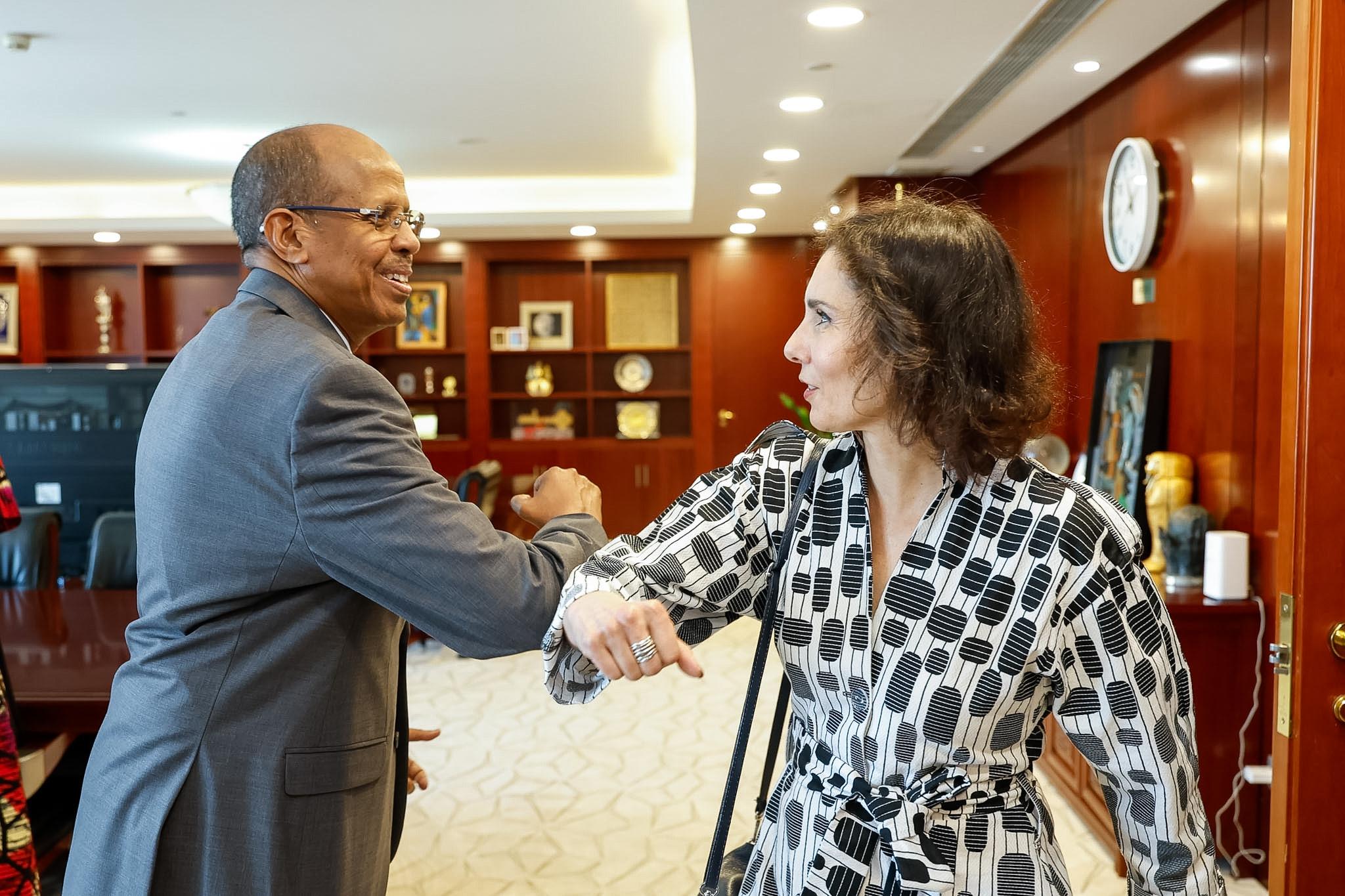
    ABUJA, NIGERIA (NPA) — 26 March 2026 — Nigeria and the European Union (EU) have reaffirmed their strategic partnership, pledging deeper cooperation across peace, security, trade, climate, migration, and democratic governance during the Eighth Ministerial Dialogue held in Abuja. The meeting was co-chaired by Nigeria’s Foreign Minister, H.E. Yusuf Maitama Tuggar, and the EU’s High Representative for Foreign Affairs and Security Policy, H.E. Kaja Kallas.

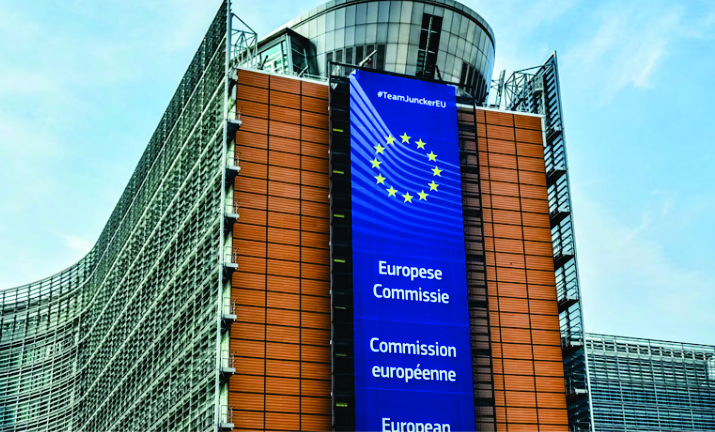
    The dialogue provided an opportunity to consolidate recent engagements and advance practical cooperation. At a time of global geopolitical uncertainty, both sides stressed the importance of reinforcing alliances that deliver tangible benefits to citizens. President Bola Ahmed Tinubu was formally invited to Brussels by the President of the European Council, with Tinubu expressing readiness to accept.

    Multilateralism and Global Peace

    Nigeria and the EU reiterated their commitment to multilateralism, democracy, human rights, and the rule of law. They emphasised protecting fundamental freedoms, including gender equality and freedom of expression. The EU reaffirmed support for reforming the UN Security Council to give Africa stronger representation.

    Both sides restated support for peace in conflict zones such as Ukraine, the Middle East, Sudan, South Sudan, the Democratic Republic of Congo, Somalia, and the Sahel.

    Climate, Energy, and West African Security

    Climate change and energy transition featured prominently. Nigeria and the EU agreed to dialogue on renewable energy investment in solar, wind, and clean hydrogen, recognising Nigeria’s potential. They also pledged to strengthen climate resilience, particularly in the Lake Chad Basin.

    On regional security, the EU acknowledged Nigeria’s pivotal role in safeguarding democracy and stability in West Africa. Both sides pledged enhanced collaboration on counter-terrorism, intelligence sharing, and preventing the financing of terrorism. They expressed readiness to support the operationalisation of the ECOWAS Standby Force.

    Peace, Security, and Humanitarian Action

    The communiqué highlighted the first Peace, Security and Defence Dialogue held in Brussels in February 2026. The EU signalled readiness to step up support for Nigeria’s security challenges, including possible assistance under the European Peace Facility and renewed support for the Multi-National Joint Task Force around Lake Chad.

    Both sides emphasised protecting civilians, particularly children affected by terrorism, and expressed concern over the deteriorating situation in the Sahel. Humanitarian cooperation remains central, with the EU committing €33 million in 2026 to support vulnerable populations in Nigeria’s North-East and North-West.

    Migration and Mobility

    Migration was recognised as a multidimensional issue requiring humane responses. Nigeria and the EU reaffirmed readiness to deepen cooperation on migration governance, tackling irregular migration, trafficking, and smuggling.

    A milestone was the initialling of the EU–Nigeria Readmission Agreement, with both sides expressing willingness to expedite its signature. The agreement will enhance cooperation on return, readmission, and reintegration, while also exploring legal migration pathways, including a potential Talent Partnership. Dialogue on visa policy was also agreed.

    Trade, Investment, and Global Gateway

    The EU remains Nigeria’s largest trading and investment partner. Both sides welcomed progress from the Senior Officials’ Trade and Investment Dialogue and technical working groups. Nigeria was encouraged to adopt the draft bill on Geographical Indications to strengthen trade facilitation.

    The EU’s Global Gateway strategy was highlighted as a driver of social, green, and digital transition. Current priorities in Nigeria include green energy, agriculture, digitalisation, transport, health, and education. Notable projects include the Omi-Eko electric waterways system in Lagos, supported by €361 million from the EU, EIB, and France. Additional initiatives announced include loans for healthcare manufacturing, agriculture value chains, and optic fibre rollout.

    Science, Technology, and Digital Cooperation

    Nigeria and the EU welcomed negotiations on a science, technology, and innovation agreement, expected to be finalised by June 2026. Nigerian participation in EU research programmes has doubled under Horizon Europe compared to Horizon 2020.

    Education cooperation under Erasmus+ continues to thrive, with Nigeria ranking first in Africa for Erasmus Mundus scholarships. Both sides pledged to expand opportunities for Nigerian institutions and students, particularly in renewable energy, agriculture innovation, and digital entrepreneurship.

    Digital transformation was acknowledged as a pillar of sustainable development. The EU–Nigeria Digital Economy Package will focus on infrastructure, eGovernance, cybersecurity, and digital skills development.

    Looking Ahead

    The dialogue concluded with both sides agreeing to hold regular annual ministerial dialogues, with the ninth session scheduled for Brussels in 2027. The EU delegation expressed gratitude for Nigeria’s hospitality and reaffirmed commitment to deepening cooperation across all areas of mutual concern.

  • IDF confirms killing of IRGC Navy Commander Alireza Tangsiri and Intelligence Chief Behnam Rezaei

    IDF confirms killing of IRGC Navy Commander Alireza Tangsiri and Intelligence Chief Behnam Rezaei

    MIDDLE EAST (NPA) — 26 March 2026 — The Israel Defence Forces (IDF) have officially announced the killing of Admiral Alireza Tangsiri, Commander of the Islamic Revolutionary Guard Corps (IRGC) Navy.

    In a statement, the IDF noted that Tangsiri had served in the role for the past eight years, following earlier senior positions within the IRGC Navy, including overseeing what Israel described as the regime’s terror activities.

    The IDF accused him of responsibility for repeated strikes against oil tankers and trading vessels, portraying him as a central figure who posed a threat to maritime navigation and freedom of trade in the Strait of Hormuz and the wider international maritime domain.

    According to the statement, during Operation Roaring Lion, Tangsiri directed efforts to close the Strait of Hormuz and oversaw maritime attacks against countries in the Middle East, as well as against U.S. and allied energy infrastructure.

    The IDF added that he was directly implicated in disrupting the global economy and had been subject to numerous international sanctions due to his involvement in attacks on vessels in international waters, as well as in the transfer of air defence systems and unmanned aerial vehicles (UAVs) to Russia and Syria.

    The statement further revealed that another senior Iranian military official was killed alongside Tangsiri — Behnam Rezaei, Head of the IRGC Navy Intelligence Directorate. Rezaei was said to have been responsible for intelligence collection on regional countries and for leading cooperation with various intelligence organisations.

  • EU parliament endorses talks on regulation for returning illegal immigrants

    EU parliament endorses talks on regulation for returning illegal immigrants

    INTERNATIONAL (NPA) — 26 March 2026 — The European Parliament has endorsed the opening of negotiations with the Council on a new legal framework for the return of people without the right to remain in the European Union.

    With 389 votes in favour, 206 against and 32 abstentions, MEPs agreed to proceed to the next stage of the legislative process for an updated EU common system for the return of third-country nationals staying illegally in the EU.

    According to a statement issued by Polona Tedesko, Press Officer (SI), the vote on Thursday followed three separate requests by the S&D, Greens/EFA, and The Left political groups challenging the 9 March 2026 decisions taken in the Civil Liberties Committee, in line with rule 72 of Parliament’s rules of procedure.

    The statement added that rapporteur Malik Azmani (Renew, NL) will lead Parliament’s negotiating team. Parliament’s negotiating position and a summary of key points are available, with the first round of negotiations with the Cyprus Presidency scheduled to take place shortly.

    If the regulation is eventually adopted, illegal immigrants found without legal grounds to remain in the EU would face formal removal procedures. These would include identification, detention where necessary, and repatriation to their country of origin or transit, with safeguards in place for vulnerable individuals such as minors and asylum seekers.

    The reforms aim to strengthen coordination between member states, improve efficiency, and deliver measurable results in managing migration across the Union.

  • BREAKING: UN declares transatlantic slave trade the gravest crime against humanity

    BREAKING: UN declares transatlantic slave trade the gravest crime against humanity

    UNITED NATIONS (NPA) — March 25, 2026—The United Nations General Assembly today passed a historic resolution declaring the trafficking of enslaved Africans and the transatlantic slave trade as the gravest crime against humanity. The resolution, published by the UN Media Liaison Unit (MALU), was sponsored by more than 50 countries and underscores the enduring impact of slavery and colonialism on Africans and people of African descent worldwide.

    The resolution reaffirms the principles of the UN Charter, the Universal Declaration of Human Rights, and international covenants prohibiting slavery. It recalls historic milestones, including the Durban Declaration, the International Decade for People of African Descent, and the Ark of Return memorial at UN Headquarters, while stressing that slavery’s legacies persist in structural racism, inequality, and underdevelopment.

    Delegates emphasized that the transatlantic slave trade represented “a profound rupture in human history,” involving the forced capture, commodification, and transportation of millions of Africans over four centuries. The resolution highlights the exceptional brutality and systemic nature of racialized chattel enslavement, noting its codification in laws such as the Barbados Slave Code and the French Code Noir, which legally defined Africans as property.

    The Assembly condemned slavery as “the most inhumane and enduring injustice against humanity” and declared that crimes related to the trafficking of enslaved Africans are violations of jus cogens norms, not subject to statutory limitations. It affirmed that grave crimes generate continuing obligations until addressed through truth, justice, and reparations.

    The resolution calls on Member States to engage in inclusive dialogue on reparatory justice, including formal apologies, restitution, compensation, rehabilitation, and guarantees of non-repetition. It urges the restitution of cultural properties and artifacts taken during slavery and colonialism, and encourages international cooperation to promote cultural rights for present and future generations.

    The Assembly also requested the UN Secretary-General to strengthen coordination on remembrance, education, and research related to slavery and its legacies, and to report back at the 82nd session on progress made. Regional organizations such as the African Union and Caribbean Community were invited to collaborate on frameworks for reparatory justice and reconciliation.

    By passing this resolution today, the General Assembly reaffirmed its collective commitment to historical justice, healing, and sustainable peace. It stressed that addressing the legacies of slavery is essential to combating systemic racism and ensuring dignity and equality for Africans and people of African descent across the globe.

  • Ukraine’s drone offensive halves Russia’s oil shipments as global oil markets hangs in the balance

    Ukraine’s drone offensive halves Russia’s oil shipments as global oil markets hangs in the balance

    INTERNATIONAL (NPA) — March 25, 2026: Russia’s ambitions to cash in on soaring global oil demand amid Middle East turmoil have suffered a devastating setback, as Ukrainian drone attacks cripple nearly half of its export capacity.

    Massive fires erupted at Russia’s Baltic Sea ports, Primorsk and Ust-Luga, forcing the suspension of oil shipments for the second time in a week. The Ust-Luga terminal, which handles about 700,000 barrels of oil daily, was struck overnight, sparking an inferno that continues to rage. The port is a vital hub for petroleum products, coal, and fertilizers.

    Primorsk, Russia’s largest Baltic oil port with a capacity of 1 million barrels per day, was also targeted earlier on March 22. That strike ignited fuel storage tanks, halting operations and compounding the disruption.

    The scale of the damage is staggering: about 2 million barrels per day—roughly 40% of Russia’s export capacity—has been knocked offline. Novorossiysk, another critical port on the Black Sea, has also faced interruptions following a drone attack earlier this month.

    MarineTraffic data shows at least 50 vessels stranded in the Gulf of Finland, awaiting clearance to dock at the paralyzed ports. Local media, including Helsingin Sanomat, report that smoke from Ust-Luga’s burning fuel tanks—33 in total, with capacity exceeding 500 rail tank cars—is visible from Finland’s coastline, stretching for dozens of kilometers.

    Russia’s oil lifeline to global markets now hangs in the balance, as Ukraine’s precision strikes continue to dismantle Moscow’s export infrastructure.

  • Philippines deploys vessels to shield fishermen amid Chinese harassment in Bajo de Masinloc

    Philippines deploys vessels to shield fishermen amid Chinese harassment in Bajo de Masinloc

    INTERNATIONAL (NPA) — March 24, 2026 — The Philippine Coast Guard (PCG) and Bureau of Fisheries and Aquatic Resources (BFAR) have deployed vessels to safeguard Filipino fishermen following continued harassment by Chinese Coast Guard ships in the Bajo de Masinloc area. The move comes after more than 20 Filipino fishing boats reported intimidation last weekend.

    In response, two PCG vessels and five fishery patrol boats were dispatched to the area, providing protection and logistical support such as fuel subsidies, food packs, and ice to extend fishing operations and ease rising fuel costs.

    PCG Spokesperson on West Philippine Sea Concerns, Jay Tarriela, confirmed the deployment, noting that PCG Commandant Admiral Ronnie Gil Gavan also ordered a Maritime Domain Awareness (MDA) flight. The aerial patrol documented six China Coast Guard vessels, 20 China Maritime Militia ships, and one People’s Liberation Army Navy warship operating nearby.

    Significantly, the PCG recorded a China Coast Guard vessel announcing via live radio broadcast its intent to conduct a “clearing operation” within coordinates spanning 15°05’N, 118°10’E to 14°14’N, 118°25’E.

    The PCG reaffirmed its commitment to President Ferdinand Marcos Jr.’s directive to defend Philippine sovereignty and maritime rights in the West Philippine Sea, pledging to uphold international law and protect the livelihoods of Filipino fishermen against external threats.

  • EU announces €288m grant to Nigeria’s healthcare, agriculture, and digital sectors

    EU announces €288m grant to Nigeria’s healthcare, agriculture, and digital sectors

    ABUJA, NIGERIA (Agency Report) — March 24, 2026 — The European Union (EU) delegation to Nigeria and ECOWAS has announced €288 million in support for Nigeria’s healthcare, agriculture, finance, migration, climate, and digital public infrastructure sectors.

    The announcement was made at the EU-Nigeria Ministerial Conference in Abuja under the EU-Nigeria Partnership. Stefano Signore, Director-General for International Partnerships at the European Commission, said the project represents accelerated investment under the EU’s Global Gateway Strategy. He noted that health and agriculture are priorities, aimed at improving standards, infrastructure, local manufacturing, and inclusion. He also emphasised stronger cooperation on sustainable migration, providing better life options for returnee migrants.

    Minister of Budget and Economic Planning, Abubakar Bagudu, said the initiative builds on the 2023 EU-Nigeria Strategic Dialogue, which launched the EU’s Global Gateway Strategy in Nigeria. Bagudu described the partnership as a deepening of ties anchored on mutual respect, shared prosperity, and sustainable investment. Represented by Minister of State Doris Anite-Uzoka, he highlighted reforms under President Bola Tinubu to stabilise the economy, strengthen fiscal sustainability, and create an enabling environment for private-sector growth.

    Bank of Industry (BoI) CEO Olasupo Olusi said the partnership with the European Investment Bank channels long-term financing into healthcare and agriculture, central to Tinubu’s agenda for resilience and inclusive growth. Finland’s Under Secretary of State for Foreign Trade, Jarno Syrjaia, announced Finland’s lead role in strengthening Nigeria’s digital public services and training three million technical talents. Finland’s HAUS and Estonia’s ESTDEV will implement the initiative, bringing European expertise in digital government and innovation.

    Uche Amaonwu, Country Director of the Gates Foundation, stressed the importance of supporting health manufacturing. He praised the BoI and PVAC for mobilising financing facilities to meet the needs of Nigerian health manufacturers.

    Breakdown of the €288m package includes: €23m for digital infrastructure, €108m in grants and loans to government, €50m for healthcare manufacturing, €5m for health and nutrition training, €85m for agribusiness lending, €1m for climate/agriculture expertise, and €16m for migration governance.

    The initiative underscores a modern partnership focused on shared prosperity, sustainable investment, and resilience.