Category: Education

  • Umo Eno inspects Agric Equipment Leasing Company, expresses satisfaction with progress

    Umo Eno inspects Agric Equipment Leasing Company, expresses satisfaction with progress

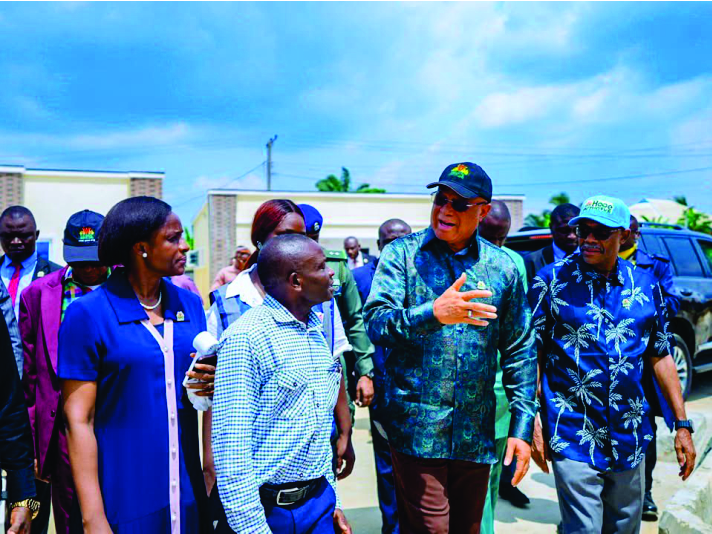
    UYO, NIGERIA — (NPA) MARCH 14 — The Governor of Akwa Ibom State, Pastor Umo Eno, has inspected ongoing work at the state’s Agric Equipment Leasing Company, designed to provide tractors and modern farming equipment to farmers at subsidised rates. The initiative aims to boost productivity and support large-scale agriculture across the state.

    Located at Ekpri Nsukara in Uyo, the facility is a flagship project of the government to promote mechanised farming. In a statement issued March 12, the governor confirmed that the centre will soon be commissioned to deliver essential tools needed to enhance food production.

    “With over 25 tractors already in place, our goal is to make farming more efficient, increase food production, and improve the earnings of our farmers,” he said. He further noted that as the rainy season approaches, the state is set to commence its tree-crop revolution programme, with palm seedlings ready for distribution to farmers.

    Governor Eno reaffirmed that agriculture remains a critical pillar of his ARISE Agenda, stressing that investments in mechanisation and crop diversification are central to achieving food security and empowering rural communities.

  • Umo Eno rolls out red carpet for young scholars, vows brighter future through bold education policy

    Umo Eno rolls out red carpet for young scholars, vows brighter future through bold education policy

    UYO, NIGERIA — (NPA) MARCH 14 —The Governor of Akwa Ibom State, Pastor Umo Eno, on Friday welcomed pupils of King’s Kids Christian Montessori School during a guided tour of the Government House, Uyo.

    In a statement issued Saturday, the governor expressed delight at the visit, noting that he always makes time for children because they represent the future of the state and the nation. He emphasised the responsibility of leaders to provide a peaceful and secure environment where young people can learn, grow, and pursue their dreams.

    The governor encouraged the pupils to study diligently and aspire to become responsible leaders of tomorrow, while commending their teachers for their dedication in shaping young minds. “It was my pleasure to receive the pupils of King’s Kids Christian Montessori School, Uyo, who visited Government House to learn about the workings of government,” the statement read.

    He added, “I encouraged them to study hard and become responsible leaders of tomorrow, and I commend their teachers for their dedication. It was a joy to interact with them and to receive their Award of Leadership Excellence.”

    The governor further noted that Akwa Ibom State’s education policy is anchored on free and compulsory schooling, improved literacy, and human capital development. By investing in teachers, infrastructure, and universal basic education, the state aims to empower children with the skills and opportunities needed to thrive, ensuring that today’s pupils become tomorrow’s innovators and leaders.

  • Nigeria reaffirms commitment to education reform at Commonwealth Celebration

    Nigeria reaffirms commitment to education reform at Commonwealth Celebration

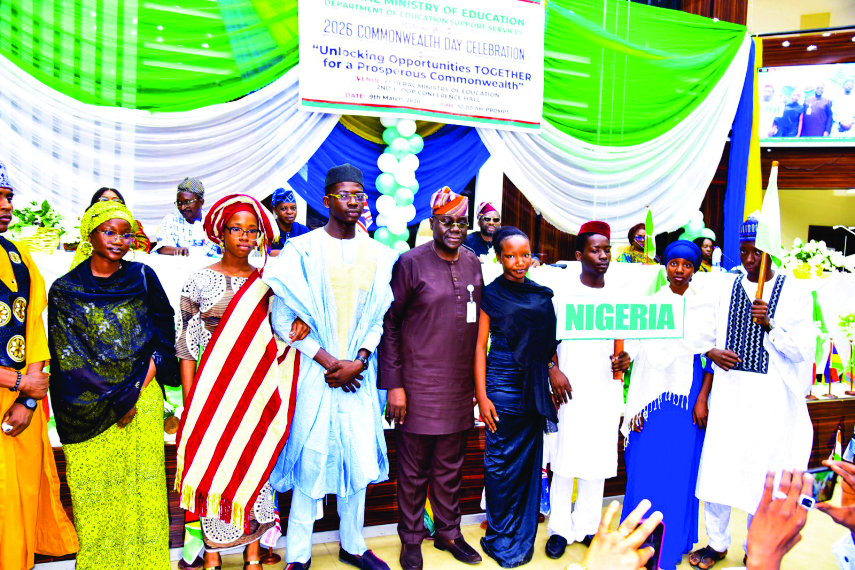
    ABUJA, NIGERIA (NPA) — March 12, 2026 — Nigeria’s Federal Ministry of Education has reiterated its dedication to strengthening education reforms, expanding opportunities for young Nigerians, and deepening collaboration with other Commonwealth nations to advance sustainable development and shared prosperity. This was highlighted during the 2026 Commonwealth Celebration held at the ministry’s headquarters in Abuja.

    The Minister of Education, Dr. Maruf Tunji Alausa, emphasized that the 2026 theme, “Unlocking Opportunities Together for a Prosperous Commonwealth,” aligns with President Bola Ahmed Tinubu’s Renewed Hope Agenda, which prioritizes education reform, innovation, human capital development, and inclusive economic growth.

    Alausa underscored the Federal Government’s continued investment in Technical and Vocational Education and Training (TVET) as a key driver of national progress. He revealed that about 250,000 Nigerians are currently enrolled in programmes across technical colleges, skills centres, and accredited vocational institutions, where they are gaining industry-relevant skills essential for the modern workforce.

    In a statement on Thursday, the ministry noted that the Permanent Secretary, Mr. Abel Enitan, described education as the most powerful tool for unlocking opportunities, reducing inequality, and driving national development. He stressed the importance of leveraging Commonwealth partnerships to strengthen learning, foster research collaboration, and promote youth empowerment initiatives.

  • MICHAEL SPENCE: Adam Smith’s philosophy still sheds light on how economies grow, trade, and respond to change

    MICHAEL SPENCE: Adam Smith’s philosophy still sheds light on how economies grow, trade, and respond to change

    OPINION (NPA)— March 9, 2026 — When The Wealth of Nations was published on March 9, 1776, there was no such thing as an economics profession. Two hundred fifty years on, there is no shortage of economists, and Adam Smith is widely regarded as the godfather of their profession.

    If asked, Smith would have probably described himself as a Scot who made a living as a moral philosopher. And as for his famous book, it came to be seen as a true expression of the Enlightenment. This period of cultural and intellectual flourishing helped create an alternative vision for humanity based on reason, science, individual liberty, and human dignity.

    Despite detours and missteps, it is a moral frame of reference that resonates to this day. It is why we continue to listen to what Smith had to say.

    He illuminated the structural foundations of modern economies. Although he is best known for his idea of the “invisible hand,” Smith gave us an insight that is even more important: Moving from a static, subsistence economy to increasing income and prosperity requires what he called the “division of labor.” 

    Without this specialization, one cannot achieve dramatic increases in productivity coming from scale economies, learning curves, and improved conditions for innovation. Like all scientific discoveries, it seems obvious after the fact. 

    Division of labor

    For specialization to work, we need two structural elements, which are mutually reinforcing.

    One is trade, which is implied by specialized production. Indeed, while the supply side of the economy is specialized, the demand side is not. Hence the need for an “invisible hand” in the form of trade, a market system using prices and currencies. Trade is efficient, unless there are glaring externalities and informational gaps and asymmetries. It is economical by not requiring the collection of vast amounts of centralized information. And as a decentralized resource-allocation system, it allows for diverse preferences and creates incentives for innovation.

    Of course, Smith was no stranger to trade. His father served as the customs agent in his hometown and birthplace, Kirkcaldy, and Smith himself served as the commissioner of customs for Scotland from 1778 to 1790. While he is sometimes unfairly accused of codifying a system that glorifies selfishness, he envisioned the opposite: an economy with moral underpinnings and supporting structures, such as regulations, government revenues, and a stable currency.

    The second structural element needed for specialization is a sufficiently large market. In other words, an economy needs to generate enough demand to support the specialized producer.  Otherwise, the producing entity will have to reduce its level of specialization. Think of the general store in the American West giving way to specialized shops as the population grew and became richer and urban centers expanded.

    This is especially relevant for high-tech industries, where the total addressable market is central to assessing investment returns. The economics are clear: Developing new technology involves up-front investment. And the return on that investment is proportional to the size and scope of the market for the innovation. As an aside, the return on investment is also proportional to the duration of the market opportunity—until it is superseded by the next innovation. This is where the Schumpeterian dynamics enter the model.

    All these factors—from specialization and trade to finding ways to access large potential markets—lie at the heart of any successful development model. They are complementary and structural. It is their coevolution that produces the desired result: rising productivity and incomes, economic growth, increasing purchasing power, and the resulting expansion of domestic markets for products and services that, by virtue of growth, become more affordable and desired.

    Technology and development

    Let’s remember that Smith lived at the very beginning of the British Industrial Revolution. To my mind, it is simply stunning that he understood, and to some extent foresaw, the structural features and dynamics that have driven much of the evolution of the global economy in which we now live.

    Time and again, technology has played an essential role in directly driving productivity growth, but also in specialization via a connectivity channel, hence expanding the size of the addressable market. Smith may have seen James Watt’s steam engine (1769), which was more efficient than earlier models; if so, he would have certainly understood its potential in factories and transportation. He did not live to see the first steam locomotive, developed by Richard Trevithick in 1804. Nor did he get to see our modern digital economy, including the latest AI tools.

    But again, he would have understood the implications of these revolutionary developments: the immense benefits of expanding market size at reasonable cost, the opportunity to foster inclusive growth patterns, and the prospect of another jump discontinuity in specialization and productivity.

    The relevance to economic development is hard to overstate. Think of how specialization and trade accelerated in scale and scope after World War II. Over time, specialization moved from being a defining feature of developed economies to being one of the key engines of the entire global economy. It helped generate unprecedented growth rates, productivity expansions, and—over the past three decades—the biggest reduction in extreme poverty in human history.

    In countries in the early stages of development, income levels are low and domestic demand is limited, which in turn limits specialization. But if the global economy is accessible, the domestic demand constraint is removed, at least for tradable goods and services. Leveraging this opportunity requires technology, connectivity, and infrastructure. It also requires the removal of barriers to trade that are created by policies. Hence the importance of the General Agreement on Tariffs and Trade and its successor, the World Trade Organization, and the general acceptance that trade can be broadly beneficial to all.

    While technology, connectivity, and infrastructure cannot be acquired overnight, they can be built, and then the tradable part of the economy specializes and starts to grow. Employment shifts toward the tradable side, and average incomes grow. This income growth initially produces demand that spills over to nontradable goods and services markets. Relaxing the demand constraint on specialization beyond its tradable part benefits the economy as a whole.

    Risk and complexity

    The process of development gathers momentum because its underlying dynamics are mutually reinforcing. And yet myriad things can go wrong. These risks are well documented in the literature: macroeconomic mismanagement, instability and crises, insufficient investment in infrastructure and hence poor connectivity, and failure to leverage the opportunity created by global demand, to name just a few risks.

    Let me briefly expand on one of them. A specialized economy entails risk for the simple reason that anything that causes a disruption or failure of the trading system is dangerous, the more so the longer it lasts. Perceived risks to market openness, functioning, and access could severely constrain specialization. We could even restate Smith’s fundamental insight as follows: Specialization is limited by the extent of the market and the probability that it will remain accessible.

    One way to understand recent developments in the global economy is that, as the risks from multiple sources rise, there is a predictable partial pullback in specialization.

    Moreover, a highly specialized economy is by definition complex. The degree of specialization and complexity can be seen as different sides of the same coin. The market and network connections that underpin a modern economy exceed the capacity of its participants to fully comprehend them. Perhaps advances in AI will give us tools to enhance this comprehension and our ability to adapt. A promising and growing application of AI is precisely in assisting in the management of complex systems, such as global supply chains and smart grids. 

    Complexity also entails hidden risks, which are often systemic. They are embedded in the complex network of interconnections that are hard to see comprehensively. Unless we get better at managing them, complexity will become an additional major constraint on specialization. More broadly, complexity at this level makes it hard for people to understand the economic system. That creates a vacuum, with all kinds of unsubstantiated theories about how, and in whose interests, it works. Some of these theories risk undermining political and social cohesion. 

    All this would make for a fascinating conversation with Smith, who saw plenty of economic disruption and dislocation. He lived at a time when the economy went from extremely local—where people probably knew most of those with whom they interacted and transacted—to the beginning of a rapid increase in specialization and the scope of markets.

    This journey continues in our lifetimes. We increasingly depend on people and places we have never seen and that are largely unknown to us. We depend on science, technology, media, and expertise that go beyond our capacity to verify directly. How we address these challenges will shape our individual well-being and the wealth of nations in the years ahead.

    MICHAEL SPENCE

    MICHAEL SPENCE is a senior fellow at the Hoover Institution and Philip H. Knight Professor and dean, emeritus, at Stanford Graduate School of Business. In 2001, he was awarded the Nobel Memorial Prize in Economic Sciences.

    The opinions expressed in articles and other materials are solely those of the authors and do not necessarily reflect the views or editorial position of Newpost Africa.

  • Kenya to launch first home-grown creative digital platform

    Kenya to launch first home-grown creative digital platform

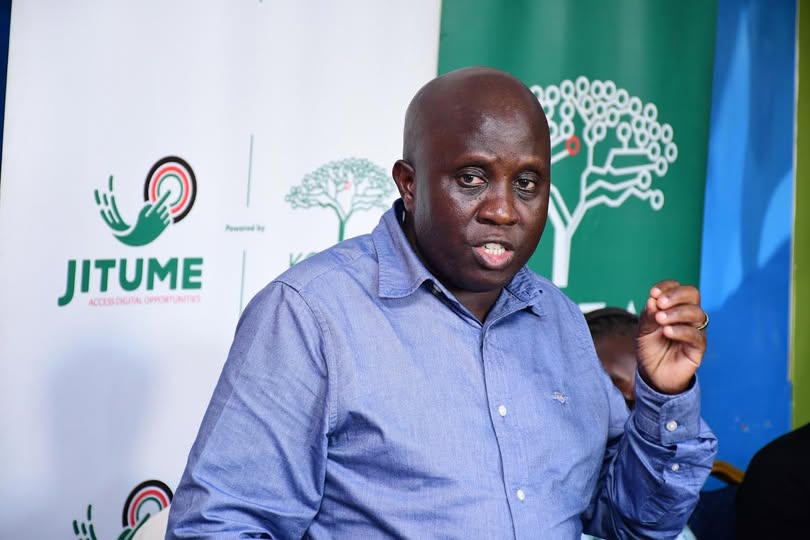
    INTERNATIONAL (Agency Report) — March 9, 2026 — The Kenyan government is set to unveil its first locally developed creative digital platform within the next two months, a move aimed at strengthening the country’s creative industry and reducing dependence on foreign-owned social media.

    John Tanui, Principal Secretary for the State Department of ICT and the Digital Economy, announced that several initiatives are underway to support home-grown platforms for content creators. He noted that the Ministry of ICT is collaborating with United Nations agencies under the “DigiKen” programme, which focuses on promoting the development of locally built digital platforms.

    Tanui highlighted that while thousands of young Kenyans earn income through international platforms such as Facebook and TikTok, the sector remains vulnerable to policy changes or market exits by these global players. He urged innovators, universities, and researchers to prioritize the creation of local platforms for advertising, content creation, and digital marketing, stressing the importance of resilience and sustainability in Kenya’s digital economy.

    Dagoretti South MP John Kiarie, chair of the National Assembly Committee on Communication, Information and Innovation, commended ongoing legislative reforms that support digital innovation. He pointed to the rollout of 47 Digital Hubs and expanded fibre connectivity as key steps in empowering youth and widening access to online opportunities.

    Kiarie also reminded content creators to use digital tools responsibly, noting that while the growing digital space offers immense opportunities, it also carries responsibilities and risks if misused.

  • NMEC committed to combating illiteracy in Nigeria- Executive Secretary

    NMEC committed to combating illiteracy in Nigeria- Executive Secretary

    Abuja, Nigeria (Agency Report) — March 8, 2026 —Prof. Musa Maitasfir, Executive Secretary, National Commission for Mass Literacy, Adult and Non-Formal Education (NMEC), says the commission is fully committed to combating illiteracy in Nigeria.

    Maitasfir made the commitment in a statement issued after he led a high-powered delegation of the commission on a visit to the Aco community in Lugbe, a densely populated area of the Federal Capital Territory (FCT).

    This statement was issued in Abuja on Sunday by the commission’s Deputy Director, Information and Public Relations, Mr Issa Marughu.

    Maitasfir said the visit formed part of the commission’s practical efforts to tackle illiteracy and strengthen the implementation of its mandate.

    According to him, the visit has further underscored the need for the commission to urgently extend literacy interventions to the community and other underserved areas across the country.

    The executive secretary said that his interaction with residents of the community and neighbouring settlements revealed that many of them lacked formal education.

    He, however, noted that the residents demonstrated a strong willingness to learn.

    “This is where NMEC comes in. The commission will not only provide the necessary learning materials, but will also deploy staff to facilitate the teaching and learning process,” he said.

    He added that the commission’s intervention in the community would serve as a test case for its renewed strategy aimed at addressing illiteracy in the country.

    Maitasfir urged staff members of the commission residing in various communities to prepare to support the initiative, which he said would commence soon. (NAN).

  • International Women’s Day: women hold just 64% of legal rights afforded to men worldwide — UN Women

    International Women’s Day: women hold just 64% of legal rights afforded to men worldwide — UN Women

    POLITICS (NPA) — March 8, 2026 — As the world commemorates International Women’s Day 2026, UN Women has raised alarm over the persistent global gap in legal rights between men and women.

    In a statement on Saturday, the agency revealed that women currently hold only 64% of the legal rights afforded to men worldwide. This means that, on average, women are entitled to just two-thirds of the protections and opportunities guaranteed to men under the law.

    UN Women, the United Nations entity dedicated to gender equality and women’s empowerment, urged global leaders to confront structural barriers to justice, including discriminatory laws, weak legal protections, harmful practices, and entrenched social norms that undermine the rights of women and girls.

    The agency further noted that conflict and instability exacerbate these inequalities, leaving women and girls more vulnerable to violence, exclusion, and discrimination. Reports of violations have emerged from Nigeria’s northeast, northwest, and north-central regions, where insurgent groups such as Boko Haram and ISWAP, alongside banditry, have displaced communities and subjected women to abuse. The ongoing war in Sudan was also highlighted as a flashpoint for widespread violations of women’s rights in Africa.

    In Nigeria, UN Women continues to push for gender equality by addressing violence against women, promoting women’s political participation, and supporting economic empowerment initiatives. However, progress remains slow, with women holding only 3.9% of parliamentary seats. The agency has warned that democracy itself is at risk if women remain excluded from decision-making processes.

    Nigeria also faces high rates of gender-based violence, with one in three women aged 15–49 experiencing physical or sexual abuse. Harmful practices such as female genital mutilation (FGM) persist, further eroding women’s rights.

    Beyond advocacy, UN Women’s programs in Nigeria include initiatives on economic empowerment, health, and social issues, with a particular focus on combating HIV/AIDS and supporting women’s access to education and vocational training.

  • Tinubu approves additional 50,000 for NYSC mobilisation in 2026

    Tinubu approves additional 50,000 for NYSC mobilisation in 2026

    Abuja, Nigeria (Agency Report) — March 7, 2026 — The Director-General of the National Youth Service Corps (NYSC), Brig.-Gen. Olakunle Nafiu, says President Bola Tinubu has approved an additional 50,000 eligible graduates for mobilisation in 2026.

    Nafiu disclosed this on Friday in Abuja during the commissioning of a remodelled clinic at the NYSC headquarters to mark his one year in office.

    He said the approval was part of efforts to address delays in mobilisation and improve opportunities for graduates awaiting national service.

    “Government listens and acts when people bring up issues that are in their name.

    “In response to this agitation, this issue of long waits for mobilisation, Mr President, in the 2026 budget approved an additional 50,000 corps members for mobilisation,” he said.

    The NYSC boss said the scheme had expanded significantly since its establishment in 1973 and that with the new addition, the scheme plans to mobilise 418,000 corps members in 2026.

    According to him, mobilisation has grown alongside the increase in tertiary institutions across the country.

    “We started with less than 10 or 12 corps-producing institutions in 1972, and from that we were able to mobilise 2,364 corps members.

    “Today we have over 400 corps-producing institutions turning out around 600,000 graduates yearly,” he said.

    Nafiu explained that not all graduates are eligible for the scheme each year because some receive exemptions, while professionals such as medical doctors and lawyers undergo additional training before mobilisation.

    He said the scheme was currently working with an automated system that regulates mobilisation and deployment processes.

    “So when you don’t go to camp, the system we operate is automated. It will not mobilise you until that pool is depleted,” he explained.

    The D-G attributed some delays experienced by prospective corps members to institutions failing to upload Senate-approved lists on the NYSC portal in time.

    He also said some graduates decline mobilisation after being posted to certain states.

    According to him, the scheme avoids deploying corps members to high-risk locations.

    “As much as possible, we do not deploy corps members to red zones, and even when corps members go to such states, they are restricted to state capitals and major cities,” Nafiu said.

    He said the management remained committed to the safety and welfare of corps members nationwide.

    “We are parents ourselves and we cannot toy with other people’s children.

    “We owe parents that responsibility of securing the lives of their children,” he said.

    Earlier, the Minister of Youth Development, Mr Ayodele Olawande, commended Nafiu for what he described as impactful leadership within his first year in office.

    Olawande said the remodelled clinic reflected the NYSC leadership’s commitment to the welfare of staff and corps members.

    “You can see today that one of those priorities has been the welfare of the staff and those working in this headquarters.

    “It has been paramount to him to have a truly functional clinic,” he said.

    The minister also addressed recent security concerns involving corps members and urged them to avoid travelling at night.

    “We may not be where we want to be, even as a country or as an agency, but we are working towards it and doing everything possible to secure our corps members,” he said.

    He added that the Federal Government was working on additional measures, including insurance coverage, to strengthen the protection of corps members.

    “I have said it and I will keep saying it, please do not travel at night.

    “Travel when you can see and we can see ourselves so that we can minimise these incidents,” he said.

    The NYSC clinic was remodelled as part of initiatives to improve welfare services at the scheme’s headquarters.

    NAN reports that the NYSC scheme was established in 1973 to promote national unity and integration by deploying Nigerian graduates to serve in states that are not states of their origin. (NAN).

  • Lagos Police Command Invites Applicants for Screening Starting Monday

    Lagos Police Command Invites Applicants for Screening Starting Monday

    Lagos, Nigeria (NPA) — March 5, 2026 — The Lagos State Police Command has urged indigenes of Lagos State who completed the online registration for the 2025/2026 recruitment into the Nigeria Police Force as General Duty and Specialist Constables to present themselves for the Physical and Credential Screening Exercise.

    The screening will run from April 9 to April 18, 2026, at the Police College, Ikeja, in the Centre of Excellence.

    In a statement issued on March 5, 2026, the Police Public Relations Officer, Lagos State Command, SP Abimbola Adebisi, emphasised that the exercise is free of charge and will be conducted strictly on merit, in line with the highest standards of professionalism and transparency.

    Applicants are required to appear in clean white T-shirts and white shorts and must present the following mandatory documents, neatly arranged in two white flat files:

    1. Invitation Slip (with assigned TABLE)
    2. Credential Screening Form
    3. Original National Identity Number (NIN) printout or card issued by NIMC
    4. O-Level (GCE/SSCE) Certificate
    5. Birth Certificate or Declaration of Age
    6. Local Government/State of Origin Certificate
    7. Trade Test/Certificate (for Specialists only)
    8. Duly completed and signed Guarantor’s Form with photocopies and passport photographs of referees attached
    9. Original and duplicate copies of all credentials, packaged in two separate white flat files with recent passport photographs attached.
  • Governor Buni Approves Scholarships and Laptops for 148 Law Graduates

    Governor Buni Approves Scholarships and Laptops for 148 Law Graduates

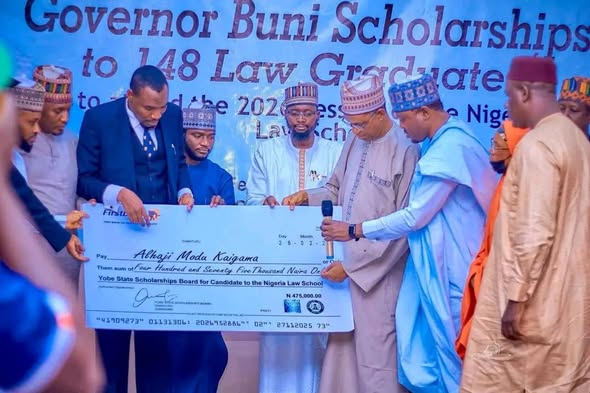
    DAMATURU, NIGERIA (NPA) – Governor Mai Mala Buni of Yobe State has approved scholarships for 148 indigenes admitted to the Nigerian Law School for the 2026 academic session.

    The announcement was made by the State Commissioner for Higher Education, Science and Technology, Professor Bello Kawuwa, following a joint meeting of the Yobe State Scholarships Board convened to oversee the disbursement of funds. Each beneficiary will receive a scholarship grant of ₦475,000 and a laptop to support their studies.

    According to Yusuf Ali, Focal Person for Digital and Strategic Communications in the governor’s office, this latest intervention brings the total number of law graduates sponsored by the Buni administration since 2020 to 719. In addition, 11 students have been granted financial support to resit their examinations at the Nigerian Law School.

    The initiative forms part of Yobe State’s education-focused policies aimed at expanding access to higher education, equipping young people with competitive skills, and fostering the overall development of the state.