Category: Business

  • NNPC GCEO meets leaders of Society of Petroleum Engineers and SPE International

    NNPC GCEO meets leaders of Society of Petroleum Engineers and SPE International

    ABUJA, NIGERIA (NPA) — March 11, 2026 — The Group Chief Executive Officer of the Nigerian National Petroleum Corporation (NNPC), Engr. Bashir Bayo Ojulari, on Wednesday received the leadership of the Society of Petroleum Engineers (SPE), Nigeria Council, at the NNPC Towers in Abuja. The delegation was led by Council Chairman Engr. Francis Nwaochei, FNSE, and the Africa Regional Director of SPE International, Dr. Riverson Oppong, during a courtesy visit.

    According to an NNPC statement, discussions focused on collaboration to advance technology, strengthen industry dialogue, and support the growth of Nigeria’s energy sector.

    In his remarks, Ojulari reaffirmed NNPC Limited’s commitment to active engagement with SPE activities and joint initiatives to drive production growth. He highlighted the importance of deeper technical support in subsurface disciplines to help achieve Nigeria’s target of producing three million barrels of oil per day.

    The GCEO also interacted with young professionals present, encouraging them to remain dedicated to continuous learning and to play an active role in shaping the future of the energy industry.

    The visit concluded with both parties pledging to collaborate closely in the attainment of their respective mandates.

  • Nigeria to host 2027 Intra-African Trade Fair, pledges to boost continental trade

    Nigeria to host 2027 Intra-African Trade Fair, pledges to boost continental trade

    Lagos, Nigeria (NPA) — March 11, 2026 — Nigeria has secured the right to host the fifth edition of the biannual Intra-African Trade Fair (IATF) in 2027, with a pledge to accelerate intra-African trade and investment.

    The Minister of Industry, Trade and Investment, Dr. Jumoke Oduwole, expressed pride at the development during the host agreement signing ceremony in Lagos. The IATF, under the African Continental Free Trade Area (AfCFTA), serves as a marketplace connecting continental and global players. The fair will run from Nov. 5 to Nov. 11, 2027, in Lagos.

    In four editions, the IATF has generated more than $167 billion in trade and investment deals. Oduwole noted Nigeria’s completion of its five-year AfCFTA implementation review in 2025, making it the first State Party to do so. She emphasized that inclusive growth, focusing on women and youth, is central to Nigeria’s vision for IATF 2027.

    She added that Nigeria intends not only to surpass previous transaction levels but also to deepen collaboration across Africa. “Beyond transactions, we envision IATF 2027 as a marketplace that will aggregate ideas, relationships, capital and skills to boldly confront challenges impeding our one African market,” she said.

    Preparations include Nigeria’s launch of an AfCFTA air cargo export corridor with Uganda Airlines in 2025 and initiatives such as the Customs Partnership for African Cooperation in Trade (C-PACT).

    Former President Olusegun Obasanjo, Chair of the IATF 2027 Advisory Council, highlighted Lagos’s historic role in hosting the 1980 Lagos Plan of Action. He praised government and private sector efforts in securing hosting rights.

    African Export-Import Bank President Dr George Elombi projected the fair would attract over 100,000 visitors, stressing its role in building regional value chains, creating jobs, and boosting intra-African trade.

  • Pope Leo sacks San Diego Bishop accused of stealing $250,000

    Pope Leo sacks San Diego Bishop accused of stealing $250,000

    INTERNATIONAL (NPA) — March 11, 2026 — Pope Leo has accepted the resignation of Bishop Emanuel Hana Shaleta of San Diego, following his arrest on suspicion of embezzling $250,000 from his congregation, the Vatican announced Tuesday.

    Shaleta, who has led the Chaldean Catholic community in San Diego since 2017, pleaded not guilty to 16 counts of embezzlement and money laundering during a court hearing on Monday, according to local media.

    San Diego Deputy District Attorney Joel Madero said the alleged crimes occurred in 2024 and were uncovered by a church employee who noticed missing funds, KGTV reported. Shaleta was arrested on March 5 at San Diego International Airport while attempting to leave the United States, according to the sheriff’s office.

    His lawyer told the court that the bishop had been planning a trip to Germany.

    The Chaldean Catholic Church, which follows an Eastern Christian liturgical rite but recognizes the pope’s authority, has about 71,000 members in San Diego, Vatican statistics show.

  • President Tinubu approves Bonga Deepwater Project in a $20 billion breakthrough

    President Tinubu approves Bonga Deepwater Project in a $20 billion breakthrough

    Abuja, Nigeria (NPA) — March 11, 2026 — President Bola Ahmed Tinubu has approved a Final Investment Decision (FID) for the Bonga Deepwater Project, unlocking an estimated $20 billion in Foreign Direct Investment and positioning Nigeria for a new era of offshore oil and gas production.

    The Nigerian National Petroleum Corporation (NNPC) announced the milestone in a statement signed by Chief Corporate Communications Officer Andy Odeh. The approval followed months of technical and commercial negotiations involving NNPC Limited, the Nigeria Revenue Service, Special Adviser to the President on Energy Olu Verheijen, and Shell CEO Wael Sawan.

    NNPC Group Chief Executive Officer, Engr. Bashir Bayo Ojulari, hailed the breakthrough: “This approval is a testament to the President’s leadership, NNPC’s disciplined execution, and our ability to structure complex, bankable transactions that deliver value for Nigeria. For nearly two decades, the Bonga Southwest project remained stalled. Today, under President Tinubu’s reform-driven leadership, we have broken that logjam.”

    The statement noted that the Bonga Southwest project will be the first FID on a Nigerian deepwater Production Sharing Contract asset since 2008, re-establishing Nigeria as a premier investment destination. The fiscal package includes an enhanced Production Tax Credit and resolution of the 2021 dispute settlement agreement, creating a competitive framework balancing national value with investor returns.

    Operated by Shell with all international oil companies in Nigeria as partners, the project is expected to deliver 150,000 barrels of crude oil per day and 140 million standard cubic feet of gas daily, while creating over 5,000 direct and indirect jobs.

    “With Presidential approval secured, NNPC and partners will now progress toward execution, triggering multi-billion-dollar capital commitments that will transform Nigeria’s deepwater landscape,” the statement added.

  • Enugu Air soars as Governor Mbah secures Air Operator Certificate

    Enugu Air soars as Governor Mbah secures Air Operator Certificate

    Lagos, Nigeria (NPA) — March 11, 2026 — The Enugu State Governor, Dr Peter Ndubuisi Mbah, has announced a breakthrough for the state-owned airline, Enugu Air, as it received its Air Operator Certificate (AOC) from the Nigerian Civil Aviation Authority (NCAA).

    The certificate was formally presented to Governor Mbah at the Government House, Lion Building, Enugu, by the Commissioner for Transport, Dr Obi Ozor, on March 9, 2026.

    In a statement, Governor Mbah described the milestone as a transformative step for Enugu’s aviation ambitions. “This milestone is more than a regulatory approval; it is a strategic step in our broader vision to transform Enugu into a premier aviation hub in Nigeria and West Africa,” he said. 

    He emphasised that the AOC would enable Enugu Air to expand into new destinations, boost tourism, and stimulate economic growth through job creation and investment.

    Governor Mbah further noted that aviation is central to his administration’s “Tomorrow is Here” agenda, linking transport, commerce, tourism, and logistics to unlock Enugu’s full potential. With the AOC secured, Enugu Air is now positioned to enter Nigeria’s aviation landscape as a reliable carrier connecting the Southeast to key national and international routes.

    Established in July 2025, Enugu Air is Nigeria’s second state-owned airline after Ibom Air. Headquartered at Akanu Ibiam International Airport, the carrier is designed to strengthen regional connectivity and drive economic transformation in the entire Southeast of Nigeria.

  • NBS REPORT: Nigeria posts trade surplus in Q4 2025 as oil dominates exports

    NBS REPORT: Nigeria posts trade surplus in Q4 2025 as oil dominates exports

    Lagos, Nigeria (NPA Business) — March 10, 2026 — Nigeria’s National Bureau of Statistics (NBS) on Tuesday released its latest trade data, showing the country recorded a positive trade balance in the fourth quarter of 2025.

    According to the NBS, total trade in goods during the period stood at N36,214.34 billion, with imports valued at N17,250.93 billion and exports at N18,963.41 billion. This resulted in a trade surplus of N1,712.48 billion.

    Crude oil remained Nigeria’s dominant export, accounting for about half of total exports. Agricultural products such as cocoa, sesame, and cashew contributed roughly one‑third, while other categories — including raw materials, manufactured goods, and solid minerals — made up smaller shares.

    On the import side, manufactured goods represented the largest category at 51%, followed by petroleum products at 23%, raw materials at 14%, and agricultural goods at 8%. Solid minerals accounted for less than one per cent.

    Exports were similarly concentrated, with crude oil at 51%, agricultural goods at 32%, other petroleum products at 7%, raw materials at 6%, manufactured goods at 2%, and solid minerals at less than one per cent.

    The report underscores Nigeria’s continued reliance on oil exports while highlighting the growing role of agriculture. At the same time, the country remains heavily dependent on imports of manufactured goods, reflecting limited domestic industrial output.

  • Anambra is back: No more Monday sit-at-home — Prof. Soludo

    Anambra is back: No more Monday sit-at-home — Prof. Soludo

    POLITICS (NPA) — March 10, 2026: Governor Chukwuma Soludo of Anambra State has declared an end to the long-standing Monday sit-at-home order that disrupted economic and social life in the southeast for nearly five years. The governor expressed delight at the return of normalcy, noting that schools, markets, and offices across the state now operate fully on Mondays.

    The directive, issued last month, mandated schools, markets, and government offices to resume Monday activities, effectively countering the protest linked to the detention of Indigenous Peoples of Biafra (IPOB) leader, Mazi Nnamdi Kanu.

    On March 9, Soludo toured ten primary and secondary schools across the state, observing classes in session. “I am very happy, I must say. I have visited ten schools, including private schools. I’m very pleased. The schools are back, the markets are back, and the civil servants are back. The southeast cannot be different from the rest of the world. The southeast is back. Anambra is back, and we are rising,” he said.

    In a statement accompanied by video footage of his visits, the governor celebrated the resilience of teachers and students. “I was excited to see our kids back in class, learning and thriving! No more Monday sit-at-home in Anambra State! To our teachers, you are heroes. Your dedication is inspiring. Pupils, keep soaking up knowledge — the future is yours!”

    Soludo emphasised that the state had moved past excuses, declaring: “It’s time to reclaim our Mondays and build a brighter Anambra.”

    Earlier, the government had temporarily shut down the popular Nnewi Auto Spare Parts Market (Nkwo Nnewi) after traders continued to observe the sit-at-home order despite official directives. The closure, announced by Soludo’s Special Adviser on Trade and Markets, Chief Evarist Uba, took effect on February 23, 2026.

    With schools, markets, and civil service offices now open, the governor’s push appears to have restored confidence and economic activity in Anambra, signalling a turning point in the region’s efforts to move beyond years of disruption.

  • MICHAEL SPENCE: Adam Smith’s philosophy still sheds light on how economies grow, trade, and respond to change

    MICHAEL SPENCE: Adam Smith’s philosophy still sheds light on how economies grow, trade, and respond to change

    OPINION (NPA)— March 9, 2026 — When The Wealth of Nations was published on March 9, 1776, there was no such thing as an economics profession. Two hundred fifty years on, there is no shortage of economists, and Adam Smith is widely regarded as the godfather of their profession.

    If asked, Smith would have probably described himself as a Scot who made a living as a moral philosopher. And as for his famous book, it came to be seen as a true expression of the Enlightenment. This period of cultural and intellectual flourishing helped create an alternative vision for humanity based on reason, science, individual liberty, and human dignity.

    Despite detours and missteps, it is a moral frame of reference that resonates to this day. It is why we continue to listen to what Smith had to say.

    He illuminated the structural foundations of modern economies. Although he is best known for his idea of the “invisible hand,” Smith gave us an insight that is even more important: Moving from a static, subsistence economy to increasing income and prosperity requires what he called the “division of labor.” 

    Without this specialization, one cannot achieve dramatic increases in productivity coming from scale economies, learning curves, and improved conditions for innovation. Like all scientific discoveries, it seems obvious after the fact. 

    Division of labor

    For specialization to work, we need two structural elements, which are mutually reinforcing.

    One is trade, which is implied by specialized production. Indeed, while the supply side of the economy is specialized, the demand side is not. Hence the need for an “invisible hand” in the form of trade, a market system using prices and currencies. Trade is efficient, unless there are glaring externalities and informational gaps and asymmetries. It is economical by not requiring the collection of vast amounts of centralized information. And as a decentralized resource-allocation system, it allows for diverse preferences and creates incentives for innovation.

    Of course, Smith was no stranger to trade. His father served as the customs agent in his hometown and birthplace, Kirkcaldy, and Smith himself served as the commissioner of customs for Scotland from 1778 to 1790. While he is sometimes unfairly accused of codifying a system that glorifies selfishness, he envisioned the opposite: an economy with moral underpinnings and supporting structures, such as regulations, government revenues, and a stable currency.

    The second structural element needed for specialization is a sufficiently large market. In other words, an economy needs to generate enough demand to support the specialized producer.  Otherwise, the producing entity will have to reduce its level of specialization. Think of the general store in the American West giving way to specialized shops as the population grew and became richer and urban centers expanded.

    This is especially relevant for high-tech industries, where the total addressable market is central to assessing investment returns. The economics are clear: Developing new technology involves up-front investment. And the return on that investment is proportional to the size and scope of the market for the innovation. As an aside, the return on investment is also proportional to the duration of the market opportunity—until it is superseded by the next innovation. This is where the Schumpeterian dynamics enter the model.

    All these factors—from specialization and trade to finding ways to access large potential markets—lie at the heart of any successful development model. They are complementary and structural. It is their coevolution that produces the desired result: rising productivity and incomes, economic growth, increasing purchasing power, and the resulting expansion of domestic markets for products and services that, by virtue of growth, become more affordable and desired.

    Technology and development

    Let’s remember that Smith lived at the very beginning of the British Industrial Revolution. To my mind, it is simply stunning that he understood, and to some extent foresaw, the structural features and dynamics that have driven much of the evolution of the global economy in which we now live.

    Time and again, technology has played an essential role in directly driving productivity growth, but also in specialization via a connectivity channel, hence expanding the size of the addressable market. Smith may have seen James Watt’s steam engine (1769), which was more efficient than earlier models; if so, he would have certainly understood its potential in factories and transportation. He did not live to see the first steam locomotive, developed by Richard Trevithick in 1804. Nor did he get to see our modern digital economy, including the latest AI tools.

    But again, he would have understood the implications of these revolutionary developments: the immense benefits of expanding market size at reasonable cost, the opportunity to foster inclusive growth patterns, and the prospect of another jump discontinuity in specialization and productivity.

    The relevance to economic development is hard to overstate. Think of how specialization and trade accelerated in scale and scope after World War II. Over time, specialization moved from being a defining feature of developed economies to being one of the key engines of the entire global economy. It helped generate unprecedented growth rates, productivity expansions, and—over the past three decades—the biggest reduction in extreme poverty in human history.

    In countries in the early stages of development, income levels are low and domestic demand is limited, which in turn limits specialization. But if the global economy is accessible, the domestic demand constraint is removed, at least for tradable goods and services. Leveraging this opportunity requires technology, connectivity, and infrastructure. It also requires the removal of barriers to trade that are created by policies. Hence the importance of the General Agreement on Tariffs and Trade and its successor, the World Trade Organization, and the general acceptance that trade can be broadly beneficial to all.

    While technology, connectivity, and infrastructure cannot be acquired overnight, they can be built, and then the tradable part of the economy specializes and starts to grow. Employment shifts toward the tradable side, and average incomes grow. This income growth initially produces demand that spills over to nontradable goods and services markets. Relaxing the demand constraint on specialization beyond its tradable part benefits the economy as a whole.

    Risk and complexity

    The process of development gathers momentum because its underlying dynamics are mutually reinforcing. And yet myriad things can go wrong. These risks are well documented in the literature: macroeconomic mismanagement, instability and crises, insufficient investment in infrastructure and hence poor connectivity, and failure to leverage the opportunity created by global demand, to name just a few risks.

    Let me briefly expand on one of them. A specialized economy entails risk for the simple reason that anything that causes a disruption or failure of the trading system is dangerous, the more so the longer it lasts. Perceived risks to market openness, functioning, and access could severely constrain specialization. We could even restate Smith’s fundamental insight as follows: Specialization is limited by the extent of the market and the probability that it will remain accessible.

    One way to understand recent developments in the global economy is that, as the risks from multiple sources rise, there is a predictable partial pullback in specialization.

    Moreover, a highly specialized economy is by definition complex. The degree of specialization and complexity can be seen as different sides of the same coin. The market and network connections that underpin a modern economy exceed the capacity of its participants to fully comprehend them. Perhaps advances in AI will give us tools to enhance this comprehension and our ability to adapt. A promising and growing application of AI is precisely in assisting in the management of complex systems, such as global supply chains and smart grids. 

    Complexity also entails hidden risks, which are often systemic. They are embedded in the complex network of interconnections that are hard to see comprehensively. Unless we get better at managing them, complexity will become an additional major constraint on specialization. More broadly, complexity at this level makes it hard for people to understand the economic system. That creates a vacuum, with all kinds of unsubstantiated theories about how, and in whose interests, it works. Some of these theories risk undermining political and social cohesion. 

    All this would make for a fascinating conversation with Smith, who saw plenty of economic disruption and dislocation. He lived at a time when the economy went from extremely local—where people probably knew most of those with whom they interacted and transacted—to the beginning of a rapid increase in specialization and the scope of markets.

    This journey continues in our lifetimes. We increasingly depend on people and places we have never seen and that are largely unknown to us. We depend on science, technology, media, and expertise that go beyond our capacity to verify directly. How we address these challenges will shape our individual well-being and the wealth of nations in the years ahead.

    MICHAEL SPENCE

    MICHAEL SPENCE is a senior fellow at the Hoover Institution and Philip H. Knight Professor and dean, emeritus, at Stanford Graduate School of Business. In 2001, he was awarded the Nobel Memorial Prize in Economic Sciences.

    The opinions expressed in articles and other materials are solely those of the authors and do not necessarily reflect the views or editorial position of Newpost Africa.

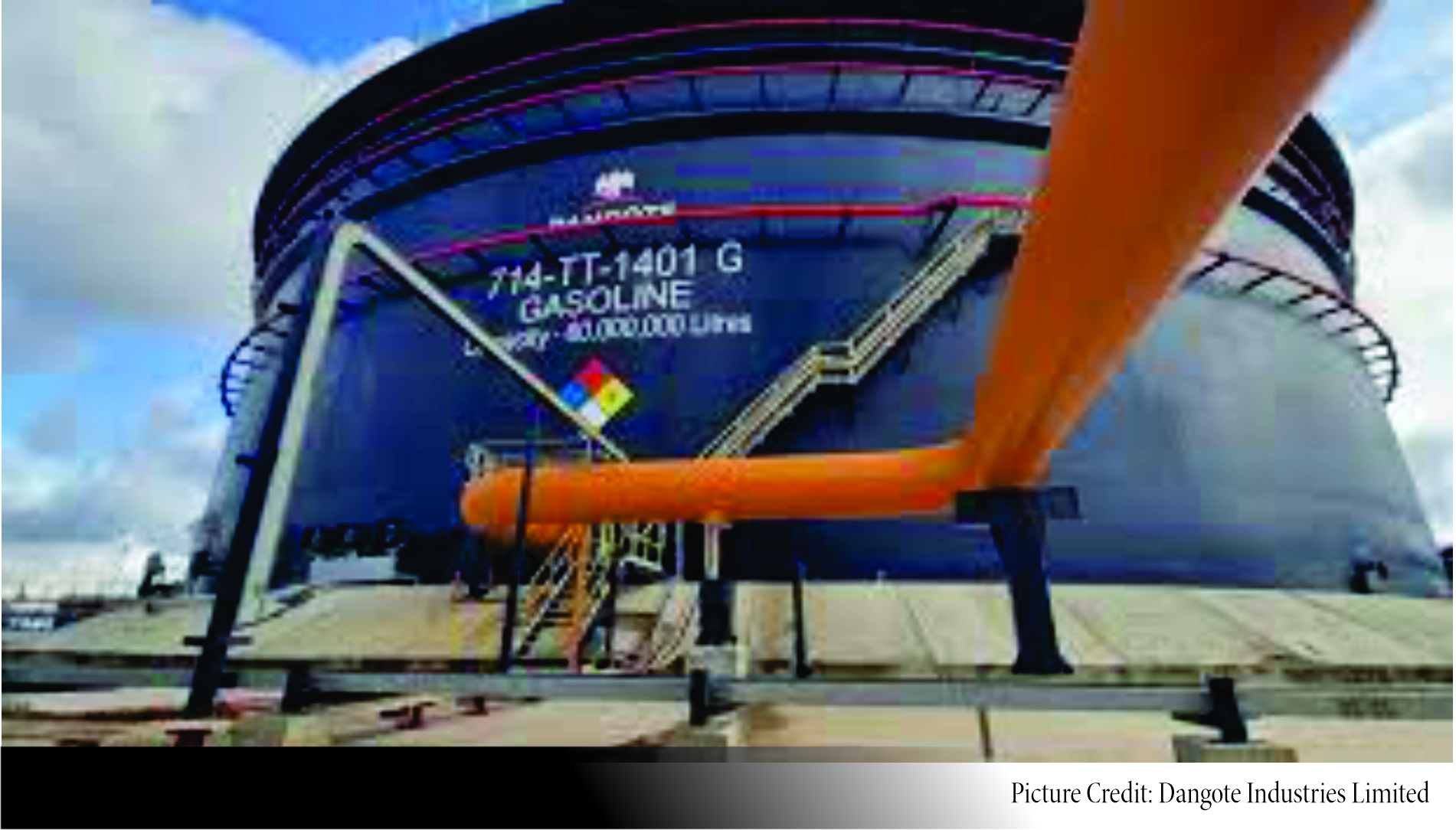
  • Dangote Refinery raises fuel to ₦1,175 amid global oil surge

    Dangote Refinery raises fuel to ₦1,175 amid global oil surge

    Lagos, Nigeria — March 9, 2026 — The Dangote Petroleum Refinery has announced its fourth ex-depot price adjustment since March 2, raising the gantry price of Premium Motor Spirit (PMS), or petrol, to ₦1,175 per litre and Automotive Gas Oil (AGO), commonly known as diesel, to ₦1,620 per litre. The latest increase marks the third upward revision in just one week, underscoring mounting pressure on Nigeria’s downstream sector amid global market volatility.

    According to petroleumprice.ng, Nigeria’s downstream industry monitoring platform, the new pricing template has been communicated to marketers following earlier adjustments this month. The changes come after a temporary suspension of petrol loading operations and restricted truck-out activities, which had fueled speculation of an imminent price hike.

    Under the revised structure, petrol has jumped from ₦995 per litre, while diesel has surged from ₦1,430 per litre, reflecting sharp increases in domestic fuel costs. The adjustments coincide with a spike in international crude benchmarks: as of 1:00 pm WAT, Brent crude traded at $102.8 per barrel (+10.91%), while WTI crude stood at $101.0 (+11.08%).

    Analysts warn that the latest increases are likely to ripple through Nigeria’s economy, driving up the cost of goods and services in a petroleum-dependent market. Industry observers note that while the government is expected to benefit from higher revenues amid the Middle East conflict involving the United States, Israel, and Iran, pressure is mounting for authorities to deploy subsidies or other interventions to stabilise domestic prices.

  • BREAKING: Tinubu resolves OPL 245 dispute, ending Nigeria’s longest-running oil block battle

    BREAKING: Tinubu resolves OPL 245 dispute, ending Nigeria’s longest-running oil block battle

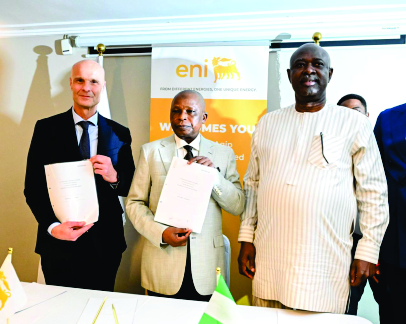
    Abuja, Nigeria — March 8, 2026 — President Bola Ahmed Tinubu has brought closure to Nigeria’s longest-running and most controversial oil block ownership dispute, announcing a landmark settlement over Oil Prospecting Licence (OPL) 245 with ENI and Nigerian Agip Exploration Limited (NAEL).

    In a statement issued Sunday by Bayo Onanuga, Special Adviser to the President on Information and Strategy, the resolution was described as a turning point that will reposition Nigeria’s economy and strengthen its fiscal capacity.

    Attorney-General and Minister of Justice, Lateef Fagbemi, praised President Tinubu’s leadership, calling the agreement “a milestone in repositioning Nigeria’s economic landscape.”

    “The agreement marks a turning point for Nigeria’s oil and gas sector after more than two decades of legal battles and international arbitration,” Fagbemi said. “The clear vision and deep commitment of President Tinubu provided the political will required to bring closure to this protracted dispute. The agreement demonstrates Nigeria’s commitment to transparency, accountability, and the rule of law.”

    According to the Attorney-General, the settlement will culminate in a Consent Arbitral Award, resolving a complex international dispute and restoring Nigeria’s credibility as a responsible global business partner.

    Fagbemi emphasized that the deal will pave the way for large-scale investments, stimulate job creation, and reinforce Nigeria’s position as a leading energy producer in Africa. He noted that projected revenues from OPL 245 can now be factored into Nigeria’s medium-term fiscal framework, supporting budget stability, long-term planning, and debt sustainability.

    He further highlighted that resolving the matter through negotiation rather than prolonged arbitration underscores Nigeria’s commitment to alternative dispute resolution and enhances its standing in international commercial and arbitration circles.

    “This settlement sends a clear signal to the global community that Nigeria is open for business and committed to fairness and respect for contractual obligations,” Fagbemi said, commending the Ministry of Petroleum Resources, the Nigerian Upstream Petroleum Regulatory Commission, Nigerian National Petroleum Company Limited, the Economic and Financial Crimes Commission, and international partners including ENI and Shell for their roles in achieving the resolution.

    “With this agreement, Nigeria can now move forward with confidence, ensuring that the development of OPL 245 becomes a source of prosperity for the nation and future generations,” he added.

    Background on OPL 245

    OPL 245 is a deepwater oil block located offshore Nigeria, widely regarded as one of the country’s most valuable reserves. It was originally awarded in 1998 to Malabu Oil and Gas, a company linked to former Petroleum Minister Dan Etete.

    Over the years, disputes over ownership, licensing rights, and allegations of bribery involving multinational oil companies ENI (Italy) and Shell (UK/Netherlands) led to decades of litigation in Nigeria and abroad. Former officials, including ex-Attorney General Mohammed Adoke, faced prosecution but maintained their actions were lawful. Adoke recently demanded an apology from the government, claiming he was persecuted despite efforts to resolve the matter.

    The prolonged controversy stalled development of the block, preventing Nigeria from exploiting its estimated billions of barrels of crude oil.