

Ghana intensifies flood response as heavy rains devastate Accra, Tema
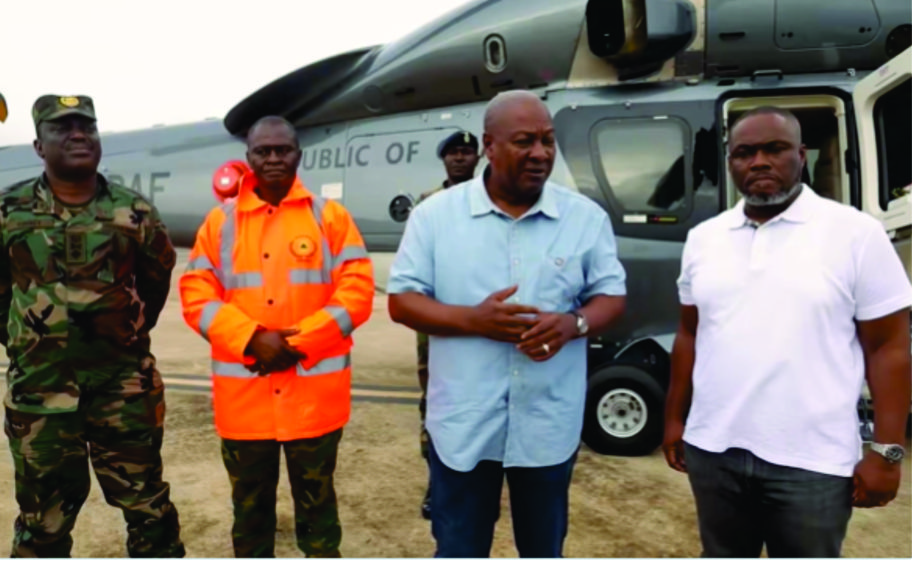
ACCRA, Ghana (NPA) — The Government of Ghana has intensified its emergency response to widespread flooding that has affected Accra, Tema and surrounding communities following days of heavy rainfall, while urging residents to cooperate with authorities and observe flood safety measures.
Minister for Works, Housing and Water Resources, Kenneth Gilbert Adjei, announced the measures on Monday after accompanying President John Dramani Mahama and members of the Anti-Flood Task Force on an assessment tour of flood-affected communities.
According to the minister, the inspection enabled the government to evaluate the causes of the flooding and assess immediate and long-term remedial measures.

“Since June 27, Accra, Tema and surrounding areas have experienced sustained heavy rains, leading to widespread flooding that has affected homes, businesses and public infrastructure, particularly in low-lying areas, while disrupting economic and social activities,” Adjei said.
He expressed the government’s sympathy to families, businesses and communities affected by the disaster, assuring victims that relief, recovery and reconstruction efforts were already underway.
“We fully appreciate the pain, disruption and economic hardship these events have imposed on households, traders, transport operators and businesses. Government remains fully committed to supporting relief, recovery and reconstruction efforts,” he said.
The minister attributed the recurring flooding to a combination of increasingly extreme weather patterns, rapid urbanisation and mounting pressure on drainage infrastructure.
He also blamed human activities, including encroachment on waterways, indiscriminate disposal of waste and widespread violations of planning regulations, for worsening the impact of heavy rainfall.
“The impact of human activities, particularly encroachment on waterways, indiscriminate waste disposal and non-compliance with planning regulations, cannot be overstated,” he said.
Adjei stressed that addressing Ghana’s flood challenges requires a collective effort involving government agencies, local authorities, traditional leaders, businesses and residents.
He said the Ministry, through the Ghana Hydrological Authority, was working closely with the National Disaster Management Organisation (NADMO), the Greater Accra Regional Coordinating Council, Metropolitan, Municipal and District Assemblies (MMDAs), security agencies and other stakeholders to manage the emergency.
According to him, ongoing interventions include the deployment of emergency response teams, evacuation support for affected residents, distribution of relief materials, assessment of damaged infrastructure and intensified clearing of drainage systems in flood-prone areas.
The minister disclosed that authorities had also intensified enforcement operations against illegal structures obstructing drainage channels, wetlands and natural waterways.
He said the government would sustain efforts to demolish structures impeding water flow while protecting critical drainage systems across the capital.
In addition, Adjei announced plans for extensive desilting and excavation of major drains and waterways clogged by silt and debris following the recent rains.
He said new drainage channels would also be constructed along natural water pathways to improve stormwater discharge and reduce future flooding.
The minister added that the government was advancing broader flood mitigation measures, including the rehabilitation and expansion of drainage infrastructure, stricter enforcement of development controls in flood-prone areas, improved early warning systems and the restoration of wetlands and lagoons.
He urged residents, particularly those living near rivers, lagoons, drains and other low-lying communities, to prioritise their safety by relocating to higher ground when necessary and avoiding movement through floodwaters.
Residents were also advised to keep children away from flooded areas to prevent accidents and reduce the risk of waterborne diseases.
Adjei appealed to the public to support government efforts by refraining from dumping refuse into drains, avoiding construction on waterways and complying fully with environmental and planning regulations.
“Together, through collective responsibility, discipline and adherence to safety measures, we can significantly reduce the effects of flooding, safeguard lives and livelihoods, and build safer, more resilient communities for present and future generations,” he said.

Ghana, UK review bilateral ties ahead of Mahama’s official visit

Nigeria, Ethiopia deepen cooperation on trade and investment
World Bank upgrades Africa growth outlook, says AI could boost jobs and productivity

Uganda vaccinates more than 8.2 million children in Measles-Rubella Campaign

NCDC heightens vigilance after imported Ebola case confirmed in Kenya

Eswatini says three third-country nationals voluntarily return home

NAFDAC DG advocates stronger continental cooperation on food safety

AU Commission Chairperson congratulates Abiy Ahmed on re-election
- Tinubu commissions NRS Headquarters, says new tax reforms will drive prosperity
- Tinubu assures investors of regulatory stability as Ogun, DP World sign $7bn port, SEZ MoUs
- Climate change anxiety is rising — and so is the willingness to act on it
- Ohaukwu LG Chairman Ituma breaks ground for modern diagnostic centre, blood bank
- Baseball boosts TBS, NFL gives ESPN a kick and streamers love ‘Squid’
Community Discussion