

G7 leaders’ communiqué charts new path for global development finance at Évian summit
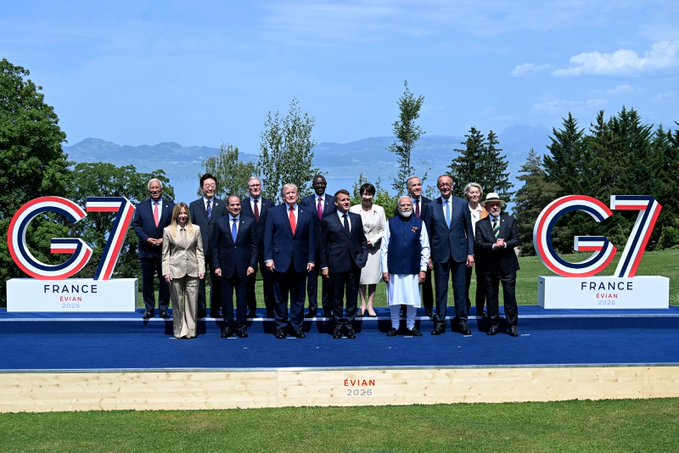
ÉVIAN, France (NPA) — The leaders of the Group of Seven (G7) nations in their Évian summit have produced one of the most ambitious communiqués in recent memory, setting out a vision for a reformed global development finance system.
The declaration is sweeping in scope, promising to tackle debt vulnerabilities, mobilise private capital, and empower partner countries to achieve sovereignty and resilience
At the heart of the communiqué is a recognition that traditional development policies have failed to break cycles of dependency. For decades, concessional aid and official lending have supported vulnerable nations, but too often without fostering genuine ownership or pro‑growth incentives. The Évian declaration acknowledges this shortcoming and pledges reforms to rationalise the development architecture, making it more efficient and impactful.

Debt vulnerabilities are a central concern. The G7 leaders highlight the growing burden on middle‑income countries excluded from the G20’s Common Framework, and they call for accelerated implementation of the IMF‑World Bank 3‑Pillar Approach. Transparency in debt data and lending practices is emphasised, alongside the launch of a Borrowers’ Platform to give debtor nations a stronger voice. These measures, if implemented, could reshape the balance of power in global finance, but they will require creditor nations to act in good faith — a challenge given competing strategic interests.
The communiqué also underscores the need to mobilise private capital, recognising that public resources alone cannot meet global development needs. Development Finance Institutions and Multilateral Development Banks are tasked with expanding risk‑sharing instruments, guarantees, and blended finance. Initiatives such as the African Trade and Investment Development Insurance (ATIDI) and the G20 Compact with Africa are highlighted as vehicles to attract investment. This focus on derisking and regulatory reform is pragmatic, but success will depend on whether private investors see genuine opportunities rather than political risk.
Supply chain resilience is another pillar of the declaration. The G7 pledges to strengthen transportation, energy, and digital infrastructure, while ensuring reliable critical minerals value chains.
Fertiliser shortages and food security are also addressed, reflecting lessons from recent global disruptions. These commitments are timely, but they require coordination across multiple stakeholders, from governments to private companies, and the political will to prioritise long‑term resilience over short‑term gains.
Human development remains a priority, with concessional resources directed to least developed countries facing external shocks or conflicts. Investments in health, education, and nutrition are emphasised, alongside support for National Health Compacts. The declaration also reaffirms that empowering women and girls is central to economic growth. These commitments are laudable, but they echo promises made at countless summits before. The challenge lies in ensuring that resources reach communities rather than being lost to inefficiency or corruption.
Institutional reform is another ambitious goal. The G7 calls for greater efficiency in the global development system, pledging to reduce fragmentation and strengthen coordination among Multilateral Development Banks, public development banks, and vertical funds. Support for UN reforms under the UN80 agenda is also noted. These reforms could streamline global development efforts, but they will require entrenched institutions to embrace change — a notoriously difficult task.
The Évian communiqué situates itself within a broader ecosystem of initiatives, including the Africa Forward Summit, the Mattei Plan for Africa, TICAD, and the EU’s Global Gateway. By aligning with these platforms, the G7 aims to mobilise a multi‑actor coalition involving emerging donors, the private sector, and civil society. This inclusive approach is promising, but coordination across such diverse actors is complex and often fraught with competing agendas.
Ultimately, the Évian declaration is a bold vision for mutually beneficial international partnerships. It seeks to move beyond aid dependency toward sustainable, sovereign development, tackling debt, mobilising capital, and prioritising human development. But the success of this agenda will depend on sustained commitment, political will, and the ability to translate lofty rhetoric into tangible outcomes.
The G7 has set the stage for transformative change. Whether it delivers will be the true test of its credibility.


Russia condemns IAEA resolution on nuclear safety and security in Ukraine

BREAKING: Trump announces US-Denmark-Greenland security agreement, plans expanded military presence

Israeli military says airstrikes kill senior Hamas commanders in Gaza
Von der Leyen outlines vision for a stronger, more independent Europe in 2026 State of the Union address
UN warns of rising global risks as Yemen fighting displaces more than 100,000

Zelenskyy urges Ukraine lawmakers to approve budget measures, prosecutor general’s dismissal

Scotland, Wales, and Northern Ireland leaders intensify push to break away from UK

Scotland, Wales and Northern Ireland leaders plan fresh push for self-determination
- Tinubu commissions NRS Headquarters, says new tax reforms will drive prosperity
- BREAKING: Ebonyi governor sacks Works commissioner
- Climate change anxiety is rising — and so is the willingness to act on it
- Golden Globes want to make a comeback this year. Hollywood isn’t buying
- Baseball boosts TBS, NFL gives ESPN a kick and streamers love ‘Squid’
Community Discussion