

Kenya suspends nationwide transport strike after deadly fuel price protests
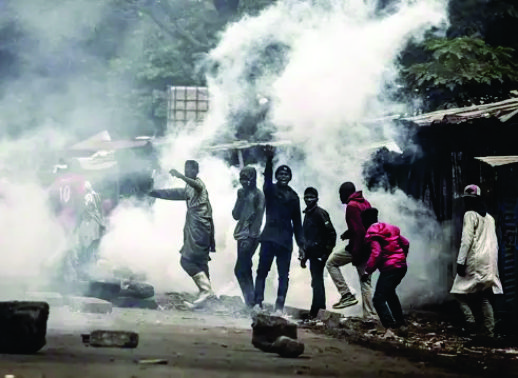
NAIROBI, Kenya (NPA) — A nationwide public transport strike in Kenya over rising fuel prices linked to the Iran war has been suspended after the government reached an interim agreement with associations representing bus and minibus operators.
The strike, which triggered widespread protests across the country, was called off on Tuesday following talks between government officials and transport stakeholders.
Speaking at a joint press conference, Kipchumba Murkomen said the strike had been suspended for one week to allow further negotiations between the government and transport operators.

The protests turned deadly on Monday, with authorities confirming that at least four people were killed while about 30 others sustained injuries during demonstrations linked to the strike and the worsening cost-of-living crisis.
Negotiations held on the first day of the strike reportedly failed to produce an agreement, despite the government offering to reduce diesel prices by about 10 Kenyan shillings per litre.
However, transport operators rejected the proposal, insisting on a deeper reduction of 46 shillings per litre, arguing that diesel remains the primary fuel used by public transport operators.
Opiyo Wandayi disclosed that the government’s proposed reduction would result in a revenue loss of approximately 2.7 billion Kenyan shillings, equivalent to about $20.79 million.
The fuel crisis and transport shutdown sparked nationwide unrest, with protesters expressing anger over rising living costs and worsening economic conditions.
Earlier, Newpost Africa reported that the Kenyan Ministry of Interior and National Administration condemned the violence, looting and destruction that erupted during the demonstrations, describing the unrest as politically motivated and infiltrated by criminal elements.
In a statement, the ministry acknowledged public frustration over soaring fuel prices but warned that attacks on public infrastructure, road blockades and destruction of property would only deepen the crisis.
Authorities accused criminal groups of targeting government projects and pro-government figures during the protests.
The government cited the looting of Khetia supermarkets, the burning of a UDA office in Wote, Makueni County, and the torching of trucks at the Rironi-Mau Summit project site as coordinated acts aimed at spreading fear and destabilising the country.
Officials reaffirmed the government’s commitment to protecting lives and property, warning that those responsible for the violence and destruction would face the full weight of the law.
The government also maintained that no individual or group would be allowed to exploit public grievances for political gain.

Ghana, UK review bilateral ties ahead of Mahama’s official visit

Nigeria, Ethiopia deepen cooperation on trade and investment
World Bank upgrades Africa growth outlook, says AI could boost jobs and productivity

Uganda vaccinates more than 8.2 million children in Measles-Rubella Campaign

NCDC heightens vigilance after imported Ebola case confirmed in Kenya
Eswatini says three third-country nationals voluntarily return home

NAFDAC DG advocates stronger continental cooperation on food safety
AU Commission Chairperson congratulates Abiy Ahmed on re-election
- Tinubu commissions NRS Headquarters, says new tax reforms will drive prosperity
- Tinubu assures investors of regulatory stability as Ogun, DP World sign $7bn port, SEZ MoUs
- Climate change anxiety is rising — and so is the willingness to act on it
- Ohaukwu LG Chairman Ituma breaks ground for modern diagnostic centre, blood bank
- Baseball boosts TBS, NFL gives ESPN a kick and streamers love ‘Squid’
Community Discussion