

WHO confirms medical evacuation of suspected hantavirus patients from cruise ship, 3 dead
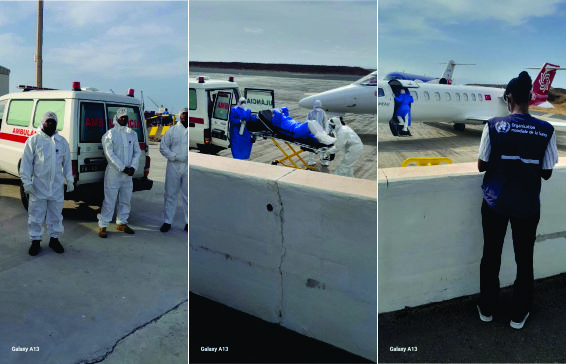
GENEVA, Switzerland (NPA) — The Director-General of the World Health Organization, Tedros Adhanom Ghebreyesus, has confirmed the evacuation of three suspected hantavirus patients from a cruise ship currently moored off Cabo Verde, as global health authorities continue coordinated monitoring and response efforts.
Tedros said the patients have been evacuated from the vessel and are en route to the Netherlands for medical care, in coordination with the World Health Organization, the ship’s operator, and national authorities from Cabo Verde, the United Kingdom, Spain, and the Netherlands.
He noted that the WHO will continue working closely with the ship’s operators to monitor the health of passengers and crew, while supporting countries involved in providing medical follow-up and evacuation where necessary.

Monitoring and follow-up for both passengers still on board and those already disembarked has been initiated in collaboration with national health authorities.
“The WHO thanks all those involved. At this stage, the overall public health risk remains low,” Tedros said.
The development follows reports of a suspected hantavirus outbreak aboard a Dutch-flagged cruise ship that departed Ushuaia, Argentina, on April 1, 2026, carrying 147 passengers and crew from 23 nationalities.
According to earlier updates, seven cases have been identified onboard, including two confirmed and five suspected infections, with three fatalities and one patient reported to be in critical condition.
The World Health Organization, alongside national health authorities, is coordinating medical evacuation, isolation measures, and laboratory investigations to determine the source and extent of the outbreak, while maintaining that the global risk remains low.
Hantaviruses are rodent-borne pathogens that can cause severe disease in humans, including Hantavirus Pulmonary Syndrome (HPS) in the Americas and Hemorrhagic Fever with Renal Syndrome (HFRS) in Europe and Asia.
Transmission typically occurs through inhalation of dust contaminated with rodent urine, droppings, or saliva, with rare cases linked to bites. Human-to-human transmission is extremely rare, documented primarily with the Andes virus in South America.
Symptoms range from fever, fatigue, and muscle aches to severe respiratory distress or kidney failure, with fatality rates varying between 1 and 50 percent. There is currently no specific cure or vaccine, and treatment remains supportive, with prevention focused on avoiding rodent exposure.

Ohaukwu LG Chairman Ituma breaks ground for modern diagnostic centre, blood bank

Lagos Government urges residents to prioritise mental health, check on others

Ohaukwu LG Chairman applauds Nwifuru over free health screening, surgery

Uganda vaccinates more than 8.2 million children in Measles-Rubella Campaign
NCDC heightens vigilance after imported Ebola case confirmed in Kenya

NAFDAC DG advocates stronger continental cooperation on food safety

WHO, Netherlands strengthen partnership on Ebola, global health security and emergency response

ESUTH gets N500m surgical upgrade as Mbah pushes for top-tier medical excellence
- Tinubu commissions NRS Headquarters, says new tax reforms will drive prosperity
- Tinubu assures investors of regulatory stability as Ogun, DP World sign $7bn port, SEZ MoUs
- Climate change anxiety is rising — and so is the willingness to act on it
- Ohaukwu LG Chairman Ituma breaks ground for modern diagnostic centre, blood bank
- Baseball boosts TBS, NFL gives ESPN a kick and streamers love ‘Squid’
Community Discussion