

JUST IN: Tinubu says World Bank report shows Nigeria’s economic reforms are working
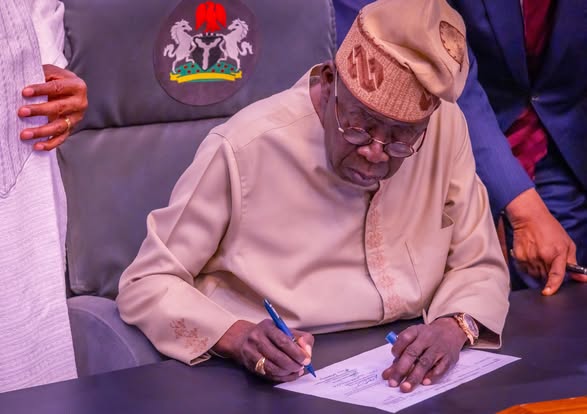
ABUJA, Nigeria (NPA) — President Bola Tinubu has welcomed the World Bank’s October 2026 Nigeria Development Update, saying its findings show that his administration’s economic reforms are strengthening the economy and creating more resources for governments to invest in infrastructure and public services.
According to a statement issued on Sunday by Bayo Onanuga, Special Adviser to the President on Information and Strategy, the report, titled Beyond the Federal Purse: How Higher Revenues Reshaped State Priorities, highlights improvements in economic growth, government revenues and external reserves.
The report found that Nigeria’s economy grew by 4.2 per cent in the first half of 2026, compared with 3.9 per cent in the corresponding period of 2025, despite the effects of the conflict in the Middle East.

The World Bank projects that economic growth will average at least 4.4 per cent between 2026 and 2028.
Tinubu also highlighted the report’s finding that Nigeria’s poverty rate had stabilised for the first time since 2019. The World Bank expects poverty to decline gradually if economic growth continues to outpace population growth.
On inflation, the report stated that the rate fell from 27.6 per cent in January 2025 to 15.2 per cent in December 2025. However, higher global fuel prices linked to the Middle East conflict have slowed the decline. The World Bank expects inflation to ease to about 12 per cent by 2028.
Nigeria’s external position also improved, with the current account surplus rising to $12 billion, equivalent to 7 per cent of gross domestic product (GDP), in the first half of 2026, up from $8.6 billion a year earlier.
Gross external reserves increased from $45.5 billion at the end of 2025 to $53.8 billion at the end of August 2026.
The report attributed higher government revenues to economic reforms introduced since 2023, stating that federation revenues increased by 69 per cent in real terms between 2023 and 2025, with state governments emerging as the biggest beneficiaries.
According to the World Bank, states used the additional revenue to increase capital expenditure by 151 per cent in real terms over the same period. Much of the spending went to roads and other transport infrastructure, agriculture, energy and housing.
Twenty-nine of 33 states shifted more of their spending towards economic infrastructure, while real social spending per person increased in all but one state.
The report also found that internally generated revenue grew in real terms in 31 of 35 states, while 21 states reduced their debt-to-GDP ratios between 2021 and 2025.
Nigeria’s overall public debt is projected to decline from 40 per cent of GDP in 2025 to 38.1 per cent in 2026.
Reacting to the findings, Tinubu said the report validated the government’s decisions to remove the petrol subsidy, unify the foreign exchange market and strengthen fiscal discipline.
“These findings confirm that the difficult but necessary decisions to remove the petrol subsidy, unify the foreign exchange market and strengthen fiscal discipline have raised revenues, stabilised the economy and created fiscal space for every tier of government to invest in its people,” he said.
The president, however, acknowledged that more work was needed to translate economic improvements into better living conditions, particularly through lower food prices and increased employment opportunities for young Nigerians.
He said his administration would continue pursuing reforms under the Renewed Hope Agenda, while expanding targeted cash transfers, accelerating the deployment of compressed natural gas (CNG), improving agricultural productivity and increasing access to affordable healthcare and quality education.
Tinubu stated that targeted cash transfers had reached more than 10 million households and urged state governments to manage their increased revenues prudently, prioritising projects that improve living standards, healthcare and education.
He also commended the Economic Management Team, led by the Minister of Finance and Coordinating Minister of the Economy, as well as state governors and other stakeholders, for their cooperation in implementing the reforms.
The president reaffirmed his administration’s commitment to its Renewed Hope Agenda 2.0, saying it would focus on accelerating inclusive growth and ensuring that the benefits of economic reforms reach more Nigerians.
JUST IN: Tinubu responds to commuters, highlights efforts to reduce transport costs
Fitch revises Nigeria’s credit outlook to positive, affirms ‘B’ rating

World Bank upgrades Africa growth outlook, says AI could boost jobs and productivity
NDB approves $395m for Hyderabad elevated transport corridor
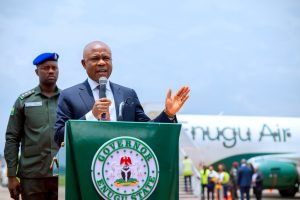
Mbah reaffirms commitment to tourism, transport as Enugu Air launches Douala route
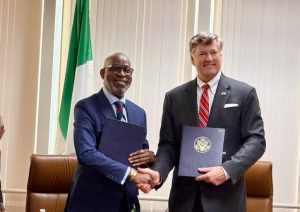
Tinubu hails US-Nigeria agreement to unlock $700bn mineral wealth
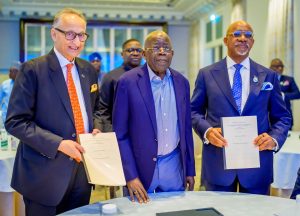
Tinubu assures investors of regulatory stability as Ogun, DP World sign $7bn port, SEZ MoUs
Ebonyi fertilizer company revives local production of NPK formulations
- Tinubu commissions NRS Headquarters, says new tax reforms will drive prosperity
- Tinubu assures investors of regulatory stability as Ogun, DP World sign $7bn port, SEZ MoUs
- Climate change anxiety is rising — and so is the willingness to act on it
- Enugu government accuses opposition of plot to import thugs ahead of 2027 elections
- Baseball boosts TBS, NFL gives ESPN a kick and streamers love ‘Squid’
Community Discussion