

WHO chief hails India as HPV vaccination campaign surpasses 8 million doses
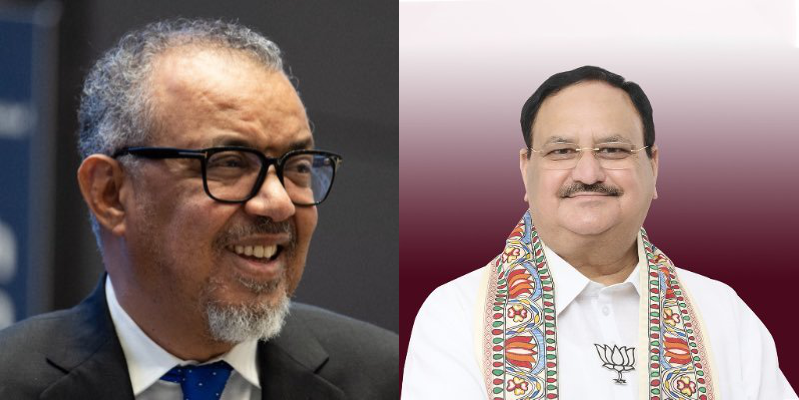
NEW DELHI, India (NPA) — The Director-General of the World Health Organization (WHO), Tedros Adhanom Ghebreyesus, has congratulated India’s Union Minister of Health and Family Welfare, Jagat Prakash Nadda, and the people of India after the country administered more than 8 million doses of the human papillomavirus (HPV) vaccine under its National HPV Vaccination Campaign.
Tedros described the milestone as a powerful demonstration that cervical cancer control is possible through strong political commitment, HPV vaccination, screening, early detection and timely treatment.
He said India’s progress was helping accelerate efforts towards the goals of the WHO’s Cervical Cancer Elimination Initiative and bringing the world closer to a future where no woman dies from the preventable disease.

“It is a powerful demonstration that cervical cancer control is possible through strong political commitment, HPV vaccination, screening, early detection and timely treatment,” Tedros said.
He added that India’s leadership was helping advance the objectives of the WHO’s Cervical Cancer Elimination Initiative.
The WHO chief’s commendation followed an announcement by Nadda that India had crossed the milestone of 8 million HPV vaccine doses administered under the national campaign.
In a statement issued on September 11, 2026, Nadda congratulated health workers, frontline teams, healthcare professionals, states and union territories, and others involved in the vaccination drive.
“India has crossed a significant milestone of 80 lakh+ HPV vaccine doses administered under the National HPV Vaccination Campaign,” Nadda said.
“Launched by PM Shri @narendramodi ji in February 2026, the campaign provides free, voluntary, single-dose HPV vaccination to 14-year-old girls, with parental consent.”
Nadda said the achievement strengthened the country’s commitment to preventive healthcare and protecting future generations against cervical cancer.
“Let us ensure that no eligible girl is left behind,” he said.
According to the Indian government, the campaign was launched by Prime Minister Narendra Modi in February 2026 and targets 14-year-old girls with a free, voluntary, single-dose HPV vaccine, subject to parental consent.
HPV and cervical cancer prevention
The human papillomavirus (HPV) is a common viral infection of the reproductive tract and is associated with cervical cancer and other cancers.
HPV vaccination provides protection against high-risk HPV types responsible for a large proportion of cervical cancer cases and can also protect against genital warts.
The WHO recommends HPV vaccination as part of efforts to prevent cervical cancer, with vaccination generally prioritised for girls aged 9 to 14, preferably before exposure to HPV.
The vaccine does not replace cervical cancer screening, but vaccination combined with screening, early detection and appropriate treatment can significantly reduce the risk of cervical cancer and deaths from the disease.
NAFDAC warns of drug poisoning risk from gabapentinoids with opioids, benzodiazepines

Expert urges Nigerians to seek help for persistent insomnia
Ebola: UN trains 200 officers in Rwanda, Kenya steps up preparedness
WHO urges regular blood pressure checks as people collapse, die suddenly across country
Global initiative launches mpox vaccine stockpile to improve outbreak response
CEPI Warns $184.8m funding gap could undermine Bundibugyo Virus vaccine efforts

N302.3bn cancer institute to train oncology experts across Africa — NICRAT DG

FG launches ‘1,000 Days of Life’ campaign to improve maternal, child nutrition
- Tinubu commissions NRS Headquarters, says new tax reforms will drive prosperity
- Nwifuru urges Izhi people to uphold traditional values, respect power-sharing arrangement
- Climate change anxiety is rising — and so is the willingness to act on it
- Golden Globes want to make a comeback this year. Hollywood isn’t buying
- Baseball boosts TBS, NFL gives ESPN a kick and streamers love ‘Squid’
Community Discussion