

Amnesty accuses Russia of trafficking foreign nationals into Ukraine war
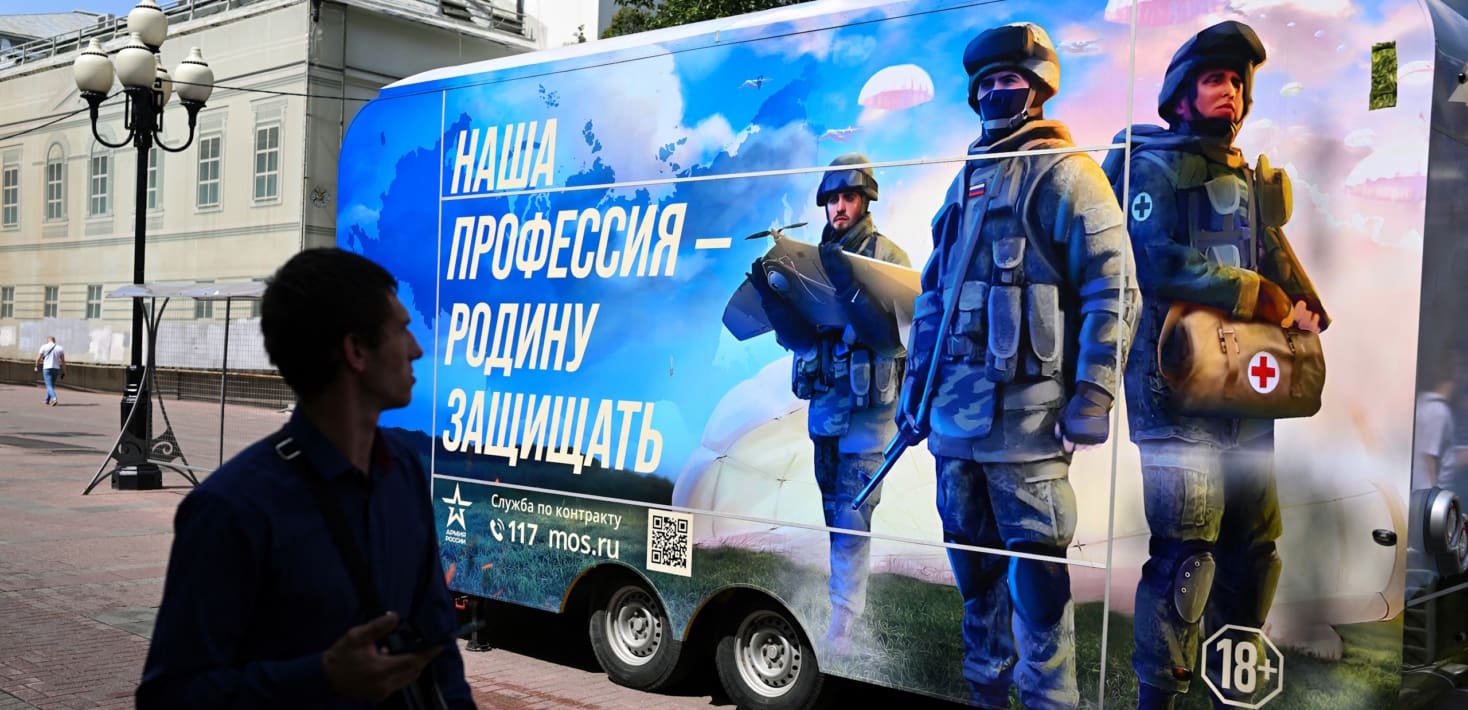
LONDON, United Kingdom (NPA) — Amnesty International has accused Russia of using deceptive, coercive and exploitative practices to recruit foreign nationals into its armed forces and deploy them to fight in Ukraine, saying the practices amount in many cases to human trafficking.
The allegations were contained in a new briefing published by the organisation on Thursday, September 10, 2026, which said the recruitment practices exploit the precarious circumstances of migrants and refugees in Russia and target nationals primarily from low-income countries in the Global South.
According to Amnesty, recruiters have lured foreign nationals into the Russian Armed Forces through false promises and misleading job offers, while exploiting migrants’ irregular immigration status and other vulnerabilities.

“Amnesty’s research demonstrates how Russia’s Armed Forces are bolstering their ranks with economically vulnerable foreign nationals and using them as cannon fodder in the war of aggression against Ukraine,” said Agnès Callamard, Amnesty International’s Secretary General.
“The level of exploitation and coercion involved led us to conclude that in many cases this amounts to human trafficking, as defined under the UN’s Palermo Protocol,” she said.
Callamard said the recruitment system builds on existing exploitative migration pathways and abusive practices towards migrants and refugees in Russia.
“Building on pre-existing exploitative migration pathways and abusive practices towards migrants and refugees in Russia, recruiters have developed a system of coercion, fraud and deception, including false promises of civilian or non-combat employment, to enlist foreigners in the military,” she said.
“Once victims sign the paperwork, often in a language they do not understand, military commanders restrict their movements, deploy them to the front lines with minimal preparation, and threaten those who seek a way out.”
The briefing is based on interviews with individuals from Brazil, Colombia, Cuba, Egypt, Sierra Leone, Sri Lanka, Somalia and South Africa conducted at two Ukrainian prisoner-of-war camps between 2024 and 2026.
Amnesty also said it spoke with foreign nationals currently serving with Russian forces, members of their families, lawyers, human rights activists and journalists.
Migrants allegedly targeted through immigration status
According to the organisation, Russian authorities have used the irregular immigration status of foreigners who overstay work-related visas, as well as the vulnerable circumstances of foreigners accused of criminal offences, as recruitment tools.
Amnesty said enlistment was sometimes presented as an alternative to detention or deportation.
The organisation interviewed two Sri Lankan men who were allegedly recruited after overstaying their work visas. It also spoke with Cuban and Egyptian nationals who were jailed over alleged drug possession and offered the opportunity to sign military contracts instead of serving or completing their prison sentences.
Amnesty said it also received testimony from a refugee from Central Africa who was detained after his temporary protection status expired and allegedly threatened with deportation unless he joined the Russian Armed Forces.
Foreigners allegedly deceived over nature of jobs
Amnesty said concealing or misrepresenting the risks and nature of military service had become a key feature of Russia’s recruitment of migrants.
According to the organisation, military service was often presented as non-combat employment, including work in military kitchens or driving jobs away from the front line.
Two Sri Lankan nationals interviewed by Amnesty said they were led to believe they would work as cooks but were instead sent to the front lines, where they were captured by Ukrainian forces within weeks.
“The scale of fighting is unimaginable. You do not see Ukrainian soldiers, only drones. Drones everywhere,” one of the men said.
“I would never go back there.”
Amnesty said local agents and misleading online job advertisements had also been used to recruit people in their home countries.
Individuals from Brazil, Colombia, Sierra Leone, Somalia, South Africa and Sri Lanka who were recruited outside Russia reportedly said they had been promised civilian jobs in security, logistics, construction, information technology and other sectors.
According to the organisation, some were offered high salaries and expedited access to Russian citizenship, only to be drawn into the Russian Armed Forces after arriving in the country.
A South African man who applied online for a driving job in Poland was allegedly instructed by an agent on WhatsApp to travel to Moscow to collect a truck and drive it to Poland, according to his wife, who spoke to Amnesty.
“Upon arrival to Moscow, everything was taken from him… He was told that he would not be going to Poland and that he is becoming a soldier,” she said.
Promised salaries, citizenship allegedly used as incentives
Amnesty said many recruits were promised lucrative salaries and enlistment bonuses that were not fully paid.
While some reportedly received partial payments before being captured, many said they received no payment.
The organisation said the prospect of obtaining Russian citizenship was another major incentive cited by those it interviewed.
It also reported that all interviewees described severe restrictions on their freedom of movement after signing military contracts.
Recruits from Brazil and Sri Lanka said their passports and mobile phones were confiscated during training or before deployment to the front line.
Others said they were unable to leave the facilities to which they had been taken after signing the paperwork, while transportation was conducted secretly and under strict control.
Pedro, a Brazilian IT professional who Amnesty said was recruited after signing what he believed was a contract for a well-paid technology job in Russia, said he asked his commander to leave but was threatened.
“If you try to escape, you will either go to jail or we will kill you,” he said he was told.
Foreign recruits allegedly sent to combat with little training
Amnesty said a lack of military experience appeared not to be a barrier to recruitment, with most foreign enlistees reportedly deployed to active combat zones after about two weeks of training.
Many interviewees described inadequate preparation, insufficient equipment and limited communication with commanders because of language barriers.
The organisation said the findings suggested that the recruitment of foreign nationals was driven largely by the need to increase the number of Russian forces at the front, with little attention to combat readiness and an apparent disregard for human life.
Amnesty said the patterns documented in its research raised serious concerns about Russia’s compliance with its obligations under international law.
The organisation alleged possible involvement in human trafficking and accused Russian authorities of failing to adequately criminalise and combat trafficking, investigate reported crimes and serious human rights violations, protect victims and survivors, and hold those responsible or complicit accountable.
Amnesty demands end to recruitment practices
Amnesty International called on Russia to immediately end abusive practices involving the recruitment of foreign nationals and their treatment in training centres and at the front line.
The organisation said this should include ending recruitment based on coercion, deception and misinformation, as well as the exploitation of economic, legal and other vulnerabilities among foreign nationals in Russia and economically disadvantaged communities elsewhere.
It also called for an end to restrictions on the movement of foreign recruits once they are in Russia or Russian-occupied Ukraine.
Amnesty urged countries whose nationals are at risk or have been affected to issue clear public warnings about deceptive or fraudulent recruitment schemes linked to employment in Russia or third countries.
The organisation also called for national, regional and international measures to combat human trafficking, establish accountability for those responsible and provide remedies for people subjected to coercion, exploitation or abuse.
The briefing also contains recommendations to the Ukrainian authorities, including on the treatment of third-country nationals being held as prisoners of war.
Callamard said the alleged trafficking had consequences far beyond the battlefield.
“The human suffering caused by the trafficking of foreign nationals by Russia, or by those it has enabled and incentivized, is not restricted to the front line in Ukraine,” she said.
“These recruitment networks reach far and wide, into vulnerable communities across the world, leaving a trail of exploitation, loss, and pain far beyond war-torn Ukraine.”
She urged other countries to act if Russia continues to exploit vulnerable communities.
“If Russia refuses to put an end to human trafficking and continues exploiting vulnerable communities globally, other states must do everything in their power to stop this crime,” Callamard said.
“There must be full accountability for all those directly involved and all those complicit, whether as private recruiters or intermediaries, state officials or military commanders.”
“Wherever human trafficking has occurred, its victims and survivors should be identified and treated as such, with all evidence collected and preserved in order to pursue those responsible.”
Borno Police recover 41 mobile phones, suspected illicit drugs worth ₦6.5m

Delta Police arrest 16 suspects, recover firearms, stolen car and illicit drugs

Ondo Police investigate reported deaths in Odigbo over suspected poisoning

Ogun Police deploy School Protection Squad as schools resume

Amnesty raises alarm over Southern Kaduna worshippers held for 5 months

Enugu wins Africa Security Watch Award for governance, security

Police pay ₦2.32bn to families of fallen officers
Police disowns viral notice directing recruits to report for training September 18
- Tinubu commissions NRS Headquarters, says new tax reforms will drive prosperity
- Radda receives innovation tech hub, pledges support for youth development in Katsina
- Climate change anxiety is rising — and so is the willingness to act on it
- Golden Globes want to make a comeback this year. Hollywood isn’t buying
- Baseball boosts TBS, NFL gives ESPN a kick and streamers love ‘Squid’
Community Discussion