

Kenya becomes Africa’s largest milk producer, surpasses Egypt
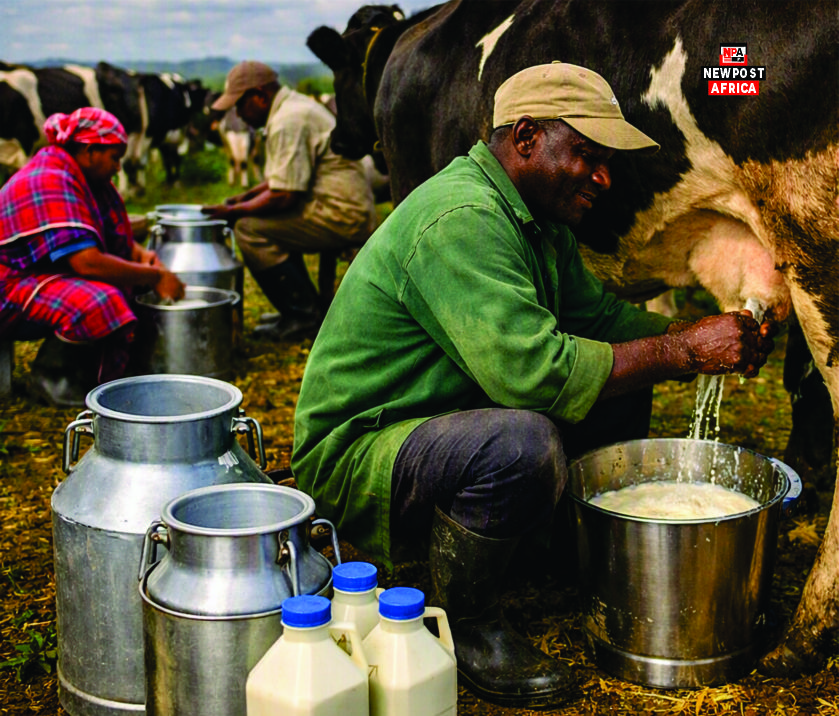
NAIROBI, Kenya (Agency Report) — Kenya has emerged as the largest producer of milk in Africa, surpassing Egypt, following a significant increase in the country’s dairy output from 4.6 billion litres to 5.4 billion litres, the government has said.
The Principal Secretary for Livestock Development, Jonathan Mueke, disclosed this while speaking at the fifth edition of the Kenya Meat Expo and Conference, held under the theme, “Accelerating Sustainable Growth: Empowering the Next Generation in the Meat Value Chain.”
Mueke said Kenya’s livestock sector was undergoing a major transformation, with the government introducing policies and programmes aimed at commercialising livestock production and turning the sector into a major driver of economic growth.

According to him, Kenya’s growing milk production and expanding livestock exports demonstrate the enormous economic potential of the sector.
“Kenya has surpassed Egypt to become the largest producer of milk in Africa, with output rising from 4.6 billion litres to 5.4 billion litres,” Mueke said.
He added that meat exports had increased by 87 per cent, rising from Sh8.9 billion to Sh16.4 billion, while dairy exports grew from Sh4.9 billion to Sh14.2 billion.
“These are not just statistics,” Mueke said, noting that the growth represents improved livelihoods for farmers and pastoralist communities across the country.
The government, he said, is working towards transforming Kenya’s livestock and meat sector into a Sh1 trillion industry, with its strategy built around four major areas — improved genetics, disease control, animal traceability and aggregation.
On livestock genetics, Mueke said the National Livestock Breeding Programme and the Kenya Animal Genetic Resources Centre (KAGRC) had distributed more than 1.7 million doses of bull semen and maintained a strategic reserve of over 724,000 straws.
He added that KAGRC had reduced the cost of subsidised sexed semen from Sh8,000 to Sh1,000, following a presidential directive, making improved livestock breeding more accessible to smallholder farmers.
Kenya, he said, has also exported livestock semen to Sierra Leone, Mauritius, Rwanda, Burundi and Nigeria, positioning the country as an emerging regional hub for animal genetics.
Mueke also highlighted the government’s efforts to strengthen disease control through mass vaccination campaigns.
Since the launch of the National Mass Livestock Vaccination Campaign in January 2025, more than 18 million animals have been vaccinated against Foot and Mouth Disease and Peste des Petits Ruminants.
The Kenya Veterinary Vaccines Production Institute (KEVEVAPI), he added, has produced more than 114 million doses of animal vaccines since August 2022, with annual production increasing by more than 500 per cent.
The government is also introducing the Animal Identification and Traceability System, known as ANITRAC, to provide farm-to-fork monitoring of livestock using RFID technology.
Mueke said the digital system would improve disease surveillance, curb illegal livestock movement and help Kenya meet traceability requirements in major export markets, including the European Union and the Middle East.
To strengthen the participation of pastoralists in the livestock economy, the government is also promoting County Livestock Investment Companies (CLICs).
Under the initiative, pastoralists will collectively own and operate professionally managed livestock companies, allowing them to access organised markets, financing and high-value export opportunities.
The government has established a Sh5 billion Pastoralist Livestock Business Fund to support more than 350,000 pastoralists across 21 arid and semi-arid counties to establish and operate CLICs.
Mueke said the first phase of the initiative is expected to improve the livelihoods of about two million household members.
He noted that more than 330,000 pastoralist households were already insured under the DRIVE project, protecting about 2.7 million animals valued at Sh29.3 billion.
Mueke said Kenya’s livestock transformation agenda was focused on moving pastoralists and farmers beyond traditional livestock ownership towards commercial production.
“The challenge is not just ownership of livestock. It is how we commercialise it,” he said.
He reaffirmed the Kenyan government’s commitment to supporting farmers and pastoralists through improved genetics, vaccination, traceability and collective marketing.
According to the Principal Secretary, the measures are designed to build a livestock sector that is resilient, competitive and globally connected while ensuring that farmers and pastoralist communities capture greater value from the industry.
Ghana, UK review bilateral ties ahead of Mahama’s official visit
Nigeria, Ethiopia deepen cooperation on trade and investment

World Bank upgrades Africa growth outlook, says AI could boost jobs and productivity
Uganda vaccinates more than 8.2 million children in Measles-Rubella Campaign
NCDC heightens vigilance after imported Ebola case confirmed in Kenya

Eswatini says three third-country nationals voluntarily return home
NAFDAC DG advocates stronger continental cooperation on food safety
AU Commission Chairperson congratulates Abiy Ahmed on re-election
- Tinubu commissions NRS Headquarters, says new tax reforms will drive prosperity
- Tinubu assures investors of regulatory stability as Ogun, DP World sign $7bn port, SEZ MoUs
- Climate change anxiety is rising — and so is the willingness to act on it
- Ohaukwu LG Chairman Ituma breaks ground for modern diagnostic centre, blood bank
- Baseball boosts TBS, NFL gives ESPN a kick and streamers love ‘Squid’
Community Discussion