

JUST IN: U.S. Supreme Court blocks Trump's bid to end birthright citizenship
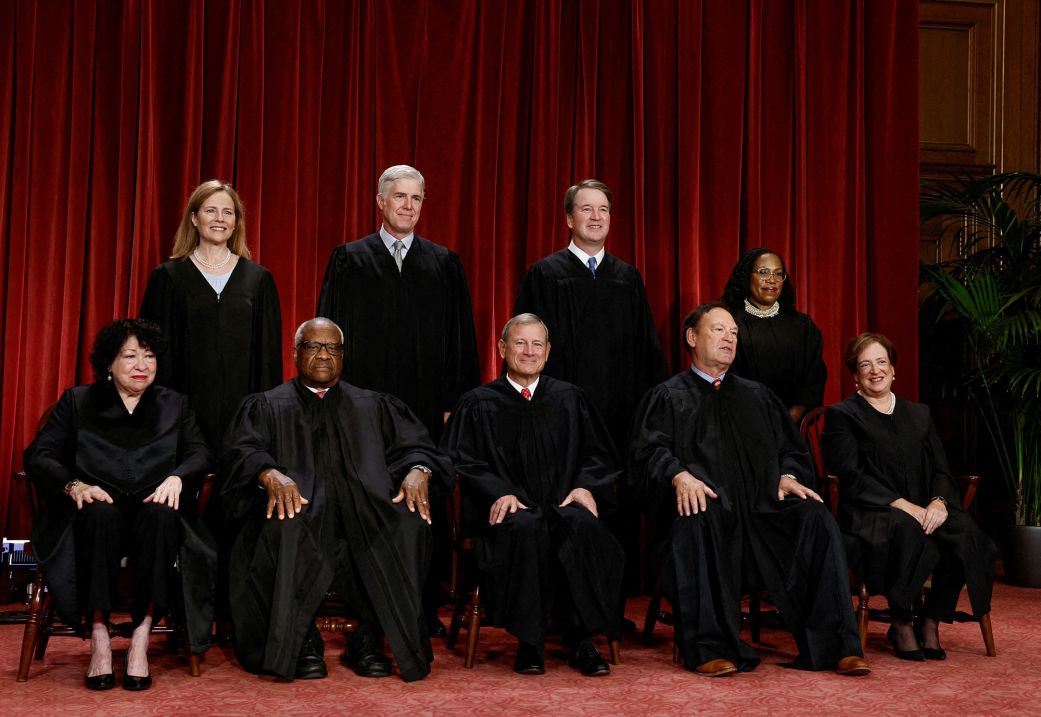
WASHINGTON, D.C. (NPA) — The U.S. Supreme Court has struck down President Donald Trump’s executive order seeking to end birthright citizenship, reaffirming that children born on American soil are entitled to U.S. citizenship under the Fourteenth Amendment, regardless of their parents’ immigration status.
The landmark ruling represents a major victory for advocates of constitutional birthright citizenship and a significant setback for the Trump administration’s immigration agenda.
The case stemmed from Executive Order 14160, signed by President Trump on January 20, 2025, which sought to deny automatic U.S. citizenship to children born in the country to parents who were unlawfully or temporarily present in the United States.

The order was challenged in multiple federal courts, which blocked its implementation on the grounds that it conflicted with the Citizenship Clause of the Fourteenth Amendment, which states that, “All persons born or naturalised in the United States, and subject to the jurisdiction thereof, are citizens of the United States.”
In a 6-3 decision delivered on June 30, the Supreme Court upheld that constitutional guarantee.
Writing for the majority, Chief Justice John Roberts said children born to parents who are unlawfully or temporarily present in the United States satisfy the constitutional requirements for citizenship at birth.
Roberts said the framers of the Fourteenth Amendment intended to extend citizenship broadly, rejecting the administration’s narrower interpretation of the Constitution.
Justice Samuel Alito dissented, arguing that birthright citizenship should apply only to children whose parents owe exclusive allegiance to the United States.
President Trump has long campaigned against birthright citizenship, describing it as a policy that encourages illegal immigration and so-called “birth tourism.”
Following the ruling, Trump criticised the decision in a post on his Truth Social platform, describing the judicial system as “rigged” and pledging to continue pursuing changes to U.S. immigration policy.
The decision preserves the long-standing constitutional interpretation established by the 1898 Supreme Court ruling in United States v. Wong Kim Ark, which affirmed citizenship for children born in the United States to non-citizen parents.
Immigration advocates welcomed the judgment, describing it as a victory for constitutional rights and warning that overturning birthright citizenship could have left hundreds of thousands of children without a recognised nationality.
Legal analysts said the ruling reinforces one of the most enduring principles of American constitutional law by affirming that citizenship guaranteed under the Fourteenth Amendment cannot be revoked through executive action.
The judgment is expected to have far-reaching implications for U.S. immigration policy and future constitutional challenges involving executive authority.

Biafra activist Simon Ekpa awaits Finnish Appeal Court ruling on six-year jail term tomorrow

Kano police arrest four suspects, recover three stolen vehicles

Amnesty International condemns police blocking of ‘Tinubu Must Go’ protest in Kano

SERAP sues CBN over alleged unaccounted $6.23m election funds, ₦1.63tn in other public funds

Abia police arrest 40-year-old suspect, recover fake ₦200 notes in Aba

Media Freedom Coalition demands justice 20 years after Anna Politkovskaya’s assassination

Finance Ministry Unaware of N124.86bn CBN withdrawal, witness tells court in Emefiele trial

Former US federal employee pleads guilty to $194 million government fraud scheme
- Tinubu commissions NRS Headquarters, says new tax reforms will drive prosperity
- Tinubu assures investors of regulatory stability as Ogun, DP World sign $7bn port, SEZ MoUs
- Climate change anxiety is rising — and so is the willingness to act on it
- Ohaukwu LG Chairman Ituma breaks ground for modern diagnostic centre, blood bank
- Baseball boosts TBS, NFL gives ESPN a kick and streamers love ‘Squid’
Community Discussion