

France’s top court blocks social media ban for under-15s
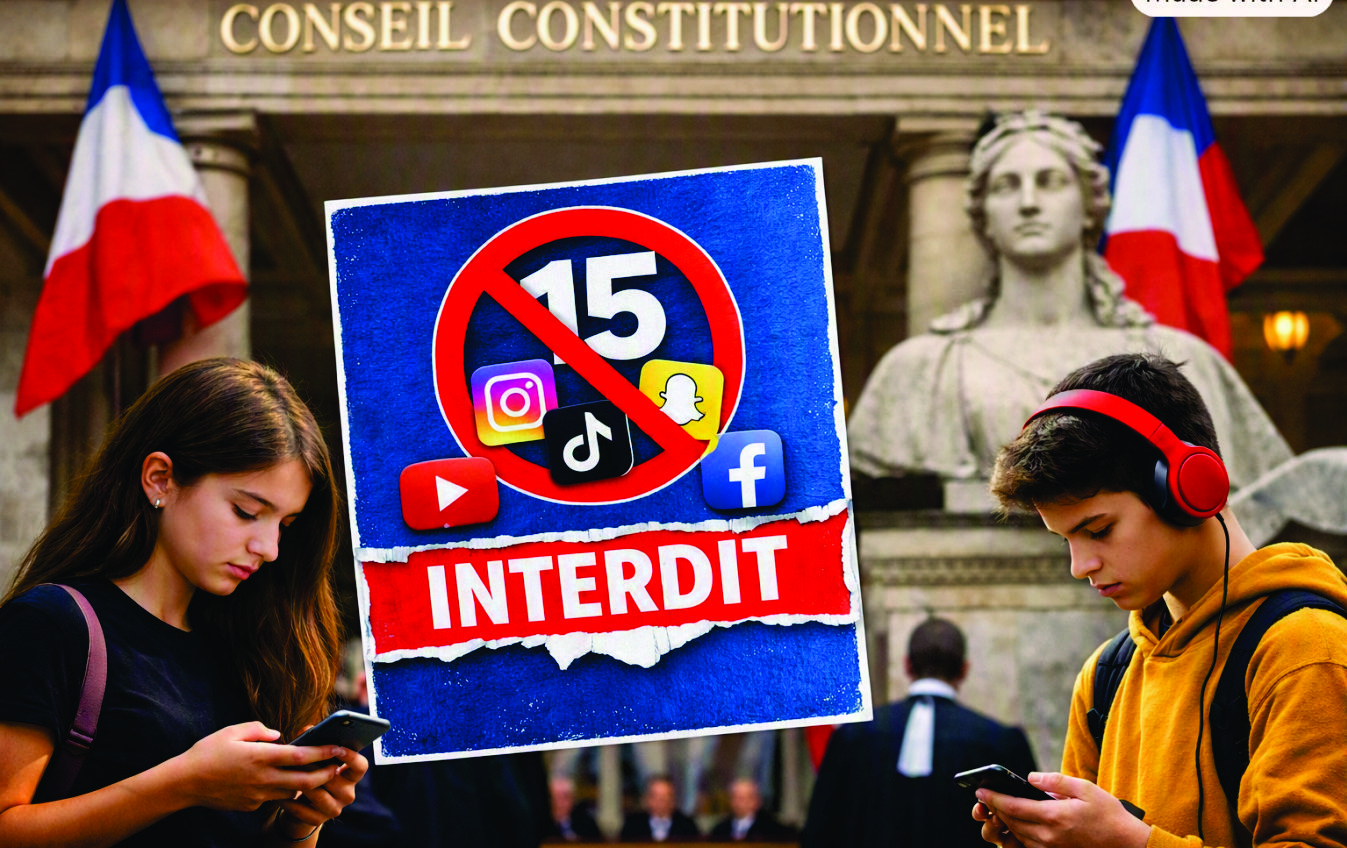
PARIS, France (NPA) — France’s Constitutional Council has blocked a law that would have banned children under 15 from accessing social media, ruling that the measure infringed fundamental freedoms and lacked sufficient safeguards for privacy.
The ruling on Friday came just weeks before the legislation was due to take effect at the start of the new school year in September. The law had been approved by Parliament in July as part of efforts to protect children from the harmful effects of social media.
The Council found that the legislation raised concerns over freedom of expression and communication, as well as the protection of private life. It also criticised the lack of clarity and adequate legal safeguards surrounding the age-verification system that would have been required to enforce the ban.

The legislation was designed to prohibit access to social media services by minors below the age of 15 and require platforms to establish secure systems for verifying users’ ages. The measure was aimed at addressing concerns over cyberbullying, exposure to harmful content and other risks associated with social media use among children.
The French Parliament approved the final version of the legislation on July 21 after lawmakers from the National Assembly and Senate reached agreement. The measure was scheduled to apply from the September school year.
Supporters of the ban argued that stronger restrictions were necessary to protect young people from online harms. French lawmakers have pointed to concerns including excessive exposure to harmful content, anxiety, sleep disruption and cyberbullying, while also criticising social media platforms for failing to adequately protect minors.
However, the Constitutional Council concluded that the broad prohibition could not be implemented in its approved form without disproportionately affecting constitutionally protected freedoms.
A major concern was the requirement for age verification. Because platforms would need to determine whether users were under or over 15, the system raised questions about how personal information would be collected and protected.
The decision represents a setback for President Emmanuel Macron, who had supported stronger restrictions on children’s access to social media. However, the French government has indicated that it intends to pursue the policy in a revised form.
Macron has asked Prime Minister Sébastien Lecornu to work on a new version of the legislation that addresses the constitutional concerns, with the government aiming to develop a legally compliant framework for protecting minors online.
The French debate comes amid growing efforts across Europe to regulate children’s access to social media. The issue has also gained international attention as governments seek to balance child protection with freedom of expression, privacy and access to digital services.
France’s attempt was particularly significant because Parliament adopted a broad prohibition covering social media services for all users under 15, rather than limiting restrictions to specific platforms considered especially harmful. The Senate had previously considered a more targeted approach, including a list of platforms that would be prohibited for younger users, but the final parliamentary agreement adopted a broader ban.
The European Union is also considering measures to strengthen protections for children online. European Commission President Ursula von der Leyen has indicated support for exploring age-based restrictions, while an EU expert group has examined options for protecting younger users from harmful digital environments
The Constitutional Council’s ruling therefore does not end France’s effort to restrict children’s access to social media. Instead, it requires the government to reconsider how such restrictions can be designed without disproportionately infringing constitutional rights.
For French policymakers, the challenge now is to establish an effective system that protects children from online harms while providing clear rules on age verification, privacy and freedom of expression.
The government is expected to continue discussions on a revised framework, while civil society and digital rights advocates are likely to press for measures that focus on platform responsibility, parental controls, digital education and protection of children’s personal data.
The ruling leaves France without the planned under-15 social media ban for the September 2026 school year, but the broader debate over how best to protect children online is far from over.

Almost 1 in 3 EU deaths linked to circulatory system diseases
EU urges tougher pressure on Russia, stronger maritime security
Von der Leyen outlines vision for a stronger, more independent Europe in 2026 State of the Union address

Scotland, Wales, and Northern Ireland leaders intensify push to break away from UK

Scotland, Wales and Northern Ireland leaders plan fresh push for self-determination
EU unity crucial as bloc prepares for 2028-2034 budget, President Costa says
JUST IN: EU releases €1.4bn from frozen Russian assets to support Ukraine

Spain warns irregular entry through Ceuta, Melilla does not grant right to stay or access EU
- Tinubu commissions NRS Headquarters, says new tax reforms will drive prosperity
- Tinubu assures investors of regulatory stability as Ogun, DP World sign $7bn port, SEZ MoUs
- Climate change anxiety is rising — and so is the willingness to act on it
- ESUTH gets N500m surgical upgrade as Mbah pushes for top-tier medical excellence
- Baseball boosts TBS, NFL gives ESPN a kick and streamers love ‘Squid’
Community Discussion