

Chidoka faults Abuja court's bail conditions, calls for judicial restraint
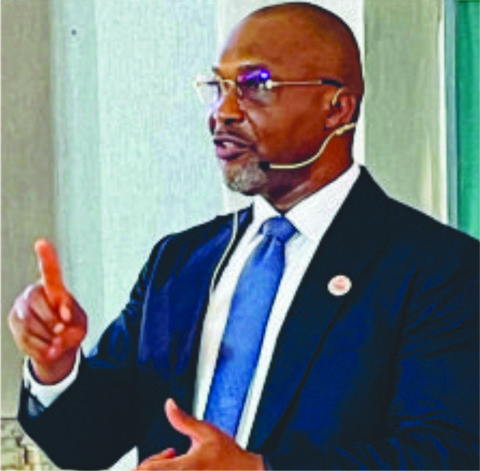
ABUJA, Nigeria (NPA) — Former Minister of Aviation and public policy expert, Osita Chidoka, has criticised the bail conditions imposed by a High Court in Abuja on a defendant in a corruption case, arguing that the requirements are excessive, unrealistic, and inconsistent with established legal principles.
In a statement titled “Bail and the Dignity of the Law: A Call for Judicial Restraint,” Chidoka said the court rightly granted bail after finding no persuasive reason to deny it, but imposed conditions that few Nigerians could realistically satisfy.
According to him, the court required the defendant’s sureties to be serving federal civil servants on Grade Level 16 or above, each owning property in Abuja valued at ₦500 million, while one must also provide a bank guarantee of ₦15 billion.

The former Corps Marshal and Chief Executive of the Federal Road Safety Corps (FRSC) argued that the conditions bear little relationship to the earning capacity of career civil servants.
He noted that a public officer who joins the service on Grade Level 08 and rises to Grade Level 16 over nearly three decades may earn between ₦80 million and ₦100 million throughout an entire career.
“By the court’s ruling, we are asking that officer to show assets worth five times his lifetime earnings and to stand behind a liability of ₦15 billion, roughly 150 times everything an honest career could ever yield,” Chidoka said.
He argued that such requirements send the troubling message that legitimate public service cannot generate the level of wealth the court expects from a credible surety.
According to him, the implication is that a civil servant considered trustworthy is one whose assets far exceed what can reasonably be explained by official earnings, a position he described as particularly problematic in a corruption-related case.
Chidoka also criticised the requirement that sureties surrender their international passports, noting that many senior public officers travel regularly on official assignments, training programmes, and international engagements.
He said such restrictions could hinder them from performing duties assigned by the government.
Drawing a comparison with the United Kingdom, Chidoka argued that requiring a British civil servant to own property in affluent areas such as Belgravia, Chelsea, or Mayfair and provide a guarantee equivalent to ₦15 billion would trigger public outrage and questions about proportionality.
The former minister further cited Section 165 of the Administration of Criminal Justice Act, which provides that bail conditions should not be excessive.
He also referenced the Court of Appeal’s decision in Dasuki v. Director-General, State Security Service, where the court held that requiring serving public servants as sureties was unknown to law, contrary to public service rules, and detrimental to anti-corruption efforts.
According to him, while the Court of Appeal struck down a ₦100 million bail requirement in that case, the latest ruling imposed significantly higher obligations.
Chidoka maintained that there is a contradiction in granting bail on the basis that an accused person is not a flight risk while simultaneously imposing conditions that effectively make release impossible.
“Conditions that cannot be met are not conditions; they are a denial of bail by arithmetic,” he said.
He stressed that the debate was not about the innocence or guilt of any defendant but about the proper application of the law.
“The purpose of bail is to guarantee appearance. It was never to measure a man’s wealth, punish him before conviction, or make honest public service a thing to be ashamed of,” he added.
Chidoka called for an end to what he described as the judiciary’s fixation with wealthy sureties, expensive Abuja properties, and financial status as measures of credibility.
He argued that the law was never intended to elevate wealth above character or make access to justice dependent on economic privilege.


Biafra activist Simon Ekpa awaits Finnish Appeal Court ruling on six-year jail term tomorrow

Kano police arrest four suspects, recover three stolen vehicles

Amnesty International condemns police blocking of ‘Tinubu Must Go’ protest in Kano

SERAP sues CBN over alleged unaccounted $6.23m election funds, ₦1.63tn in other public funds

Abia police arrest 40-year-old suspect, recover fake ₦200 notes in Aba

Media Freedom Coalition demands justice 20 years after Anna Politkovskaya’s assassination
Finance Ministry Unaware of N124.86bn CBN withdrawal, witness tells court in Emefiele trial
Former US federal employee pleads guilty to $194 million government fraud scheme
- Tinubu commissions NRS Headquarters, says new tax reforms will drive prosperity
- Tinubu assures investors of regulatory stability as Ogun, DP World sign $7bn port, SEZ MoUs
- Climate change anxiety is rising — and so is the willingness to act on it
- Ohaukwu LG Chairman Ituma breaks ground for modern diagnostic centre, blood bank
- Baseball boosts TBS, NFL gives ESPN a kick and streamers love ‘Squid’
Community Discussion