Category: Politics

  • Nigeria moves to institutionalise landmark ACReSAL project

    Nigeria moves to institutionalise landmark ACReSAL project

    ABUJA, NIGERIA (NPA) — 27 March 2026 — The Federal Government of Nigeria has charted a path to transform the Agro-Climatic Resilience in Semi-Arid Landscapes (ACReSAL) project from a time-bound initiative into a permanent pillar of national environmental policy.

    At a high-level meeting in Abuja, three cabinet ministers overseeing the project reached consensus on the need to sustain ACReSAL’s achievements in landscape restoration and community resilience beyond its current lifespan.

    A statement on Friday, signed by Jane Ozuruoke, for Director, Press and Public Relations, Federal Ministry of Environment, quoted the Steering Committee Chairman and Minister of Environment, Mallam Balarabe Abbas Lawal, as stressing that the “Knowledge Gain” from ACReSAL must serve as Nigeria’s permanent blueprint for environmental stability.

    Minister of Water Resources and Sanitation, Professor Joseph Utsev, called for immediate institutionalisation through a strong federal component to oversee sustainability strategies. Minister of State for Agriculture and Food Security, Senator Aliyu Sabi Abdullahi, emphasised the economic wisdom of federal investment at the grassroots level, noting its high impact and cost-effectiveness.

    The meeting also highlighted the World Bank’s ranking of ACReSAL as one of its best-performing projects in Nigeria, setting the stage for the forthcoming Mid-Term Review (MTR). The review will assess achievements against Project Development Objectives and refine strategies for ambitious land restoration targets.

    To bolster momentum, ministers discussed expanded collaboration with the International Institute of Tropical Agriculture (IITA), aiming to integrate climate-smart research into ACReSAL and equip farmers with resilience-building techniques.

    Recognising the project’s track record, ministers also explored additional financing to scale up restoration activities, reach more vulnerable communities and accelerate Nigeria’s climate resilience goals.

    The meeting concluded with a collective affirmation that ACReSAL has evolved into a national standard for multi-sectoral success. Plans for a permanent agency and expanded funding are expected to secure the sustainability of gains across Nigeria’s semi-arid landscapes.

    The MTR will be held in Kaduna with participation from ministers, commissioners, permanent secretaries, the World Bank and other stakeholders.

  • China accuses U.S. of nuclear ‘smears’, demands disarmament leadership

    China accuses U.S. of nuclear ‘smears’, demands disarmament leadership

    INTERNATIONAL (Agency Report) — 27 March 2026 — China’s Ministry of National Defence on Thursday rejected recent United States allegations of nuclear testing as “groundless smears” and urged Washington to honour its responsibilities on disarmament.

    Spokesperson Jiang Bin, responding to media questions, stressed that China maintains a strictly self-defensive nuclear strategy, adheres to a no-first-use policy, and pledges never to use or threaten nuclear weapons against non-nuclear states or nuclear-weapon-free zones. He said China’s nuclear capability remains at the minimum required for national security and that Beijing does not engage in an arms race.

    Jiang highlighted China’s active role in the review process of the Treaty on the Non-Proliferation of Nuclear Weapons and its participation in meetings of the five recognised nuclear powers. He noted that Beijing continues dialogue on arms control with all parties.

    Turning his criticism on Washington, Jiang accused the U.S. of undermining global stability by withdrawing from treaties, investing heavily in upgrading its nuclear triad, developing the “Golden Dome” missile defence system, and deploying intermediate-range weapons in the Asia-Pacific. He also cited the lapse of the New START treaty, U.S. interest in resuming nuclear testing, and double standards in non-proliferation.

    “These measures have seriously weakened global strategic stability,” Jiang said. “As the country with the largest nuclear arsenal, the U.S. should earnestly fulfil its special and primary responsibility for nuclear disarmament, make substantial reductions in its arsenal, and create conditions for other nuclear-weapon states to participate in disarmament.” (Xinhua/NAN).

  • Media a key player in fight against corruption — Minister

    Media a key player in fight against corruption — Minister

    ABUJA, NIGERIA (NPA) — 27 March 2026 — The Minister of Information and National Orientation, Mohammed Idris, has emphasised the media’s pivotal role in shaping public perception and encouraging citizen engagement in the fight against corruption.

    Speaking at a one-day workshop organised by the Independent Corrupt Practices and Other Related Offences Commission (ICPC) in collaboration with the Nigeria Union of Journalists (NUJ) in Abuja, Idris described the theme, “Re-invigorating the National Anti-corruption Strategy,” as timely and essential, calling for sustained media involvement and responsible journalism.

    Represented by the Director-General of Voice of Nigeria, Jibrin Ndace, the Minister noted that modern leadership demands strategic media engagement and highlighted the importance of media-government partnerships in promoting transparency.

    He commended the ICPC Chairman for enhancing institutional visibility through media collaboration.

    “In the 21st century, no modern leader can afford not to lead from the front, nor to lead without partnering with the media,” he said.

    He described journalists as loyal institutional allies whose commitment to professional excellence counters misinformation and strengthens national discourse. He also cautioned against the spread of fake news, urging journalists to uphold ethical standards in an age of unverified social media content.

    “We are in an age of noise, misinformation and disinformation. But professionals like those gathered here remain the buffers who ensure credible information prevails,” he said.

    Idris outlined the Ministry’s five-pillar communication agenda: restoring public trust, amplifying government policies, reorienting national values, modernising technology and fostering innovation in the media ecosystem.

    He encouraged journalists to continue partnering with government agencies, describing them as “the easiest people to relate with” and loyal when valued.

    ICPC Chairman, Dr Musa Aliyu (SAN), in his welcome address, called for deeper collaboration between the media and anti-graft institutions. He described the media as a powerful force for accountability and transparency.

    Aliyu said the workshop builds on an earlier engagement held in October 2024 and praised the NUJ for its commitment to professionalism and truth.

    He noted the workshop was not merely a discussion forum but a strategic platform for generating practical ideas and strengthening cooperation ahead of the next phase of Nigeria’s National Anti-Corruption Strategy.

    “The media remains one of the most powerful instruments in the fight against corruption. As journalists, you are not merely observers — you are watchdogs, agenda-setters and catalysts for reform,” he said.

    “Your role in investigating and exposing corruption, amplifying citizens’ voices and holding public officials accountable is indispensable. Without a vibrant, responsible and ethical press, the anti-corruption fight risks losing one of its strongest pillars.”

    Senator Emmanuel Udende, Chairman of the Senate Committee on Anti-Corruption and Financial Crimes, in his goodwill message, underscored the media’s role in promoting transparency and public accountability. Represented by the Committee Clerk, Umenike Uboh, he described the media as the “Fourth Estate of the Realm” with the power to influence and mobilise society.

    He urged stakeholders to forge stronger alliances and develop actionable strategies to shift Nigeria’s narrative from scepticism to collective responsibility.

    Managing Director of the News Agency of Nigeria (NAN), Malam Ali Mohammad Ali, represented by his Special Assistant on Editorial Matters, Mr Ephraim Sheyin, said journalists are well-positioned to tackle corruption, given their constitutional role and history of investigative reporting.

    Ali highlighted challenges such as inadequate whistle-blower protections, threats to personal safety and limited access to information, urging journalists to navigate these hurdles in the anti-corruption crusade.

    Also speaking, the Director-General of VON pledged the agency’s continued collaboration with anti-corruption institutions to amplify messages promoting transparency and accountability both locally and internationally.

    Ndace reaffirmed VON’s role as a dependable ICPC partner and encouraged stakeholders to leverage the agency’s multilingual broadcasting capabilities and other publicly funded media platforms to promote accountability.

    The event brought together NUJ Council Chairmen and stakeholders from across the country. (NAN).

  • FG, Access Bank reaffirm commitment to women empowerment in creative economy

    FG, Access Bank reaffirm commitment to women empowerment in creative economy

    ABUJA, NIGERIA (Agency Report) — 27 March 2026 — The Federal Government has reaffirmed its commitment to empowering women as key drivers of the creative economy, focusing on access to finance, skills development and leadership opportunities.

    Minister of Art, Culture, Tourism and the Creative Economy, Hannatu Musawa, stated this in Lagos at the International Women’s Day Conference organised by Access Bank Plc, which drew over 5,000 participants onsite and online.

    Represented by CBAAC Director-General Mrs Aisha Adamu, Musawa said women are increasingly leading in business, innovation and social change. She identified culture, capital and courage as critical factors, stressing that culture is both identity and an economic asset. She noted the ministry is repositioning culture through creative hubs, skills development and enterprise support targeting women in film, fashion, digital media and tourism. Women-owned businesses account for about 40 per cent of SMEs but face significant funding gaps.

    “Too many ideas remain small not because they lack potential, but because they lack access to capital,” she said, adding that government is working to unlock targeted funding, strengthen market access and promote women’s inclusion in leadership.

    Access Bank Chairman Mrs Ifeyinwa Osime urged deliberate investment in women as a catalyst for growth, stressing empowerment should be seen as a strategy, not charity. She noted women own 39 per cent of businesses and drive nearly 40 per cent of new enterprises, while SMEs contribute 48 per cent of GDP and over 80 per cent of jobs. Yet financing gaps persist, constraining productivity.

    “No economy can optimise its potential while underinvesting in half its population,” she said, highlighting Access Bank’s W Initiative and Womenpreneur Pitch-a-ton programme, which provides financing, training and healthcare support.

    Former Education Minister Dr Oby Ezekwesili stressed prioritising women’s inclusion, noting that societies transform when such issues are deliberately addressed. She said removing barriers could unlock vast potential, with agricultural output rising by up to 30 per cent if women had equal access to inputs. She commended Access Bank’s interventions and urged women to invest in knowledge, build partnerships and seek financing opportunities. In a one-on-one session, she emphasised shared values as “our internal currencies.”

    Mrs Nene Kunle-Ogunlusi, Group Head, Women Banking, Access Bank, said the bank remains committed to supporting women across all segments, citing a recent Women’s Day programme for market women in Oyingbo, Lagos, offering free health checks, beauty services and financial education.

    Stakeholders called for sustained collaboration between the government and the private sector to expand opportunities for women and drive inclusive growth. (NAN).

  • APC National Convention: Mohammed Idris outlines expectations for weekend

    APC National Convention: Mohammed Idris outlines expectations for weekend

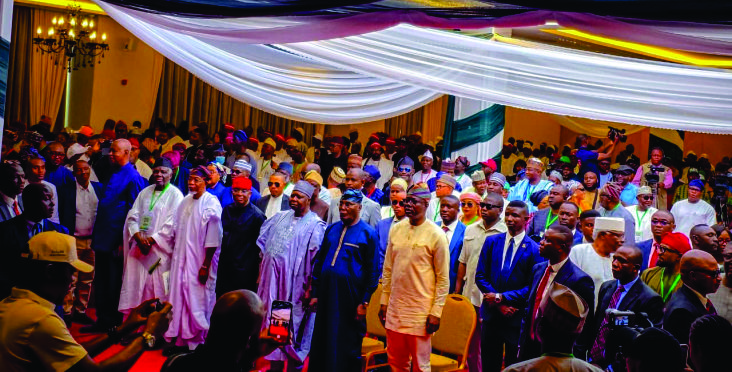
    AFRICA (NPA) — 26 March 2026 — The Minister of Communications and National Orientation, Mohammed Idris, briefed the media in Abuja today regarding the All Progressives Congress (APC) National Convention, scheduled to take place in Nigeria’s capital from Friday through Sunday at Eagle Square, Abuja.

    According to the minister, the APC—one of the largest political parties in the world—is preparing for its 8th National Convention, which will officially be held on Saturday. He described the event as a significant moment for the party and the country.

    Delegates from all 36 states of the federation, along with representatives from the Federal Capital Territory (FCT), are expected to attend.

    Idris stated that the convention will serve as a platform for policy engagement and a formal transition to the newly elected party executives. He described it as a moment of reflection and consolidation for the APC.

    “The APC remains committed to unity in progress, consolidating the Renewed Hope agenda of the present administration,” Idris said. “It will be a concise statement of who we are, where we have come from, and where we are going—projecting continuity and clarity of purpose.”

    He added that from its inception, the APC has been a platform for reform, providing a compass to guide the party’s actions and decisions. The convention, he said, offers an opportunity to highlight the party’s achievements under the leadership of President Bola Ahmed Tinubu.

    He added that the Renewed Hope agenda guides the party’s policy directions and deepens it’s commitment to ensuring that government and the people are in sync to maintain unity of purpose.

  • Ghana advises citizens travelling to Senegal on new health directive

    Ghana advises citizens travelling to Senegal on new health directive

    AFRICA (NPA) — 26 March 2026 — The Republic of Ghana’s Ministry of Foreign Affairs has issued an advisory to Ghanaians planning to travel to Senegal, urging them to comply with new health directives introduced by the West African country.

    According to the Ghanaian authorities, Senegal has recommended vaccination against certain communicable diseases, notably yellow fever, diphtheria, pertussis and tetanus (DPT), measles, and hepatitis A and B, as part of measures to safeguard travellers’ health and safety.

    The advisory clarified, however, that presentation of vaccination certificates for these diseases is not mandatory for entry into Senegalese territory.

    The statement released on Thursday reads in part: “Ghanaian travellers are, nonetheless, encouraged to consult healthcare providers for their routine vaccinations prior to travel, in order to safeguard their health while abroad.”

    It further stressed that the Ministry remains committed to providing timely information to ensure the safety, welfare, and well-being of Ghanaian citizens travelling outside the country.

  • Nigeria, EU strengthen strategic partnership at Ministerial Dialogue, issue joint Communiqué

    Nigeria, EU strengthen strategic partnership at Ministerial Dialogue, issue joint Communiqué

    ABUJA, NIGERIA (NPA) — 26 March 2026 — Nigeria and the European Union (EU) have reaffirmed their strategic partnership, pledging deeper cooperation across peace, security, trade, climate, migration, and democratic governance during the Eighth Ministerial Dialogue held in Abuja. The meeting was co-chaired by Nigeria’s Foreign Minister, H.E. Yusuf Maitama Tuggar, and the EU’s High Representative for Foreign Affairs and Security Policy, H.E. Kaja Kallas.

    The dialogue provided an opportunity to consolidate recent engagements and advance practical cooperation. At a time of global geopolitical uncertainty, both sides stressed the importance of reinforcing alliances that deliver tangible benefits to citizens. President Bola Ahmed Tinubu was formally invited to Brussels by the President of the European Council, with Tinubu expressing readiness to accept.

    Multilateralism and Global Peace

    Nigeria and the EU reiterated their commitment to multilateralism, democracy, human rights, and the rule of law. They emphasised protecting fundamental freedoms, including gender equality and freedom of expression. The EU reaffirmed support for reforming the UN Security Council to give Africa stronger representation.

    Both sides restated support for peace in conflict zones such as Ukraine, the Middle East, Sudan, South Sudan, the Democratic Republic of Congo, Somalia, and the Sahel.

    Climate, Energy, and West African Security

    Climate change and energy transition featured prominently. Nigeria and the EU agreed to dialogue on renewable energy investment in solar, wind, and clean hydrogen, recognising Nigeria’s potential. They also pledged to strengthen climate resilience, particularly in the Lake Chad Basin.

    On regional security, the EU acknowledged Nigeria’s pivotal role in safeguarding democracy and stability in West Africa. Both sides pledged enhanced collaboration on counter-terrorism, intelligence sharing, and preventing the financing of terrorism. They expressed readiness to support the operationalisation of the ECOWAS Standby Force.

    Peace, Security, and Humanitarian Action

    The communiqué highlighted the first Peace, Security and Defence Dialogue held in Brussels in February 2026. The EU signalled readiness to step up support for Nigeria’s security challenges, including possible assistance under the European Peace Facility and renewed support for the Multi-National Joint Task Force around Lake Chad.

    Both sides emphasised protecting civilians, particularly children affected by terrorism, and expressed concern over the deteriorating situation in the Sahel. Humanitarian cooperation remains central, with the EU committing €33 million in 2026 to support vulnerable populations in Nigeria’s North-East and North-West.

    Migration and Mobility

    Migration was recognised as a multidimensional issue requiring humane responses. Nigeria and the EU reaffirmed readiness to deepen cooperation on migration governance, tackling irregular migration, trafficking, and smuggling.

    A milestone was the initialling of the EU–Nigeria Readmission Agreement, with both sides expressing willingness to expedite its signature. The agreement will enhance cooperation on return, readmission, and reintegration, while also exploring legal migration pathways, including a potential Talent Partnership. Dialogue on visa policy was also agreed.

    Trade, Investment, and Global Gateway

    The EU remains Nigeria’s largest trading and investment partner. Both sides welcomed progress from the Senior Officials’ Trade and Investment Dialogue and technical working groups. Nigeria was encouraged to adopt the draft bill on Geographical Indications to strengthen trade facilitation.

    The EU’s Global Gateway strategy was highlighted as a driver of social, green, and digital transition. Current priorities in Nigeria include green energy, agriculture, digitalisation, transport, health, and education. Notable projects include the Omi-Eko electric waterways system in Lagos, supported by €361 million from the EU, EIB, and France. Additional initiatives announced include loans for healthcare manufacturing, agriculture value chains, and optic fibre rollout.

    Science, Technology, and Digital Cooperation

    Nigeria and the EU welcomed negotiations on a science, technology, and innovation agreement, expected to be finalised by June 2026. Nigerian participation in EU research programmes has doubled under Horizon Europe compared to Horizon 2020.

    Education cooperation under Erasmus+ continues to thrive, with Nigeria ranking first in Africa for Erasmus Mundus scholarships. Both sides pledged to expand opportunities for Nigerian institutions and students, particularly in renewable energy, agriculture innovation, and digital entrepreneurship.

    Digital transformation was acknowledged as a pillar of sustainable development. The EU–Nigeria Digital Economy Package will focus on infrastructure, eGovernance, cybersecurity, and digital skills development.

    Looking Ahead

    The dialogue concluded with both sides agreeing to hold regular annual ministerial dialogues, with the ninth session scheduled for Brussels in 2027. The EU delegation expressed gratitude for Nigeria’s hospitality and reaffirmed commitment to deepening cooperation across all areas of mutual concern.

  • IDF confirms killing of IRGC Navy Commander Alireza Tangsiri and Intelligence Chief Behnam Rezaei

    IDF confirms killing of IRGC Navy Commander Alireza Tangsiri and Intelligence Chief Behnam Rezaei

    MIDDLE EAST (NPA) — 26 March 2026 — The Israel Defence Forces (IDF) have officially announced the killing of Admiral Alireza Tangsiri, Commander of the Islamic Revolutionary Guard Corps (IRGC) Navy.

    In a statement, the IDF noted that Tangsiri had served in the role for the past eight years, following earlier senior positions within the IRGC Navy, including overseeing what Israel described as the regime’s terror activities.

    The IDF accused him of responsibility for repeated strikes against oil tankers and trading vessels, portraying him as a central figure who posed a threat to maritime navigation and freedom of trade in the Strait of Hormuz and the wider international maritime domain.

    According to the statement, during Operation Roaring Lion, Tangsiri directed efforts to close the Strait of Hormuz and oversaw maritime attacks against countries in the Middle East, as well as against U.S. and allied energy infrastructure.

    The IDF added that he was directly implicated in disrupting the global economy and had been subject to numerous international sanctions due to his involvement in attacks on vessels in international waters, as well as in the transfer of air defence systems and unmanned aerial vehicles (UAVs) to Russia and Syria.

    The statement further revealed that another senior Iranian military official was killed alongside Tangsiri — Behnam Rezaei, Head of the IRGC Navy Intelligence Directorate. Rezaei was said to have been responsible for intelligence collection on regional countries and for leading cooperation with various intelligence organisations.

  • EU parliament endorses talks on regulation for returning illegal immigrants

    EU parliament endorses talks on regulation for returning illegal immigrants

    INTERNATIONAL (NPA) — 26 March 2026 — The European Parliament has endorsed the opening of negotiations with the Council on a new legal framework for the return of people without the right to remain in the European Union.

    With 389 votes in favour, 206 against and 32 abstentions, MEPs agreed to proceed to the next stage of the legislative process for an updated EU common system for the return of third-country nationals staying illegally in the EU.

    According to a statement issued by Polona Tedesko, Press Officer (SI), the vote on Thursday followed three separate requests by the S&D, Greens/EFA, and The Left political groups challenging the 9 March 2026 decisions taken in the Civil Liberties Committee, in line with rule 72 of Parliament’s rules of procedure.

    The statement added that rapporteur Malik Azmani (Renew, NL) will lead Parliament’s negotiating team. Parliament’s negotiating position and a summary of key points are available, with the first round of negotiations with the Cyprus Presidency scheduled to take place shortly.

    If the regulation is eventually adopted, illegal immigrants found without legal grounds to remain in the EU would face formal removal procedures. These would include identification, detention where necessary, and repatriation to their country of origin or transit, with safeguards in place for vulnerable individuals such as minors and asylum seekers.

    The reforms aim to strengthen coordination between member states, improve efficiency, and deliver measurable results in managing migration across the Union.

  • Nigeria approves ₦32.8bn for primary healthcare in Q1 2026

    Nigeria approves ₦32.8bn for primary healthcare in Q1 2026

    ABUJA, NIGERIA (NPA) — 26 March 2026 — The Federal Government has approved the disbursement of ₦32.8 billion under the Basic Healthcare Provision Fund (BHCPF) for the first quarter of 2026, advancing BHCPF 2.0 to strengthen primary healthcare, improve maternal and child health, and expand access to essential services nationwide.

    The decision was taken at the Q1 2026 meeting of the Ministerial Oversight Committee (MOC), which reviewed reforms to improve financing, coordination, and frontline results. Gateway agencies — NHIA, NPHCDA, and NCDC — presented updates, while ALGON and civil society groups shared field-level insights.

    A key focus was the accelerated rollout of BHCPF 2.0 under the Sector-Wide Approach (SWAp), aligning financing and accountability with the Nigeria Health Sector Renewal Investment Initiative (NHSRII). Priority interventions include MAMII (reducing maternal and newborn deaths), HOPE PHC (boosting service readiness and workforce capacity), and the National Health Fellows Programme (strengthening leadership and accountability).

    The Committee also reviewed progress on the National Emergency Medical Services and Ambulance System (NEMSAS) and broader maternal and child health indicators. Coordinating Minister of Health, Prof. Muhammad Ali Pate, stressed that BHCPF 2.0 ensures resources translate into real improvements at the primary care level. Minister of State, Dr Iziaq Adekunle Salako, added that outcomes must be visible to Nigerians through safer deliveries and stronger emergency response.

    Resolutions adopted include structured private sector engagement, revised emergency transport tariffs, faster programme reviews, and reinforced quality assurance. The Ministry urged states, partners, and the private sector to align with BHCPF 2.0 priorities, while encouraging Nigerians to utilise primary healthcare services as access expands nationwide.