Category: Politics

  • Peter Obi Attack: Dr. SKC Ogbonnia Writes to Donald Trump on Nigeria’s Democratic Crisis

    Peter Obi Attack: Dr. SKC Ogbonnia Writes to Donald Trump on Nigeria’s Democratic Crisis

    LAGOS, NIGERIA (NPA): Following the reported attack on Mr. Peter Obi by suspected political hoodlums in Benin City, the Edo State capital, on Monday, former APC presidential aspirant Dr. SKC Ogbonnia has written to U.S. President Donald Trump, urging him to intervene.

    In his letter, Ogbonnia described Trump as “the leader of the free world” and appealed for action to hold accountable those he alleges are responsible for what he termed a “total collapse of democracy in Nigeria.”

    Dr. Ogbonnia, a businessman, academic, and politician, hails from Ugbo in Awgu Local Government Area of Enugu State. He is the Chairman of First Texas Energy Corporation, an Adjunct Professor of Leadership, and a regular commentator on Nigerian politics and governance.

    The letter, republished below, outlines his concerns regarding Nigeria’s democratic trajectory and calls for international attention to safeguard democratic values in the country.

    ———————————————————————-

    A Letter To Donald Trump On The Assassination Attempt On Peter Obi, By SKC Ogbonnia

    February 27, 2026

    President Donald J. Trump

    The White House

    1600 Pennsylvania Avenue NW

    Washington, D.C. 20500

    Subject: Why The World Should Hold Tinubu Responsible For The Assassination Attempt On Peter Obi

    Dear Mr. President,

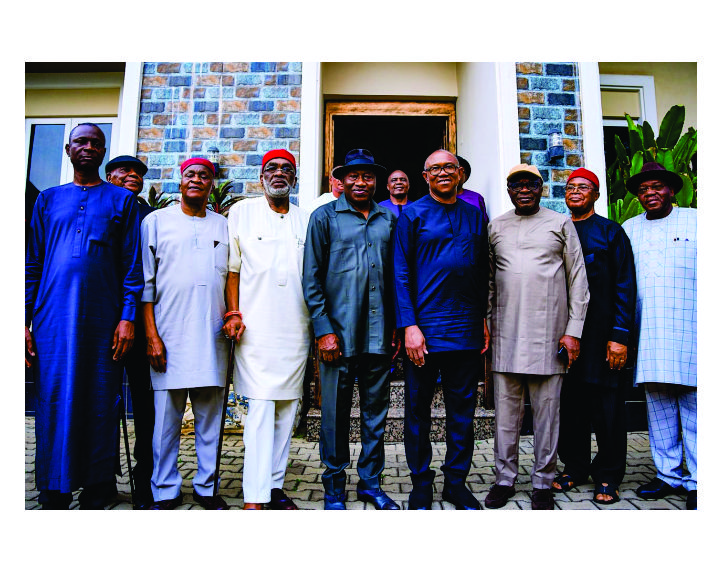
    I am writing as a voice for the millions of Nigerians and Nigerian Americans who look up to your leadership as the standard-bearer for the free world and a passionate defender of democratic integrity. Nigeria is witnessing a grave assault on the democratic process that requires your immediate attention. Besides widespread insecurity which your timely intervention has helped bring to limelight, the African country is also witnessing a deeper and deteriorating state of democratic safety. Specifically, the country is now the most dangerous place for democratic opposition. The most recent and blatant example is the assassination attempt on Peter Obi on February 24, 2026 in Benin City, Edo State. Mr. Obi is a frontline opposition leader and the presidential candidate of the Labour Party in 2023 elections in Nigeria. Gunmen trailed his convoy from a political event and eventually opened fire. They missed him but damaged vehicles and other properties at the residence of his host, a former Edo State Governor, Chief John Odigie-Oyegun.

    The primary function of a state is to protect its citizens. Yet, this incident—where armed thugs shot at a convoy and damaged properties at a private residence—demonstrates a deliberate failure to secure opposition leaders. Despite the presence of police, the assailants were able to act and flee, suggesting a lack of proactive security measures or abject complicity. The mere fact that President TInubu has failed to condemn such attack on high-profile opposition leaders full three days after the incident speaks volumes. The silence of the federal government in the face of these attacks is a testament to its enabling role. As the chief security officer of the nation, President Tinubu’s failure to act decisively against acts of violence makes him the ultimate beneficiary of this dastardly act. 

    But this development did not come as a surprise. In a widely circulated essay published in 2022, “Tinubu’s Candidacy Provoking A Civil War”, I had enumerated why the politics of Bola Ahmed Tinubu is synonymous with political violence. Therefore, the incident of the assassination attempt on Peter Obi is not an isolated occurrence but rather the apex of a sustained pattern of political intimidation that has defined Tinubu’s career, dating back to his time as Governor of Lagos State (1999–2007).

    A Deep Pattern of Political Intimidation and Violence

    Tinubu’s tenure in Lagos was widely notorious for deploying various state apparatuses to suppress the local opposition. The unsolved assassination of PDP governorship aspirant Funsho Williams in 2006 remains the darkest chapter of that era. Though the case was never legally concluded, Tinubu was generally viewed as a prime suspect, with claims that the crime was orchestrated to remove a significant political rival in Lagos. Such pattern creates a dangerous precedent where political opposition is met with lethal force rather than democratic debate.

    Sadly, Tinubu’s history of political intimidation has now found its way to the national stage. Keenly aware that his policies are unpopular with Nigerians, and he has no chance to win a free and fair re-election in 2027, President TInubu has resorted to his familiar melange of political intimidation and violence. It is significant to note here that the attack on Obi occurred shortly after a prominent member of Tinubu’s party, the Edo State Governor, Monday Okpebholo, issued a public threat against Mr. Obi. This threat created a hostile environment that preceded the violence.

    Besides the case of Peter Obi, which degenerated to open attempt on his life, many opposition leaders are continuing to face untold political persecution than ever before. Draconian intimidation has replaced democratic norms. As a renowned human rights activist and presidential candidate, Omoyele Sowore put it, he has suffered more police brutality and illegal detentions under Tinubu than during the military era. This do-or-die mentality, where political opponents are constantly being intimidated has not only fostered a culture of impunity and atmosphere of violence, but it is also an existential threat to Nigeria’s fragile democracy.

    Targeting of the Igbo People

    It is a common knowledge that Tinubu has a chronic history of intimidation directed at the Igbo people—Peter Obi’s ethnic group. For instance, during the 2023 elections in Lagos, areas dominated by opponents, particularly the Igbo, were systematically targeted, with voters intimidated and prevented from exercising their rights. Infamous threats by traditional rulers close to the ruling APC, urging that non-compliant voters be forced into the Lagos lagoon, were met with tacit approval from Tinubu and the party he led. Clearly, the 2026 attack in Edo follows this unfortunate trend of using violence to disenfranchise the political base of opponents, specifically targeting the Igbo population and their supporters.

    A Plea

    Dear President Trump, the systematic targeting of political opposition under President Tinubu has led to a de facto one-party state. The result has been total erosion of rule of law and total impunity. As the leader of the free world, I urge you to use your good offices to hold Mr. TInubu accountable. A total collapse of Nigerian democracy has severe consequences.

    Sincerely,

    SKC Ogbonnia, Ph.D.

    A former APC Presidential Aspirant

    Houston, Texas.

  • White House Press Secretary Leavitt Highlights Trump Administration’s First-Year Achievements

    White House Press Secretary Leavitt Highlights Trump Administration’s First-Year Achievements

    LAGOS, NIGERIA (NPA)–White House Press Secretary Karoline Leavitt has praised the performance of U.S. President Donald Trump, describing his first year in office as marked by “undeniable results.”

    In a statement posted on X on Friday, Leavitt asserted that the United States now has “the most secure border in history,” citing the removal of tens of thousands of undocumented immigrants accused of violent crimes. She noted that this has contributed to the murder rate reaching “the lowest level in recorded history.”

    Leavitt also pointed to economic indicators, clarifying that gas prices had fallen below $3 per gallon nationwide, mortgage rates dropped to four-year lows, and inflationary pressures were easing. “Mortgage rates fell below 6% this week for the first time in more than three years, welcome news for house hunters heading into the busy spring home-buying season,” she said.

    Additional measures highlighted included tax reforms, such as exemptions on tips, overtime, and Social Security contributions, as well as lower prescription drug costs under the “Trump Rx” initiative. According to Leavitt, these policies have led to “a nearly $1,500 increase in real wages” and positioned American patients to pay “the lowest prices for prescription drugs anywhere in the world.”

    On financial markets, she emphasized that “the stock market [is] breaking record after record” with “trillions of dollars in investments secured.”

    Leavitt further claimed progress in foreign and social policy, stating that “eight global conflicts ended,” women’s and girls’ sports were “protected,” religious liberty was “respected once again,” and new trade deals were revitalizing U.S. manufacturing.

    She criticized media outlets for allegedly failing to report these developments, framing it as part of a broader dispute between the administration and press organizations.

    Independent data also points to several measurable outcomes during Trump’s second term. U.S. border apprehensions reportedly declined by more than 90%, while refugee admissions fell by nearly 98% compared to previous years. Crime statistics indicated a reduction in homicide rates. Economically, real weekly earnings for private-sector workers rose by 1.4%, outpacing inflation, while GDP grew at an estimated 1.8%. Growth was supported by increased domestic energy production, reinforcing U.S. energy independence.

    In trade and investment, trillions of dollars in capital were reshored to the U.S., accompanied by new trade agreements aimed at strengthening manufacturing. These measures were associated with moderating inflation.

    On foreign policy, the administration engaged in Middle East conflict resolution, including those involving Israel and Hamas, and sought to restrict Iran’s nuclear and ballistic missile programs. However, the Iran issue remains unresolved, with diplomacy at times strained and edging toward military confrontation.

  • US loves to strike Muslim countries during Ramadan—Ilhan Omar

    US loves to strike Muslim countries during Ramadan—Ilhan Omar

    Washington, D.C. (NPA)– Congresswoman Ilhan Omar, who has represented Minnesota’s 5th Congressional District since 2019, has accused the United States of deliberately targeting Muslim-majority countries during the holy month of Ramadan.

    In a post on X, Omar claimed that the U.S. attacked Iraq during Ramadan in 2003 and suggested that similar plans were being made against Iran. She wrote: “Iraq was attacked by the U.S. during Ramadan, and it is sickening to know that the U.S. is again going to attack Iran during Ramadan. The U.S. apparently loves to strike Muslim countries during Ramadan, and I am convinced it isn’t about violations of international law but about who they worship.”

    However, historical records show that her claim is inaccurate. The U.S.-led invasion of Iraq began on March 19, 2003, while Ramadan that year did not start until October 27 — more than seven months later.

    Omar’s remarks come against the backdrop of her long-running feud with former President Donald Trump. Their disputes have centered on immigration, race, religion, and foreign policy. Trump has repeatedly criticized Minnesota’s Somali community, accusing it of fraud and corruption, while Omar — herself a Somali-American — has strongly rejected those claims.

    The conflict has often played out in public settings. Trump has used slogans such as “Send them back,” which were widely condemned as racist, while Omar has accused U.S. military actions in Muslim-majority countries of being influenced by religious bias. Trump, in turn, has accused her of sympathizing with extremists, even linking her without evidence to ISIS in Somalia.

    Their confrontations have been especially visible during Trump’s State of the Union addresses.

  • UN Rights Chief Raises Alarm Over Executions in Iran

    UN Rights Chief Raises Alarm Over Executions in Iran

    GENEVA, SWITZERLAND (NPA): The United Nations High Commissioner for Human Rights, Volker Türk, has urged Iran to halt the use of capital punishment, warning that many more individuals could face execution following recent unrest.

    Speaking before the UN Human Rights Council, Türk expressed deep concern after reports emerged that at least eight people — including two minors — have already received death sentences linked to the January protests. He noted that another 30 individuals may be at risk of similar rulings.

    One case involves a man convicted of “enmity against God” by a revolutionary court in Tehran. If upheld, this would mark the first death sentence directly tied to the mass demonstrations earlier this year.

    Rights organizations say thousands were killed during the crackdown, which has been described as the most severe domestic turmoil since the 1979 Islamic Revolution. The unrest also drew international attention, with warnings from Washington about possible military consequences should executions proceed.

    Türk cautioned that escalating tensions could destabilize the wider region, stressing the need for restraint and dialogue. Meanwhile, talks in Geneva between U.S. and Iranian officials — mediated by Oman — made some progress on nuclear issues, though no breakthrough was reported that might ease fears of military confrontation.

  • Shettima Inaugurates Board of Nigerian Consumer Credit Corporation

    Shettima Inaugurates Board of Nigerian Consumer Credit Corporation

    ABUJA, NIGERIA (NPA) — Nigeria’s Vice President, Senator Kashim Shettima, on Thursday inaugurated the Board of the Nigerian Consumer Credit Corporation (CREDICORP) in Abuja, underscoring its importance to the country’s ambition of building a $1 trillion economy.

    Speaking on behalf of President Bola Ahmed Tinubu, Shettima highlighted the administration’s vision for CREDICORP, noting that the institution was established to build a trusted credit infrastructure, provide catalytic capital to reduce borrowing costs, and help Nigerians overcome long-standing cultural resistance to credit.

    “The quality of life of Nigerians cannot improve without closing the gap between access to capital and human dignity,” Shettima said. He emphasized that ordinary citizens should not have to wait years to afford basic assets. “A civil servant who earns honestly does not have to chase sudden wealth just to buy a vehicle, or save for ten years to buy one. A young professional should not remain in darkness simply because solar power must be paid for all at once.”

    The newly inaugurated Board of CREDICORP is tasked with driving Nigeria’s consumer credit revolution. Its key functions include:

    • Policy Oversight: Guiding the corporation’s strategic direction.
    • Credit Infrastructure Development: Building systems that foster trust between lenders and borrowers.
    • Catalytic Capital Provision: Ensuring affordable financing options for working Nigerians.
    • Democratization of Credit Access: Expanding credit opportunities nationwide.
    • Cultural Shift Management: Promoting financial literacy and responsible borrowing.
    • Performance Monitoring: Tracking disbursement levels and impact on citizens.
    • Broader Economic Impact: Supporting financial inclusion and boosting consumer-driven growth.

    The inauguration marks a significant step in Nigeria’s efforts to expand access to consumer credit, strengthen financial inclusion, and stimulate economic growth.

  • BREAKING NEWS: Adamawa Governor Fintiri Defects to APC

    BREAKING NEWS: Adamawa Governor Fintiri Defects to APC

    YOLA, NIGERIA (NPA) — After months of speculation, Adamawa State Governor Ahmadu Umaru Fintiri has officially defected from the Peoples Democratic Party (PDP) to the ruling All Progressives Congress (APC).

    Governor Fintiri made the announcement on Friday during a statewide broadcast, confirming that members of his cabinet and PDP officials in the state have also joined him in the move.

    With this development, 30 of Nigeria’s 36 state governors are now aligned with the APC, further consolidating the party’s dominance across the country. The wave of defections has included several high-profile figures:

    • Governor Abba Kabir Yusuf (Kano State) — defected from the NNPP to the APC in January 2026.
    • Governor Agbu Kefas (Taraba State) — joined the APC in December 2025.
    • Governor Ahmadu Umaru Fintiri (Adamawa State) — defected from the PDP on February 27, 2026.

    The six remaining states are governed by opposition parties:

    • PDP (3 states): Bauchi, Oyo, Zamfara
    • Labour Party (1 state): Abia
    • APGA (1 state): Anambra
    • Accord Party (1 state): Osun

    Fintiri’s defection marks a significant political shift in Nigeria’s northeast and underscores the APC’s growing influence ahead of future national elections.

  • United States and Congo Announce $1.2 Billion Health Partnership

    United States and Congo Announce $1.2 Billion Health Partnership

    KINSHASA, CONGO (NPA) — The governments of the United States and the Democratic Republic of Congo have signed a new $1.2 billion agreement aimed at strengthening health systems and tackling major diseases.

    Under the partnership, Washington will provide up to $900 million over the next five years to support programs addressing HIV/AIDS, tuberculosis, malaria, maternal and child health, and other infectious diseases. Congo has pledged to increase its domestic health spending by $300 million during the same period.

    The deal is part of a broader U.S. initiative to establish bilateral health agreements across Africa. According to the State Department, 19 such partnerships have been signed to date. Officials say the new framework is designed to promote self-sufficiency and streamline funding, replacing older arrangements previously managed by the U.S. Agency for International Development.

    The announcement comes amid wider debate over U.S. global health policy. The Africa Centers for Disease Control and Prevention has raised concerns about provisions in some agreements that require countries to share sensitive pathogen data with Washington as a condition for funding. On Wednesday, negotiations with Zimbabwe collapsed after its government rejected such requirements.

    It remains unclear whether similar data-sharing clauses are included in the Congo agreement.

  • Zelenskyy Calls for Trilateral Meeting with U.S. and Russia in March to End War

    Zelenskyy Calls for Trilateral Meeting with U.S. and Russia in March to End War

    KYIV, Ukraine (NPA) — Ukrainian President Volodymyr Zelenskyy has expressed readiness for a trilateral meeting between Ukraine, the United States and Russia aimed at ending the war.

    Zelenskyy made the remarks following a meeting with Jared Kushner and U.S. Special Envoy Steve Witkoff.

    In a statement issued on Thursday, the Ukrainian leader said preparations were underway for discussions at the highest level.

    “We need to finalize everything achieved so far to secure real security guarantees and prepare a meeting at the leaders’ level,” Zelenskyy said. “There is already greater readiness for the next trilateral format. We expect the format to take place in early March.”

    He added that such a meeting could address key issues directly, noting that leadership-level engagement is particularly important when dealing with Russia.

    “At the end of the day, leaders decide key issues, and when it comes to Russia — such a personalist regime — this is even more relevant than in other countries,” he said.

    Zelenskyy also expressed gratitude to the United States for its continued commitment to finding a path toward peace.

    Earlier, the Ukrainian president met with representatives of the international business community. Discussions focused on strengthening Ukraine’s energy resilience and preparations for the coming winter season.

    “On March 1, all our local authorities will present an energy development plan for next winter,” Zelenskyy said. “It is important to do as much as possible over the next six months before the start of the heating season. The role of the private sector is key, and we are counting on joint projects.”

    He said broader investment opportunities and private sector involvement in Ukraine’s reconstruction — including in the defense industry — were also discussed.

    “Even during the war, after such a winter, our country continues to live,” Zelenskyy said. “We are open to partnership, to joint projects, and to investments that will support our people and our security. Thank you to everyone who invests in Ukraine’s resilience.”

  • Tinubu Approves Immediate Reconstruction of Three Key Road Projects in Niger and Rivers States

    Tinubu Approves Immediate Reconstruction of Three Key Road Projects in Niger and Rivers States

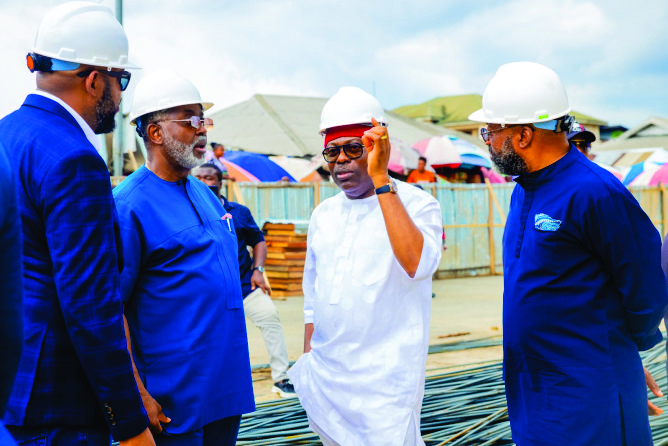
    ABUJA, NIGERIA (NPA) — President Bola Ahmed Tinubu has approved the immediate commencement of reconstruction works on three federal roads in Niger State, located in Nigeria’s north-central region.

    The roads approved for reconstruction are the Mokwa–Bida Road (120 kilometres), the Mokwa–Makeri Road (63 kilometres), and the Bida–Labata Road (123.5 kilometres).

    According to a statement issued on February 26, 2026, by Francis Nwaze, Senior Special Assistant to the Honourable Minister of Works (Media), the projects cover a total of 306.5 kilometers and will be reconstructed using reinforced concrete pavement to guarantee durability and long-term value.

    President Tinubu also gave approval for the extension of the Bodo–Bonny Road to connect with the East–West Road. The project will be executed as a dual carriageway, constructed with concrete pavement, and equipped with solar-powered street lighting. Delivery will be through a competitive bidding process.

    The Honourable Minister of Works, Engr. David Umahi expressed gratitude to the president, noting that the projects will “significantly enhance connectivity, trade, and development.”

    Umahi, widely regarded as one of the most dynamic members of the federal executive council, has injected fresh energy into the Tinubu-led administration by delivering on critical road infrastructure nationwide. He called on Nigerians to “acknowledge and appreciate” the president’s sustained commitment to infrastructure development across the six geopolitical zones, particularly in delivering quality roads and bridges.

  • BREAKING: INEC Revises 2027 Election Timetable; Presidential Poll Set for January 16

    BREAKING: INEC Revises 2027 Election Timetable; Presidential Poll Set for January 16

    ABUJA, Nigeria (NPA) — The Independent National Electoral Commission (INEC) has announced a revised timetable for Nigeria’s 2027 general elections.

    In a statement issued Thursday night, the commission explained that the adjustment followed the repeal of the Electoral Act 2022 and the enactment of the Electoral Act 2026, which introduced new statutory timelines for pre-election and electoral activities. INEC said the schedule was realigned to ensure full compliance with the updated legal framework.

    Under the new timetable:

    • Presidential and National Assembly elections will now take place on Saturday, January 16, 2027.
    • Governorship and State House of Assembly elections will follow on Saturday, February 6, 2027.

    Political parties are required to conduct their primaries — including the resolution of disputes — between April 23 and May 30, 2026. Campaigns for the Presidential and National Assembly elections will begin on August 19, 2026, while campaigns for Governorship and State Assembly elections will commence on September 9, 2026.

    INEC emphasized that all political parties must adhere strictly to the revised timetable and noted that campaigns must end 24 hours before election day.