Category: Politics

  • BREAKING: House of Reps passes State Police Bill, Senate to concur

    BREAKING: House of Reps passes State Police Bill, Senate to concur

    ABUJA, Nigeria (NPA) — The House of Representatives has passed the State Police Bill, moving Nigeria a step closer to adopting a decentralised policing system aimed at strengthening security and addressing growing concerns over banditry, kidnapping, terrorism, and other violent crimes across the country.

    The landmark legislation, which seeks to amend the 1999 Constitution (as amended), was approved during Thursday’s plenary session following extensive debate and clause-by-clause consideration by lawmakers.

    Presiding over the session, Speaker of the House of Representatives, Rt. Hon. Tajudeen Abbas, described the passage of the bill as a significant milestone in the nation’s efforts to reform its security architecture and improve grassroots policing.

    If eventually enacted, the proposed law will empower state governments to establish and operate their own police services alongside existing federal security structures.

    Under the provisions of the bill, each state will be authorised to create a State Police Service, with operational guidelines to be developed in collaboration with the National Police Council and the Federal Police Service Commission.

    The legislation also provides frameworks for recruitment, training, funding, discipline, oversight, and inter-agency coordination to ensure professionalism and prevent abuse of power.

    Lawmakers who supported the bill argued that the current centralised policing system has struggled to effectively address Nigeria’s diverse and evolving security challenges, particularly in rural and remote communities.

    They maintained that state policing would improve intelligence gathering, strengthen community engagement, and enable quicker responses to security threats.

    Speaker Abbas said the legislation reflects years of public demand for a more responsive and community-based security system.

    According to him, localised policing has become increasingly necessary in view of the security realities confronting different parts of the country.

    The bill now proceeds to the Senate for consideration and concurrence before being transmitted to President Bola Ahmed Tinubu for assent.

    Should the proposal secure Senate approval and presidential assent, it would represent the first constitutional recognition of state policing since Nigeria’s return to democratic rule in 1999.

  • BREAKING: FG disowns Prince Adeniyi’s fake Presidential Foreign Intervention Promotion Council, warns public

    BREAKING: FG disowns Prince Adeniyi’s fake Presidential Foreign Intervention Promotion Council, warns public

    ABUJA, Nigeria (NPA) — The Presidency has distanced itself from an individual identified as Prince Adeniyi Adeyemi and an organisation known as the “Presidential Foreign Intervention Promotion Council,” declaring that neither has any official recognition under the administration of President Bola Ahmed Tinubu.

    In a disclaimer issued on Wednesday, the Chief of Staff to the President, Femi Gbajabiamila, said the attention of the Federal Government had been drawn to claims by Adeyemi that he had been appointed by the Office of the Chief of Staff under the purported council.

    Gbajabiamila categorically denied the claim, stating that no such office exists within the current administration and that no appointment had been made in that regard.

    “It has come to the notice of the Federal Government of Nigeria, and specifically the Office of the Chief of Staff to the President, that a certain Prince Adeniyi Adeyemi, under the auspices of an alleged organisation styled as the ‘Presidential Foreign Intervention Promotion Council’, is portraying himself to the general public as having been appointed by my office,” the statement said.

    “The unsuspecting public is hereby advised to note that such an office does not exist under this administration, and no appointment has been made in that regard.”

    The Presidency urged members of the public to disregard any claims linking Adeyemi or the purported organisation to the Federal Government.

    It also called on foreign and diplomatic missions, multilateral and financial institutions, development partners, security agencies, and other stakeholders to take note of the disclaimer and avoid recognising any purported appointment or representation made under the banner of the alleged council.

    The statement reaffirmed that all official appointments and government bodies are communicated through recognised government channels and urged the public to verify claims of appointments before engaging with individuals purporting to represent the Presidency.

  • INEC fixes June 16–25 primaries for restored constituencies ahead of 2027 elections

    INEC fixes June 16–25 primaries for restored constituencies ahead of 2027 elections

    ABUJA, Nigeria (NPA) — The Independent National Electoral Commission (INEC) has fixed June 16 to June 25, 2026, for the conduct of political party primaries in constituencies recently restored by court orders across Benue, Delta, Jigawa, and Kogi states.

    The electoral body said the move is aimed at enabling political parties to nominate candidates for the affected constituencies ahead of the 2027 General Election.

    In a statement issued on Wednesday by the National Commissioner and Chairman of the Information and Voter Education Committee, Mohammed Kudu Haruna, INEC said the restoration followed judgments by competent courts directing the reinstatement of previously suppressed constituencies.

    According to the Commission, the action is in line with its constitutional mandate and the provisions of the Electoral Act, 2026.

    The restored constituencies in Benue State are Nyamatsor, Ukum Afia, Konshisha III (Shangev-Tiev), Makurdi III (South East), and Gboko III State Constituencies.

    In Delta State, the restored constituencies are Aniocha North II, Ika North East II, Sapele II, Ethiope West II, Warri South West II, and Warri North II State Constituencies.

    For Jigawa State, the restored constituency is Aujara State Constituency.

    In Kogi State, the restored constituencies include Adavi East, Eika, Ajaokuta North, Bassa-Komu, Dekina Town and District, Ijumu II, Kabba-Bunu II, Koton Karfe II, Igalaogwa, and Ogugu State Constituencies.

    INEC said political parties are expected to conduct fresh primaries within the approved window to facilitate the participation of the restored constituencies in the 2027 electoral process.

    The Commission clarified that all other timelines and activities contained in the already published revised Timetable and Schedule of Activities for the 2027 General Election remain applicable to the affected constituencies.

    “In light of the peculiar nature of this arrangement, political parties are requested to submit notices of their primaries to the Commission prior to the scheduled dates,” the statement said.

    INEC reaffirmed its commitment to conducting credible, inclusive, transparent, and legally compliant elections across the country.

    The Commission urged political parties to strictly comply with all electoral guidelines and timelines to ensure a seamless nomination process in the restored constituencies.

  • Umahi warns non-performing contractors, says Tinubu not responsible for delayed road projects

    Umahi warns non-performing contractors, says Tinubu not responsible for delayed road projects

    ABUJA, Nigeria (NPA) — Minister of Works, Senator David Umahi, has issued a stern warning to contractors handling Federal Government road projects, directing them to improve performance and fulfil contractual obligations or risk sanctions, including contract termination.

    Umahi said poor project execution by contractors should not be used to undermine the infrastructure efforts of President Bola Ahmed Tinubu’s administration.

    The minister spoke during an extensive inspection tour of ongoing road and bridge projects in Kogi and Edo States, where he expressed dissatisfaction with the pace of work on sections of the Abuja-Lokoja Dual Carriageway and the Obajana Junction-Benin Road dualisation project.

    According to him, reports submitted to the ministry did not accurately reflect the realities observed on the project sites.

    “I am very sad with what I saw on the ground. What was reported to us is not reflected in the actual work being done,” Umahi said.

    The minister disclosed that funding constraints had forced the Federal Government to reduce the scope of one section of the Abuja-Lokoja road project from 49.28 kilometres to 28 kilometres in order to concentrate available resources on the most critical areas.

    He reiterated the ministry’s directive that no section of a federal highway under construction should remain closed to motorists for more than 14 days.

    Consequently, Umahi issued an ultimatum to one of the contractors handling the project to complete the affected section within the stipulated period or face contract termination.

    He also handed GELD Construction Company a 72-hour deadline to effectively utilise funds already released for its section of the project and demonstrate visible progress.

    The minister, however, commended JRB Construction Company for what he described as excellent performance, professionalism, and commitment to timely project delivery.

    “If everybody does his job accordingly, there will be no reason to shift the blame to Mr. President,” he said.

    Umahi noted that a significant portion of Nigeria’s federal road network had deteriorated before the current administration assumed office, adding that President Tinubu inherited enormous infrastructure deficits but has continued to prioritise the rehabilitation and expansion of critical road infrastructure nationwide.

    He directed Federal Controllers of Works, Engineers’ Representatives, and project supervisors to strengthen monitoring mechanisms and enforce stricter accountability standards on contractors.

    According to him, all procurement processes, project expenditures, and implementation timelines must be closely scrutinised to ensure value for money.

    During the inspection, the minister assessed ongoing reconstruction works on Section III of the Abuja-Lokoja Dual Carriageway, including pavement rehabilitation and construction of the additional carriageway being executed by Trucrete Solutions Limited on the Koton Karfe-Abuja corridor.

    He also inspected two strategic bridge projects along the route, as well as Sections I and II of the Lokoja-Benin Road dualisation project covering the Obajana Junction-Okene and Okene-Auchi corridors across Kogi and Edo States.

    Umahi further evaluated progress on the flyover and interchange components of the project being handled by CCG Contractors.

    According to project updates presented during the inspection, the flyovers have reached approximately 80 per cent completion, while the interchange stands at about 30 per cent completion.

    Speaking during the tour, Chairman of the Senate Committee on Works, Senator Allwell Heacho Onyesoh, commended Umahi’s leadership and commitment to ensuring accountability in the execution of road projects.

    He said public office holders should no longer bear responsibility for the poor performance of contractors, stressing that Nigerians expect quality infrastructure projects delivered on schedule.

    The senator added that strict supervision and enforcement of contractual obligations remain essential to achieving the Federal Government’s infrastructure development objectives.

  • IMF Report: 63% of Nigerians Poor, 27 million food-insecure despite reform gains

    IMF Report: 63% of Nigerians Poor, 27 million food-insecure despite reform gains

    LAGOS, Nigeria (NPA) — The International Monetary Fund (IMF) has commended Nigeria’s economic reforms under President Bola Ahmed Tinubu, saying the measures have strengthened macroeconomic stability, improved resilience and boosted investor confidence, even as poverty and food insecurity continue to worsen across the country.

    In its 2026 Article IV Consultation Report released on Tuesday, the IMF said reforms implemented over the past three years, including the removal of fuel subsidies, exchange rate liberalisation, tighter monetary policy and the end of deficit monetisation, have helped rebuild external buffers, improve foreign exchange market functioning and restore confidence in the economy.

    However, the Fund warned that millions of Nigerians continue to face severe economic hardship despite the gains recorded at the macroeconomic level.

    According to the report, poverty has risen to 63 per cent of the population, while an estimated 27 million Nigerians experienced food insecurity in late 2025.

    “Strong reforms over the past three years have yielded improved macroeconomic outcomes and built resilience. Still, conditions for many Nigerians remain difficult,” the IMF stated.

    The Fund projected Nigeria’s economy to grow by 4.1 per cent in 2026, slightly above the estimated 4.0 per cent growth recorded in 2025, driven largely by services, agriculture, real estate, information and communications technology, as well as improvements in oil and gas production.

    Nigeria’s crude oil production is expected to rise from 1.64 million barrels per day in 2025 to 1.71 million barrels per day in 2026.

    The IMF noted that inflation, which had been on a steady downward trajectory for more than a year, rose slightly to 15.4 per cent in March 2026 following increases in global fuel and food prices linked to geopolitical tensions in the Middle East.

    Although inflationary pressures remain a concern, the Fund expects the disinflation trend to resume in the second half of the year, provided monetary policy remains tight.

    The report also highlighted significant improvements in Nigeria’s external position.

    Gross international reserves increased from $40 billion at the end of 2024 to $46 billion in 2025, while net international reserves rose from $23 billion to $35 billion during the same period.

    The current account surplus stood at 4.8 per cent of Gross Domestic Product (GDP) in 2025, supported by stronger oil and gas exports and reduced dependence on imported refined petroleum products.

    The IMF said the growing output of domestic refineries has significantly reduced fuel import requirements, strengthening the country’s external accounts.

    On fiscal management, the Fund expressed concern over rising deficits and debt servicing costs.

    Nigeria’s consolidated fiscal deficit increased to 4.4 per cent of GDP in 2025, up from 2.4 per cent in 2024, while interest payments consumed 53 per cent of Federal Government revenues, compared to 41 per cent a year earlier.

    The IMF noted that while non-oil revenues met targets, oil revenues fell below expectations, forcing the government to rely on a combination of external borrowing, domestic securities and Eurobond issuances to finance spending.

    The Fund called for a neutral fiscal stance in 2026, urging authorities to prioritise social spending and programmes targeted at vulnerable households while maintaining macroeconomic stability.

    It also recommended accelerated reforms in public financial management, fiscal reporting, transparency and accountability.

    The IMF welcomed recent tax reforms but indicated that additional measures may be required in the medium term to strengthen revenue generation and create fiscal space for development spending.

    Among the options identified were improved tax administration, broader tax compliance and further reforms aimed at reducing leakages in government revenue collection.

    The Fund further praised the Central Bank of Nigeria (CBN) for maintaining a tight monetary policy stance that has helped curb inflation and stabilise the naira.

    It encouraged the apex bank to continue pursuing data-driven monetary policy decisions while advancing its transition towards an inflation-targeting framework.

    On the foreign exchange market, the IMF endorsed Nigeria’s flexible exchange rate regime, describing it as beneficial to the economy.

    The report also noted that Nigeria had strengthened its international standing after being removed from the Financial Action Task Force (FATF) grey list in 2025 and the European Union’s anti-money laundering watch list in early 2026.

    The IMF, however, warned that major risks remain.

    These include rising global commodity prices, deteriorating domestic security conditions, climate-related shocks, election-related spending pressures ahead of the 2027 general elections and potential disruptions in international financial markets.

    The Fund stressed that insecurity continues to affect agriculture, investment and oil production, while poverty and food insecurity could worsen if global fuel and food prices remain elevated.

    It urged the government to scale up social protection programmes, including cash transfers to vulnerable households, while accelerating reforms in electricity, infrastructure, agriculture, education and human capital development.

    The IMF also called for stronger governance reforms and improvements in macroeconomic statistics to support effective policy formulation and implementation.

    Despite the challenges, the Fund said Nigeria’s reform efforts have laid a stronger foundation for economic stability and future growth, provided policymakers sustain the current reform momentum and address the country’s deep-rooted structural challenges.

  • APC Chairman Yilwatda charges Renewed Hope Ambassadors to drive public engagement

    APC Chairman Yilwatda charges Renewed Hope Ambassadors to drive public engagement

    ABUJA, Nigeria (NPA) — National Chairman of the All Progressives Congress (APC), Prof. Nentawe Goshwe Yilwatda, has called on members of the Renewed Hope Ambassadors to serve as effective links between the government and citizens in advancing President Bola Ahmed Tinubu’s Renewed Hope Agenda.

    Yilwatda made the call while attending and officially launching the Renewed Hope Ambassadors National Mobilisation Retreat.

    According to the ruling party’s chairman, the ambassadors have a critical role to play in promoting government policies, strengthening public confidence, and encouraging greater citizen participation in national development.

    He urged them to move beyond advocacy and focus on meaningful engagement with communities across the country.

    “As ambassadors, your responsibility goes beyond advocacy; it is about engaging citizens, sharing accurate information, inspiring confidence, and mobilising support for the transformational policies and programmes being implemented across our nation,” he said.

    Yilwatda noted that the success of the Renewed Hope Agenda depends on effective communication between the government and the people, as well as sustained public participation in the nation’s development efforts.

    He stressed that Nigeria’s aspiration to build a one-trillion-dollar economy would require collective commitment, shared responsibility, and active involvement from citizens across all sectors.

    “Nigeria’s journey towards a $1 trillion economy requires collective effort, commitment, and active participation from every citizen,” he said.

    The APC chairman encouraged the ambassadors to remain focused, people-centred, and committed to promoting the values of service, unity, patriotism, and national development.

    He said their activities should contribute to strengthening trust in governance and improving public understanding of government programmes and reforms.

    According to him, sustained engagement between government and citizens remains essential for achieving inclusive growth and national prosperity.

    Yilwatda expressed confidence that the Renewed Hope Ambassadors initiative would help deepen grassroots mobilisation and support the implementation of policies designed to improve the welfare of Nigerians.

    “Together, we can deepen public engagement, strengthen trust in governance, and advance the Renewed Hope Agenda for a more prosperous and inclusive Nigeria,” he added.

    The Renewed Hope Ambassadors programme is designed to mobilise public support for the Tinubu administration’s policies and development initiatives across the country.

  • NDC appoints Agada Theophilus, Brian Dennis to lead new media, strategic communications

    NDC appoints Agada Theophilus, Brian Dennis to lead new media, strategic communications

    ABUJA, Nigeria (NPA) — The Nigeria Democratic Congress (NDC) has approved the appointments of Agada Abuh Theophilus as Director of New Media and Strategic Communications and Brian Dennis as Deputy Director of New Media and Strategic Communications.

    The appointments form part of the party’s efforts to strengthen its communications architecture and deepen engagement with Nigerians across traditional and digital platforms.

    In a statement issued by the National Publicity Secretary of the party, Osa Director, the NDC described both appointees as experienced communications professionals with strong backgrounds in strategic messaging, political communications, public relations, and media engagement.

    According to the statement, Theophilus brings extensive experience spanning political campaigns, corporate brand management, institutional public relations, and new media strategy.

    He is an Associate of the Nigerian Institute of Public Relations (NIPR) and holds a Master of Arts degree in Development Communications, with a specialisation in strategic communication for social and institutional development.

    The party also noted that he is currently pursuing a doctoral degree, with research interests focused on election administration and management.

    His appointment is expected to strengthen the party’s strategic communication efforts and expand its digital outreach.

    The NDC also announced the appointment of Brian Dennis as Deputy Director of New Media and Strategic Communications.

    Dennis is a communications analyst with seven years of experience in strategic and political communications.

    He holds a Master’s degree in Peace and Conflict Resolution and has worked in various capacities involving public engagement, political communication, and media analysis.

    The party expressed confidence that both appointments would enhance its ability to communicate its policies, programmes, and political vision to Nigerians.

    “The party is excited to welcome both appointees and looks forward to the energy, expertise, and fresh perspectives they bring to its communications efforts,” the statement said.

    The NDC added that the appointments reflect its commitment to building a robust communication structure capable of engaging citizens effectively and strengthening the party’s presence across multiple media platforms.

    According to the party, the new communications team will play a critical role in amplifying its message, expanding public engagement, and supporting its broader political objectives ahead of future electoral contests.

    The NDC expressed optimism that the leadership of Theophilus and Dennis would further strengthen the party’s voice and deepen its connection with Nigerians nationwide.

  • Peter Obi questions rising debt amid claims of increased government revenue

    Peter Obi questions rising debt amid claims of increased government revenue

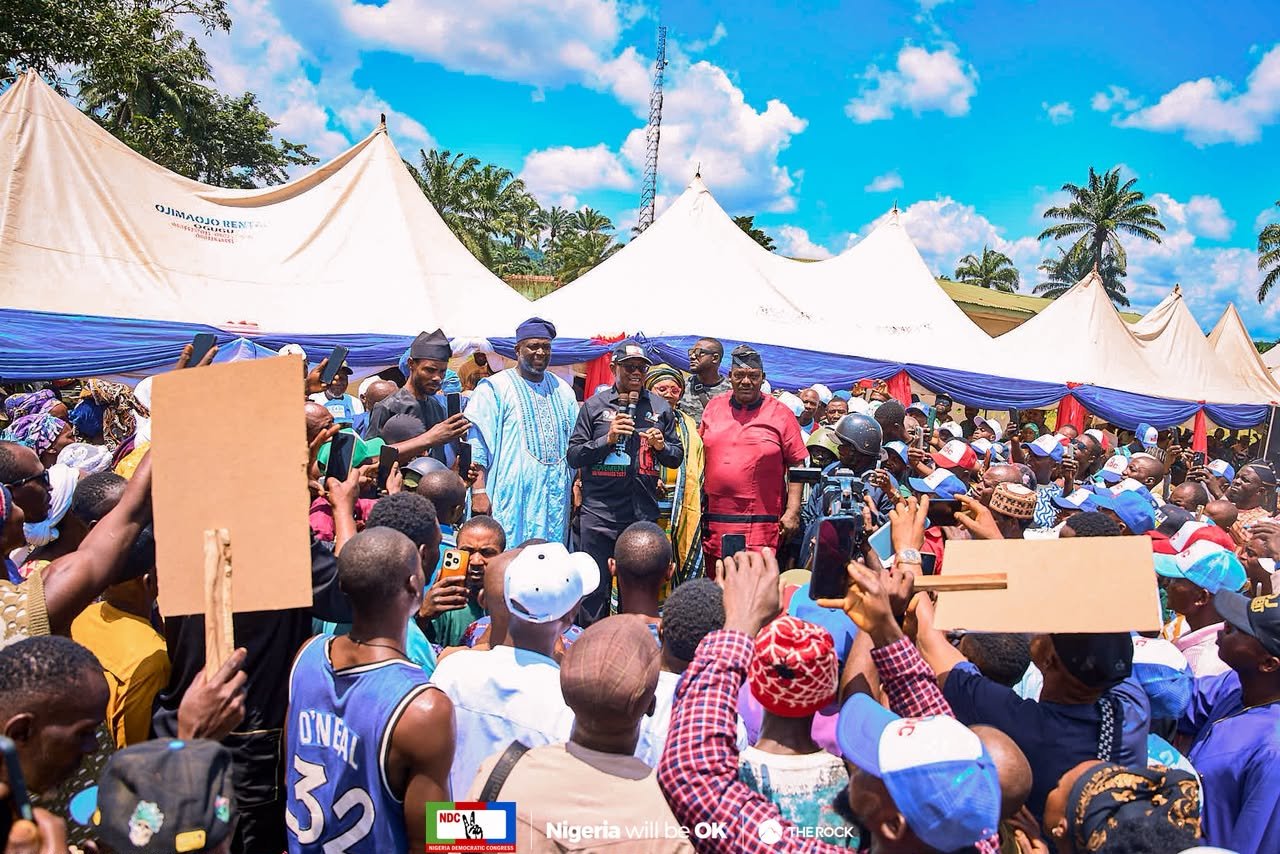
    ABUJA, Nigeria (NPA) — Presidential candidate of the Nigeria Democratic Congress (NDC), Mr Peter Obi, has criticised the Federal Government’s growing debt profile, arguing that increased revenue generation should have reduced the country’s dependence on borrowing.

    Obi made the remarks in a statement personally signed on Wednesday and titled, “Exponential Increase in Revenue with Excessive Borrowing: Yet More Hardship for Nigerians!”

    The former Anambra State governor was reacting to recent claims by President Bola Ahmed Tinubu that government revenue increased from N16.8 trillion in 2022 to N35 trillion in 2025, representing a rise of more than 100 per cent.

    According to Obi, the significant increase in revenue should ordinarily have translated into reduced borrowing and improved living conditions for Nigerians.

    Instead, he argued, the country’s debt burden has continued to rise at an alarming rate.

    “Shockingly, while Nigerians expected a reduction in borrowing with the exponential increase in revenue, the opposite is the case,” Obi said.

    He alleged that the Tinubu administration has relied heavily on borrowing over the past three years, claiming that Nigeria’s total public debt has risen to about N200 trillion.

    According to him, the increase represents an additional debt burden of more than N100 trillion within the period under review.

    Obi further argued that, beyond increased revenue, Nigeria has also benefited from favourable global and regional economic developments that boosted government earnings beyond budget projections.

    He, however, expressed concern that the additional revenue and borrowing have not translated into measurable improvements in the welfare of citizens.

    “Alarmingly, even with the astronomical increase in both revenue and debt, almost all key socio-economic and governance indicators are worse than in 2023,” he stated.

    The opposition figure claimed that multidimensional poverty has increased significantly in recent years, while unemployment and other economic challenges have continued to worsen.

    He also pointed to a decline in Nigeria’s Gross Domestic Product (GDP) per capita, arguing that the country’s economic performance has not reflected the scale of resources reportedly available to the government.

    According to Obi, many Nigerians are struggling with worsening living conditions despite official reports of higher revenues and increased government spending.

    “Just more and more hardship for Nigerians,” he said.

    The former presidential candidate questioned how the additional revenues and borrowings had been utilised and called for greater transparency in the management of public finances.

    “The question Nigerians and even the international community are asking is: ‘Where did all the money go?’” Obi stated.

    He urged the Federal Government to provide a comprehensive explanation of the country’s financial position and account for revenues generated since 2023.

    Obi also called for what he described as prudent, transparent, and accountable management of public resources, insisting that Nigerians deserve to know how government funds have been spent.

    The NDC presidential candidate maintained that addressing the country’s economic challenges would require greater fiscal discipline and policies focused on productivity, accountability, and sustainable development.

    He reiterated his campaign message that a more productive and prosperous Nigeria remains achievable through responsible governance and effective economic management.

  • Adeleke condemns alleged APC-linked political attacks in Osun, seeks Tinubu’s intervention

    Adeleke condemns alleged APC-linked political attacks in Osun, seeks Tinubu’s intervention

    OSOGBO, Nigeria (NPA) — Osun State Governor, Ademola Adeleke, has condemned what he described as coordinated attacks allegedly carried out by political thugs linked to the All Progressives Congress (APC) in several parts of the state.

    The governor alleged that the attacks occurred in Ile-Ife, Ede, Osogbo and other communities on Tuesday, resulting in injuries and heightened political tensions ahead of the state’s governorship election.

    In a statement personally signed and issued on Tuesday, Adeleke called on President Bola Ahmed Tinubu, the National Security Adviser, Nuhu Ribadu, the Inspector-General of Police, Kayode Egbetokun, the Director-General of the Department of State Services (DSS), and other security agencies to urgently intervene.

    He also urged key figures in the APC, including former Governor Gboyega Oyetola and governorship aspirant Bola Oyebamiji, to prevail on their supporters and prevent further escalation of tensions in the state.

    According to the governor, failure to address the situation could threaten the peace and stability of Osun State.

    Adeleke said he personally visited some of the affected locations and hospitals following reports of the attacks.

    “After receiving reports of the attacks, I personally visited affected areas and met victims receiving treatment at the Osun State Teaching Hospital, Osogbo, and the Cottage Hospital, Ede. I also paid a solidarity visit to the Osogbo Accord Chairman who survived a gunshot attack last week,” he said.

    The governor expressed sympathy to the victims and their families, assuring them that his administration would provide the necessary support.

    He disclosed that security agencies had been directed to conduct thorough investigations into the incidents and ensure that those responsible are brought to justice, regardless of their political affiliation or social status.

    Adeleke stressed that political disagreements should not degenerate into violence, intimidation, or attacks on citizens exercising their democratic rights.

    “Political differences must never degenerate into violence, intimidation, or attacks on citizens exercising their constitutional rights. Democracy thrives on dialogue, tolerance and respect for the rule of law,” he stated.

    The governor also appealed to residents to remain peaceful, law-abiding and avoid actions that could further inflame tensions.

    He disclosed that additional security measures were being deployed to vulnerable locations across the state as part of efforts to maintain law and order.

    Adeleke reaffirmed his administration’s commitment to protecting lives and property and preserving the peace for which Osun State is known.

    He concluded by praying for the speedy recovery of those injured in the incidents and called for collective efforts to sustain peace and stability across the state.

    As of the time of filing this report, the APC had not issued an official response to the allegations.

  • Tinubu congratulates Modi on becoming India’s longest-serving elected Prime Minister

    Tinubu congratulates Modi on becoming India’s longest-serving elected Prime Minister

    ABUJA, Nigeria (NPA) — President Bola Ahmed Tinubu has congratulated Indian Prime Minister Narendra Modi on becoming India’s longest-serving elected Prime Minister, describing the achievement as a testament to the confidence and trust reposed in him by the Indian people.

    In a statement issued on Tuesday, Tinubu said Modi’s historic milestone reflects his enduring popularity, commitment to public service, and dedication to the development and prosperity of India.

    The Nigerian leader praised the Indian Prime Minister’s leadership record, noting that his influence extends beyond India and continues to inspire people around the world.

    “This remarkable achievement reflects the enduring confidence and trust the people of India have reposed in his leadership over three consecutive mandates,” Tinubu said.

    He commended Modi’s commitment to national development and his role on the global stage, describing him as a leader whose service continues to impact millions.

    Tinubu also highlighted the cordial relationship between Nigeria and India, noting that Prime Minister Modi has played a significant role in strengthening bilateral ties between the two countries.

    “Beyond being a great friend of Nigeria, Prime Minister Modi is a personal friend and trusted ally whom I can always count on,” the President stated.

    According to Tinubu, he has come to admire Modi’s wisdom, courage, and unwavering commitment to the progress of his nation.

    The President further recalled that Modi is a recipient of Nigeria’s national honour, the Grand Commander of the Order of the Niger (GCON), in recognition of his contributions to fostering cooperation and friendship between both countries.

    On behalf of the Federal Government and the people of Nigeria, Tinubu wished the Indian leader continued good health, wisdom, and success as he continues to lead his country.

    He expressed confidence that under Modi’s leadership, India would continue to record greater achievements and strengthen its position as a major global power.