Category: Politics

  • BREAKING: No figures outside polling units will be announced in 2027, says Obi  

    BREAKING: No figures outside polling units will be announced in 2027, says Obi  

    ABUJA, Nigeria (NPA) — The presidential candidate of the Nigeria Democratic Congress (NDC), Peter Obi, has explained his recent remark that he was “ready to die” for his vote, saying the statement was made in response to a member of the audience who expressed a similar determination at a political gathering in Port Harcourt.

    Obi, a former governor of Anambra State, made the clarification in an interview with Ojy Okpe on Arise Television’s Morning Show, aired on September 10, 2026, and monitored by our correspondent.

    He explained that someone at the political gathering had told the audience that he was prepared to die for his vote, prompting him to encourage the people by saying that he was also prepared to do the same.

    Obi said his focus was on ensuring that votes cast at polling units are properly counted, recorded and transmitted.

    “We must make sure that every polling unit the votes are counted, recorded properly and counted. We’ll have a dual transmission to INEC portal and to where the people will see it. This time around, we’ll make sure that in every polling unit, we must have a system that transmits to our own situation room.”

    He said such a system would prevent anyone from announcing figures that did not emanate from the polling station, adding that in 2023, he and his supporters took certain things for granted by believing that the Independent National Electoral Commission (INEC) would carry out its responsibilities lawfully.

    Obi alleged that the immediate past INEC chairman worked for the opposition and maintained that he won the 2023 presidential election.

    “Everybody knows they (INEC) did the wrong thing,” he said.

  • Nigeria condemns Houthi attack on Saudi Arabia

    Nigeria condemns Houthi attack on Saudi Arabia

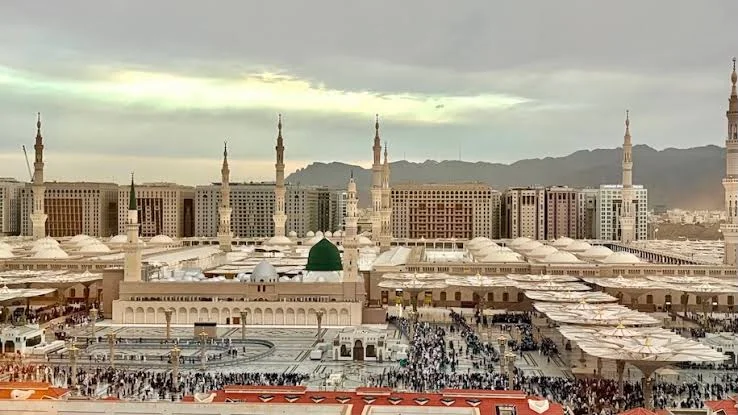
    ABUJA, Nigeria (NPA) — The Federal Government has condemned the September 7, 2026, attack on the Kingdom of Saudi Arabia by the Houthi militia in Yemen, describing the renewed hostilities as a threat to regional security and stability.

    Nigeria’s position was contained in a statement issued by the spokesperson for the Ministry of Foreign Affairs, Oluwafemi Adeniyi, who said the attack resulted in injuries to scores of civilians and damage to public infrastructure.

    “Nigeria regards the fresh hostilities as a serious threat not only to the security and sovereignty of Saudi Arabia, but also to regional stability in the Middle East,” Adeniyi said.

    He said Nigeria was calling on all parties to uphold international law, exercise maximum restraint and refrain from actions capable of escalating the situation, endangering civilian lives, undermining regional security and further disrupting the flow of much-needed global energy supplies.

    “Nigeria stands in solidarity with the government and people of Saudi Arabia at this difficult time, and prays for speedy recovery for those injured in the attack,” he said.

    Adeniyi reiterated the Federal Government’s commitment to supporting peace and reconciliation frameworks aimed at promoting regional and international peace, security and stability, while advancing shared prosperity and development for all.

    The ministry said Nigeria would continue to support efforts that contribute to peaceful resolution of conflicts and the protection of civilians amid growing tensions in the Middle East.

    -NAN

  • The Obasanjo–Atiku Feud: Why the ghost of Third  Term still haunts them

    The Obasanjo–Atiku Feud: Why the ghost of Third  Term still haunts them

    OPINION (NPA) — Nearly two decades after Olusegun Obasanjo and Atiku Abubakar left Nigeria’s highest elected offices, their political feud remains remarkably alive.

    The latest exchange between the former President and his former Vice-President has once again revived one of the most enduring political rivalries of Nigeria’s Fourth Republic.

    At the heart of the dispute is a question that has never entirely disappeared from Nigeria’s political memory: what really happened between Obasanjo and Atiku, and why does the bitterness surrounding their relationship continue nearly 20 years later?

    The answer may lie partly in the events of 2006, when the controversial proposal to amend the Constitution and potentially extend the tenure of the President became one of the biggest political battles of the era.

    But the story is also about personal rivalry, competing political ambitions, allegations of disloyalty and corruption, and the difficulty some political actors have in moving beyond old battles.

    The Third-Term Controversy

    The third-term controversy remains one of the defining political episodes of Nigeria’s Fourth Republic.

    In 2006, speculation intensified that President Obasanjo was seeking a constitutional amendment that would allow him to remain in office beyond the constitutionally prescribed two terms.

    The Presidency did not initially provide the unequivocal denial that many Nigerians expected. As the speculation continued, the issue moved from political gossip into a major national controversy.

    The National Assembly became the principal battleground.

    Governors, political parties, legislators and rival political factions all became involved. The proposed constitutional amendment eventually failed.

    Atiku was among the most prominent political figures to oppose the tenure-extension proposal.

    He described it as unconstitutional and morally wrong. His opposition became an important obstacle to the effort to amend the Constitution.

    There is room for debate over Atiku’s motivations.

    His supporters can point to constitutional principle. His critics can argue that presidential ambition and political survival were also factors.

    Both interpretations can coexist.

    What is less difficult to dispute is that Atiku became one of the leading political opponents of the proposed third-term arrangement.

    That confrontation appears to have left a lasting mark on his relationship with Obasanjo.

    Was Third-Term The Unforgivable Offence?

    Atiku’s political record is not beyond criticism.

    His career has been marked by controversies, allegations and political confrontations. His conduct as Vice-President and his subsequent political decisions remain legitimate subjects of public scrutiny.

    But there is an important distinction between criticism, allegation and established wrongdoing.

    If Atiku was disloyal to Obasanjo while serving as Vice-President, the former President was entitled to challenge him politically.

    If there were credible allegations of corruption, the appropriate institutions were entitled to investigate them.

    The same principle should apply today.

    An allegation should not automatically become a fact simply because it has been repeated for many years.

    This distinction is particularly relevant to controversies surrounding Atiku’s role as chairman of the National Council on Privatisation.

    His tenure attracted allegations concerning the handling of public assets and the privatisation process. But political controversy is not the same thing as a criminal conviction.

    That distinction matters in any serious account of Nigeria’s political history.

    The PTDF Controversy

    The controversy surrounding the Petroleum Technology Development Fund requires even greater care.

    The allegations against Atiku were investigated during the Obasanjo administration. The Economic and Financial Crimes Commission, under Nuhu Ribadu, examined the matter, after which Obasanjo constituted an administrative panel headed by then Attorney-General and Minister of Justice, Bayo Ojo.

    The panel produced findings adverse to Atiku.

    But the matter subsequently went to court.

    In November 2006, a Lagos State High Court set aside the Administrative Panel’s report, holding, among other things, that the proceedings infringed judicial powers and amounted to an abuse of executive power.

    That ruling does not mean that every allegation made against Atiku was proven false.

    Neither does it amount to a fresh judicial trial of all the underlying allegations.

    What it does mean is that a significant administrative finding relied upon by the Obasanjo administration was subsequently nullified by a court.

    That distinction should inform how the matter is discussed today.

    There is a fundamental difference between saying, “I remain convinced that Atiku acted improperly,” and presenting an allegation as though it were a judicially established fact.

    For public figures, particularly former presidents, that distinction carries considerable weight.

    An Old Feud, a New Accusation

    The latest controversy has again demonstrated how deeply the political battles of the Obasanjo years continue to resonate.

    Obasanjo recently alleged that Atiku gave the late former Speaker of the House of Representatives, Ghali Umar Na’Abba, five million naira to initiate impeachment proceedings against him.

    Atiku has denied the allegation.

    He also questioned the propriety of making such a serious accusation against a deceased person who is no longer able to respond.

    The competing claims remain disputed.

    But the episode is significant for another reason: it shows that the political arguments of 2003–2007 have not entirely disappeared.

    Na’Abba is dead.

    Obasanjo is now 89, while Atiku is 79.

    Yet a political confrontation from nearly two decades ago continues to generate fresh accusations and rebuttals.

    That should prompt a larger question about Nigeria’s political culture.

    At what point does accountability end and personal grievance begin?

    Obasanjo’s Legacy is Bigger Than Atiku

    Whatever one’s assessment of the former President, Obasanjo’s place in Nigerian history is considerably larger than his dispute with Atiku.

    He was a military head of state before returning to power as an elected civilian president in 1999.

    His administration was associated with significant economic and diplomatic developments, including Nigeria’s debt-relief negotiations.

    He remains one of Nigeria’s most internationally recognised elder statesmen.

    That record deserves neither unquestioning praise nor blanket condemnation.

    It deserves historical scrutiny.

    Obasanjo has repeatedly denied seeking a third term. In 2023, he again rejected the claim, saying he never asked for another term and arguing that, had he genuinely wanted one, he would have been capable of obtaining it.

    Yet political history is not always determined solely by the intentions of those who occupy office.

    It is also shaped by events, political manoeuvres, public perceptions and institutional consequences.

    That is why the third-term controversy continues to occupy a place in assessments of the Obasanjo presidency.

    It may not define his entire legacy.

    But it remains an important part of it.

    The Question of Forgiveness 

    There is another dimension to the Obasanjo-Atiku dispute: the long-standing perception that Obasanjo can be unforgiving towards those who cross him politically.

    That perception has been expressed not only by political opponents but also by people who have known him personally.

    In his memoir, You Must Set Forth at Dawn, Nobel laureate Wole Soyinka offered a sharply critical assessment of Obasanjo’s personality, including his tolerance for criticism.

    Soyinka’s assessment is his own interpretation and should not be treated as conclusive evidence of Obasanjo’s motives in every political dispute.

    But it contributes to a broader public debate about the former president’s political relationships and the persistence of some of his rivalries.

    Another account comes from the late Lieutenant General Victor Samuel Leonard Malu.

    In In the Name of Victor, Malu recounted an incident following Obasanjo’s visit to Monrovia in July 1999 involving Major General Felix Mujakperuo, who was then Force Commander of ECOMOG.

    According to Malu’s account, Obasanjo subsequently directed him, as Chief of Army Staff, to retire Mujakperuo.

    Malu said he sought clarification and was told that Mujakperuo had previously chaired the Special Military Tribunal that sentenced Obasanjo to imprisonment following the 1995 alleged coup plot.

    The account has been cited as evidence of the possibility that Obasanjo retained strong memories of past conflicts.

    But it remains an account of events as remembered and interpreted by Malu, rather than independent proof of Obasanjo’s motive.

    That distinction is essential.

    Historical commentary must leave room for evidence, competing accounts and uncertainty.

    Political History Should Not Become Personal History 

    There is no case for forgetting Nigeria’s political history.

    Constitutional controversies, alleged corruption, political betrayals and abuses of power should be documented and remembered.

    But remembering is not the same as remaining trapped in the past.

    Former leaders have a particular responsibility to demonstrate that political disagreements can eventually be placed in perspective.

    That responsibility becomes even greater with time.

    Obasanjo has lived through virtually every major chapter of modern Nigerian political history: military rule, civil war, imprisonment, democratic transition and presidential government.

    He has seen political alliances form and collapse across several generations.

    The question now is what value is gained by repeatedly reopening battles that began in 2003, 2005 and 2006.

    Nigeria’s current political challenges are considerable.

    The country needs its former leaders to contribute to institutional stability, democratic development and national reconciliation—not simply to revisit old political scores.

    Atiku Also Has Questions to Answer 

    None of this absolves Atiku. His political record should be examined with the same seriousness applied to that of every other national leader.

    His conduct as Vice-President remains part of the historical record. So do his subsequent political ambitions, alliances and controversies.

    He cannot demand fairness for himself while asking Nigerians to ignore uncomfortable questions about his own career.

    But accountability should not be confused with personal fixation.

    The Nigerian public does not have to choose between the proposition that Obasanjo was right about everything and the proposition that Atiku was right about everything.

    Neither is necessary.

    Both men may have made mistakes.

    Both may have been motivated, at different times, by political ambition.

    Both may have contributed to the collapse of their relationship.

    And both should be judged by the historical record.

    The Final Irony

    The irony is difficult to miss. 

    The third-term proposal ultimately failed, yet the controversy surrounding it became one of the most enduring features of the Obasanjo-Atiku relationship.

    Atiku’s opposition to the proposal contributed to the breakdown of his relationship with Obasanjo and helped establish him as one of the most visible opponents of the effort to alter the constitutional order at the time.

    Obasanjo, for his part, has consistently denied that he sought a third term.

    Still, the controversy refuses to disappear.

    It has become a ghost of Nigeria’s political past.

    And whenever Obasanjo and Atiku return to their old political arguments, that ghost appears again.

    Perhaps the more important question for Nigerians today is not who won the political battle of 2006.

    It is what the episode taught the country.

    It demonstrated the importance of constitutional limits, institutional checks and balances, political accountability and the need to distinguish allegation from established fact.

    It also offers a lesson in political leadership.

    Former leaders will inevitably have disagreements. Some disputes may never be completely resolved.

    But national history is bigger than the personal relationships of the people who once occupied public office.

    Obasanjo’s legacy should not be reduced to his quarrel with Atiku.

    Atiku’s political history should not be reduced to his disagreement with Obasanjo.

    Nearly twenty years later, perhaps the time has come to allow the historical record to speak for itself.

    The most consequential victory may no longer be winning an old political argument.

    It may be the wisdom to move beyond it.
  • Eswatini begins government-wide induction for SADC security organ chairship

    Eswatini begins government-wide induction for SADC security organ chairship

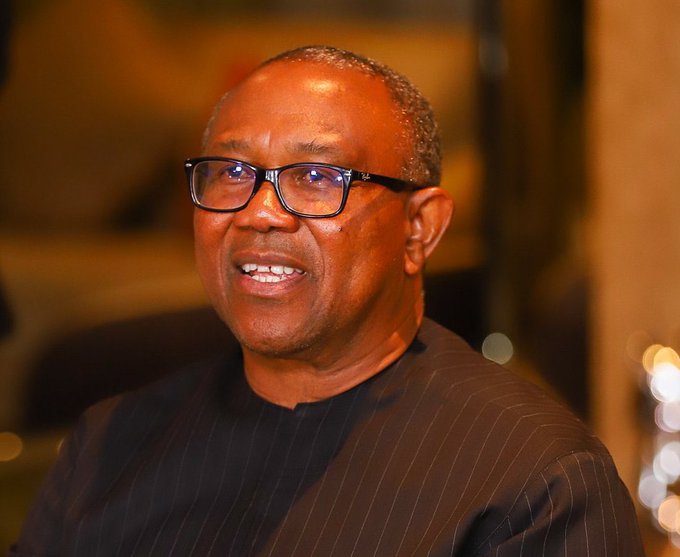
    MBABANE, Eswatini (NPA) — The Kingdom of Eswatini has commenced a government-wide induction programme to prepare its institutions for the responsibilities of chairing the Southern African Development Community (SADC) Organ on Politics, Defence and Security Cooperation.

    The exercise began on Tuesday, September 8, 2026, with the Minister of Foreign Affairs and International Cooperation, Senator Pholile Shakantu, meeting a delegation from the SADC Secretariat to review the Kingdom’s responsibilities and set the tone for the induction programme.

    The SADC delegation was led by Professor Ishmael Kula Theletsane, Director of the Organ, and included Ms. Barbara Lopi, Head of the Public Relations Unit, and Mr. Terry Rose, Senior Officer responsible for Politics and Diplomacy.

    According to a statement issued by the Ministry of Foreign Affairs and International Cooperation of the Kingdom of Eswatini on September 8, 2026, the induction programme will run from September 8 to 10 and bring together ministries, departments and institutions responsible for foreign affairs, defence, state security, public security, policing, immigration, corrections, anti-corruption, refugees, parks and wildlife, counter-terrorism, and Women, Peace and Security.

    “The Kingdom of Eswatini accepts this responsibility with humility and a clear appreciation of the confidence placed in His Majesty King Mswati III and the Government by the SADC region,” Shakantu said.

    The Minister stressed that the chairship must be treated as a coordinated national undertaking, with all participating institutions expected to understand their responsibilities, maintain the required level of readiness and contribute effectively to the peace, security and democratic stability of the region.

    “Our Chairship must be approached as a coordinated national undertaking. Every participating institution must understand its responsibilities, maintain the required level of readiness and contribute effectively to the peace, security and democratic stability of our region,” she said.

    Over the course of the induction, government institutions will engage directly with SADC experts on the mandate and working methods of the Organ, the preparation and conduct of regional meetings, implementation of SADC decisions, management of sensitive information, and the logistical and communication standards expected of the Chair.

    During its tenure, Eswatini will be responsible for chairing and hosting meetings across the Organ’s political, diplomatic and security architecture.

    These will include meetings of the Organ Troika, the Ministerial Committee of the Organ, the Inter-State Politics and Diplomacy Committee, the Inter-State Defence and Security Committee, as well as relevant defence, state-security, public-security and Police/SARPCCO structures.

    Sector-specific engagements will also cover migration and immigration, refugees, corrections and prisons, anti-corruption, parks and wildlife, regional counter-terrorism cooperation, conflict prevention, mediation, electoral observation, and the advancement of the Women, Peace and Security agenda.

    The chairship will also place important operational responsibilities on Eswatini. In 2027, the Kingdom will be expected to lead the SADC Electoral Observation Mission to the Republic of Angola during the country’s general elections.

    Eswatini will also head the SADC Liaison Office to be established imminently in Antananarivo, Madagascar.

    The office will support SADC’s engagement in Madagascar and facilitate coordination among the authorities of Madagascar, the SADC Secretariat and the Chairperson of the Organ.

    “These responsibilities demonstrate that the Chairship is not ceremonial,” Shakantu said. “It requires vigilance, sound diplomacy, institutional coordination and the ability to respond promptly to developments affecting peace, constitutional order and security within our region.”

    The Minister emphasised that the Ministry of Foreign Affairs and International Cooperation, through the Organ National Contact Point, will provide the central coordination link between the Government of Eswatini and the SADC Secretariat.

    All participating institutions will be expected to designate appropriately empowered focal persons, prepare coordinated national positions, identify capacity and resource requirements, and ensure that regional decisions are followed through to implementation.

    “The success of Eswatini’s Chairship will ultimately be measured by the quality of our leadership, the discipline of our coordination and the contribution we make towards a more peaceful, secure and stable Southern African region,” Shakantu concluded.

  • Tinubu celebrates Pentecostal Fellowship leader Wale Oke at 70

    Tinubu celebrates Pentecostal Fellowship leader Wale Oke at 70

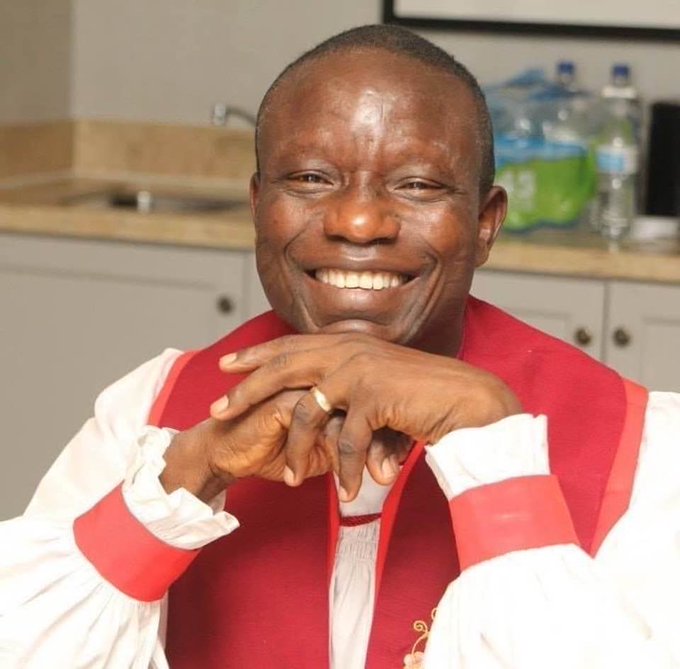
    ABUJA, Nigeria (NPA) — President Bola Ahmed Tinubu has felicitated the National President of the Pentecostal Fellowship of Nigeria (PFN) and founder of the Sword of the Spirit Ministries, Archbishop Francis Wale Oke, as he marks his 70th birthday.

    President Tinubu celebrated the author and renowned cleric as a deeply religious leader guided by a deep-rooted love for propagating the gospel of Christ.

    In a statement signed by Bayo Onanuga, Special Adviser to the President on Information and Strategy, on September 8, 2026, President Tinubu also commended the clergyman’s contributions to higher education and human development in Nigeria as the co-founder and Chancellor of Precious Cornerstone University, which has provided opportunities to thousands of Nigerian youths.

    President Tinubu said: “As a celebrated spiritual leader and two-time President of the Pentecostal Fellowship of Nigeria, you have distinguished yourself through integrity, humility, spiritual commitment, and courageous leadership.

    “You have consistently championed mutual respect, dialogue, understanding, and peaceful coexistence. Through your words and actions, you have shown that faith, when genuinely rooted in love for God and humanity, should build bridges across boundaries.

    “Through the Sword of the Spirit Ministries, your commitment to evangelism has found a powerful instrument for proclaiming the Gospel, reaching and leading millions across the world to embrace the message of salvation, hope, faith, and restoration.

    “As you mark this milestone, you have served God faithfully, provided leadership responsibly, built bridges across religious divides, advocated for peace, proclaimed the Gospel, and invested in the future through education.

    “May the Lord, whose light you have faithfully proclaimed through your ministry, continue to illuminate your path, renew your strength, and preserve you in sound health, for many more fruitful years of service to God and humanity.”

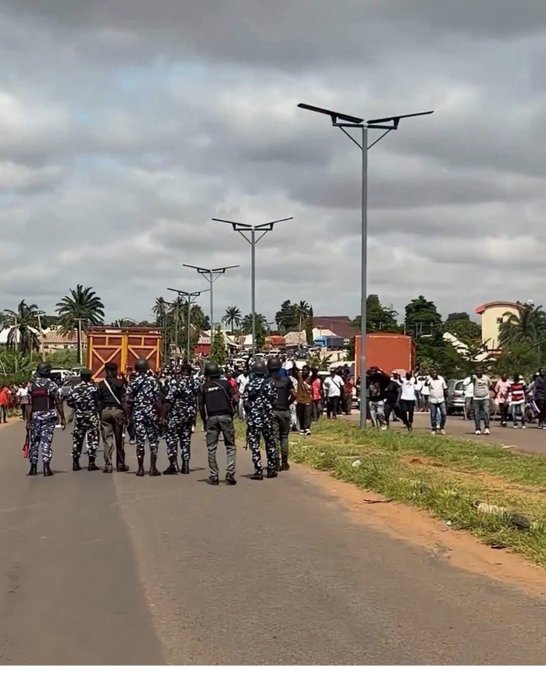
  • Sowore condemns alleged state-sponsored blockade and attack on Peter Obi’s convoy in Benue

    Sowore condemns alleged state-sponsored blockade and attack on Peter Obi’s convoy in Benue

    ABUJA, Nigeria (NPA) — The presidential candidate of the African Action Congress (AAC), Omoyele Sowore, has condemned what he described as a “state-sponsored blockade and attack” on the presidential candidate of the Nigeria Democratic Congress (NDC), Mr Peter Obi, while travelling to Yelwata in Benue State.

    Sowore said the incident occurred as Obi was attempting to visit displaced Nigerians and families affected by recent attacks, describing the planned visit as a legitimate campaign activity.

    In a statement on Tuesday, Sowore condemned what he described as “acts of political brigandage” by agents of the Benue State Government and the administration of President Bola Ahmed Tinubu.

    “I have watched videos showing what appears to be a state-sponsored blockade and attack on NDC presidential candidate @PeterObi as he attempted to enter the state capital to carry out legitimate campaign activities,” Sowore said in a post on X.

    “I strongly condemn these acts of political brigandage by agents of the state government and the Tinubu regime. This is totally unacceptable.”

    He said no presidential candidate should be prevented from campaigning freely anywhere in Nigeria through violence, intimidation or alleged state-sponsored thuggery.

    “Those behind these cowardly attacks are toying with fire and threatening the democratic rights of all Nigerians,” he said.

    Sowore urged those responsible to desist from such actions immediately, warning that continued interference with political activities could have wider implications for Nigeria’s democracy.

  • Peter Obi visits Plateau IDP camp after Benue incident

    Peter Obi visits Plateau IDP camp after Benue incident

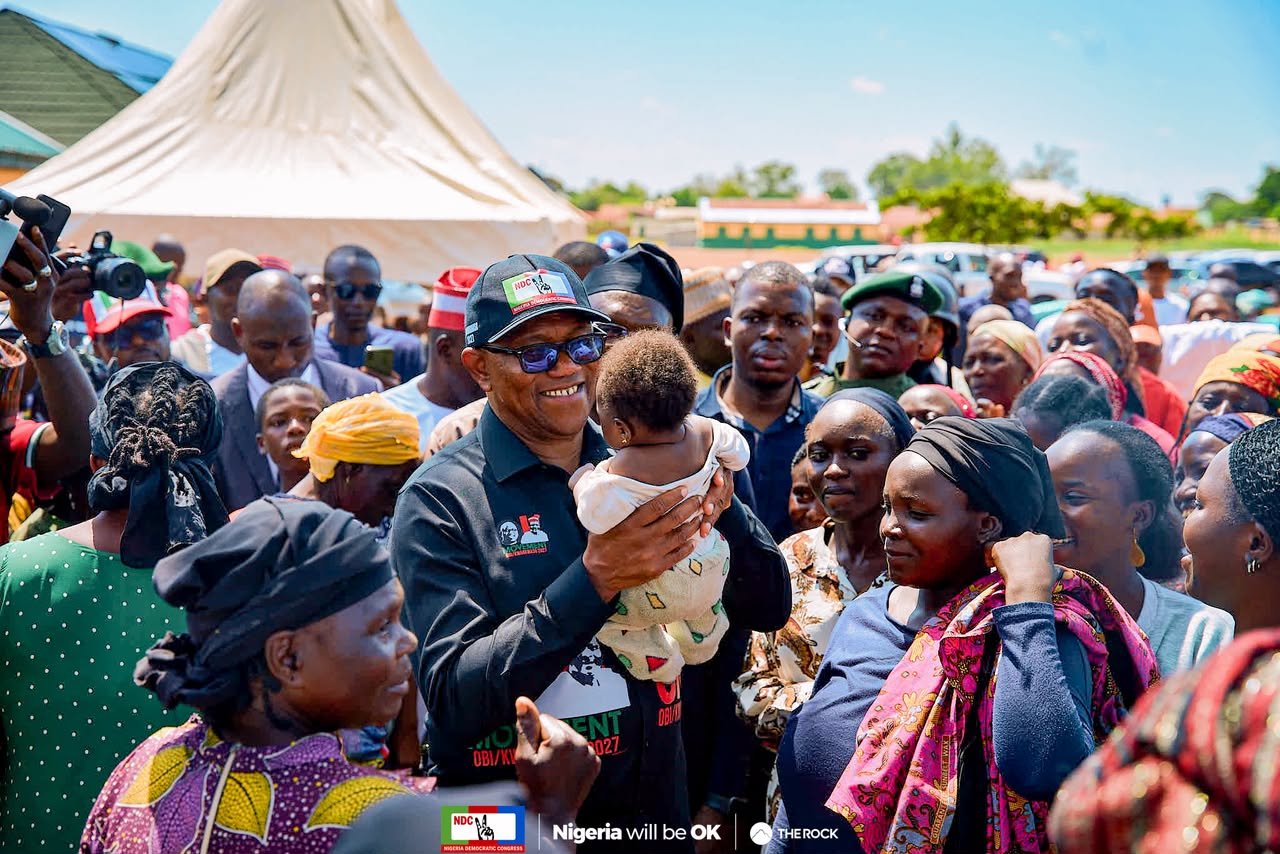
    JOS, Nigeria (NPA) — The presidential candidate of the Nigeria Democratic Congress (NDC), Mr Peter Obi, has visited an Internally Displaced Persons (IDP) camp in Mangu Local Government Area of Plateau State, where more than 500 displaced persons are being sheltered.

    The visit came a day after Obi and his delegation were reportedly prevented from proceeding to Yelwata in Benue State to visit displaced Nigerians and families affected by recent attacks.

    Obi, a former Governor of Anambra State and advocate of the “A New Nigeria is Possible” mantra, described the situation in Mangu as deeply disturbing, saying more than 45,000 people have reportedly been displaced, while over 20 communities have been sacked by terrorists.

    In a statement on Wednesday, Obi urged the government to intensify efforts to secure the affected communities and restore the confidence of residents.

    He said the right to life, safety, dignity and livelihood must be protected for every Nigerian, regardless of where they live, their ethnicity, religion or political affiliation.

    Obi said: “As long as there is one displaced Nigerian, all Nigerians are displaced.”

    He urged the government to ensure that displaced citizens did not become forgotten Nigerians, stressing the need to create conditions for their safe and dignified return, secure their communities and support them in rebuilding their lives.

    Obi also offered what he described as modest support to the displaced families as a gesture of solidarity, compassion and shared humanity.

    He said the New Nigeria he advocates must be a country where every citizen could live, work, farm, raise a family and pursue their dreams in peace and security.

  • Kwankwaso condemns attack on Peter Obi’s convoy in Benue

    Kwankwaso condemns attack on Peter Obi’s convoy in Benue

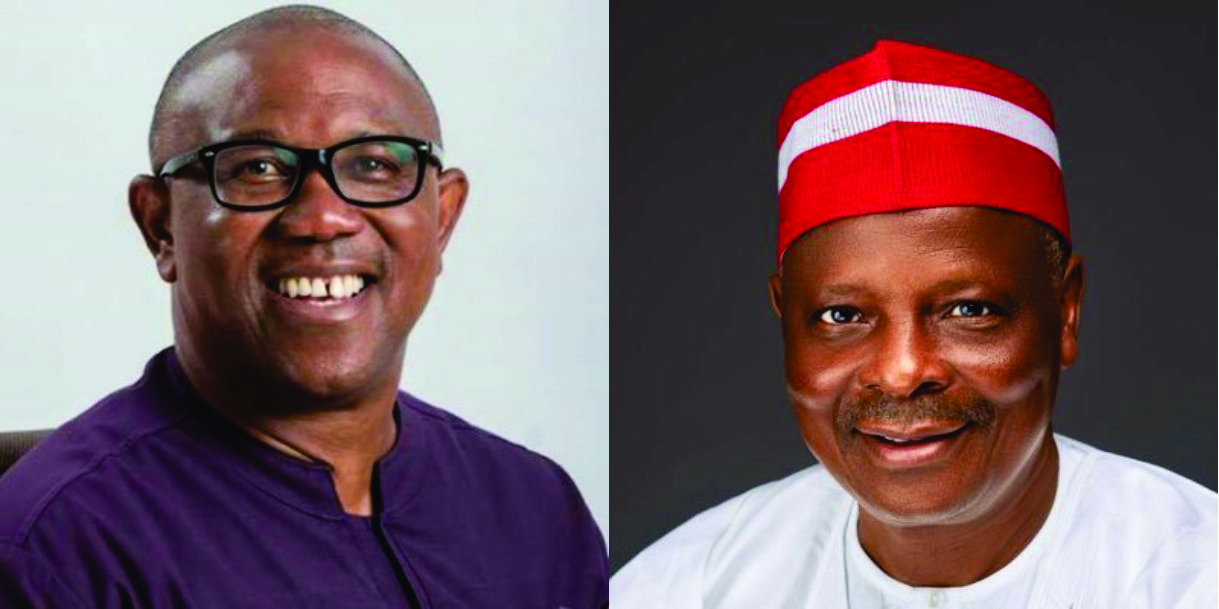
    ABUJA, Nigeria (NPA) — The vice-presidential candidate of the Nigeria Democratic Congress (NDC) and former governor of Kano State, Senator Rabiu Musa Kwankwaso, has condemned the reported attack on the convoy of the party’s presidential candidate, Mr Peter Obi, in Benue State.

    In a statement on Tuesday, Kwankwaso said he was “deeply disturbed” by the incident as Obi travelled to the North-Central state.

    He called on the Benue State Government to urgently identify and prosecute those responsible for the attack, while guaranteeing the safety and free movement of Obi and his entourage.

    “The deliberate mobilisation of unruly elements to block and attack his convoy and prevent him from entering Makurdi marks another dark day for our democracy,” Kwankwaso said.

    He noted that the Constitution guarantees every citizen the right to freedom of movement, adding that the right also applied to Obi as a former governor and leading opposition figure.

    Kwankwaso further urged President Bola Ahmed Tinubu to caution state governors, particularly those in the ruling party, against actions that could undermine the sanctity of Nigeria’s democracy.

    He also called on the international community, including diplomatic missions and election observation groups, to take note of the incident and urge Nigerian authorities to uphold the rule of law, protect opposition leaders and safeguard democratic freedoms.

    Meanwhile, New Post Africa (NPA) reported that Obi on Monday called for unity, love and mutual respect in politics ahead of the 2027 general elections.

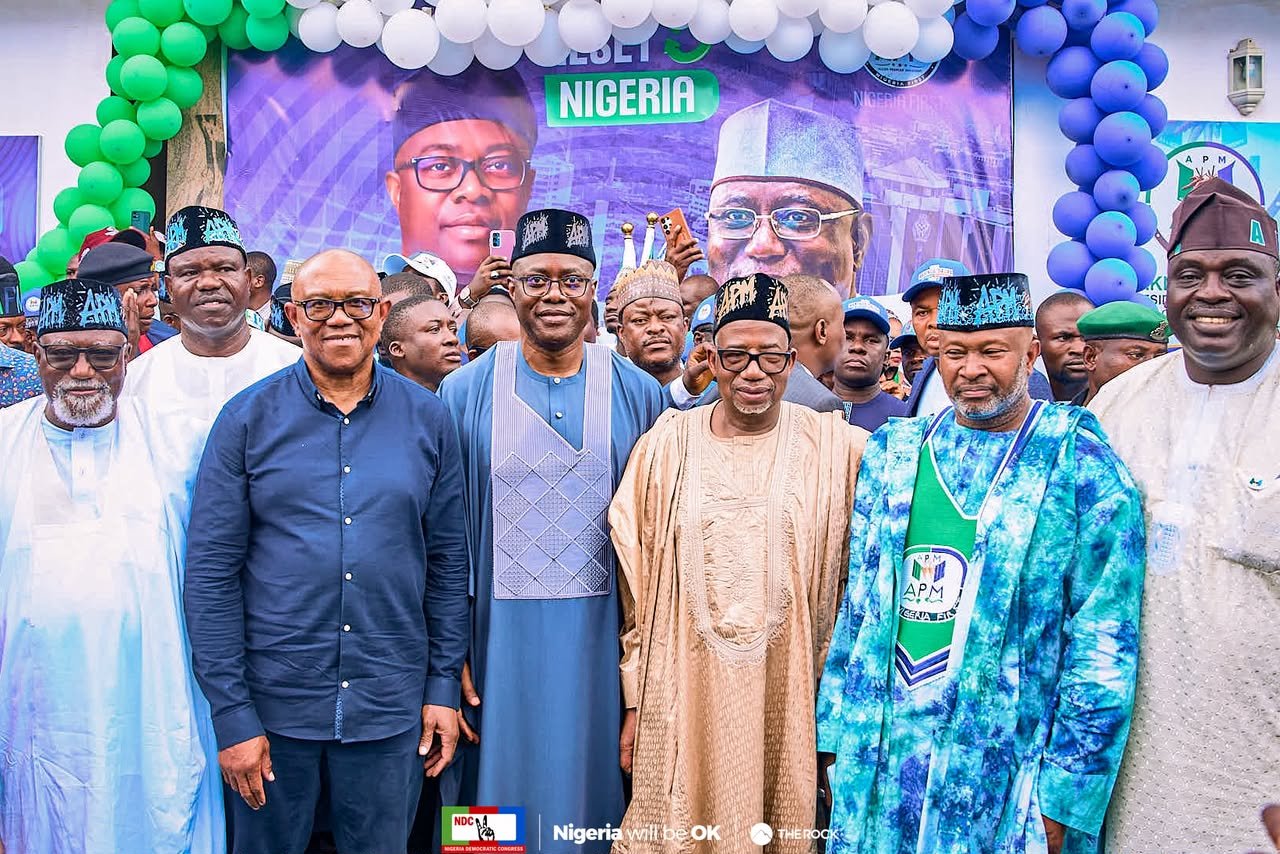
    Obi, a former governor of Anambra State, made the call at the commissioning of the Allied Peoples Movement (APM) Presidential Campaign Office in Abuja.

    In a statement titled “Unity and Love in Politics,” Obi said Nigeria needed to build a new nation anchored on unity, love, justice, mutual respect and inclusion, particularly at a time when political contests could become contentious and divisive.

    He urged political contestants to place their love for the country above their political differences.

  • Peter Obi calls for unity, love in politics ahead of 2027

    Peter Obi calls for unity, love in politics ahead of 2027

    ABUJA, Nigeria (NPA) — The presidential candidate of the Nigeria Democratic Congress (NDC), Mr Peter Obi, has called for unity, love and mutual respect in politics ahead of the 2027 general elections.

    Obi, a former Governor of Anambra State, made the call on Monday at the commissioning of the Allied Peoples Movement (APM) Presidential Campaign Office in Abuja.

    In a statement titled “Unity and Love in Politics,” Obi said Nigeria needed to build a new nation anchored on unity, love, justice, mutual respect and inclusion, particularly at a time when political contests could become contentious and divisive.

    He urged political contestants to place their love for the country above their political differences.

    “We must insist that our shared love for our country should always be greater than our political differences. This is my call to all contestants in the forthcoming elections,” he said.

    Obi said political campaigns should focus on ideas and practical solutions to the challenges confronting Nigerians, including insecurity, poverty, hunger, inequality and the growing number of out-of-school children.

    “Let our contest be about ideas and solutions that will address the enormous challenges facing our country today: insecurity, poverty, hunger, inequality, and the growing number of out-of-school children,” he said.

    He urged political parties and candidates to compete on policies capable of uniting Nigerians, improving living conditions and restoring hope, while maintaining respect, decency and love for one another.

    Obi said he attended the commissioning alongside Oyo State Governor Seyi Makinde, the APM presidential candidate, and Bauchi State Governor Bala Mohammed, the party’s leader.

    He congratulated Makinde, Mohammed and other leaders and members of the APM on the commissioning of the campaign office.

    “I used the opportunity to emphasise the need for us to build a New Nigeria anchored on Unity, Love, Justice, mutual respect, and inclusion, particularly at a time when political contests can become unnecessarily contentious and divisive,” Obi said.

    He reiterated his belief that “A New Nigeria is Possible with OK.”

  • BREAKING: Tinubu did not promise Eldorado in three years — Dare

    BREAKING: Tinubu did not promise Eldorado in three years — Dare

    ABUJA, Nigeria (NPA) — The Special Adviser to President Bola Tinubu on Media and Public Communications and presidential spokesperson, Mr Sunday Dare, says the president did not promise Nigerians an “Eldorado” within three years of his administration.

    Dare also said no country could solve all its challenges within four years, describing governance and national development as a continuous process.

    The presidential aide made the remarks in a post on Monday morning on X, responding to a post by an X user, Ada Anambra.

    Dare criticised opposition parties over what he described as their continued attacks on the results and impact of the Renewed Hope Agenda, the policy framework of the Tinubu administration.

    He alleged that the opposition lacked original ideas and a clear blueprint for governing the country.

    “Campaigning against results and impact of the Renewed Hope Agenda is now their stock in trade. No original ideas. No blueprint,” Dare said.

    He added: “President Tinubu did not promise Eldorado in three years. No country solved its challenges in four years. It’s always a journey.

    “The opposition continues to attack the successful and bold decisions of President Tinubu.

    “We will continue to point the results out and defend them. We will make Nigerians understand deeply that the rebuilding of the pillars of our economy is ongoing and those eager to gain power are desperados who have nothing to offer except their greed for power.”

    Dare was responding to a post by Ada Anambra, who argued that the opposition was unable to effectively challenge the Tinubu administration because, according to her, it was “campaigning against results, not promises.”

    “One reason the opposition can’t stop President Tinubu: they’re campaigning against results, not promises. Easy to attack a manifesto. Very hard to attack delivered numbers,” she wrote.

    She listed a range of policies, programmes and outcomes which she attributed to the Tinubu administration, including subsidy removal, foreign exchange unification, NELFUND, minimum wage increase, Nigeria’s exit from the FATF grey list, pension fund growth, Nigeria’s removal from the EU high-risk third countries list, macroeconomic reforms and local government autonomy.

    Ada Anambra also cited infrastructure and transport projects, including the Kano-Katsina-Maradi rail line, Kaduna-Kano rail line, Kano light rail, National Single Window implementation and coastal highways, as well as the deployment of four new satellites to enhance Nigeria’s space technology.

    On health and security, she claimed that maternal deaths had declined by 17 per cent and newborn deaths by 10 per cent, while more than 40,000 free Caesarean sections had been performed. She also listed six cancer centres, more than 20 upgraded federal hospitals, the neutralisation of more than 7,500 bandits and the rescue of more than 8,800 kidnapped civilians among the administration’s reported achievements.

    Her list also included the expansion of the Nigerian Army from eight to 12 divisions, the recruitment of additional personnel, the clearance of $850 million in trapped aviation funds, tax reform legislation, NYSC reforms, judicial welfare and pension legislation, and initiatives under the Renewed Hope Initiative of the First Lady.

    Ada Anambra concluded: “You can argue with promises. You can’t argue with a scorecard.”

    Dare thanked her for what he described as highlighting the achievements of the administration and bringing attention to issues he said the opposition wanted to conceal.

    “Thank you Ada for the bitter truth said. But more for the light you have brought to what they want to hide,” he said.