Category: Politics

  • JUST IN: Ebonyi PDP governorship candidate says leadership must prioritise people, not intimidation

    JUST IN: Ebonyi PDP governorship candidate says leadership must prioritise people, not intimidation

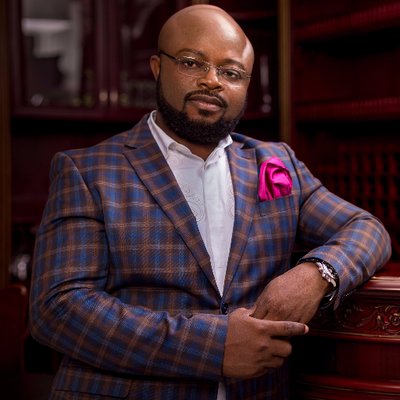
    LAGOS, Nigeria (NPA) — The Peoples Democratic Party (PDP) governorship candidate in Ebonyi State for the 2027 election has said leadership should be defined by compassion, sacrifice and service to the people rather than intimidation, threats, hate speech or violence.

    The candidate, Chief Executive Officer of Orient Group and President of Ultimus Holdings, who is campaigning under the slogan “ANYI GA EMEYA”, made the remarks in a statement he personally issued on Saturday titled, “Answering the Call to Serve My People.”

    He said a leader should be judged by the lives touched, difficult decisions made and opportunities created to make the people happier, safer and more prosperous.

    “Leadership should never be about the number of people you can intimidate, attack or harm. It should never be about hate speech, threats, provocation or inciting violence.

    “True leadership is about compassion, genuine sacrifice and the courage to put your people before yourself.

    “A leader is remembered not by the power he wielded, but by the lives he touched, the difficult decisions he made and the opportunities he created to make his people happier, safer and more prosperous,” he said.

    Candidate recounts decision to abandon resort project to build houses for the poor

    The PDP candidate said his commitment to people-centred leadership was reflected in a personal experience dating back to 2020, when he acquired several hectares of land in his hometown, Isu Achara, to build a private resort.

    According to him, contractors, engineers and equipment had already been mobilised and work had commenced when he took a walk around the area and observed the difficult living conditions of many residents.

    He said about 95 per cent of his neighbours were living in extremely difficult conditions, with some residing in mud houses with thatched roofs.

    “I asked myself: What is the value of building a beautiful private resort when the people around me do not have decent homes to live in?

    “I made a decision.

    “I immediately stopped and demobilised the resort project and redirected the resources towards providing decent homes for people in the community,” he said.

    He said the decision resulted in the construction and completion of more than 35 houses in Isu Achara and over 113 houses across other communities in Ebonyi State.

    “For me, that is leadership.

    “It is about seeing a need and responding.

    “It is about sacrificing personal comfort for the welfare of others.

    “It is about using what you have to improve the lives of people around you,” he said.

    Candidate highlights education initiative

    The candidate also said children from the affected communities had been provided access to education through initiatives under his foundation, including Ebele and Anyichuks Model Secondary School.

    He described the school as a two-storey facility comprising six classrooms, ICT facilities and a laboratory.

    According to him, the school was completed and commissioned in 2018 by the then Governor of Ebonyi State, Senator David Umahi, who attended the commissioning with members of his Executive Council and the Ebonyi State House of Assembly.

    “These are not merely political promises.

    “They are examples of what we have already done,” he said.

    ‘Ebonyi must come first’

    The PDP candidate said his decision to contest the governorship election was guided by what he described as a commitment to put the interests of Ebonyi State above personal or political considerations.

    “As I answer the call to serve my people, I am guided by one principle:

    “Ebonyi must come first.

    “Not me.

    “Not any individual.

    “Not any political party.

    “EBONYI FIRST.”

    He said the people of the state deserved leadership that would bring hope, opportunity, security, dignity and prosperity.

    “Leadership should unite us, not divide us.

    “It should build homes, schools, businesses and communities—not fear and hatred,” he said.

    The candidate expressed optimism that a “New Ebonyi” could be built where children, youths, women, farmers, workers, pensioners, senior citizens and vulnerable people would have genuine opportunities to improve their lives.

    “ANYI GA EMEYA.

    “There is hope.

    “There is possibility.

    “And together, we can do it better,” he said.

  • Nigeria parliament cancels  official trips to South Africa over xenophobia attacks on citizens

    Nigeria parliament cancels official trips to South Africa over xenophobia attacks on citizens

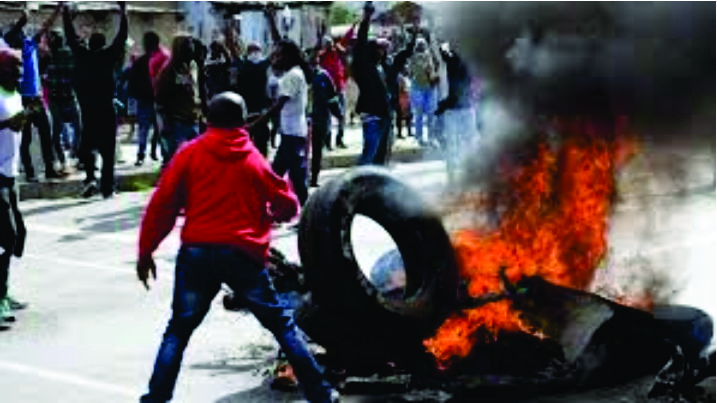
    ABUJA, Nigeria (NPA) — Nigeria’s parliament has suspended official visits to South Africa and directed lawmakers to boycott legislative activities hosted by South African institutions, citing reports of attacks on Nigerians and other African migrants in the country.

    The decision reflects growing concern over the safety of Nigerians in South Africa and renewed tensions between the two countries, which are among Africa’s largest economies.

    Nigerian officials have repeatedly raised concerns over anti-immigrant violence in South Africa. The Minister of State for Foreign Affairs recently said 98 Nigerians had died in mob and hate-related incidents in the country since 2022.

    In addition, 1,695 Nigerians have voluntarily returned to the country this year amid tensions linked to xenophobia, according to Nigeria’s acting High Commissioner in Pretoria.

    The parliamentary directive, announced by the House spokesperson, Akin Rotimi, bars lawmakers from official travel to South Africa and from participating in meetings hosted or organised by South African institutions until further notice.

    However, the directive does not apply to visits and meetings involving government officials.

    “This decision is a strong expression of concern over the safety, dignity and welfare of Nigerians living and conducting legitimate businesses in South Africa,” Rotimi said in a statement on Friday.

    The decision comes amid longstanding concerns over attacks on Nigerians and other African nationals in South Africa, which have periodically strained relations between Abuja and Pretoria.

    In July, South African Foreign Minister Ronald Lamola led a delegation to Abuja for discussions with Nigerian officials aimed at easing tensions over attacks on Nigerians and other African nationals in South Africa.

    Lamola said during the visit that the South African government condemned “all forms of xenophobia”.

    Nigeria’s Foreign Ministry had not immediately responded to requests for comment on the parliamentary directive, while a spokesperson for the South African government also did not immediately respond to a request for comment.

  • Obi denies Obasanjo funding NDC, clarifies Atiku relationship, unveils economic agenda and 2027 vision 

    Obi denies Obasanjo funding NDC, clarifies Atiku relationship, unveils economic agenda and 2027 vision 

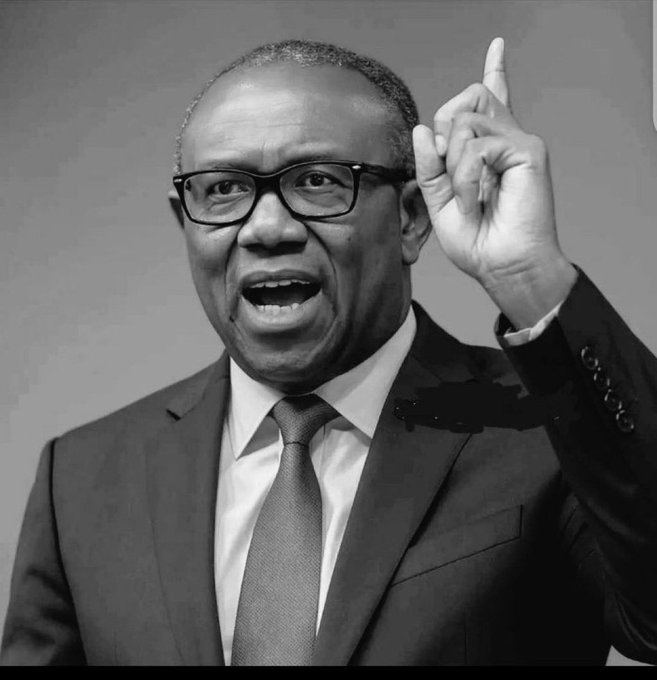
    ABUJA, Nigeria (NPA) — The presidential candidate of the Nigeria Democratic Congress (NDC), Peter Obi, has denied that the former president Olusegun Obasanjo is the financier of the NDC. 

    Obi, a former governor of Anambra State, made the clarification in an interview with Ojy Okpe on Arise Television’s Morning Show, aired on September 10, 2026, monitored by our correspondent.

    Responding to a question on whether former President Olusegun Obasanjo was funding the NDC, Obi said he was not aware of such funding.

    “I don’t know who is funding the NDC. I don’t think so. NDC accounting to me is transparent, and I have never seen any credit and any receipt from Obasanjo.”

    When asked about the status of the NDC as a political party and whether he was aware that the party was still existing by court order, Obi said: “All this is happening because the government wants to destabilize every opposition party,” he said.

    On his relationship with former Vice President Atiku and why he allegedly refused to serve as a vice president to him, Obi said nobody had offered him the position and that he had never refused such an offer.

    He also denied ever saying that he could not serve as vice president to anyone, explaining that any such arrangement would require discussions among the political parties and agreement on what was best for the country.

    “I am a candidate. My leader, Atiku, is a candidate. Now it’s no longer me or him. It’s a discussion. It’s no longer me Peter talking. It’s not me now. We must be able to talk about things that make meaning. A genuine consensus would be between parties, not me now.”

    He said any arrangement would require him to consult his stakeholders, just as Atiku would need to consult his own party and stakeholders, stressing that the decision could not be based solely on his personal position.

    Obi noted that the NDC had more than 80 people contesting for Senate seats, more than 20 contesting for governorship positions and others contesting various electoral positions, saying they must all be carried along in any political arrangement.

    “I respect the institution that I am coming from. I respect the decision of such an institution. I don’t operate where a leader serves as if he’s accountable to no one. I will make sure every part of the country is involved.”

    ‘We must agree on what we want Nigeria to be’

    Obi said what he was offering Nigerians was responsive leadership rather than merely sharing political positions and resources, noting that his vision was to build a country where opportunities would be available to every Nigerian regardless of background.

    “We are talking about the country. We’ll have a country where a child of nobody will be somebody without knowing anybody.”

    He said such a country must be founded on unity, law and order, with leaders expected to exemplify the values they want society to uphold.

    “We’ll sit down as a country and agree on what we want the country to be.”

    Obi said he wanted a coalition capable of making Nigeria work, with priorities including education, job creation, tackling insecurity, educating young people, reducing infant and maternal mortality and creating employment opportunities for youths.

    Obi speaks on subsidy removal

    On fuel subsidy removal, Obi said the subsidy regime had been affected by corruption and criminality and maintained that any reform must address those issues.

    “The subsisdy regime was enmeshed in corruption and criminality. I will remove and fight and remove that corruption and criminality.”

    He said there was a need to establish whether subsidy was actually being paid and determine the true level of fuel consumption.

    Obi cited Pakistan as an example, saying the country had more vehicles than Nigeria, removed subsidy and subsequently discovered that its actual fuel consumption was lower than previously measured.

    He said his administration would supply crude oil to local refineries before addressing the subsidy issue.

    Obi proposes agricultural investment

    Obi also said his administration would develop Nigeria’s vast uncultivated land, increase agricultural production and provide subsidies and lower interest rates to support productive sectors of the economy.

    He cited Indonesia, saying that although its interest rate was about 15 per cent, rates available to small and medium-sized enterprises were significantly lower to encourage productive activity.

    Obi argued that Nigeria had continued to borrow heavily despite the removal of fuel subsidy and accused the Tinubu administration of using funds that should have gone into productive infrastructure for consumption and luxury.

    “If there is one president the north will celebrate, it’s me. I will deal with the issue of poverty in a non-corrupt way. I will deal with their assets. Well cultivate it. We’ll ensure that we take these poor people, the alamajiri, to education; invest in health and support them.”

    He said poverty in northern Nigeria was not caused solely by subsidy removal, arguing that other factors had contributed to the region’s economic difficulties.

    Obi blamed the present administration for what he described as reckless management of the country’s resources.

    “At times, I believe he is not in charge. If he’s in charge he will be explaining it to the people.”

    He said that, if elected president, he would personally communicate with Nigerians rather than allowing others to speak on his behalf.

    “If elected, nobody will talk for Peter. I will be talking to the people.”

    Obi said his administration would prioritise repairing existing schools and roads instead of immediately embarking on new construction projects.

    He said government must first address the decay in existing infrastructure.

    “I will not build new buildings until we fix schools and existing roads.”

    “We’ll fix what is existing.”

    He also called on Nigerian leaders to make the country attractive enough for them and other citizens to spend their holidays at home.

    “The Nigerian president should spend his vacation in Nigeria. That’s the country he leads. I will visit other countries but I will not do my holiday anywhere else.”

    Obi criticised President Bola Tinubu for what he described as insufficient direct engagement with Nigerians, citing instances where the President visited places such as Jos but ended up at the airport.

    He urged Tinubu to visit Benue, Kano and Jos and spend at least three days engaging with communities and seeking solutions to the killings and insecurity.

    “I will go to Sokoto and spend the Sallah with the Sultan,” he said.

    Obi calls for protection of national values

    Obi also called on political leaders to work towards protecting the country’s value system, arguing that institutions must not be manipulated in ways that undermine democratic principles.

    He said the Constitution did not permit an electoral body to be manipulated by the National Assembly in a manner that would derail the country’s value system.

    “That is nonsensical. We are dealing with the issue of morality. The issues that go beyond court decision.”

  • Obi seeks northern support, confronts civil war legacy, pledges one-term presidency

    Obi seeks northern support, confronts civil war legacy, pledges one-term presidency

    ABUJA, Nigeria (NPA) — The presidential candidate of the Nigeria Democratic Congress (NDC), Peter Obi, has explained his recent remark that he was “ready to die” for his vote, saying the statement was made in response to a member of the audience who expressed a similar determination at a political gathering in Port Harcourt.

    Obi, a former governor of Anambra State, made the clarification in an interview with Ojy Okpe on Arise Television’s Morning Show, aired on September 10, 2026, monitored by Newpost Africa.

    Responding to questions about the challenges or otherwise of securing support from northern Nigeria, Obi said his message to the region was centred on his commitment to its future and economic potential.

    “I am only trying to tell them that I am committed to your future. We can make more money from agriculture than oil.”

    He said the vast arable land in Niger State, for instance, could help feed the country if properly developed.

    Speaking on the mistrust created by the Civil War against his Igbo speaking region, and concerns about how the history could affect his candidacy, Obi said Nigerians needed to focus on building a future based on love and unity rather than hatred.

    “Yes it happened. But we must build a future based on love not on hatred. I was not involved in it. It’s time to show love. It’s time to show unity. Today, we have a president who said he doesn’t believe in Nigeria. I believe in it. I am committed to it.”

    “You cannot hold what happened when I was barely three-four years against me. That was in the past.

    “All these are part of our history, which we can overcome with love. You don’t dwell on yesterday. I want to build a new Nigeria that is possible.”

    Responding to a question about his earlier promise to serve only one term if elected, Obi said he would not remain in office beyond the period he had committed to.

    “I will not stay a day longer. You don’t need a day longer to make things happen.”

    He said he made significant changes during his four years as Anambra State governor and would seek to replicate the same approach at the national level.

    More on the interview later.

  • JUST IN: INEC updates NDC’s logo, leadership, uploads modified logo as ordered by court

    JUST IN: INEC updates NDC’s logo, leadership, uploads modified logo as ordered by court

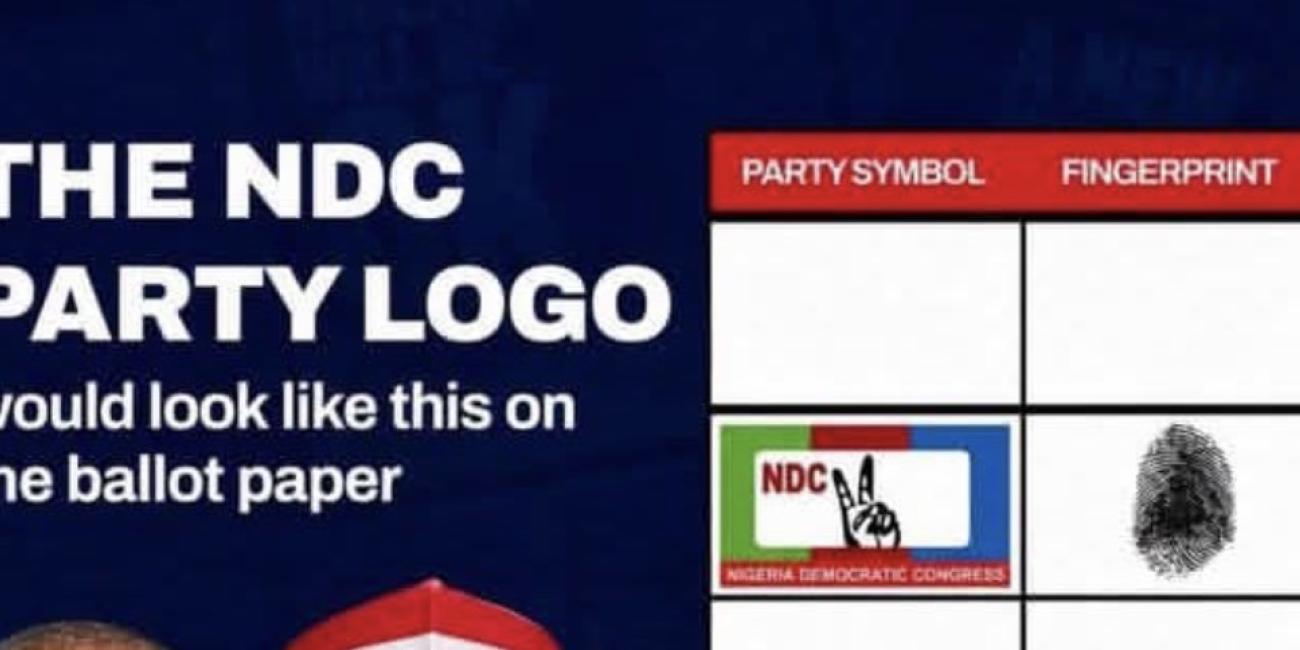
    ABUJA, Nigeria (NPA) — The Independent National Electoral Commission (INEC) has updated the leadership details of the Nigeria Democratic Congress (NDC) on its website and uploaded the party’s modified logo following a judgment of the Federal High Court in Abuja directing the electoral body to recognise the design.

    The development follows a judgment delivered on Tuesday, September 8, 2026, by Justice J. O. Abdulmalik, which held that INEC’s refusal to permit the modification of the NDC’s colour and logo design was unconstitutional, illegal and an infringement of the party’s rights.

    According to the updated information on INEC’s website, Senator Cleopas Moses Zuwoghe is listed as the National Chairman of the NDC, with the position marked as updated “by court order.”

    INEC also lists Barrister Ikenna Morgan Enekwelzu as National Secretary, Mr John Odey as National Treasurer, Hon Mainasara Abubakar Sani as National Financial Secretary and Barrister Reuben Egwuaba as National Legal Adviser.

    The commission marked each of the five leadership positions as updated “by court order.”

    The update follows a suit filed by the NDC against INEC, challenging the commission’s refusal to recognise and upload the party’s modified logo.

    The suit, marked FHC/ABJ/CS/1814/2026, was heard by Justice Abdulmalik of the Federal High Court sitting in Abuja.

    According to a report by Sahara Reporters, the court relied on provisions of the 1999 Constitution, including Sections 7, 14, 40, 221 and 222, as well as Article 11 of the African Charter on Human and Peoples’ Rights, as applicable in Nigeria.

    The court specifically recognised the modified logo adopted by the NDC at its first National Executive Committee (NEC) meeting held on March 25, 2026.

    According to the judgment, the logo is a digitally designed “Two fingers victory sign” with a blue background and the word “NDC” written in red.

    Justice Abdulmalik held that INEC’s refusal to recognise the modified logo, despite the party’s alleged compliance with the requirements for its modification, amounted to an infringement of the NDC’s constitutional and statutory rights.

    The judge further held that the NDC was entitled to use the modified logo, including its symbol and colours, as its official logo for political activities and elections conducted by INEC.

    Justice Abdulmalik consequently ordered INEC to “forthwith approve the modified logo design of the Plaintiff, including its symbol and colours,” for use by the party “for all purposes as a political party including for all elections conducted by the Defendant in Nigeria.”

    The court also declared that the modified logo adopted at the NDC’s first NEC meeting “shall be deemed as the proper official logo design of the plaintiff.”

    It further ordered that the logo be used by the party for all purposes, including elections conducted by INEC.

    The court also issued a perpetual injunction restraining INEC, its officers, servants and agents from stopping or interfering with the NDC’s use of the modified logo.

    The judgment specifically barred the commission from interfering with the party’s use of the logo, including its “symbol and colours,” as its official logo.

    NDC recounts dispute with INEC

    The development comes against the background of a dispute between the NDC and INEC over the party’s logo.

    NDC founder, Henry Seriake Dickson, had earlier said the party approved and forwarded its modified logo to INEC after its first NEC meeting.

    Dickson said INEC initially uploaded the modified logo but later removed it and reverted to the old logo of the association under which the NDC was originally registered.

    “However, without any reason communicated to us, INEC later removed the modified logo and insisted on using the old logo of the association, a position we disagreed with,” Dickson said.

    He said the party waited for INEC to resolve the issue before seeking judicial intervention.

    “After giving INEC sufficient time to correct the situation without any action taken, we were compelled to go to court,” he said.

    Following the judgment, Dickson welcomed the decision, describing it as a victory for the party and a confirmation of its position on the logo.

    “We therefore commend the judiciary for its timely intervention and welcome the judgment directing INEC to forthwith upload and utilise our modified digital logo,” he said.

    He urged NDC candidates and members to immediately begin using the approved logo on campaign materials.

    “We urge all candidates and party members to forthwith adopt and utilise the approved logo in all campaign materials, including banners, posters and other publicity materials,” Dickson said.

    The NDC founder acknowledged that some candidates and party members might have already produced campaign materials bearing the previous logo and apologised for the inconvenience.

    “We understand that some candidates and party members may have already made arrangements using the other logo, and we regret the inconvenience this may have caused,” he said.

    Dickson, however, noted that both versions retained the two-finger victory sign and urged party members to transition to the version recognised by the court.

    “However, both logos retain the two-finger victory sign. Candidates should now transition to the logo approved in our party’s constitution, which is the authentic party logo and, indeed, the one that is more widely recognised,” he said.

    He also urged party members not to panic over the development, saying the party had experienced leaders capable of managing the situation.

    “I want to assure everyone that the party has experienced and strategic leaders who understand what we are doing. Therefore, nobody should panic,” Dickson said.

    He described the dispute as part of what he called “administrative machinations” faced by the party, adding that the NDC would continue to defend its position.

  • Radda receives innovation tech hub, pledges support for youth development in Katsina

    Radda receives innovation tech hub, pledges support for youth development in Katsina

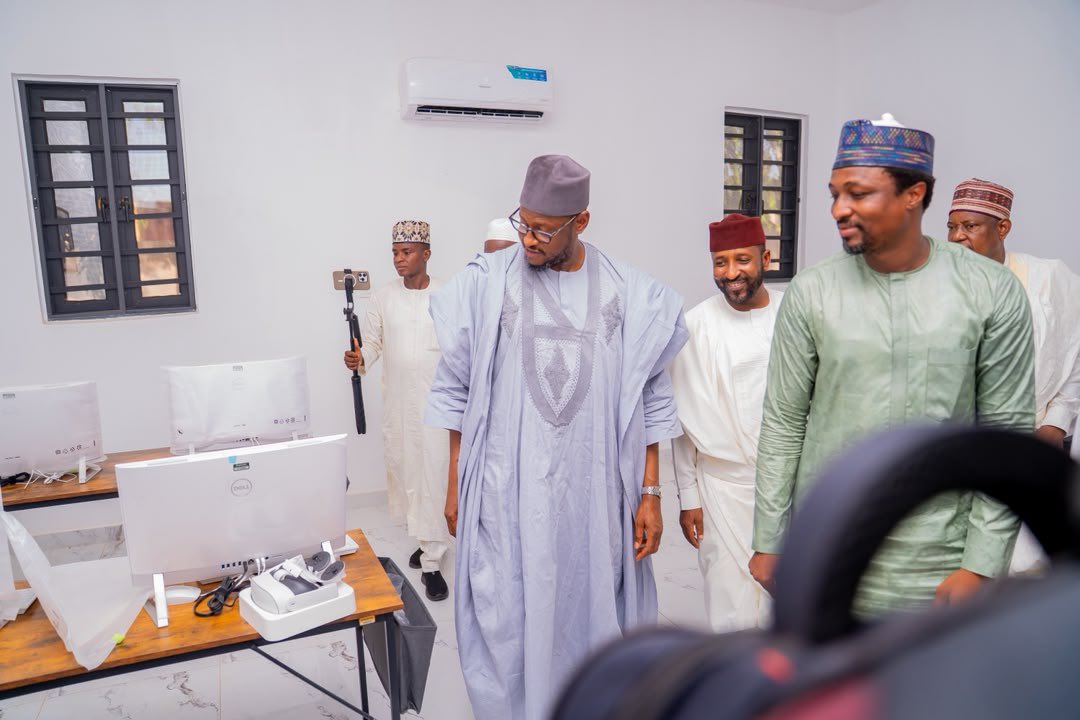
    KATSINA, Nigeria (NPA) — Katsina State Governor Dikko Umaru Radda has expressed satisfaction over the formal handover of an Adolescent and Young People Innovation Tech Hub in the state, facilitated by the Institute of Human Virology Nigeria (IHVN).

    The governor said the facility would provide adolescents and young people with opportunities to acquire skills in information and communication technology (ICT), web design, content creation, beauty technology, entrepreneurship, mentorship and vocational training.

    He added that the hub would also support the health and psychosocial wellbeing of adolescents and young people, while creating a platform for innovation, skills development and economic empowerment.

    In a statement personally issued on Thursday, Radda said the handover represented more than the transfer of a physical facility, describing the project as an investment in the dreams, talents and future of young people in Katsina.

    “This is more than the handover of a facility. It is an investment in the dreams, talents and future of our young people,” the governor said.

    According to Radda, the 12-room state-of-the-art hub aligns with his administration’s Building Your Future Agenda, particularly its focus on human capital development, youth empowerment and economic opportunity.

    He noted that more than 1,200 young people had already benefited from apprenticeship and skills development programmes at the Katsina Youth Craft Village.

    Radda said he was particularly pleased to accept the assets on behalf of the Katsina State Government and its people, assuring development partners and young people that the government would take ownership of the facility, sustain its operations and expand the impact of the initiative.

    The governor also expressed appreciation to the United States Centers for Disease Control and Prevention (US CDC) and IHVN for their financial, technical and institutional support towards the project.

    “Our partnership does not end with this handover; rather, it opens a new chapter of shared responsibility and sustainable impact,” Radda said.

    The governor said the state government would continue to work with development partners to strengthen initiatives that equip young people with relevant skills, improve their wellbeing and expand opportunities for economic participation.

  • BREAKING: No figures outside polling units will be announced in 2027, says Obi  

    BREAKING: No figures outside polling units will be announced in 2027, says Obi  

    ABUJA, Nigeria (NPA) — The presidential candidate of the Nigeria Democratic Congress (NDC), Peter Obi, has explained his recent remark that he was “ready to die” for his vote, saying the statement was made in response to a member of the audience who expressed a similar determination at a political gathering in Port Harcourt.

    Obi, a former governor of Anambra State, made the clarification in an interview with Ojy Okpe on Arise Television’s Morning Show, aired on September 10, 2026, and monitored by our correspondent.

    He explained that someone at the political gathering had told the audience that he was prepared to die for his vote, prompting him to encourage the people by saying that he was also prepared to do the same.

    Obi said his focus was on ensuring that votes cast at polling units are properly counted, recorded and transmitted.

    “We must make sure that every polling unit the votes are counted, recorded properly and counted. We’ll have a dual transmission to INEC portal and to where the people will see it. This time around, we’ll make sure that in every polling unit, we must have a system that transmits to our own situation room.”

    He said such a system would prevent anyone from announcing figures that did not emanate from the polling station, adding that in 2023, he and his supporters took certain things for granted by believing that the Independent National Electoral Commission (INEC) would carry out its responsibilities lawfully.

    Obi alleged that the immediate past INEC chairman worked for the opposition and maintained that he won the 2023 presidential election.

    “Everybody knows they (INEC) did the wrong thing,” he said.

  • Nigeria condemns Houthi attack on Saudi Arabia

    Nigeria condemns Houthi attack on Saudi Arabia

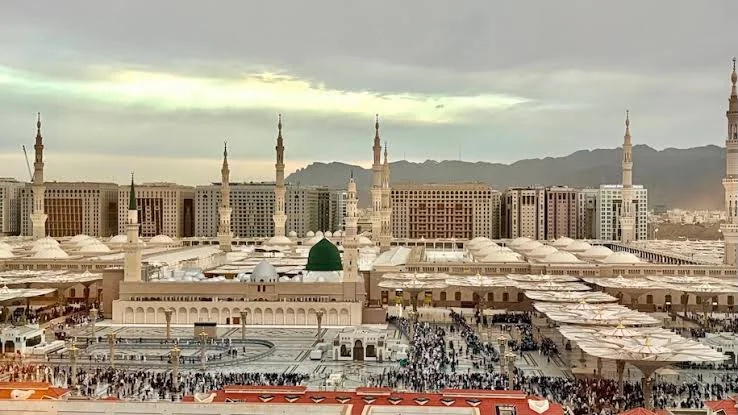
    ABUJA, Nigeria (NPA) — The Federal Government has condemned the September 7, 2026, attack on the Kingdom of Saudi Arabia by the Houthi militia in Yemen, describing the renewed hostilities as a threat to regional security and stability.

    Nigeria’s position was contained in a statement issued by the spokesperson for the Ministry of Foreign Affairs, Oluwafemi Adeniyi, who said the attack resulted in injuries to scores of civilians and damage to public infrastructure.

    “Nigeria regards the fresh hostilities as a serious threat not only to the security and sovereignty of Saudi Arabia, but also to regional stability in the Middle East,” Adeniyi said.

    He said Nigeria was calling on all parties to uphold international law, exercise maximum restraint and refrain from actions capable of escalating the situation, endangering civilian lives, undermining regional security and further disrupting the flow of much-needed global energy supplies.

    “Nigeria stands in solidarity with the government and people of Saudi Arabia at this difficult time, and prays for speedy recovery for those injured in the attack,” he said.

    Adeniyi reiterated the Federal Government’s commitment to supporting peace and reconciliation frameworks aimed at promoting regional and international peace, security and stability, while advancing shared prosperity and development for all.

    The ministry said Nigeria would continue to support efforts that contribute to peaceful resolution of conflicts and the protection of civilians amid growing tensions in the Middle East.

    -NAN

  • The Obasanjo–Atiku Feud: Why the ghost of Third  Term still haunts them

    The Obasanjo–Atiku Feud: Why the ghost of Third  Term still haunts them

    OPINION (NPA) — Nearly two decades after Olusegun Obasanjo and Atiku Abubakar left Nigeria’s highest elected offices, their political feud remains remarkably alive.

    The latest exchange between the former President and his former Vice-President has once again revived one of the most enduring political rivalries of Nigeria’s Fourth Republic.

    At the heart of the dispute is a question that has never entirely disappeared from Nigeria’s political memory: what really happened between Obasanjo and Atiku, and why does the bitterness surrounding their relationship continue nearly 20 years later?

    The answer may lie partly in the events of 2006, when the controversial proposal to amend the Constitution and potentially extend the tenure of the President became one of the biggest political battles of the era.

    But the story is also about personal rivalry, competing political ambitions, allegations of disloyalty and corruption, and the difficulty some political actors have in moving beyond old battles.

    The Third-Term Controversy

    The third-term controversy remains one of the defining political episodes of Nigeria’s Fourth Republic.

    In 2006, speculation intensified that President Obasanjo was seeking a constitutional amendment that would allow him to remain in office beyond the constitutionally prescribed two terms.

    The Presidency did not initially provide the unequivocal denial that many Nigerians expected. As the speculation continued, the issue moved from political gossip into a major national controversy.

    The National Assembly became the principal battleground.

    Governors, political parties, legislators and rival political factions all became involved. The proposed constitutional amendment eventually failed.

    Atiku was among the most prominent political figures to oppose the tenure-extension proposal.

    He described it as unconstitutional and morally wrong. His opposition became an important obstacle to the effort to amend the Constitution.

    There is room for debate over Atiku’s motivations.

    His supporters can point to constitutional principle. His critics can argue that presidential ambition and political survival were also factors.

    Both interpretations can coexist.

    What is less difficult to dispute is that Atiku became one of the leading political opponents of the proposed third-term arrangement.

    That confrontation appears to have left a lasting mark on his relationship with Obasanjo.

    Was Third-Term The Unforgivable Offence?

    Atiku’s political record is not beyond criticism.

    His career has been marked by controversies, allegations and political confrontations. His conduct as Vice-President and his subsequent political decisions remain legitimate subjects of public scrutiny.

    But there is an important distinction between criticism, allegation and established wrongdoing.

    If Atiku was disloyal to Obasanjo while serving as Vice-President, the former President was entitled to challenge him politically.

    If there were credible allegations of corruption, the appropriate institutions were entitled to investigate them.

    The same principle should apply today.

    An allegation should not automatically become a fact simply because it has been repeated for many years.

    This distinction is particularly relevant to controversies surrounding Atiku’s role as chairman of the National Council on Privatisation.

    His tenure attracted allegations concerning the handling of public assets and the privatisation process. But political controversy is not the same thing as a criminal conviction.

    That distinction matters in any serious account of Nigeria’s political history.

    The PTDF Controversy

    The controversy surrounding the Petroleum Technology Development Fund requires even greater care.

    The allegations against Atiku were investigated during the Obasanjo administration. The Economic and Financial Crimes Commission, under Nuhu Ribadu, examined the matter, after which Obasanjo constituted an administrative panel headed by then Attorney-General and Minister of Justice, Bayo Ojo.

    The panel produced findings adverse to Atiku.

    But the matter subsequently went to court.

    In November 2006, a Lagos State High Court set aside the Administrative Panel’s report, holding, among other things, that the proceedings infringed judicial powers and amounted to an abuse of executive power.

    That ruling does not mean that every allegation made against Atiku was proven false.

    Neither does it amount to a fresh judicial trial of all the underlying allegations.

    What it does mean is that a significant administrative finding relied upon by the Obasanjo administration was subsequently nullified by a court.

    That distinction should inform how the matter is discussed today.

    There is a fundamental difference between saying, “I remain convinced that Atiku acted improperly,” and presenting an allegation as though it were a judicially established fact.

    For public figures, particularly former presidents, that distinction carries considerable weight.

    An Old Feud, a New Accusation

    The latest controversy has again demonstrated how deeply the political battles of the Obasanjo years continue to resonate.

    Obasanjo recently alleged that Atiku gave the late former Speaker of the House of Representatives, Ghali Umar Na’Abba, five million naira to initiate impeachment proceedings against him.

    Atiku has denied the allegation.

    He also questioned the propriety of making such a serious accusation against a deceased person who is no longer able to respond.

    The competing claims remain disputed.

    But the episode is significant for another reason: it shows that the political arguments of 2003–2007 have not entirely disappeared.

    Na’Abba is dead.

    Obasanjo is now 89, while Atiku is 79.

    Yet a political confrontation from nearly two decades ago continues to generate fresh accusations and rebuttals.

    That should prompt a larger question about Nigeria’s political culture.

    At what point does accountability end and personal grievance begin?

    Obasanjo’s Legacy is Bigger Than Atiku

    Whatever one’s assessment of the former President, Obasanjo’s place in Nigerian history is considerably larger than his dispute with Atiku.

    He was a military head of state before returning to power as an elected civilian president in 1999.

    His administration was associated with significant economic and diplomatic developments, including Nigeria’s debt-relief negotiations.

    He remains one of Nigeria’s most internationally recognised elder statesmen.

    That record deserves neither unquestioning praise nor blanket condemnation.

    It deserves historical scrutiny.

    Obasanjo has repeatedly denied seeking a third term. In 2023, he again rejected the claim, saying he never asked for another term and arguing that, had he genuinely wanted one, he would have been capable of obtaining it.

    Yet political history is not always determined solely by the intentions of those who occupy office.

    It is also shaped by events, political manoeuvres, public perceptions and institutional consequences.

    That is why the third-term controversy continues to occupy a place in assessments of the Obasanjo presidency.

    It may not define his entire legacy.

    But it remains an important part of it.

    The Question of Forgiveness 

    There is another dimension to the Obasanjo-Atiku dispute: the long-standing perception that Obasanjo can be unforgiving towards those who cross him politically.

    That perception has been expressed not only by political opponents but also by people who have known him personally.

    In his memoir, You Must Set Forth at Dawn, Nobel laureate Wole Soyinka offered a sharply critical assessment of Obasanjo’s personality, including his tolerance for criticism.

    Soyinka’s assessment is his own interpretation and should not be treated as conclusive evidence of Obasanjo’s motives in every political dispute.

    But it contributes to a broader public debate about the former president’s political relationships and the persistence of some of his rivalries.

    Another account comes from the late Lieutenant General Victor Samuel Leonard Malu.

    In In the Name of Victor, Malu recounted an incident following Obasanjo’s visit to Monrovia in July 1999 involving Major General Felix Mujakperuo, who was then Force Commander of ECOMOG.

    According to Malu’s account, Obasanjo subsequently directed him, as Chief of Army Staff, to retire Mujakperuo.

    Malu said he sought clarification and was told that Mujakperuo had previously chaired the Special Military Tribunal that sentenced Obasanjo to imprisonment following the 1995 alleged coup plot.

    The account has been cited as evidence of the possibility that Obasanjo retained strong memories of past conflicts.

    But it remains an account of events as remembered and interpreted by Malu, rather than independent proof of Obasanjo’s motive.

    That distinction is essential.

    Historical commentary must leave room for evidence, competing accounts and uncertainty.

    Political History Should Not Become Personal History 

    There is no case for forgetting Nigeria’s political history.

    Constitutional controversies, alleged corruption, political betrayals and abuses of power should be documented and remembered.

    But remembering is not the same as remaining trapped in the past.

    Former leaders have a particular responsibility to demonstrate that political disagreements can eventually be placed in perspective.

    That responsibility becomes even greater with time.

    Obasanjo has lived through virtually every major chapter of modern Nigerian political history: military rule, civil war, imprisonment, democratic transition and presidential government.

    He has seen political alliances form and collapse across several generations.

    The question now is what value is gained by repeatedly reopening battles that began in 2003, 2005 and 2006.

    Nigeria’s current political challenges are considerable.

    The country needs its former leaders to contribute to institutional stability, democratic development and national reconciliation—not simply to revisit old political scores.

    Atiku Also Has Questions to Answer 

    None of this absolves Atiku. His political record should be examined with the same seriousness applied to that of every other national leader.

    His conduct as Vice-President remains part of the historical record. So do his subsequent political ambitions, alliances and controversies.

    He cannot demand fairness for himself while asking Nigerians to ignore uncomfortable questions about his own career.

    But accountability should not be confused with personal fixation.

    The Nigerian public does not have to choose between the proposition that Obasanjo was right about everything and the proposition that Atiku was right about everything.

    Neither is necessary.

    Both men may have made mistakes.

    Both may have been motivated, at different times, by political ambition.

    Both may have contributed to the collapse of their relationship.

    And both should be judged by the historical record.

    The Final Irony

    The irony is difficult to miss. 

    The third-term proposal ultimately failed, yet the controversy surrounding it became one of the most enduring features of the Obasanjo-Atiku relationship.

    Atiku’s opposition to the proposal contributed to the breakdown of his relationship with Obasanjo and helped establish him as one of the most visible opponents of the effort to alter the constitutional order at the time.

    Obasanjo, for his part, has consistently denied that he sought a third term.

    Still, the controversy refuses to disappear.

    It has become a ghost of Nigeria’s political past.

    And whenever Obasanjo and Atiku return to their old political arguments, that ghost appears again.

    Perhaps the more important question for Nigerians today is not who won the political battle of 2006.

    It is what the episode taught the country.

    It demonstrated the importance of constitutional limits, institutional checks and balances, political accountability and the need to distinguish allegation from established fact.

    It also offers a lesson in political leadership.

    Former leaders will inevitably have disagreements. Some disputes may never be completely resolved.

    But national history is bigger than the personal relationships of the people who once occupied public office.

    Obasanjo’s legacy should not be reduced to his quarrel with Atiku.

    Atiku’s political history should not be reduced to his disagreement with Obasanjo.

    Nearly twenty years later, perhaps the time has come to allow the historical record to speak for itself.

    The most consequential victory may no longer be winning an old political argument.

    It may be the wisdom to move beyond it.
  • Eswatini begins government-wide induction for SADC security organ chairship

    Eswatini begins government-wide induction for SADC security organ chairship

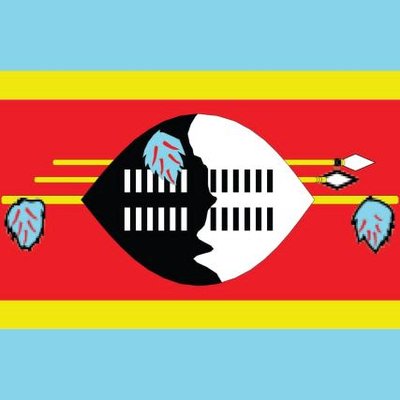
    MBABANE, Eswatini (NPA) — The Kingdom of Eswatini has commenced a government-wide induction programme to prepare its institutions for the responsibilities of chairing the Southern African Development Community (SADC) Organ on Politics, Defence and Security Cooperation.

    The exercise began on Tuesday, September 8, 2026, with the Minister of Foreign Affairs and International Cooperation, Senator Pholile Shakantu, meeting a delegation from the SADC Secretariat to review the Kingdom’s responsibilities and set the tone for the induction programme.

    The SADC delegation was led by Professor Ishmael Kula Theletsane, Director of the Organ, and included Ms. Barbara Lopi, Head of the Public Relations Unit, and Mr. Terry Rose, Senior Officer responsible for Politics and Diplomacy.

    According to a statement issued by the Ministry of Foreign Affairs and International Cooperation of the Kingdom of Eswatini on September 8, 2026, the induction programme will run from September 8 to 10 and bring together ministries, departments and institutions responsible for foreign affairs, defence, state security, public security, policing, immigration, corrections, anti-corruption, refugees, parks and wildlife, counter-terrorism, and Women, Peace and Security.

    “The Kingdom of Eswatini accepts this responsibility with humility and a clear appreciation of the confidence placed in His Majesty King Mswati III and the Government by the SADC region,” Shakantu said.

    The Minister stressed that the chairship must be treated as a coordinated national undertaking, with all participating institutions expected to understand their responsibilities, maintain the required level of readiness and contribute effectively to the peace, security and democratic stability of the region.

    “Our Chairship must be approached as a coordinated national undertaking. Every participating institution must understand its responsibilities, maintain the required level of readiness and contribute effectively to the peace, security and democratic stability of our region,” she said.

    Over the course of the induction, government institutions will engage directly with SADC experts on the mandate and working methods of the Organ, the preparation and conduct of regional meetings, implementation of SADC decisions, management of sensitive information, and the logistical and communication standards expected of the Chair.

    During its tenure, Eswatini will be responsible for chairing and hosting meetings across the Organ’s political, diplomatic and security architecture.

    These will include meetings of the Organ Troika, the Ministerial Committee of the Organ, the Inter-State Politics and Diplomacy Committee, the Inter-State Defence and Security Committee, as well as relevant defence, state-security, public-security and Police/SARPCCO structures.

    Sector-specific engagements will also cover migration and immigration, refugees, corrections and prisons, anti-corruption, parks and wildlife, regional counter-terrorism cooperation, conflict prevention, mediation, electoral observation, and the advancement of the Women, Peace and Security agenda.

    The chairship will also place important operational responsibilities on Eswatini. In 2027, the Kingdom will be expected to lead the SADC Electoral Observation Mission to the Republic of Angola during the country’s general elections.

    Eswatini will also head the SADC Liaison Office to be established imminently in Antananarivo, Madagascar.

    The office will support SADC’s engagement in Madagascar and facilitate coordination among the authorities of Madagascar, the SADC Secretariat and the Chairperson of the Organ.

    “These responsibilities demonstrate that the Chairship is not ceremonial,” Shakantu said. “It requires vigilance, sound diplomacy, institutional coordination and the ability to respond promptly to developments affecting peace, constitutional order and security within our region.”

    The Minister emphasised that the Ministry of Foreign Affairs and International Cooperation, through the Organ National Contact Point, will provide the central coordination link between the Government of Eswatini and the SADC Secretariat.

    All participating institutions will be expected to designate appropriately empowered focal persons, prepare coordinated national positions, identify capacity and resource requirements, and ensure that regional decisions are followed through to implementation.

    “The success of Eswatini’s Chairship will ultimately be measured by the quality of our leadership, the discipline of our coordination and the contribution we make towards a more peaceful, secure and stable Southern African region,” Shakantu concluded.