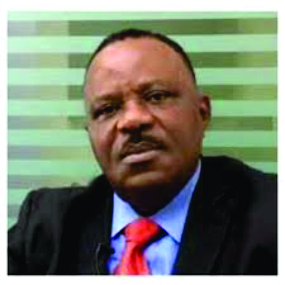
LAGOS, NIGERIA (NPA): Following the reported attack on Mr. Peter Obi by suspected political hoodlums in Benin City, the Edo State capital, on Monday, former APC presidential aspirant Dr. SKC Ogbonnia has written to U.S. President Donald Trump, urging him to intervene.
In his letter, Ogbonnia described Trump as “the leader of the free world” and appealed for action to hold accountable those he alleges are responsible for what he termed a “total collapse of democracy in Nigeria.”
Dr. Ogbonnia, a businessman, academic, and politician, hails from Ugbo in Awgu Local Government Area of Enugu State. He is the Chairman of First Texas Energy Corporation, an Adjunct Professor of Leadership, and a regular commentator on Nigerian politics and governance.
The letter, republished below, outlines his concerns regarding Nigeria’s democratic trajectory and calls for international attention to safeguard democratic values in the country.
———————————————————————-
A Letter To Donald Trump On The Assassination Attempt On Peter Obi, By SKC Ogbonnia
February 27, 2026
President Donald J. Trump
The White House
1600 Pennsylvania Avenue NW
Washington, D.C. 20500
Subject: Why The World Should Hold Tinubu Responsible For The Assassination Attempt On Peter Obi
Dear Mr. President,
I am writing as a voice for the millions of Nigerians and Nigerian Americans who look up to your leadership as the standard-bearer for the free world and a passionate defender of democratic integrity. Nigeria is witnessing a grave assault on the democratic process that requires your immediate attention. Besides widespread insecurity which your timely intervention has helped bring to limelight, the African country is also witnessing a deeper and deteriorating state of democratic safety. Specifically, the country is now the most dangerous place for democratic opposition. The most recent and blatant example is the assassination attempt on Peter Obi on February 24, 2026 in Benin City, Edo State. Mr. Obi is a frontline opposition leader and the presidential candidate of the Labour Party in 2023 elections in Nigeria. Gunmen trailed his convoy from a political event and eventually opened fire. They missed him but damaged vehicles and other properties at the residence of his host, a former Edo State Governor, Chief John Odigie-Oyegun.
The primary function of a state is to protect its citizens. Yet, this incident—where armed thugs shot at a convoy and damaged properties at a private residence—demonstrates a deliberate failure to secure opposition leaders. Despite the presence of police, the assailants were able to act and flee, suggesting a lack of proactive security measures or abject complicity. The mere fact that President TInubu has failed to condemn such attack on high-profile opposition leaders full three days after the incident speaks volumes. The silence of the federal government in the face of these attacks is a testament to its enabling role. As the chief security officer of the nation, President Tinubu’s failure to act decisively against acts of violence makes him the ultimate beneficiary of this dastardly act.
But this development did not come as a surprise. In a widely circulated essay published in 2022, “Tinubu’s Candidacy Provoking A Civil War”, I had enumerated why the politics of Bola Ahmed Tinubu is synonymous with political violence. Therefore, the incident of the assassination attempt on Peter Obi is not an isolated occurrence but rather the apex of a sustained pattern of political intimidation that has defined Tinubu’s career, dating back to his time as Governor of Lagos State (1999–2007).
A Deep Pattern of Political Intimidation and Violence
Tinubu’s tenure in Lagos was widely notorious for deploying various state apparatuses to suppress the local opposition. The unsolved assassination of PDP governorship aspirant Funsho Williams in 2006 remains the darkest chapter of that era. Though the case was never legally concluded, Tinubu was generally viewed as a prime suspect, with claims that the crime was orchestrated to remove a significant political rival in Lagos. Such pattern creates a dangerous precedent where political opposition is met with lethal force rather than democratic debate.
Sadly, Tinubu’s history of political intimidation has now found its way to the national stage. Keenly aware that his policies are unpopular with Nigerians, and he has no chance to win a free and fair re-election in 2027, President TInubu has resorted to his familiar melange of political intimidation and violence. It is significant to note here that the attack on Obi occurred shortly after a prominent member of Tinubu’s party, the Edo State Governor, Monday Okpebholo, issued a public threat against Mr. Obi. This threat created a hostile environment that preceded the violence.
Besides the case of Peter Obi, which degenerated to open attempt on his life, many opposition leaders are continuing to face untold political persecution than ever before. Draconian intimidation has replaced democratic norms. As a renowned human rights activist and presidential candidate, Omoyele Sowore put it, he has suffered more police brutality and illegal detentions under Tinubu than during the military era. This do-or-die mentality, where political opponents are constantly being intimidated has not only fostered a culture of impunity and atmosphere of violence, but it is also an existential threat to Nigeria’s fragile democracy.
Targeting of the Igbo People
It is a common knowledge that Tinubu has a chronic history of intimidation directed at the Igbo people—Peter Obi’s ethnic group. For instance, during the 2023 elections in Lagos, areas dominated by opponents, particularly the Igbo, were systematically targeted, with voters intimidated and prevented from exercising their rights. Infamous threats by traditional rulers close to the ruling APC, urging that non-compliant voters be forced into the Lagos lagoon, were met with tacit approval from Tinubu and the party he led. Clearly, the 2026 attack in Edo follows this unfortunate trend of using violence to disenfranchise the political base of opponents, specifically targeting the Igbo population and their supporters.
A Plea
Dear President Trump, the systematic targeting of political opposition under President Tinubu has led to a de facto one-party state. The result has been total erosion of rule of law and total impunity. As the leader of the free world, I urge you to use your good offices to hold Mr. TInubu accountable. A total collapse of Nigerian democracy has severe consequences.
Sincerely,
SKC Ogbonnia, Ph.D.
A former APC Presidential Aspirant
Houston, Texas.