Category: North America

  • WTO warns Middle East conflict could slow global trade in latest report

    WTO warns Middle East conflict could slow global trade in latest report

    INTERNATIONAL (NPA) — March 20, 2026 — The World Trade Organization (WTO) says global trade growth will slow in 2026, after stronger‑than‑expected gains last year driven by booming demand for AI‑related products.

    According to the WTO’s latest Global Trade Outlook published on March 19, merchandise trade is forecast to grow by 1.9% in 2026, down from 4.6% in 2025, before picking up slightly to 2.6% in 2027. Services trade is also expected to ease, rising 4.8% in 2026 compared with 5.3% in 2025. Together, goods and services trade will expand by 2.7% in 2026, compared with 4.7% last year.

    The slowdown is linked to the ongoing Middle East conflict, which has disrupted transport routes and raised energy prices. If oil and gas prices stay high, WTO economists warn global GDP growth could fall by 0.3 percentage points, while trade growth could drop by 0.5 points — with energy‑importing regions like Asia and Europe hit hardest.

    The conflict has already blocked traffic through the Strait of Hormuz, a vital global shipping lane. This has disrupted fertilizer exports critical for farming and raised food security concerns in countries such as India, Thailand, and Brazil. Gulf states, heavily dependent on food imports, also face rising costs. Transport disruptions have cancelled tens of thousands of flights and increased insurance premiums, adding further strain on businesses and consumers worldwide.

    Despite these risks, WTO Director‑General Ngozi Okonjo‑Iweala stressed that trade remains resilient, supported by high‑tech goods and digital services. She urged governments to keep trade policies predictable and strengthen supply chains to cushion the impact.

    There is some upside: if the conflict ends quickly and AI‑related spending continues, trade growth could rise to 2.4% in 2026 and 2.7% in 2027. But if energy prices remain high, the outlook will stay fragile.

    In 2025, AI‑enabling goods such as semiconductors and data equipment grew by nearly 22%, accounting for almost half of global trade growth. WTO economists say this sector could continue to offset some of the negative effects of tariffs and geopolitical tensions, offering hope that technology will remain a bright spot in otherwise uncertain times.

  • BREAKING: U.S.–Israel strikes kill two more senior Iranian officials

    BREAKING: U.S.–Israel strikes kill two more senior Iranian officials

    MIDDLE EAST (NPA) — March 20, 2026 — Iran’s Islamic Revolutionary Guard Corps (IRGC) has confirmed the deaths of two senior figures in overnight strikes carried out jointly by the United States and Israel, on March 20, 2026.

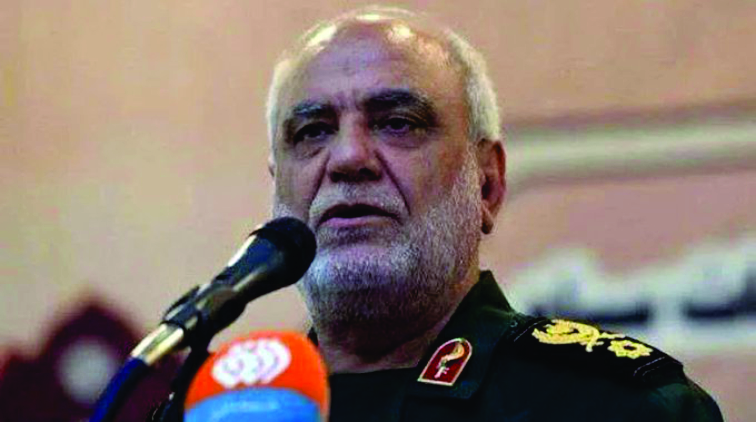
    Brigadier General Ali Mohammad Naeini, the IRGC’s spokesperson, was among those killed. A veteran of the Iran–Iraq War and a key architect of the corps’ “soft war” strategies, Naeini had served as spokesman since 2024. The IRGC denounced the attack as a “cowardly terrorist act” by what it called the “American-Zionist alliance.”

    Reports also point to the killing of General Ismail Ahmadi, intelligence chief of the Basij paramilitary force. The Basij plays a central role in domestic security and surveillance, and Ahmadi’s death is seen as a major setback for Iran’s internal enforcement network.

    The twin losses highlight an intensifying campaign against Iran’s military and intelligence elite, raising fears of further instability and retaliation across the region. Analysts warn that the strikes not only weaken Iran’s propaganda and security apparatus but also risk escalating tensions in the already volatile Middle East.

  • Macron urges de‑escalation in Middle East, calls for civilian infrastructure protection

    Macron urges de‑escalation in Middle East, calls for civilian infrastructure protection

    INTERNATIONAL (NPA) — March 19, 2026 — French President Emmanuel Macron has called on the warring parties in the Middle East to open a path toward de‑escalation and restore stability in the region.

    Macron, in a statement released Thursday, urged the immediate implementation of a moratorium on strikes targeting civilian infrastructure, including water and energy facilities. He stressed that freedom and security of navigation must be restored, referencing the ongoing logjam in the Strait of Hormuz.

    He emphasised that as the region enters a period of religious celebrations and renewal, tempers must cool and fighting must cease to allow for the prospect of a negotiated and sustainable solution.

    Macron’s statement follows similar remarks by United Nations Secretary‑General António Guterres, who urged the United States, Israel, and Iran to halt hostilities and pave the way for dialogue. 

    Guterres warned that intensified attacks and counterattacks in Iran, Israel, and across the Gulf have already struck key energy installations, threatening both regional security and global energy supplies.

  • BREAKING: UN Secretary‑General calls for an end to Iran conflict for energy security

    BREAKING: UN Secretary‑General calls for an end to Iran conflict for energy security

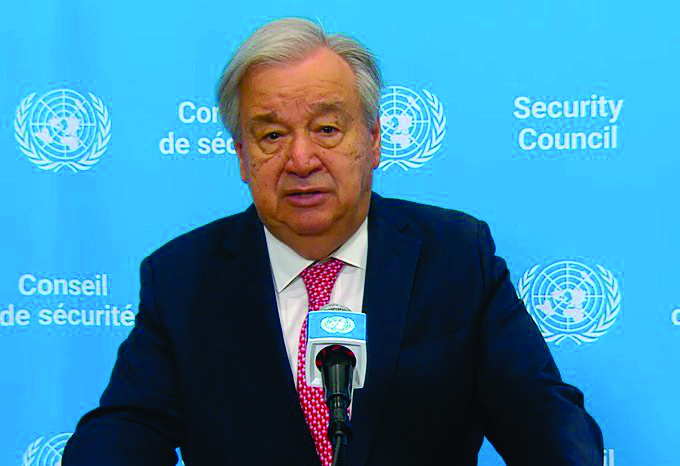
    INTERNATIONAL (NPA) — March 19, 2026 — United Nations Secretary‑General António Guterres has called on the United States and Israel to end the war against Iran, while also urging Tehran to halt its attacks on neighbouring nations. He made the appeal on Thursday following his meeting with the European Council in Brussels.

    Guterres warned that the escalating conflict in the Middle East — particularly involving Iran, Israel, and the United States — poses grave risks to regional stability and global energy security, citing disruptions in the Strait of Hormuz as a critical concern. He stressed the importance of multilateralism and closer cooperation between the European Union, the United Nations, and global partners.

    The Secretary‑General urged restraint and diplomacy, calling for collective action to prevent further escalation and to safeguard humanitarian principles. He condemned the attacks on energy infrastructure in West Asia, warning of severe global economic consequences, and appealed for dialogue to restore peace, stability, and the free flow of goods and energy. His remarks echoed widespread concerns about blockades and rising oil prices.

    Guterres further called for stronger international cooperation to defend multilateralism and prevent additional humanitarian crises, insisting that only through unity and diplomacy can the region move toward lasting peace and security.

  • UAE Defence Intercepts 22 projectiles as Iranian missiles and drones rain on Gulf

    UAE Defence Intercepts 22 projectiles as Iranian missiles and drones rain on Gulf

    MIDDLE EAST (NPA) — March 19, 2026 — The United Arab Emirates’ Defence Ministry announced today that its air defence systems successfully intercepted and destroyed seven ballistic missiles and 15 armed drones launched from Iran. 

    According to the ministry, the coordinated attack was detected early, and defence units acted swiftly to neutralise the incoming threats before they could reach populated areas or critical infrastructure. Officials described the operation as a demonstration of the UAE’s growing defence capability and readiness to respond to regional security challenges. 

    The ministry emphasised that the interceptions were carried out in close coordination with allied monitoring systems, underscoring the importance of regional cooperation in countering evolving threats. While no casualties or damage were reported, authorities noted that the attempted strikes highlight ongoing tensions in the Gulf and the need for vigilance. 

    Earlier today, Qatar expelled Iranian diplomatic attaches following missile strikes on the Ras Laffan energy hub. The move came amid a wave of coordinated assaults across the Gulf, where Iranian projectiles and drones also targeted the UAE’s Habshan gas plants and Saudi Arabia’s refineries in Riyadh.

    Regional authorities confirmed that defence systems intercepted several of the incoming threats, but the attacks underscored escalating tensions and the vulnerability of critical energy infrastructure in the Gulf. The incidents have prompted heightened security alerts and renewed calls for international cooperation to safeguard the region’s strategic assets.

  • President Trump honours fallen service members at solemn dignified transfer ceremony

    President Trump honours fallen service members at solemn dignified transfer ceremony

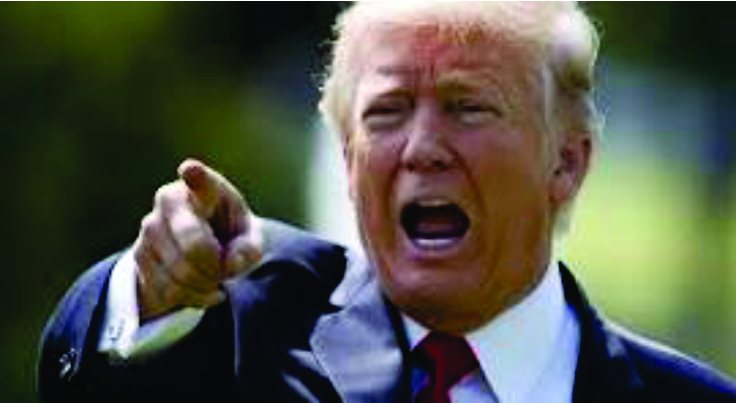
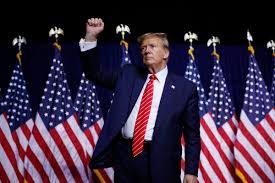
    NORTH AMERICA (NPA) — March 19, 2026 — U.S. President Donald Trump, on Wednesday, attended the dignified transfer ceremony for six American heroes who lost their lives in a refuelling plane crash in the war against the Islamic Republic of Iran. The solemn event took place at Dover Air Force Base in Delaware.

    The six servicemen honoured were Major John A. Klinner, Capt. Ariana G. Savino, Tech. Sgt. Ashley B. Pruitt, Capt. Seth R. Koval, Capt. Curtis J. Angst, and Tech. Sgt. Tyler H. Simmons.

    The dignified transfer ceremony paid tribute to their ultimate sacrifice and underscored the nation’s gratitude for their service. 

    The solemn military tradition in which the remains of U.S. service members killed in action are returned to American soil is conducted with full honours, symbolising respect and national appreciation. The ceremony typically takes place at Dover Air Force Base, where fallen troops are received by military personnel, family members, and sometimes national leaders before being prepared for burial.

  • BREAKING: Sweden confirms Execution of citizen in Iran amid war tensions

    BREAKING: Sweden confirms Execution of citizen in Iran amid war tensions

    Sweden’s Foreign Minister, Maria Malmer Stenergard, announced on Wednesday that Iran has executed a Swedish citizen. The announcement follows confirmation from Iranian officials that this marks the first execution of a man convicted of spying since the outbreak of the U.S.-Israeli war.

    Stenergard described the development as deeply troubling, noting that it underscores the heightened risks faced by foreign nationals in Iran during the ongoing conflict. The execution is expected to further strain diplomatic relations between Tehran and Stockholm, while adding to international concerns over Iran’s use of capital punishment in politically sensitive cases.

  • U.S. Treasury Department lifts restrictions on Venezuela, grants license for Petróleos de Venezuela

    U.S. Treasury Department lifts restrictions on Venezuela, grants license for Petróleos de Venezuela

    NORTH AMERICA (NPA) — March 18, 2026 — The U.S. Treasury Department’s Office of Foreign Assets Control (OFAC) on Wednesday issued a license authorising American entities to engage in business transactions with Venezuela’s state-owned oil company, Petróleos de Venezuela, S.A. (PdVSA), and its subsidiaries.

    The agency said the license will benefit both the United States and Venezuela, while supporting the global energy market by increasing available oil supply and encouraging new investment in Venezuela’s energy sector.

    In a statement, the Treasury Department noted: “Today, the Treasury Department’s Office of Foreign Assets Control issued a license broadly authorising established U.S. entities to engage in many types of transactions with Venezuela’s state-owned oil company, Petróleos de Venezuela, S.A. (PdVSA), and its subsidiaries.”

    “This license will benefit both the United States and Venezuela, while supporting the global energy market by increasing the supply of available oil. It will also help incentivise new investment in Venezuela’s energy sector.”

    The U.S. Treasury Department had previously sanctioned Venezuela over human rights abuses, corruption, election fraud, and ties to drug trafficking and armed groups. Those measures, which began in 2014, expanded into broad economic restrictions on Venezuela’s oil and gold sectors.

    The consequences were severe: Venezuela’s economy contracted sharply, foreign investment dried up, and access to international financial markets was restricted. While sanctions weakened the Maduro government’s ability to fund operations, they also worsened living conditions for ordinary citizens, contributing to shortages of food, medicine, and fuel, while pushing Caracas to deepen ties with Russia, China, and Iran.

  • BREAKING: Iran holds funeral for top security chiefs killed in Israeli strikes

    BREAKING: Iran holds funeral for top security chiefs killed in Israeli strikes

    INTERNATIONAL (NPA) — March 18, 2026 — A funeral procession is underway at Revolution Square in Tehran for Iranian security chief Ali Larijani and Basij commander Gholamreza Soleimani, both killed in recent Israeli airstrikes.

    On Tuesday, Israel’s Chief of Defence Staff confirmed that the two senior officials were deliberately targeted in an overnight strike on the Iranian capital.

    The ongoing funerals followed another reported strike on the residence of Iran’s Intelligence Minister, Ismail Khatib. Khatib, who has led the Ministry of Intelligence since 2021, is considered a central figure in Iran’s leadership, with a career spanning the nation’s security and judicial institutions, including service under the late Supreme Leader Ayatollah Khamenei. His fate remains unclear.

    Earlier, Iran’s Foreign Minister, Seyyed Abbas Araghchi, speaking to Al Jazeera, insisted that Israel’s campaign of targeted eliminations “will not weaken the regime,” vowing resilience despite mounting losses and sheer uncertainties among senior officials.

    The back-to-back strikes have rattled Tehran’s leadership, raising fears of further escalations and leaving many officials questioning who might be next on Israel’s list.

  • Shockwaves in Tehran as latest Israeli strike targets Ismail Khatib, Iran’s spy chief

    Shockwaves in Tehran as latest Israeli strike targets Ismail Khatib, Iran’s spy chief

    MIDDLE EAST (NPA) — March 18, 2026 — Tehran was rocked overnight as another Israeli airstrike reportedly zeroed in on Iran’s Intelligence Minister, Ismail Khatib, at his residence. Khatib, who has led the powerful Ministry of Intelligence since 2021, is regarded as a key figure in Iran’s inner circle, with a career spanning the nation’s security and judicial apparatus, including service under the late Supreme Leader Ayatollah Khamenei.

    Under his watch, the ministry has been accused of crushing domestic dissent, spearheading counterintelligence operations, and orchestrating activities against Israeli and Western interests. The United States previously placed a $10 million bounty on Khatib, fueling speculation that the strike may have been a calculated attempt to “cash in” on his head. His fate remains uncertain — whether he was killed or survived the attack.

    The strike comes just 24 hours after the killing of Ali Larijani, secretary of Iran’s Supreme National Security Council. That assassination sent shockwaves through Iran’s leadership, with officials reportedly trembling and frantically calling colleagues to ask who might be next.

    Israeli Prime Minister Benjamin Netanyahu, speaking to the U.S. Ambassador yesterday, chillingly declared he still has “names of the bad guys” to cross out.

    Iranian authorities have yet to issue any statement on Khatib’s condition.