Category: Middle East

  • Middle East War: Netanyahu praises Israeli forces amid ongoing campaign

    Middle East War: Netanyahu praises Israeli forces amid ongoing campaign

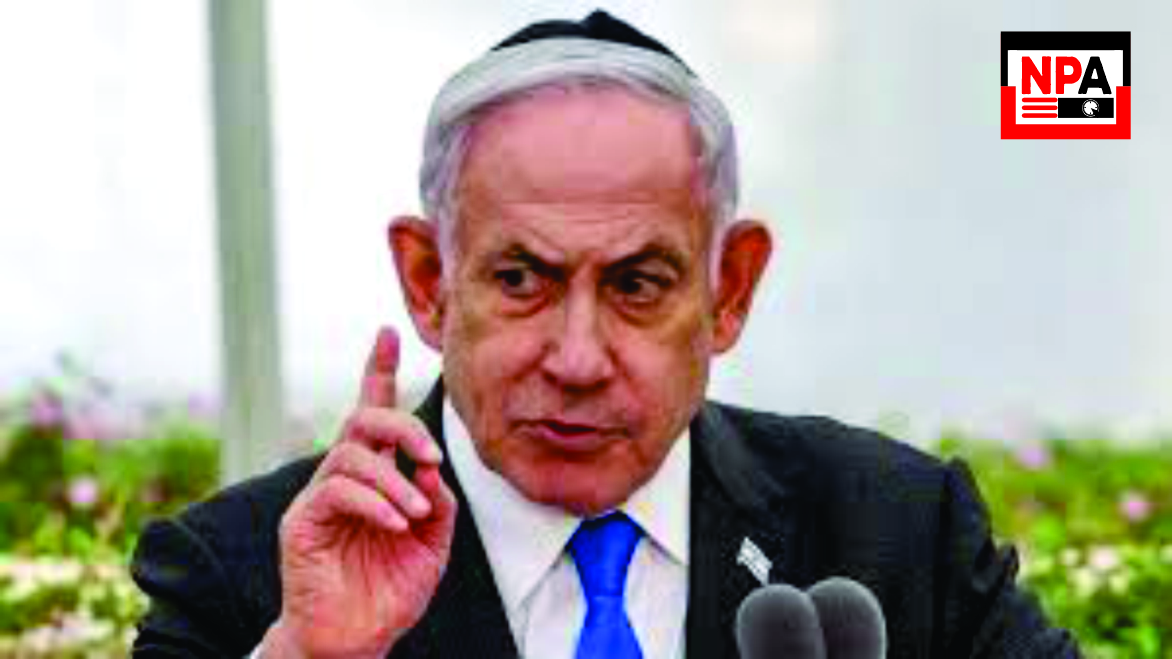
    MIDDLE EAST (NPA) — March 7, 2026 — Israeli Prime Minister Benjamin Netanyahu has commended the country’s military forces for their role in the ongoing campaign, conducted in coordination with the United States, against elements of the Islamic Republic of Iran. The operation began last Saturday.

    In a statement released on his verified X account, Netanyahu described the campaign as “a fateful struggle for Israel’s existence.” He emphasised Israel’s resolve, saying: “In the past week, we have acted with strength, initiative, and determination against our enemies—and we will continue to act with all our might until we achieve all our goals.”

    The prime minister extended his praise to the Israel Air Force pilots, ground crews, security personnel, and rescue teams. He also acknowledged the resilience of Israeli citizens, highlighting their “steadfast spirit, responsibility, and courageous stand.”

    Concluding his remarks, Netanyahu declared: “Together, we have changed the face of the Middle East. Together, we will continue to fight. Together, we will roar like a lion. And with God’s help—together, we will ensure the eternity of Israel.”

    Reported Achievements in the Iran Campaign

    Since the campaign began, Israel has claimed several military accomplishments:

    • High-intensity strikes: Israeli forces, in coordination with the U.S., have carried out a large number of precision strikes against Iranian military targets at an unprecedented pace.
    • Infrastructure damage: Operations have reportedly degraded Iran’s missile launch facilities, drone bases, and naval assets.
    • Air superiority: The Israeli Air Force has maintained operational tempo, intercepting drones and conducting precision bombardments.
    • Joint coordination: The campaign highlights close U.S.-Israeli military cooperation, with American assets supporting Israel’s strikes.

    Strategic objectives include neutralising Iran’s ballistic missile capabilities, suppressing drone warfare, and limiting Tehran’s ability to project power in the Gulf. While Israel has achieved tactical successes, Iran retains retaliatory capacity, and the broader regional consequences remain uncertain.

  • Middle East War: Bahrain, UK, U.S. Hold Virtual C-SIPA Defence Working Group Meeting

    Middle East War: Bahrain, UK, U.S. Hold Virtual C-SIPA Defence Working Group Meeting

    Tampa, Fla. (NPA) — March 7, 2026 — U.S. Central Command (USCENTCOM) convened a virtual meeting of the Comprehensive Security Integration and Prosperity Agreement (C-SIPA) Defence Working Group with representatives from Bahrain, the United Kingdom, and the United States.

    According to a statement issued by USCENTCOM on March 6, participants included HH Shaikh Nasser bin Hamad Al Khalifa, National Security Advisor and Secretary General of the Supreme Defence Council of Bahrain; Air Chief Marshal Sir Richard Knighton, Chief of the Defence Staff of the United Kingdom; and Adm. Brad Cooper, Commander of U.S. Central Command.

    Discussions focused on the current regional security environment, with emphasis on what officials described as deliberate aggression by the Iranian regime and attacks on civilians across the Middle East. The parties underscored the importance of cooperation to safeguard peace and stability.

    The meeting followed recent developments in the Gulf, where Iranian President Masoud Pezeshkian issued an apology to neighboring states after Iranian missile and drone strikes. In a televised address, Pezeshkian pledged to halt the attacks and called for diplomacy over escalation, attributing the strikes to miscommunication within Iran’s military ranks.

  • U.S. approves $151.8 million emergency arms sale to Israel

    U.S. approves $151.8 million emergency arms sale to Israel

    Washington, D.C. (NPA) — March 7, 2026 — The United States has approved a $151.8 million emergency weapons sale to Israel, bypassing congressional review amid escalating conflict with Hezbollah and Iran.

    The package, authorized on March 6 by the State Department, includes 12,000 BLU-110A/B 1,000-pound bomb bodies, along with engineering and logistics support. Officials said part of the supply will be drawn from U.S. stockpiles to ensure rapid delivery.

    This latest deal follows a larger $6.67 billion arms package approved in January 2026, which included advanced missile systems, precision-guided munitions, and expanded drone capabilities. Together, the sales reflect Washington’s effort to reinforce Israel’s military capacity during the ongoing regional war.

    Analysts note that the emergency authorization not only underscores U.S. commitment to Israel’s defense but also signals Israel’s readiness to prosecute the conflict with Iran and Hezbollah for a longer duration than many observers might have anticipated.

  • BREAKING: 3 Lebanese soldiers killed in Israeli shelling in the south

    BREAKING: 3 Lebanese soldiers killed in Israeli shelling in the south

    Beirut, Lebanon (NPA) — March 7, 2026 — The Lebanese Army has confirmed that three of its soldiers were killed in Israeli shelling in southern Lebanon, near the border with Israel. The strike reportedly targeted Hezbollah positions in the area.

    Israel launched ground operations into southern Lebanon earlier this week in response to a Hezbollah attack, amid its ongoing military campaign against Iranian-linked forces.

    The situation remains fluid, with further details expected as developments unfold.

    Meanwhile, Israel announced it had carried out another wave of airstrikes across military targets in Iran, deploying more than 85 warplanes in the operation.

  • Iran apologises for attacks on neighbours, sets tough conditions

    Iran apologises for attacks on neighbours, sets tough conditions

    Tehran, Iran (NPA) — March 7, 2026 — Iranian President Masoud Pezeshkian has issued an apology to Gulf nations following Iranian missile and drone strikes on neighbouring states amid ongoing military operations in the Persian Gulf involving the United States and Israel.

    In a televised address, Pezeshkian acknowledged the attacks, pledged to halt them, and called for diplomacy over escalation. “I should apologise to the neighbouring countries that were attacked by Iran, on my own behalf,” he said, attributing the strikes to miscommunication within Iran’s military ranks.

    The president clarified that the response came after heavy assaults on Iran and the killing of Supreme Leader Ayatollah Ali Khamenei, describing the strikes as unintended escalations. He warned, however, that Iran would retaliate against any future attacks launched from external territories.

    Analysts note uncertainty over whether the apology reflects a weakened military position, as both the U.S. and Israel have claimed to have destroyed more than 80 per cent of Iran’s military capabilities, including its navy.

    Meanwhile, Pezeshkian rejected U.S. President Donald Trump’s demand for unconditional surrender, dismissing it as “a dream they should take to their grave.”

  • U.S. military sinks Iranian drone carrier, vows destruction of Iranian naval power

    U.S. military sinks Iranian drone carrier, vows destruction of Iranian naval power

    Florida, U.S. (NPA) — March 6, 2026 — The United States military has announced the sinking of an Iranian naval vessel described as a drone carrier. The announcement was made by U.S. Central Command (CENTCOM), headquartered at MacDill Air Force Base in Florida.

    In a statement accompanied by video footage, CENTCOM said: “U.S. forces are not holding back in the mission to degrade the Iranian Navy. Today, an Iranian drone carrier, roughly the size of a World War II-era aircraft carrier, was struck and is now on fire.”

    The incident follows a recent operation in which U.S. forces sank another Iranian naval vessel off the coast of Sri Lanka, reportedly leaving more than 100 Iranian military personnel dead and dozens injured. The latest strike underscores escalating tensions between Washington and Tehran, with analysts warning of potential wider regional implications.

  • Azerbaijan warns of retaliation after drone strike blamed on Iran

    Azerbaijan warns of retaliation after drone strike blamed on Iran

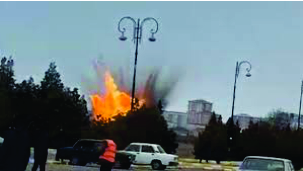
    Baku, Azerbaijan, March 5, 2026 (Agency Report) — Azerbaijan said Thursday it is preparing retaliatory measures after four Iranian drones allegedly crossed its border into the Nakhchivan exclave, injuring four people and striking civilian infrastructure. The incident has heightened fears that the Middle East war could spill further into the Caucasus.

    President Ilham Aliyev, addressing his Security Council, condemned the attack as “an unprovoked act of terror and aggression against Azerbaijan.” He ordered the armed forces to prepare a response, warning Tehran: “We are ready to demonstrate our strength against any hostile force — and they should not forget this in Iran.”

    Iran’s Deputy Foreign Minister Kazem Gharibabadi rejected the accusation, telling local media: “We do not attack our neighbouring countries.” Azerbaijani officials said investigations are underway to identify the drones, noting that one struck the terminal at Nakhchivan International Airport, another landed near a school, a third was shot down by the army, and a fourth damaged civilian infrastructure.

    The Foreign Ministry has demanded clarification from Tehran and lodged a formal protest with Iran’s ambassador. Officials warned that any threat to Azerbaijan’s energy infrastructure — a major supplier to Turkey and Europe via the Baku-Tbilisi-Ceyhan pipeline — could further drive up global oil prices already rattled by the U.S.–Iran war.

    Relations between Baku and Tehran have long been strained, with Azerbaijan deepening ties to Turkey and Israel. There is a growing fear that the conflict risks igniting violence between the neighbours, particularly given the presence of nearly 20 million ethnic Azerbaijanis inside Iran, the country’s largest minority group.

  • Middle East War: Two coalitions emerge — Israel’s President

    Middle East War: Two coalitions emerge — Israel’s President

    LAGOS, NIGERIA (NPA) — March 5, 2026 — Amid escalating military operations by the United States and Israel against the Islamic Republic of Iran, the President of Israel, Isaac Herzog, declared on Thursday that the conflict has given rise to two opposing coalitions in the Middle East.

    In a video message monitored by our correspondents, Herzog stated: “Two coalitions have emerged in the Middle East. One of terror, with Tehran at its centre. And one of hope, with Muslims, Christians, and Jews living together in peace. This coalition of hope, coexistence, and peace will prevail.”

    Israel’s objectives in its current strikes on Iran are twofold: to cripple Iran’s nuclear and missile programs and to weaken or remove the ruling regime. Coordinated closely with the United States, these attacks represent the most direct attempt yet to reshape Iran’s political and military landscape. Targets have included nuclear facilities, missile sites, and command centres, intending to reduce Iran’s capacity to arm regional proxies such as Hezbollah and deter future assaults on Israeli territory.

    Beyond military deterrence, analysts suggest Israel’s broader strategic goal is regime change in Tehran. The killing of senior Iranian officials, including Supreme Leader Ali Khamenei, underscores this ambition. By destabilising Iran’s leadership, Israel hopes to pave the way for a government less hostile to its existence and regional stability. This marks a dramatic escalation from defensive operations toward actively reshaping Iran’s political order.

    Iran has responded with avalanches of missiles and drone strikes across countries in the region, inflicting significant damage and deaths in the Gulf.

  • Middle East War: Israel intensifies strikes on Tehran as U.S. Senate backs Trump’s war authority

    Middle East War: Israel intensifies strikes on Tehran as U.S. Senate backs Trump’s war authority

    JERUSALEM, ISRAEL (NPA) — March 4, 2026 — Israel carried out extensive airstrikes on Tehran Thursday, targeting facilities it said were linked to Iranian authorities, after missile attacks forced millions of Israelis into bomb shelters.

    The U.S.–Iran war, now in its sixth day, has spread beyond the Gulf into Asia, disrupting global markets and leaving thousands of tourists and residents scrambling to leave the region.

    In Washington, Republican senators late Wednesday blocked a measure that would have required congressional approval for continued military action against Iran. The move leaves President Donald Trump with broad authority to direct the campaign as fighting intensifies.

    U.S. Defence Secretary Pete Hegseth assured Israeli Defence Minister Israel Katz in a phone call: “Keep going until the end — we’re with you,” according to Israel’s defence ministry.

    Iran’s foreign minister condemned the sinking of the frigate Dena off Sri Lanka, which killed at least 80 sailors. He said the vessel, visiting under the Indian navy’s invitation, was struck without warning in international waters, calling the attack an “atrocity at sea” and warning Washington would “bitterly regret” the precedent.

    General Kioumars Heydari of the Revolutionary Guard Corps vowed on state television: “We have decided to fight Americans wherever they are. We do not care how long the war lasts.”

    Later Thursday, the Guards claimed responsibility for striking a U.S. tanker in the northern Gulf, leaving the vessel ablaze. State media reported that the force declared that during wartime, passage through the Strait of Hormuz would remain under Iran’s control.

    Later on Thursday, the Revolutionary Guards said they ​had hit a U.S. tanker in the northern part of the Gulf, and the vessel was on fire. The Guards said in the statement carried by state media that in time of ​war, passage through the Strait of Hormuz would be under the control of the Islamic Republic.

  • Middle East War: Israel Accuses South Africa of Backing Iran

    Middle East War: Israel Accuses South Africa of Backing Iran

    JERUSALEM, ISRAEL (NPA) — March 5, 2026 — The Israeli Foreign Ministry has sharply criticised the South African government for allegedly backing Iran, following Pretoria’s co-chairing of the Hague Group’s March 4, 2026, meeting in The Hague. The gathering, attended by representatives from 40 states, focused on enforcing international law in Palestine.

    Israel condemned the landmark diplomatic event — the largest Hague Group meeting since its founding in January 2025 — accusing South Africa of aligning with Iran in its confrontation against Israel and the United States.

    In a statement issued on March 4, the Foreign Ministry declared: “South Africa, a close ally of the murderous regime in Tehran, which slaughtered thousands of its own citizens, has just organised another distorted anti-Israel meeting of the Hague Group. These two corrupt regimes, united by their hatred of Israel, recently held a joint naval exercise.”

    The statement further mocked the forum’s credibility, adding: “We can expect the outcome of the Hague meeting to be as successful as Iran’s navy, which is probably why Bolivia and Honduras had the sense to leave this forum.”

    The meeting’s agenda centred on strengthening coordinated state action to enforce international law in Palestine, discussing measures targeting Israeli settlements and arms transfers, promoting accountability mechanisms through international institutions, and highlighting South Africa’s role as a leading voice in global justice and solidarity with Palestine.