Category: Middle East

  • Narendra Modi Visits Holocaust Museum, Calls for Humanity, Dignity, and Peace

    Narendra Modi Visits Holocaust Museum, Calls for Humanity, Dignity, and Peace

    JERUSALEM, ISRAEL (NPA): Indian Prime Minister Narendra Modi, currently on a two-day visit to Israel for bilateral talks and to strengthen defense cooperation, on Thursday visited Yad Vashem, the World Holocaust Remembrance Center.

    In a statement posted on his official X account, Modi expressed gratitude to Israeli Prime Minister Benjamin Netanyahu for accompanying him during the visit. “I placed a wreath at Yad Vashem, the World Holocaust Remembrance Center. I am grateful to Prime Minister Benjamin Netanyahu for accompanying me during this visit,” he wrote.

    Modi also toured the Hall of Names, a solemn memorial space that preserves the memory of those who suffered and perished during the Holocaust. Reflecting on the experience, he stated: “The Holocaust stands as one of the darkest chapters in human history. It is an eternal reminder of the need to uphold humanity, dignity, and peace.”

    Yad Vashem, located on the western slope of Mount Herzl in Jerusalem, serves as Israel’s official memorial to the victims of the Holocaust. The center is dedicated to preserving their memory, honoring survivors, and educating future generations about the atrocities of the Holocaust.

  • Netanyahu to Modi: “From the Indus Valley to the Jordan Valley, India and Israel Share Ancient Civilizational Bonds”

    Netanyahu to Modi: “From the Indus Valley to the Jordan Valley, India and Israel Share Ancient Civilizational Bonds”

    JERUSALEM, ISRAEL (NPA): Israeli Prime Minister Benjamin Netanyahu has emphasized the enduring relationship between Israel and India, describing both nations as “two ancient civilizations, from the Indus Valley to the Jordan Valley.” He made the remarks during a special session of the Knesset in honour of Indian Prime Minister Narendra Modi, who is on a two-day state visit to Israel.

    Netanyahu, in a statement posted Wednesday on X, said: “Our alliance multiplies our strengths — in spirit, in action, and in innovation. Together, we will take the friendship between our peoples to unprecedented heights.”

    Addressing the Knesset, Modi highlighted the deep-rooted friendship between the two countries and the goodwill of the Indian people toward Israel. He was awarded the Medal of the Knesset, which he described as “not a tribute to an individual, but to the enduring friendship between India and Israel. It reflects the shared values that guide our two nations.”

    Following the session, both leaders toured an exhibition showcasing Israeli technological innovations. Modi praised the pioneering work of Israeli youth in fields such as artificial intelligence, quantum computing, healthcare, cybersecurity, water management, and agriculture. He encouraged Israeli companies to invest in India and collaborate with Indian talent.

    Modi’s visit, taking place from February 25–26, 2026, includes bilateral talks with Netanyahu aimed at strengthening cooperation in defence, technology, agriculture, water resources, and trade.

  • Israel Condemns Jordanian Parliament for Erasing Mentions of Israel from Records

    Israel Condemns Jordanian Parliament for Erasing Mentions of Israel from Records

    Lagos, Nigeria (NPA): The Israeli government has strongly condemned the decision by the Jordanian parliament on February 23, 2026, to erase all mentions of Israel from its parliamentary records. Lawmakers voted unanimously to remove references to “Israel” from the minutes of a debate that followed remarks by U.S. Ambassador to Israel Mike Huckabee regarding proposed Israeli reforms in the West Bank—comments Jordanian MPs denounced as a breach of international law.

    In a statement issued Tuesday, the Israeli Ministry of Foreign Affairs said it “categorically condemns the decision taken yesterday by the Jordanian parliament to erase all mentions of Israel from its parliamentary records.” The ministry warned that the move “runs counter to the spirit of the peace treaty which has been maintained for over thirty years. It must be denounced by all who strive to build a region of tolerance and understanding.”

    Jordanian lawmakers defended the decision as a symbolic gesture of resistance, aimed at rejecting Israeli sovereignty claims in the occupied West Bank and Jordan Valley and expressing solidarity with Palestinian rights. While the measure does not alter official treaties or agreements between Jordan and Israel, it reinforces parliament’s opposition to Israeli policies and is expected to heighten diplomatic tensions between the neighbours despite their 1994 peace treaty.

    The controversy follows remarks made earlier in February 2026 by Ambassador Huckabee, who claimed that Israel has a right to much of the Middle East. His comments—widely condemned by Arab and Muslim nations as extremist rhetoric—contradicted decades of U.S. policy by asserting that Area C of the occupied West Bank “is Israel.” The statements have fuelled regional criticism of U.S. policy and intensified political actions such as Jordan’s parliamentary move.

  • Spain Buying Israeli-Designed Missiles Through Germany — Hananya Naftali

    Spain Buying Israeli-Designed Missiles Through Germany — Hananya Naftali

    LAGOS, NIGERIA (NPA): Israeli journalist and pro-Israel social media influencer Hananya Naftali has accused Spain of acquiring Israeli-designed missiles through indirect channels despite its public suspension of a major arms deal with Israel. Naftali, a former digital aide to Prime Minister Benjamin Netanyahu, made the allegation in a post on his verified Facebook page, claiming that Spain’s government blocked a €285 million Rafael Spike missile deal over Gaza but later purchased the same weapons via Germany.

    Naftali argued that the move demonstrated the indispensability of Israel’s defense technology, stating that it was “too advanced to boycott and vital for global security.”

    His comments come amid heightened tensions between Spain and Israel over the Gaza conflict. Spain has imposed a permanent arms embargo, restricted Israeli officials from entering the country, and banned ships carrying fuel for Israeli military personnel from docking in Spanish ports, citing humanitarian concerns. Israel has rejected Madrid’s accusations, with Foreign Minister Eli Cohen accusing Prime Minister Pedro Sánchez of antisemitism and recalling Spain’s ambassador from Tel Aviv.

    Naftali, who previously worked on Netanyahu’s communications team, has not held a formal government office but has played a significant role in shaping Israel’s digital outreach strategy. His remarks underscore the growing diplomatic rift between Spain and Israel, as Madrid aligns more closely with Palestinian advocacy while Israel insists its military campaign in Gaza is essential for national security.

  • Netanyahu Welcomes Modi’s Visit, Pledges Stronger Israel–India Cooperation

    Netanyahu Welcomes Modi’s Visit, Pledges Stronger Israel–India Cooperation

    LAGOS, NIGERIA (NPA): Israeli Prime Minister Benjamin Netanyahu has praised his country’s ties with India ahead of the arrival of Indian Prime Minister Narendra Modi for a state visit this week. Speaking at the opening of a government meeting, Netanyahu described Modi as a “personal friend” and highlighted the close relationship forged between the two leaders in recent years. “This week, expression will be given to the special relationship that has been forged between Israel and the global power that is India, and between myself and Prime Minister Modi,” he said.

    Netanyahu noted that Modi’s visit would provide an opportunity to deepen cooperation in economic, diplomatic, and security fields. He also spoke of building a broader alliance of nations across continents to counter radical movements in the Middle East. Modi is expected to arrive in Israel on Wednesday, deliver an address at the Knesset, and participate in an innovation event in Jerusalem. The two leaders will also visit Yad Vashem together. Netanyahu emphasized that the visit would advance collaboration in high-tech, artificial intelligence, and quantum computing, underscoring the growing strategic partnership between Israel and India.

    India and Israel already maintain strong ties in defense, technology, and trade. Since the establishment of diplomatic relations in 1992, cooperation has expanded significantly, with India emerging as one of Israel’s largest defense customers.

    Both countries also collaborate in agriculture, water management, cybersecurity, and innovation. In 2026, they adopted a joint working plan to strengthen strategic cooperation while engaging in regional peace initiatives, including support for the Gaza Peace Plan.

  • Newpost Africa Relaunches, Reaffirms Commitment to World-Class Journalism

    Newpost Africa Relaunches, Reaffirms Commitment to World-Class Journalism

    LAGOS, NIGERIA (NPA): Nigerian media organisation Newpost Africa Media Publishing® (Newpost Africa) has announced its return following a successful restructuring process. The relaunch underscores the company’s renewed commitment to delivering journalism of the highest standards—anchored in integrity, balance, and diversity.

    Positioning itself as “Nigeria’s independent, world-class media organisation”, Newpost Africa emphasized its founding principles of strict editorial neutrality, an uncompromising stance against propaganda, and reporting that informs without bias or distortion. The organisation stressed that credible journalism is indispensable to democratic societies and informed citizenship.

    In a statement issued on February 22, 2026, Newpost Africa encouraged stakeholders and readers to actively engage with its mission. “By sharing perspectives and experiences, you contribute to a platform that values truth, dialogue, and collective responsibility in shaping the public record,” the statement read.

    Driven by a team of seasoned professionals and supported by a global network of journalists and writers, Newpost Africa said it is well-positioned to deliver timely coverage of rapidly evolving stories with speed, clarity, and analytical depth—while maintaining accuracy and editorial discipline.

    Its editorial focus remains firmly on Nigeria and the African continent, ensuring accountability from policymakers, institutions, and power brokers. At the same time, the organisation pledged to continue reporting on international developments that shape Africa’s place in the global context.

    The relaunch, according to the statement, is not merely a return but a reaffirmation of purpose and a strategic commitment to excellence in journalism. “This relaunch is a reaffirmation of our mission to uphold the highest standards of journalism and to serve as a trusted voice in Nigeria, Africa, and beyond,” the organisation noted.

  • Pakistani Military Strikes Afghan Targets in Retaliation for Suicide Blast

    Pakistani Military Strikes Afghan Targets in Retaliation for Suicide Blast

    KABUL, AFGHANISTAN (News Agencies): Pakistan says it has launched strikes on armed groups in Afghanistan after blaming recent suicide bombings, including attacks during the Muslim holy month of Ramadan, on fighters it says are operating from its neighbour’s territory.

    Kabul has repeatedly denied allowing armed groups to use Afghan territory to stage attacks in Pakistan.

    Afghanistan’s Ministry of Defence on Sunday said “dozens of innocent civilians, including women and children, were martyred and wounded” when strikes hit a school and homes in the eastern provinces of Nangarhar and Paktika.

    Nangarhar police told the AFP news agency the bombardment started about midnight (19:30 GMT on Saturday) and hit three districts.

    “Civilians were killed. In one house, there were 23 family members. Five wounded people were taken out,” police spokesperson Sayed Tayeeb Hammad said.

    The Afghan Defence Ministry said it will “deliver an appropriate and calculated response” to the Pakistani strikes.

    The two countries have been locked in an increasingly bitter dispute since the Taliban authorities retook control of Afghanistan in 2021.

    Pakistani military action killed 70 Afghan civilians from October to December, according to the United Nations mission in Afghanistan.

    Several rounds of negotiations followed an initial ceasefire brokered by Qatar and Turkiye, but they have failed to produce a lasting agreement.

    Saudi Arabia intervened this month, mediating the release of three Pakistani soldiers captured by Afghanistan in October.

    The deteriorating relationship has had repercussions for people in both countries with the land border largely closed for months.

  • EU Designates Iran’s Revolutionary Guard Corps as Terrorist Organization: What’s Next

    EU Designates Iran’s Revolutionary Guard Corps as Terrorist Organization: What’s Next

    LAGOS, NIGERIA (NPA): The European Union has officially designated Iran’s Islamic Revolutionary Guard Corps (IRGC) as a terrorist organization, following a decision by the Foreign Affairs Council. The move places the IRGC under EU counterterrorism sanctions, including asset freezes and a ban on providing funds or economic resources within member states. In total, 13 individuals and 23 organizations are now subject to restrictive measures under the EU’s terrorist list. The Council emphasized that this regime, established under Common Position 2001/931/CFSP, is distinct from the EU framework implementing United Nations Security Council resolutions targeting Al-Qaida and ISIL/Da’esh. The EU also retains the ability to autonomously apply restrictive measures against groups such as Hamas and Palestinian Islamic Jihad.

    The decision has drawn international reactions. The Board of Deputies of British Jews welcomed the move and urged the United Kingdom to adopt a similar stance. Senior Vice President Adrian Cohen stated: “The Board of Deputies has welcomed the decision by the European Union to designate Iran’s Islamic Revolutionary Guard Corps as a terrorist organisation and has renewed its call for the UK Government to take equivalent action without further delay.”

    Strategically, the designation places the IRGC alongside Al-Qaida and ISIL, signaling that the EU views the Guard not as a legitimate state institution but as a transnational actor of repression and violence. The sanctions severely restrict the IRGC’s ability to operate economically in Europe, while also complicating EU-Iran relations.

    Analysts warn that Tehran may retaliate by limiting European business activity in Iran and reducing cooperation on regional security. The move aligns EU policy more closely with Washington, strengthening transatlantic coordination but heightening risks of further polarization in the Middle East.

  • Leave Iran Immediately, Polish PM Donald Tusk Warns Citizens

    Leave Iran Immediately, Polish PM Donald Tusk Warns Citizens

    WARSAW, POLAND (NPA): Polish Prime Minister Donald Tusk has urged Polish nationals residing in Iran to leave the country without delay, citing escalating tensions in the Middle East.

    In a statement on Thursday, Tusk cautioned that evacuation could soon become impossible. “Leave immediately. It is possible that in a few hours there will be no option to evacuate from the country,” he said.

    The Prime Minister also advised against travelling to Iran under any circumstances, stressing that the situation could deteriorate rapidly. His warning comes amid heightened military activity in the region, with the United States deploying significant assets near Iran, fuelling fears of a confrontation.

    Iran, for its part, has vowed to retaliate against any U.S. attack and recently conducted military exercises in the Strait of Hormuz, a critical waterway for global oil shipments.

    The developments have placed the Middle East at the centre of international attention, as diplomatic efforts between Washington and Tehran remain stalled.

    Earlier, Newpost Africa reported READ HERE the Islamic Republic of Iran and the United States met on Tuesday in Switzerland, with the Iranian Foreign Minister Abbas Araqchi saying the two sides had exchanged views and made progress.

  • Iran’s Foreign Minister Reports Progress After Nuclear Talks with U.S. in Geneva

    Iran’s Foreign Minister Reports Progress After Nuclear Talks with U.S. in Geneva

    GENEVA, SWITZERLAND: Following high-level discussions between the Islamic Republic of Iran and the United States on Tuesday, Iranian Foreign Minister Abbas Araqchi said the two sides had exchanged views and made progress.

    Araqchi told Iranian media that “different ideas have been seriously discussed, and ultimately we have been able to reach a general agreement on some guiding principles.” He added that future negotiations would build on these principles as the parties move toward drafting the text of a potential agreement.

    Further rounds of talks are expected in the coming days and weeks.

    U.S. Demands

    Ahead of the latest meeting, Washington outlined several conditions for Iran to avoid military confrontation:

    • Nuclear Program: Scale back or halt uranium enrichment and return to compliance with nuclear deal terms.
    • Missile Development: Limit ballistic missile testing, which the U.S. views as destabilising.
    • Regional Activities: Reduce support for proxy groups such as Hezbollah, Hamas, the Houthis, and other militias across the Middle East.
    • Human Rights: End violent repression of protests, which the U.S. has linked to its military buildup.

    President Donald Trump warned that if no deal is reached, the U.S. is prepared to take “something very tough” military action.

    Iran’s Response

    Iran has maintained a firm stance:

    • Scope of Talks: Insists negotiations should focus solely on its nuclear program, rejecting U.S. demands on missiles and regional influence.
    • Defiance of Threats: Officials argue U.S. military threats are provocative and accuse Washington of seeking regime change.
    • Sovereignty: Frames U.S. demands as interference in domestic affairs, particularly regarding protests.
    • Preparedness: Warns that it will respond strongly if attacked, raising the risk of regional escalation.

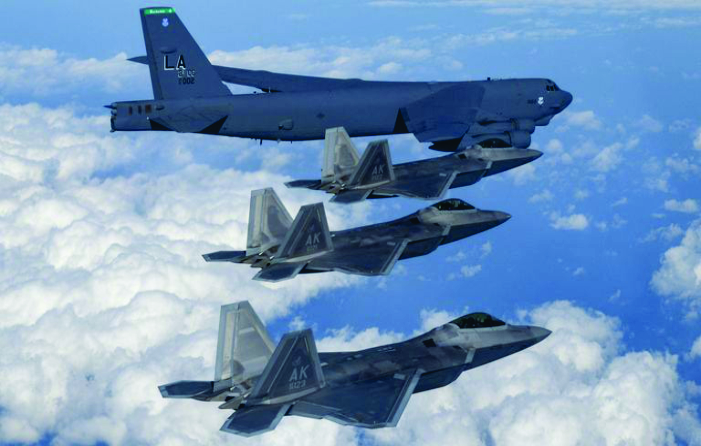
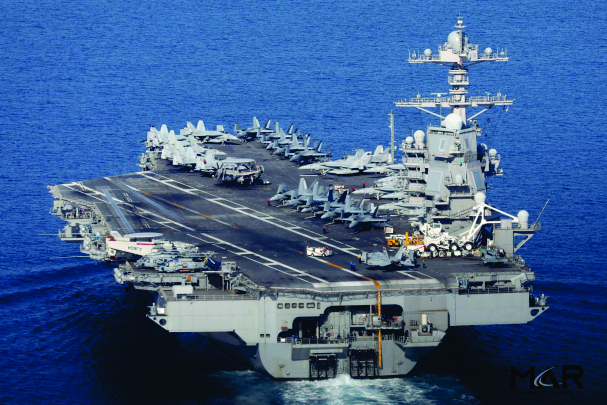
    The U.S. has deployed a “massive armada” of ships and aircraft near Iran, signalling readiness for strikes should diplomacy fail. With Israel also a factor in the regional equation, analysts warn that the risk of military escalation remains high as neither side shows willingness to compromise on core demands.