Category: Education

  • Otti commissions Abia’s first smart school, reaffirms commitment to education

    Otti commissions Abia’s first smart school, reaffirms commitment to education

    UMUAHIA, Nigeria (NPA) — Abia State Governor Alex Otti has commissioned the Ogbo Central Smart School in Ipupe, Ubakala, Umuahia South Local Government Area, marking the launch of the first of 20 Smart Schools planned across the state’s 17 local government areas and three senatorial districts.

    Speaking during the inauguration, Otti described the project as a major investment in the future of Abia’s children and reaffirmed his administration’s commitment to transforming public education through technology and innovation.

    “Tomorrow is the reward for the investments we make today, and together, we are building a brighter future for every Abia child,” the governor said.

    The commissioning was attended by the Minister of Education, Dr Maruf Tunji Alausa, who joined the governor in unveiling the facility.

    According to Otti, the Smart Schools initiative is designed to equip pupils with the knowledge and digital skills required to compete in a rapidly changing global economy.

    “The future belongs to societies that invest in knowledge, innovation and technology. We are transforming public education into a technology-driven system that prepares our children not just to earn certificates, but to compete, innovate and lead,” he said.

    Each Smart School is equipped with interactive learning boards, digital tablets for pupils, trained teachers, a sick bay, modern security systems and learning facilities designed to promote creativity, academic excellence and character development.

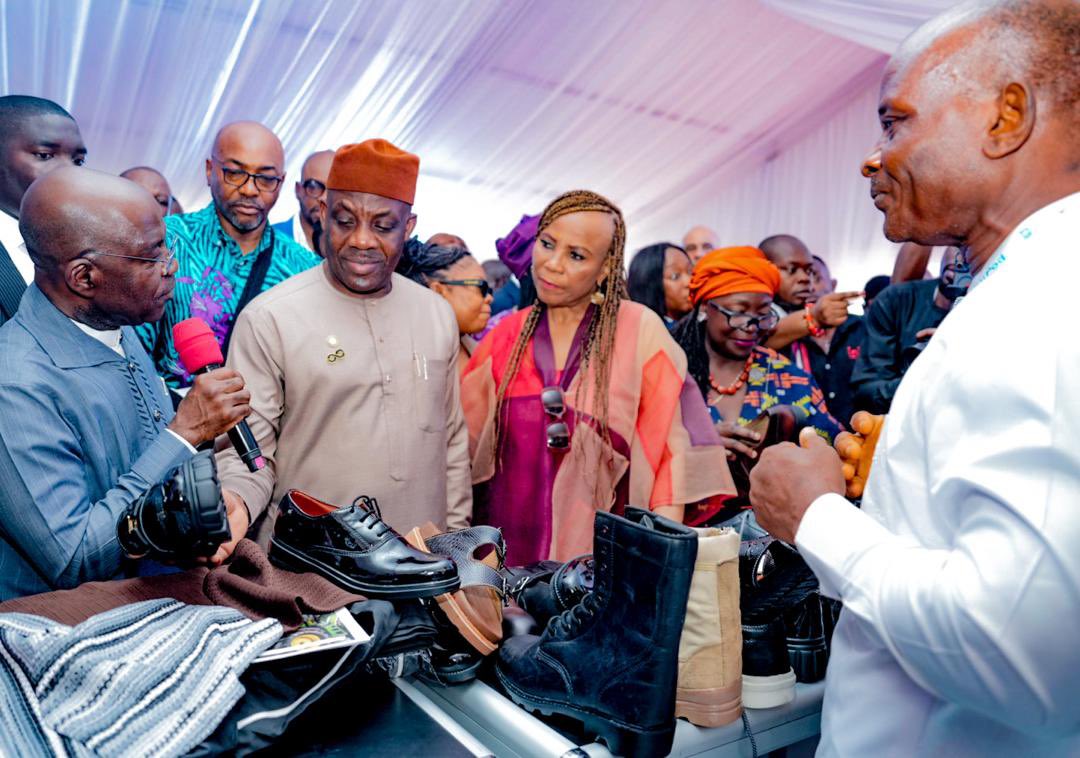
    The governor noted that the inauguration followed the launch of the Manufacturing Technology (Manu-Tech) University Innovation Pod at Michael Okpara University of Agriculture, Umudike, a project implemented in partnership with the Federal Government, the Tertiary Education Trust Fund (TETFund) and the United Nations Development Programme (UNDP).

    He said the two initiatives reflected the state’s strategy of investing in human capital as a foundation for sustainable economic growth.

    Otti disclosed that his administration allocates 20 per cent of the state’s annual budget to education, covering school infrastructure, teacher recruitment and retraining, as well as the implementation of free and compulsory basic education.

    He called on parents, guardians, community leaders and religious organisations to support efforts to protect public school facilities and nurture responsible children.

    The governor warned that anyone found vandalising school infrastructure or extorting pupils or parents would face the full weight of the law.

    He also commended the Minister of Education and the state’s Commissioner for Education, Goodluck Chinedu Ubochi, for their support and commitment to the successful delivery of the project.

  • BREAKING: Nigerian Students Win Gold at International STEM Olympiad in Italy

    BREAKING: Nigerian Students Win Gold at International STEM Olympiad in Italy

    ROME, Italy (NPA) — Two Nigerian students, Onyedikachi Egejurum and Don Anele Munachimso, have won gold medals at the 2026 International STEM Olympiad held in Rome, Italy, bringing global recognition to Nigeria’s academic excellence.

    Onyedikachi Egejurum emerged as the world’s best in Mathematics in the Primary Category, while Don Anele Munachimso won the gold medal in the Science Category.

    The awards were presented after contestants from several countries competed in various science, technology, engineering and mathematics (STEM) disciplines.

    The achievement was announced on Tuesday by the Chief Executive Officer of Educare and founder of the Southeast STEM Olympiad, Mr Alex Onyia, whose organisation organised the regional competition that produced the Nigerian representatives.

    According to Onyia, Munachimso is also recognised as Nigeria’s best student in IGCSE Chemistry.

    He said he personally sponsored the trip of three students to the international competition, describing the investment as worthwhile.

    “The investment is worth it,” Onyia said.

    Celebrating the students’ achievement, he wrote: “The three wise men from the East came to Rome and conquered. Nigeria will be great again once we declare a state of emergency in education.”

    Onyedikachi, 11, and Munachimso, 17, are both students of Diamond Special Schools, Owerri, Imo State.

    They represented Nigeria in the Mathematics and Science categories, respectively, at the global academic competition, which featured students from across the world.

  • JUST IN: FG launches Nigeria’s first manufacturing technology innovation hub at Michael Okpara University

    JUST IN: FG launches Nigeria’s first manufacturing technology innovation hub at Michael Okpara University

    UMUDIKE, Nigeria (NPA) — The Federal Government has inaugurated Nigeria’s first Manufacturing Technology University Innovation Pod (Manu-Tech UniPod) at Michael Okpara University of Agriculture, Umudike, through a partnership involving the United Nations Development Programme (UNDP), the Tertiary Education Trust Fund (TETFund) and the Abia State Government.

    Representing Vice President Kashim Shettima at the inauguration, the Minister of Education, Dr Maruf Tunji Alausa, said the facility reflects the Federal Government’s commitment to transforming universities into centres for innovation, entrepreneurship, research commercialisation and job creation.

    According to the minister, Nigerian universities must evolve beyond their traditional teaching and research roles to become drivers of enterprise development, technology transfer and industrial competitiveness.

    He said the initiative aligns with President Bola Tinubu’s vision of building a $1 trillion economy by 2030 through innovation, industrialisation and human capital development.

    Abia State Governor, Dr Alex Otti, described the siting of the Manu-Tech UniPod in the state as a demonstration of confidence in Abia’s growing potential as a manufacturing and industrial hub.

    United Nations Assistant Secretary-General and Director of the UNDP Regional Bureau for Africa, Ms Ahunna Eziakonwa, and the UNDP Resident Representative in Nigeria, Ms Elsie Attafuah, described the project as a catalyst for youth innovation, entrepreneurship and sustainable economic development.

    The Vice-Chancellor of Michael Okpara University of Agriculture, Umudike, Prof. Ursula Akanwa, said the innovation hub represents a landmark achievement that will strengthen the university’s role in science, technology, manufacturing and enterprise development while promoting innovation and sustainable economic growth.

  • FG denies adopting Ankara to replace NYSC khaki uniform

    FG denies adopting Ankara to replace NYSC khaki uniform

    ABUJA, Nigeria (NPA) — The Federal Government has dismissed reports claiming it has approved Ankara fabric to replace the National Youth Service Corps (NYSC) khaki uniform as part of ongoing reforms of the scheme.

    The Minister of Youth Development, Ayodele Olawande, clarified on Thursday that no decision has been taken on the proposed redesign of the NYSC uniform, describing media reports suggesting otherwise as misleading.

    According to the minister, the misunderstanding followed comments he made during an interview on Channels Television, where he referenced Adire and Ankara as examples of proposals submitted during consultations on the reform of the NYSC.

    “My attention has been drawn to some media reports following my brief appearance earlier this morning on Channels Television regarding the ongoing reforms of the National Youth Service Corps (NYSC), particularly on the issue of the proposed uniform,” Olawande said.

    “For the avoidance of doubt, yes, I mentioned Adire during the discussion. I also mentioned Ankara. My intention was simply to cite examples of some of the proposals that have been put forward in the course of our consultations. It was not an announcement that any particular fabric has been adopted or approved to replace the current NYSC uniform.”

    He explained that the government is evaluating several options that meet the objectives of the reform programme.

    According to him, the considerations include professional appearance, a distinct national identity, durability, functionality, affordability and the promotion of national pride.

    “For the record, what we are considering are different options that tick all the right boxes in terms of professional outlook, a unique national identity, durability, functionality, cost-effectiveness and the projection of national pride. No final decision has been taken on the fabric or design,” he said.

    The minister stressed that any eventual decision would be guided by extensive stakeholder consultations and what best serves the interests of the NYSC and the country.

    He urged Nigerians to focus on the broader objectives of the ongoing reforms rather than the debate over the uniform.

    According to Olawande, the reforms are designed to reposition the NYSC as a more relevant institution capable of improving graduate employability, promoting entrepreneurship, strengthening national integration, and easing the transition from education to productive careers.

    “I respectfully urge Nigerians to continue to engage with the ongoing NYSC reform conversation based on its broader objectives and the immense benefits it holds for our young people and our country,” he said.

    “The reforms are designed to make the Scheme more relevant to today’s realities by improving employability, promoting entrepreneurship, strengthening national integration, enhancing service delivery, and creating a smoother transition from education to productive careers.”

    He acknowledged the public interest in the proposed redesign of the NYSC uniform but cautioned against allowing the issue to overshadow the wider reforms aimed at empowering Nigerian youths.

    “While conversations around the uniform are understandable, they should not overshadow the far-reaching reforms aimed at empowering millions of Nigerian youths and positioning the NYSC as a stronger platform for national development,” the minister said.

    Olawande assured Nigerians that every proposal under consideration would be carefully evaluated before any final decision is taken in the national interest.

  • FG moves to merge JSS, SSS as 20 million pupils drop out before senior secondary

    FG moves to merge JSS, SSS as 20 million pupils drop out before senior secondary

    ABUJA, Nigeria (NPA) — The Federal Government has announced plans to merge Junior Secondary School (JSS) and Senior Secondary School (SSS) as part of sweeping reforms aimed at addressing Nigeria’s worsening education crisis, which has seen more than 20 million pupils drop out before reaching senior secondary education.

    Minister of Education, Dr Tunji Alausa, said the move would phase out the long-standing disarticulation policy separating JSS and SSS, describing it as a failed system that has hindered access to education and contributed to the country’s growing number of out-of-school children.

    “We have 20 million dropouts from primary school to JSS. Where are those students? This disarticulation policy has failed. We will phase it out because it is about doing what is best for every Nigerian child,” Alausa said.

    Nigeria currently operates the 6-3-3-4 education system, comprising six years of primary education, three years of junior secondary school, three years of senior secondary school and four years of tertiary education.

    Under the existing arrangement, JSS and SSS operate independently with separate principals, management structures and facilities.

    However, the minister said the policy has created significant structural imbalances within the education system.

    According to him, Nigeria has about 80,000 public primary schools but only 15,000 junior secondary schools, creating a major bottleneck that limits pupils’ transition from primary to junior secondary education.

    He noted that while many junior secondary schools remain overcrowded, numerous senior secondary school facilities across the country are underutilised, particularly in Kaduna and several northern states.

    “We have overflowing junior secondary schools and empty senior secondary schools. We cannot continue creating administrative positions while damaging our education system,” Alausa said.

    He added that the current administration was determined to reverse years of decline in the education sector.

    “The previous governments may have failed in this regard, but this government will not fail. We are fixing this,” he stated.

    The proposed reform will be presented to the National Council on Education (NCE), the country’s highest education policy-making body, for consideration and approval.

    As part of the implementation strategy, the Federal Government has inaugurated a Universal Basic Education Commission (UBEC) Ministerial Implementation and Monitoring Committee chaired by Professor Rashid Aderinoye.

    The committee will oversee the completion and operationalisation of Smart Schools, Bilingual Schools and Alternative Schools across the country as part of broader efforts to improve access to quality education.

    According to the Ministry of Education, the planned merger is expected to streamline the transition between junior and senior secondary education, reduce school dropout rates and ensure more efficient utilisation of existing educational infrastructure.

    Officials also believe the reforms will strengthen learning outcomes by integrating digital education through Smart Schools while expanding access to vulnerable and underserved children through Alternative Schools.

    Education experts have long argued that Nigeria’s large population of out-of-school children poses a serious threat to the country’s economic growth, security and human capital development.

    If approved by the National Council on Education, the merger of JSS and SSS would represent one of the most significant structural reforms to Nigeria’s education system in decades, with the government hoping it will improve retention rates and ensure that more children complete secondary education.

  • BREAKING: FG reforms NYSC, introduces new uniform, leadership, skills-focused orientation, others

    BREAKING: FG reforms NYSC, introduces new uniform, leadership, skills-focused orientation, others

    ABUJA, Nigeria (NPA) — The Federal Executive Council (FEC) has approved a comprehensive reform of the National Youth Service Corps (NYSC), marking the first holistic review of the scheme since its establishment 53 years ago.

    Minister of Youth Development, Ayodele Olawande, announced the approval on Monday, describing it as a landmark step towards transforming the NYSC into a modern, skills-driven institution that prepares young Nigerians for emerging economic opportunities.

    He said the reforms are designed to preserve the scheme’s legacy of promoting national unity while equipping corps members with the knowledge, skills and experience needed to succeed in a rapidly changing world.

    “For over five decades, the NYSC has remained a powerful symbol of national unity and service. Today, we have taken a bold step to preserve that legacy while preparing it for the future,” Olawande said.

    According to the minister, the approved reforms will reposition the NYSC as a productivity-focused and youth-empowering institution aligned with President Bola Ahmed Tinubu’s vision of building a $1 trillion economy.

    Among the key reforms approved by the Federal Executive Council is the introduction of a technology-driven call-up process aimed at improving efficiency and transparency.

    The government also approved a risk-sensitive deployment policy to enhance the safety and security of corps members during their national service.

    The six-week orientation programme will be redesigned to place greater emphasis on leadership development, entrepreneurship, digital skills and specialised career streams tailored to the needs of the modern economy.

    In addition, corps members will now undertake skills-based primary assignments aligned with their academic qualifications and career aspirations.

    The reforms also introduce a new governance structure that places the NYSC under civilian operational leadership, while the military will continue to provide security support during orientation and other activities.

    To improve facilities nationwide, the government approved a national grading and certification system for orientation camps to ensure higher operational standards.

    The NYSC will also replace its traditional Passing Out Parade with a formal graduation ceremony, while a redesigned uniform reflecting professionalism and national identity will be introduced.

    Olawande said the reform process began in 2025 through an extensive stakeholder consultation involving the Federal Ministry of Youth Development, the Federal Ministry of Education and the Office of the Special Adviser to the President on Policy and Coordination.

    He noted that the approval by the Federal Executive Council marks the culmination of months of consultations and policy reviews.

    The minister disclosed that the Council had directed the Attorney-General of the Federation and the Federal Ministry of Youth Development to commence the amendment of the NYSC Act and its regulations to provide the legal framework for implementing the reforms.

    “This is more than a reform of an institution. It is an investment in Nigeria’s greatest asset, our young people.

    “The future of the NYSC begins now, and it is brighter, more relevant and more impactful than ever,” Olawande said.

  • BREAKING: NECO releases 2026 BECE results, schedules re-sit for July

    BREAKING: NECO releases 2026 BECE results, schedules re-sit for July

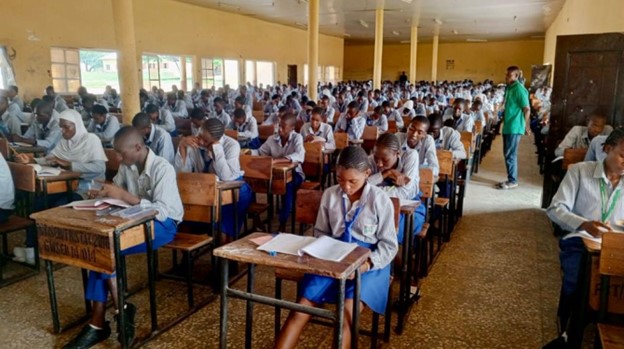
    MINNA, Nigeria (NPA) — The National Examinations Council (NECO) has released the results of the 2026 Basic Education Certificate Examination (BECE), with a total of 186,291 candidates participating in the examination nationwide.

    In a statement issued on Thursday by Azeez Sani, Ag. Director, Information and Public Relations, NECO said the candidates sat for examinations in 12 subjects across the 36 states, the Federal Capital Territory (FCT) and five foreign countries.

    The council said the examination commenced on April 20 and ended successfully on April 30, 2026.

    According to NECO, the results were approved for release following the successful conclusion of the 2026 BECE Award Committee Meeting held at the council’s headquarters in Minna, Niger State.

    The meeting was chaired by Dr Folake Olatunji David, Director of Basic Education at the Federal Ministry of Education, who represented the Minister of Education, Dr Maruf Tunji Alausa.

    NECO said the committee expressed satisfaction with the conduct of the examination and the processes leading to the release of the results.

    The Award Committee meeting was attended by members of NECO’s management and secondary school principals drawn from across the country.

    Meanwhile, the committee approved July 22 and July 23, 2026, for the conduct of the 2026 BECE Re-sit Examination in Mathematics and English Studies.

    According to the council, the re-sit examination is designed for candidates with conditional deficiencies in Mathematics, English Studies or both.

    It explained that the examination would enable affected candidates to remedy the deficiencies and obtain the certification required for admission into Senior Secondary School One (SSS1) without repeating an academic year.

    NECO urged candidates, schools and other stakeholders to take note of the re-sit dates and make the necessary preparations.

  • NUC, ODELAN explore partnership to strengthen open and distance learning

    NUC, ODELAN explore partnership to strengthen open and distance learning

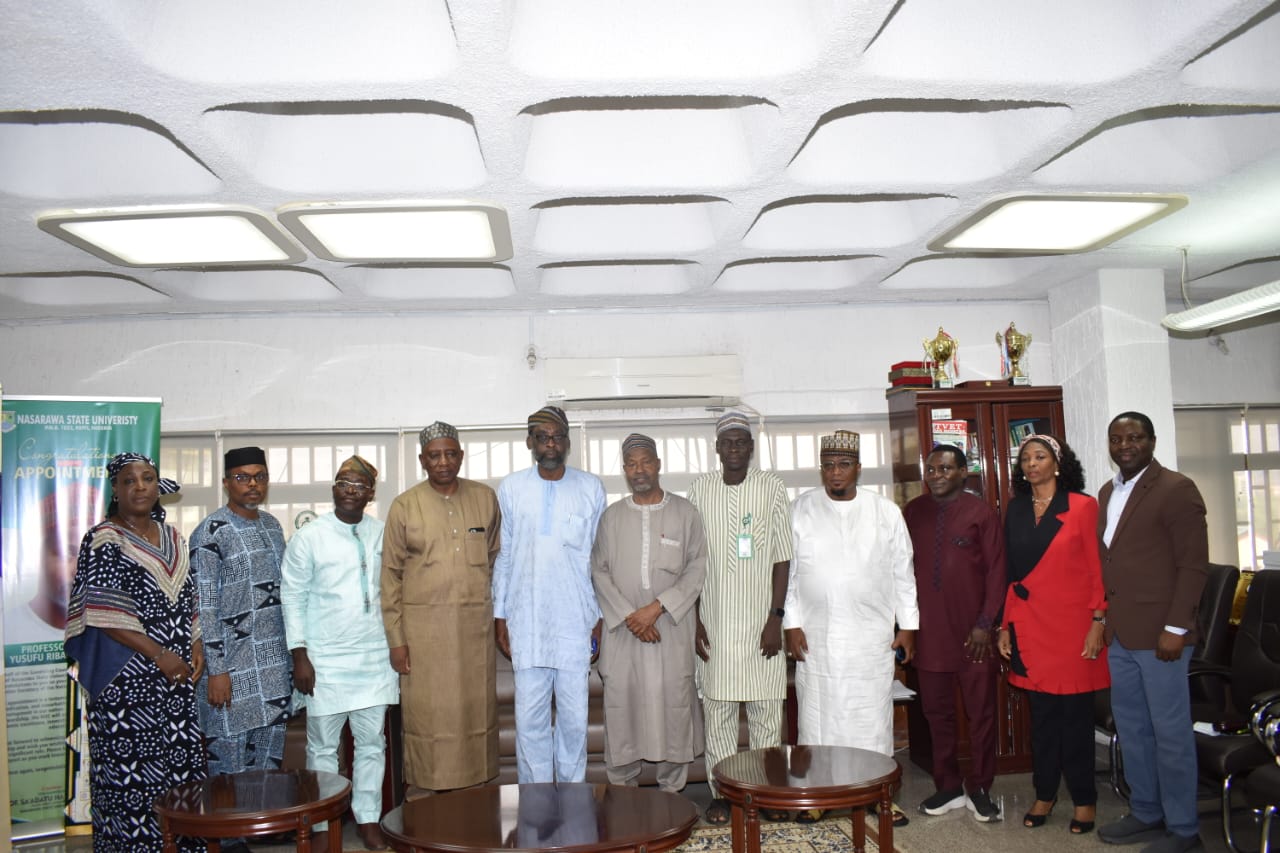
    ABUJA, Nigeria (NPA) — The National Universities Commission (NUC) has reaffirmed its commitment to strengthening access to quality university education through Open and Distance Learning (ODL) as it explores collaboration with the Open Distance and e-Learning Association of Nigeria (ODELAN).

    The commitment was made by the Executive Secretary of the NUC, Professor Abdullahi Yusufu Ribadu, during a courtesy visit by a delegation of ODELAN to the Commission’s headquarters in Abuja.

    The delegation was led by the President of the association, Professor Francis Egboghare.

    According to ODELAN, the association was established to support efforts aimed at advancing Open and Distance Learning in Nigeria through research, capacity building, mentorship and strategic partnerships.

    The delegation informed the NUC leadership of its desire to develop a collaborative framework with the Commission to enhance the delivery and practice of ODL across the country.

    Speaking during the meeting, Ribadu commended ODELAN for its contributions to the growth of Open and Distance Learning in Nigeria, particularly in the areas of research, professional development and mentorship.

    He noted that members of the association had consistently supported activities of the Commission and contributed to the development of its database of ODL practitioners.

    The NUC boss reaffirmed the Commission’s readiness to partner with stakeholders committed to expanding educational opportunities and improving access to higher education through technology-driven learning platforms.

    He stressed the importance of collaboration in strengthening the quality, accessibility and effectiveness of Open and Distance Learning programmes nationwide.

    In his remarks, Egboghare reiterated the association’s commitment to working closely with the NUC to advance the ODL sector.

    He said ODELAN was prepared to provide policy proposals and a framework for sustained collaboration aimed at enhancing the delivery of Open and Distance Learning programmes in Nigeria.

    The proposed partnership is expected to support ongoing efforts to improve access to tertiary education, promote innovation in learning delivery and strengthen institutional capacity within the country’s higher education system.

  • BREAKING: JAMB releases 2026 UTME original result slip for printing

    BREAKING: JAMB releases 2026 UTME original result slip for printing

    ABUJA, Nigeria (NPA) — The Joint Admissions and Matriculation Board (JAMB) has announced that candidates who sat for the 2026 Unified Tertiary Matriculation Examination (UTME) can now print their Original Result Slips.

    The examination body disclosed this in a statement issued on Wednesday by its Public Communication Advisor, Dr Fabian Benjamin.

    According to JAMB, the Original Result Slip became available for printing from Wednesday, June 17, 2026, and can be accessed from any internet-enabled device.

    The Board explained that the document contains important candidate information, including the candidate’s photograph, national ranking, and other security features required for admission processing.

    JAMB noted that the Original Result Slip remains one of the key documents required by tertiary institutions for post-UTME screening and admission consideration.

    “The 2026 UTME Original Result Slip is now available for printing,” the Board stated.

    “The Original Result Slip contains the candidate’s photograph, national ranking, and other security features. It is part of the official document required for post-UTME processing and consideration by tertiary institutions.”

    The Board added that candidates can conveniently print the document from their homes, offices, or accredited business centres using internet-enabled devices.

    JAMB advised candidates to carefully verify all information contained on the slip immediately after printing to ensure accuracy.

    The examination body further urged candidates to retain copies of the document for future admission-related processes.

    The release of the Original Result Slip marks another critical stage in the 2026 admission cycle, as universities, polytechnics, colleges of education, and other tertiary institutions prepare to commence post-UTME screening and admission exercises.

    Candidates are expected to present the document, alongside other required credentials, during the admission process.

  • JUST IN: FG dismisses report of cyberattack on education data platform, reaffirms NEMIS security

    JUST IN: FG dismisses report of cyberattack on education data platform, reaffirms NEMIS security

    ABUJA, Nigeria (NPA) — The Federal Government has dismissed reports alleging that the Nigeria Education Management Information System (NEMIS) was compromised by a cyberattack, insisting that the education data platform remains secure and fully operational.

    The clarification follows a media report suggesting that the Federal Government’s education data infrastructure may have suffered a security breach.

    In a statement issued on Monday, the Federal Ministry of Education described the report as inaccurate and misleading, stressing that there was no cyberattack, hacking incident, or unauthorised access to the NEMIS platform.

    According to the Ministry, the integrity, confidentiality, and availability of data on the platform were never compromised.

    The Ministry explained that a temporary warning message encountered by some users was caused by a Secure Sockets Layer (SSL) certificate configuration issue at the hosting level, which affected the platform’s secure access certification.

    It noted that the incident was purely technical and did not result in data loss, data alteration, system compromise, or exposure of sensitive information.

    “The platform was neither hacked nor breached. The issue was related to SSL certification and was promptly resolved by our technical team in collaboration with the hosting service provider,” the statement said.

    The Ministry added that normal services have since been fully restored and that the platform remains accessible to authorised users.

    It further explained that browser security warnings associated with SSL certificate issues should not automatically be interpreted as evidence of a cyberattack or data breach.

    According to the Ministry, even cybersecurity experts referenced in the original publication acknowledged that such warnings can result from routine technical or configuration issues rather than malicious activity.

    NEMIS serves as a key digital platform for the collection, management, and utilisation of education data across Nigeria’s education sector.

    The Ministry said it continues to deploy robust cybersecurity measures, system monitoring tools, infrastructure safeguards, and periodic security assessments to ensure the platform’s reliability and security.

    The statement also highlighted the role of the Nigeria Education Data Infrastructure (NEDI), which serves as the Federal Government’s flagship framework for strengthening education data governance, integration, accessibility, and evidence-based planning.

    According to the Ministry, protecting the integrity of platforms supporting NEDI remains a critical priority.

    The Federal Government therefore urged media organisations and members of the public to verify information through official channels before publishing or circulating claims relating to government digital platforms.

    It warned that the dissemination of unverified reports could create unnecessary public concern and undermine confidence in critical government systems.

    The Ministry reaffirmed its commitment to information security, digital governance, transparency, and accountability in line with the Renewed Hope Agenda of President Bola Ahmed Tinubu.

    It advised stakeholders, development partners, and members of the public to disregard reports suggesting that NEMIS was compromised, maintaining that the claims are unfounded and unsupported by the facts.