Category: Crime Diary

  • Kanu’s lawyer blames Gowon’s rejection of Aburi Accord for Nigeria’s security challenges

    Kanu’s lawyer blames Gowon’s rejection of Aburi Accord for Nigeria’s security challenges

    ABUJA, Nigeria (NPA) — Special Counsel to the leader of the proscribed Indigenous People of Biafra (IPOB), Mazi Nnamdi Kanu, Mr Alloy Ejimakor, has blamed Nigeria’s lingering security challenges on the failure to implement the 1967 Aburi Accord.

    Ejimakor made the assertion in a statement titled, “How the Ghost of Aburi Came Back to Haunt Nigeria,” in which he criticised former Head of State, General Yakubu Gowon (retd.), for rejecting the agreement reached between Nigerian and Eastern Region leaders in Aburi, Ghana.

    According to him, the decision contributed to the outbreak of the Nigeria-Biafra War and the deaths of millions of people during the conflict.

    The lawyer argued that the insecurity currently affecting parts of the country, particularly North-Central communities, reflects concerns that were raised by the late Biafran leader, Chukwuemeka Odumegwu Ojukwu, during the Aburi negotiations.

    “Had the Aburi Accord been fully implemented, regions might have had the constitutional tools to secure their people. Instead, the resort to a utopian unity has produced a state where violence once directed against the East in 1967 has now spread to the very people that had fought against Aburi,” he said.

    Ejimakor pointed to recurring attacks, killings and displacement of communities in Plateau State and other parts of the Middle Belt as evidence of what he described as the consequences of excessive centralisation.

    He also referenced comments by former Defence Minister and retired General, Theophilus Danjuma, who had previously urged communities to defend themselves against attacks.

    Quoting Danjuma’s warning that, “If you depend on the Armed Forces to protect you, you will all die,” Ejimakor said the statement reflected frustrations over the country’s security architecture.

    He further argued that the concerns expressed by Danjuma mirror the fears that informed Ojukwu’s position during the Aburi talks.

    The lawyer also claimed that the centralised security structure has repeatedly failed to protect vulnerable communities and accused successive governments of not addressing underlying structural issues.

    According to him, ethnic and communal violence has spread beyond the South-East and North-Central regions to parts of the South-West, where some groups have advocated stronger regional security arrangements.

    Ejimakor maintained that the Aburi Accord represented a practical framework for managing Nigeria’s diversity through decentralisation rather than an attempt at secession.

    “History has rendered its verdict. Aburi was right and beyond reproach. Ojukwu was the Nostradamus that saw the tomorrow of Nigeria, and that tomorrow is here,” he said.

    The Aburi Accord was reached in January 1967 during talks between Nigerian military leaders in Ghana, but was never fully implemented, a development widely regarded as one of the factors that preceded the Nigerian civil war.

  • Nigeria Police caution against reprisals over South Africa xenophobic violence

    Nigeria Police caution against reprisals over South Africa xenophobic violence

    ABUJA, Nigeria (NPA) — The Nigeria Police Force (NPF) has called for calm following reports of xenophobic attacks on Nigerian nationals in South Africa, warning against reprisals targeting South African citizens, businesses and interests in Nigeria.

    In a statement issued on Saturday by the Force Public Relations Officer, DCP Anthony Olaniyi, the police said security and intelligence assets had been deployed to assess the situation and determine any potential security implications for Nigeria.

    The NPF assured Nigerians and members of the South African community residing in the country that there was no cause for alarm, noting that the Federal Government was actively engaging relevant authorities in South Africa.

    According to the police, ongoing collaboration between both countries is aimed at addressing the situation peacefully and protecting the interests of Nigerians at home and abroad.

    While acknowledging public concerns over the reported attacks on Nigerians in South Africa, the Force cautioned citizens against taking the law into their own hands.

    It stressed that any reprisal attacks, violence or destruction of property directed at South African-owned businesses or individuals in Nigeria would be unlawful and counterproductive.

    The police also warned against the spread of unverified, inflammatory or inciting messages, particularly on social media, saying such actions could heighten tensions and undermine public safety.

    “The Force urges the public to refrain from spreading unverified, inflammatory, or inciting messages, especially on social media, and to report any credible information through established channels,” the statement said.

    The NPF reiterated its commitment to protecting lives and property, preserving public order and maintaining a peaceful environment for all residents.

    It further assured Nigerians that all necessary measures were being taken to ensure public safety and national security.

    The Force also appealed for cooperation from citizens and residents, urging them to remain law-abiding while authorities continue to monitor developments surrounding the reported incidents.

  • IGP Disu approves promotion of 17,952 junior police officers nationwide

    IGP Disu approves promotion of 17,952 junior police officers nationwide

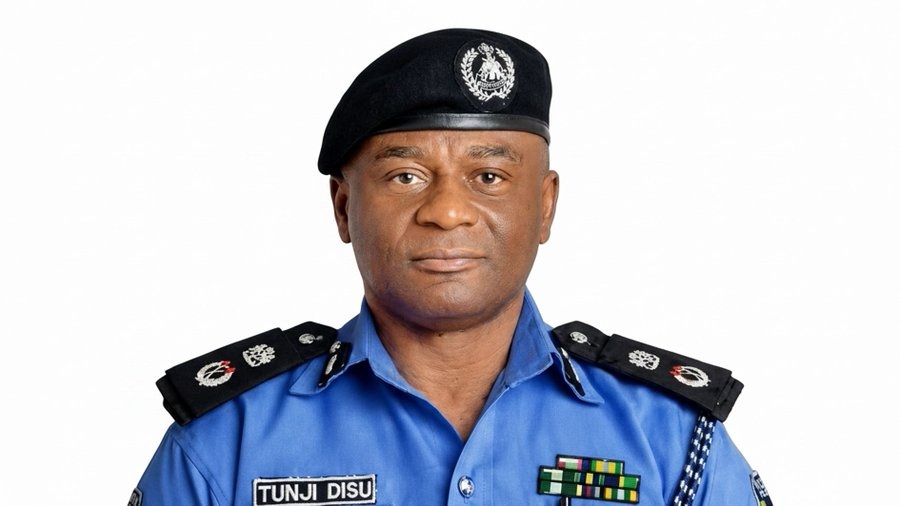
    ABUJA, Nigeria (NPA) — The Inspector-General of Police (IGP), Olatunji Rilwan Disu, psc(+), NPM, has approved the promotion of 17,952 junior officers across the Nigeria Police Force, in a move aimed at boosting morale, rewarding diligence, and strengthening institutional capacity.

    According to a statement issued by DCP Anthony Okon Placid, Force PRO, the exercise cuts across Commands and Formations nationwide. It includes the elevation of 165 Sergeants to Inspectors, 73 Corporals to Sergeants, and 17,714 Constables to Corporals.

    IGP Disu described timely promotion as a critical component of the Force’s human resource management strategy, stressing that career progression motivates officers to remain committed to their constitutional responsibilities.

    He noted that the advancement of deserving personnel reflects the leadership’s dedication to merit, professionalism, and institutional development.

    “This promotion is not just a reward but a call to greater responsibility. Officers must uphold discipline, integrity, respect for human rights, and commitment to the rule of law,” Disu said.

    The Police boss congratulated the newly promoted officers and urged them to redouble their dedication to service. He reaffirmed that the Nigeria Police Force remains steadfast in promoting excellence, rewarding hard work, and aligning its operations with global best practices in policing.

  • SERAP seeks UN intervention over Nigeria’s worsening insecurity

    SERAP seeks UN intervention over Nigeria’s worsening insecurity

    ABUJA, Nigeria (NPA) — The Socio-Economic Rights and Accountability Project (SERAP) has called on United Nations Secretary-General António Guterres to invoke Article 99 of the UN Charter and bring Nigeria’s worsening insecurity before the UN Security Council.

    SERAP said the escalating wave of killings, abductions, attacks on civilians and mass displacement across several states poses a threat to international peace and security and requires urgent international attention.

    In an open letter dated May 30, 2026, and signed by its Deputy Director, Kolawole Oluwadare, the organisation argued that the scale and persistence of violence in Nigeria have created severe humanitarian consequences and could further destabilise the West African region.

    According to SERAP, communities in Oyo, Benue, Borno, Plateau, Kaduna, Zamfara and other parts of the country continue to experience repeated attacks by armed groups and criminal networks.

    The organisation cited the recent abduction of pupils and teachers from schools in Ahoro Esinele community in Oriire Local Government Area of Oyo State, where at least 25 pupils and seven teachers were reportedly kidnapped during coordinated attacks on multiple schools.

    SERAP also referenced recent attacks in Benue, Katsina, Adamawa and Borno states, including bomb explosions in Maiduguri that reportedly killed at least 23 people and injured more than 100 others.

    It maintained that the crisis has gone beyond a domestic security challenge, warning that cross-border movement of armed groups, large-scale displacement and weakening institutions pose wider regional risks.

    The rights group said placing Nigeria’s security situation on the Security Council’s agenda would ensure sustained international attention, strengthen civilian protection efforts and improve accountability for perpetrators of violence.

    SERAP noted that United Nations officials have repeatedly expressed concern about the deteriorating security situation in Nigeria.

    It recalled that Guterres condemned the killings in Benue State in June 2025 and denounced a terrorist attack in Kwara State in February 2026, while the Office of the UN High Commissioner for Human Rights also raised concerns over rising cases of mass abductions in the country.

    The organisation urged the UN chief to encourage regular Security Council briefings on insecurity in Nigeria, support independent investigations into attacks, and press Nigerian authorities to strengthen civilian protection measures and secure the release of abducted persons.

    SERAP also called on the international community to use all available means to prevent further escalation of violence and support efforts aimed at ending impunity and delivering justice for victims.

    The organisation warned that continued insecurity could deepen humanitarian suffering, undermine regional stability and further threaten peace and security across West Africa.

  • BREAKING: Peter Obi emerges NDC presidential candidate for 2027 election

    BREAKING: Peter Obi emerges NDC presidential candidate for 2027 election

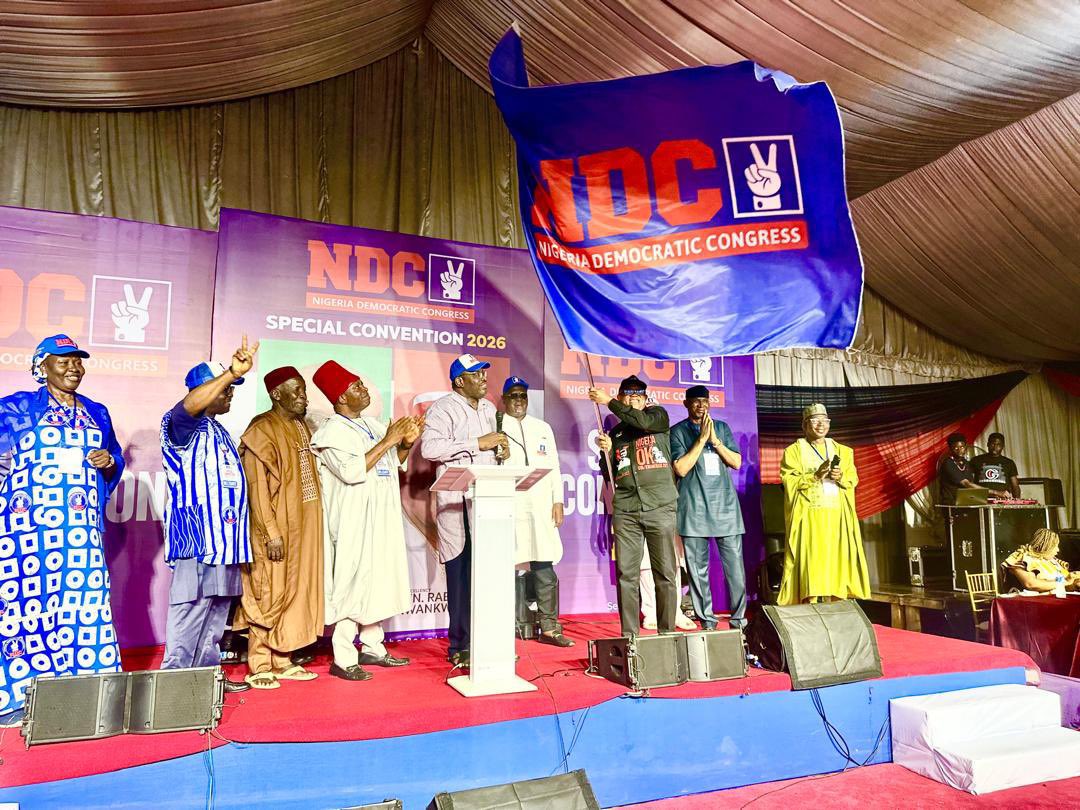
    ABUJA, Nigeria (NPA) — The Nigeria Democratic Congress (NDC) has unveiled former Anambra State Governor Peter Obi as its presidential candidate for the 2027 general election.

    Obi, the sole aspirant in the party’s presidential primary, emerged as the NDC flag bearer at the party’s special convention held in Abuja on Saturday.

    He was formally presented with the party’s flag by the NDC leadership, led by former Bayelsa State Governor and National Chairman, Senator Seriake Dickson.

    The unveiling marks a major step in the party’s preparations for the 2027 presidential election.

    With his emergence, Obi is expected to challenge incumbent President Bola Ahmed Tinubu of the All Progressives Congress (APC), former Vice President Atiku Abubakar of the African Democratic Congress (ADC), and other candidates expected to contest the presidency.

    As of May 30, 2026, several political parties had confirmed their presidential candidates ahead of the next general election. They include President Tinubu (APC), Atiku Abubakar (ADC), Donald Duke of the Peoples Redemption Party (PRP), Adewole Adebayo of the Social Democratic Party (SDP), Omoyele Sowore of the African Action Congress (AAC), and Sandy Onor of a Peoples Democratic Party (PDP) faction.

    The Independent National Electoral Commission (INEC) is expected to receive additional nominations from political parties before the official deadline for candidate submissions.

  • Ex-IPOB lawyer urges truth and justice as Igbos honour Biafra Remembrance Day

    Ex-IPOB lawyer urges truth and justice as Igbos honour Biafra Remembrance Day

    ENUGU, Nigeria (NPA) — Former counsel to the leader of the proscribed Indigenous People of Biafra (IPOB), Ifeanyi Ejiofor, has called on Nigeria to confront the legacy of the Biafra War with honesty, justice and historical truth as Igbos across the world marked Biafra Remembrance Day on May 30.

    Ejiofor made the call in a statement issued on Saturday titled “Remembering Our Heroes and Heroines of Biafra (1967–1970): A Day of Remembrance, A Day of Conscience.”

    The lawyer said remembrance was necessary not to perpetuate grievances or seek revenge, but to preserve historical truth and promote genuine reconciliation. According to him, history imposes a moral obligation on nations to acknowledge painful chapters of their past rather than bury them in silence.

    “A society achieves greatness not by burying its tragedies beneath silence, but by courageously acknowledging them, learning from them and ensuring that such suffering never again befalls any people,” he said.

    Ejiofor paid tribute to the over five million lives lost during the Nigerian Civil War, remembering fathers who never returned home, mothers who endured unimaginable hardship and children whose lives were cut short by war, hunger, disease and displacement.

    “Above all, we remember a people who, despite unimaginable suffering, refused to surrender their dignity, their identity and their hope,” he said.

    He described May 30 as more than a symbolic date, noting that it serves as a solemn reminder of one of the darkest chapters in Nigeria’s history.

    According to him, the memories of the war remain vivid for many survivors and their descendants, with entire communities uprooted, families separated, and villages destroyed during the conflict.

    Ejiofor recalled that before the outbreak of full-scale hostilities in 1967, many Eastern Nigerians, particularly Igbos, were victims of violence following the political crises and military coups of 1966.

    He said thousands fled to Eastern Nigeria carrying the trauma of survival and memories of loved ones lost during the unrest.

    The former IPOB lawyer noted that the war, which began in July 1967, evolved into one of Africa’s worst humanitarian crises.

    He said images of malnourished children suffering from starvation shocked the international community, while restrictions on food and humanitarian supplies contributed significantly to civilian suffering.

    “History records that millions were displaced. History records that countless lives were lost. History records that entire generations were scarred by the horrors of war. And history must never be forgotten,” he said.

    Ejiofor also reflected on the October 1967 Asaba Massacre, describing it as one of the most painful episodes of the conflict.

    According to him, the scars of the tragedy remain deeply embedded in the collective memory of the people of Asaba and the wider Igbo nation.

    “The dead cannot speak. The starving children cannot testify. The mothers who died in agony cannot return to tell their stories. Yet the silence of their graves continues to speak to humanity,” he said.

    He argued that the tragedy of Biafra should not be viewed solely through an ethnic lens, describing it as a universal human story about the consequences of political conflict, dehumanisation and collective punishment.

    “The tragedy of Biafra is not merely an Igbo story. It is a human story. It is a reminder of what occurs when political disagreements are allowed to descend into dehumanisation and the abandonment of our common humanity,” he said.

    Ejiofor noted that although the war officially ended in January 1970 with the declaration of “No Victor, No Vanquished,” many survivors continued to grapple with its consequences for decades.

    He cited destroyed homes, lost businesses, economic hardship and diminished opportunities as some of the realities faced by many families after the conflict.

    According to him, generations of Igbos grew up hearing stories of displacement, sacrifice, resilience and loss, not as instruments of bitterness but as reminders of a painful chapter in the nation’s history. He maintained that genuine healing requires acknowledgement, compassion, justice and historical honesty.

    “A wound that is denied cannot heal. A tragedy that is forgotten can be repeated. A people whose suffering is ignored can never experience complete reconciliation,” he said.

    Ejiofor urged Nigerians to preserve the memory of those who died during the conflict while committing themselves to truth, justice and lasting peace.

    “The war officially ended in 1970, but the obligation to remember remains. The obligation to seek truth remains. The obligation to pursue justice remains. Today, we mourn. Today, we remember. Today, we honour. And today, we reaffirm that the memories of those who perished shall never be erased from the pages of history.”

    He concluded by expressing hope that justice, truth and peace would ultimately prevail. “Ozo-emezina,” he said.

  • U.S. lawmaker cites report alleging Fulani militants killed more Christians than Boko Haram, ISIS

    U.S. lawmaker cites report alleging Fulani militants killed more Christians than Boko Haram, ISIS

    WASHINGTON, United States (NPA) — United States Congressman Riley Moore has cited a recent report by the U.S. Commission on International Religious Freedom (USCIRF), alleging that Fulani militants were responsible for more deaths in Nigeria over the past year than Boko Haram and the Islamic State West Africa Province (ISWAP).

    Moore, who heads a congressional committee established by President Donald Trump to investigate allegations of killings of Christians, made the remarks in a post on his X account on Saturday.

    The lawmaker referenced a USCIRF report titled “Nonstate Violators of Religious Freedom in Nigeria: Fulani Militants,” published on May 8, 2026.

    According to the report, armed groups of Fulani ethnic background have carried out some of the most deadly and high-profile attacks on religious communities in Nigeria in recent years, often, though not exclusively, targeting Christians.

    USCIRF said the publication examined the role of Fulani-led militant violence in the deterioration of religious freedom conditions in Nigeria, as well as the Nigerian government’s response to the attacks.

    The commission, an independent bipartisan agency established by the U.S. Congress to monitor religious freedom worldwide, also highlighted violations committed by non-state actors in Nigeria in its 2026 Annual Report.

    It maintained its recommendation that Nigeria be designated a Country of Particular Concern (CPC), citing persistent violence against religious communities and other religious freedom challenges.

    The report stated that Fulani militants were responsible for more deaths than Boko Haram or ISWAP during the review period, with Christian farming communities among the primary targets of the attacks.

    Commenting on the findings, the Chief Executive Officer of Open Doors, Henrietta Blyth, described the human cost of the violence as devastating. “My heart has been broken as I have heard stories from women and men who have seen their beloved family members butchered in front of them or carried off into a life of slavery,” she said.

    Reacting to the report, Moore said its findings reinforced conclusions reached by a congressional review conducted alongside fellow lawmaker Mario Díaz-Balart and submitted to President Trump. “The latest USCIRF report further details a horrific truth that Mario Díaz-Balart and I revealed in our report to President Trump,” Moore wrote.

    “Fulani militants killed more people in Nigeria over the past year than Boko Haram or ISIS. Innocent Christians are bearing the brunt of this violent persecution.”

    He added that Trump had recognised the need to address threats against Christians in Nigeria through measures included in the administration’s counterterrorism strategy.

    “America is a Christian nation. We must continue to stand with those who are persecuted for their faith and hold these terrorists accountable,” Moore said.

    The report comes amid growing concerns over insecurity in parts of Nigeria’s Middle Belt and North-Central regions. Earlier, Newpost Africa® published a video report highlighting the plight of residents of Oganiju Community in Kogi State, where worsening insecurity and repeated attacks by armed groups and militias have forced residents to flee, leaving the community largely deserted. The report stressed the growing humanitarian and security challenges facing rural communities affected by violence across the country.

    The Nigerian government has not officially responded to Moore’s latest comments at the time of filing this report.

  • Police arrest two suspected armed robbers, recover firearm in Delta

    Police arrest two suspected armed robbers, recover firearm in Delta

    ASABA, Nigeria (NPA) — Operatives of the Delta State Police Command have arrested two suspected armed robbers and recovered a pump-action gun, a live cartridge and other weapons during a security operation along the Second Niger Bridge corridor.

    The Police Public Relations Officer, SP Bright Edafe, disclosed this in a statement issued on Friday in Asaba.

    Edafe said the suspects were arrested on May 27 by operatives of the Department of Operations (DOPS) Buffalo Team while carrying out a targeted stop-and-search operation.

    According to him, the officers intercepted an unregistered blue Hijet Cargo mini-bus travelling from Anambra State into Delta State. He said the vehicle occupants attempted to prevent the officers from conducting a search and threatened to record them if the operation proceeded.

    “Despite the resistance, the operatives remained professional and carried out a thorough search of the vehicle,” Edafe said.

    The police spokesperson said the search led to the recovery of a pump-action gun loaded with one live cartridge and two daggers.

    The suspects were identified as Ugo Chukwu Kendirim, 25, and Odo Jude, 27.

    Edafe said the suspects were taken into custody and that investigations were ongoing to determine the circumstances surrounding the possession of the recovered items and any possible links to criminal activities.

    The Commissioner of Police in Delta State, CP Yemi Oyeniyi, commended the operatives for their vigilance and professionalism.

    He reaffirmed the command’s commitment to intelligence-led policing, proactive crime prevention and sustained efforts to deny criminal elements operating space within the state.

  • Police kill three suspected kidnappers, rescue victim in Oyo operation

    Police kill three suspected kidnappers, rescue victim in Oyo operation

    IBADAN, Nigeria (NPA) — The Oyo State Police Command says its operatives have killed three suspected kidnappers and rescued an abducted victim during a security operation in Otu, in the Oke-Ogun area of the state.

    The command said the operation, carried out in collaboration with local hunters and other security agencies, was part of ongoing efforts to combat violent crimes and strengthen public safety across the state.

    The Police Public Relations Officer of the command, DSP Ayanlade Olayinka, disclosed this in a statement issued on Tuesday in Ibadan.

    Olayinka said the operation followed a distress call received on May 25 from local hunters who came under attack by suspected kidnappers during a hunting expedition in Otu.

    According to him, the hunters were shot at by the suspects but escaped without casualties.

    He said following the intelligence received, a joint security team comprising police operatives, local hunters and other security personnel was immediately deployed to the area.

    “Upon arrival, the hoodlums opened fire and engaged the security team in a gun duel.

    “However, through superior tactical response and coordinated efforts, the criminals were overpowered, leading to the neutralisation of three suspected kidnappers,” the statement said.

    The police said the operation also led to the rescue of a 50-year-old victim, identified as Mosudi Gbolagade, who was earlier kidnapped in Okaka and held captive within the Otu area.

    Olayinka said Gbolagade sustained gunshot injuries during the incident and had been taken to a medical facility, where he was receiving treatment.

    The command added that one AK-47 rifle without ammunition, one single-barreled gun and one machete were recovered from the scene.

    It said one of the local hunters involved in the operation also sustained gunshot wounds during the exchange and was taken to the hospital for treatment.

    The Commissioner of Police in Oyo State commended the bravery and cooperation of the local hunters and other security stakeholders, saying their timely intervention contributed to the success of the operation.

    The command reaffirmed its commitment to sustained operations against criminal elements across the state, while urging residents to remain vigilant and provide timely information that could assist security agencies.

  • EFCC’s Olukoyede urges students to embrace integrity, discipline for future leadership

    EFCC’s Olukoyede urges students to embrace integrity, discipline for future leadership

    ABUJA, Nigeria (NPA) — Chairman of the Economic and Financial Crimes Commission (EFCC), Ola Olukoyede, has charged students across Nigeria to cultivate integrity, discipline, honesty, and hard work as essential qualities for responsible leadership and national development.

    Olukoyede gave the charge during a sensitisation lecture organised for pupils of Loyola Jesuit Basic School who visited the EFCC Academy in Abuja on an educational excursion.

    Represented by the Head of the Media Academy Unit of the EFCC, Assistant Commander of the EFCC, ACE I Chidimma Amanambu, the anti-graft agency boss urged the students to reject dishonesty, corruption, and criminal behaviour while striving for academic excellence and good moral conduct.

    “You are the future leaders. Be disciplined, truthful, original and hardworking. These values will make you responsible leaders that Nigeria will be proud of,” Olukoyede said.

    During the interactive session, Deputy Superintendent of the EFCC, DSE Angel O. Israel, delivered a lecture titled “Consequences of Crime and the Benefits of Good Morals.”

    The students were enlightened on the history, mandate, and operational activities of the EFCC, including the various financial and economic crimes investigated by the commission. They were also introduced to career opportunities within the agency and educated on the dangers and long-term consequences of engaging in criminal activities.

    The sensitisation programme formed part of the EFCC’s broader public enlightenment and preventive strategy aimed at promoting ethical values and discouraging corruption among young Nigerians.

    Speaking on behalf of the students and management of the school, the leader of the delegation, Ramat Joshua, expressed appreciation to the commission for what she described as an impactful and enlightening experience for the pupils.

    She commended the EFCC for exposing the students to practical lessons on integrity, patriotism, and responsible citizenship.