Category: Crime Diary

  • Nigeria, Ghana deepen anti-drug partnership to combat trafficking cartels

    Nigeria, Ghana deepen anti-drug partnership to combat trafficking cartels

    ABUJA, Nigeria (NPA) — National Drug Law Enforcement Agency (NDLEA) and Narcotics Control Commission (NACOC) of Ghana have strengthened bilateral cooperation against drug trafficking and related transnational crimes in West Africa.

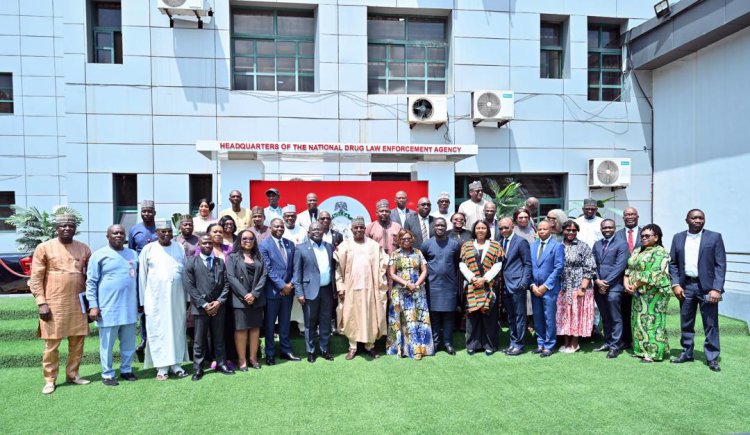
    Chairman/Chief Executive Officer of the NDLEA, Mohamed Buba Marwa, stated this on Tuesday while receiving a Ghanaian delegation led by NACOC Director General, Maxwell Obuba Mantey, during a benchmarking visit and study tour of the agency’s operational model at the NDLEA headquarters in Abuja.

    Marwa said the renewed collaboration between both anti-narcotics agencies should serve as a strong warning to drug trafficking networks operating within the West African sub-region.

    “Let this visit serve as a warning to those who seek to destabilize our societies with illicit drugs: Nigeria and Ghana stand united. We will continue to innovate, collaborate, and dominate the tactical space until our streets and communities are safe,” he said.

    According to a statement signed by NDLEA Director of Media and Advocacy, Femi Babafemi, the NDLEA boss noted that the visit reflects the long-standing relationship between Nigeria and Ghana and reinforces their shared commitment to regional security.

    He warned that transnational organised crime, especially drug trafficking and associated money laundering activities, continues to evolve across borders, requiring deeper cooperation among regional partners. “The threat posed by transnational organized crime, particularly drug trafficking and its associated money laundering activities, knows no borders,” Marwa said.

    He added that intelligence-led operations, interdiction strategies, digital forensics, and operational best practices remain critical in narrowing operational space for criminal cartels across the region.

    Marwa described the signing of a Memorandum of Understanding between NDLEA and NACOC as the major highlight of the engagement.

    According to him, the agreement provides a legal and operational framework for combating illicit drug production, trafficking of psychotropic substances and precursor chemicals, as well as related money laundering activities.

    “This agreement moves our relationship from informal consultation to a structured, aggressive, and unified front against drug barons,” he stated.

    In his remarks, Mantey described Nigeria as a leading force within the region, noting that Ghana regards the country as an “elder brother” in regional affairs.

    “Nigeria has consistently played a leading role within our region, and Ghana holds that leadership in the highest regard,” he said.

    The NACOC Director General said the partnership between both agencies reflects the deep historical and diplomatic ties between Nigeria and Ghana.

    According to him, the visit was aimed at strengthening existing cooperation through intelligence sharing, joint operations, training, and institutional collaboration.

    Mantey warned that the drug trade across West Africa is becoming increasingly sophisticated, with traffickers adopting new methods, including the use of maritime routes and synthetic drug networks.

    He noted that Ghana is witnessing a growing domestic drug problem despite historically being considered mainly a transit point for narcotics trafficking. “No single country can effectively address this threat in isolation,” he said.

    Mantey added that the newly signed MoU must produce measurable outcomes through coordinated operations, stronger intelligence sharing, structured training exchanges, and closer collaboration between both agencies.

    Also present at the event was the acting Ghanaian High Commissioner to Nigeria, Gladys Mansa Yawa Feddy Akyea, alongside senior officials of the Ghana High Commission, members of the NACOC delegation, and top management staff of the NDLEA.

  • Sowore condemns alleged assault on TheCable journalist Olalekan Fakoyejo by soldiers in Lagos

    Sowore condemns alleged assault on TheCable journalist Olalekan Fakoyejo by soldiers in Lagos

    LAGOS, Nigeria (NPA) — Nigerian activist and journalist Omoyele Sowore has condemned the alleged assault of a journalist with TheCable by two Nigerian Army officers in the Ikeja area of Lagos, southwestern Nigeria.

    Sowore, a politician and former presidential candidate, in a statement posted on his X handle on Tuesday, called on relevant authorities to identify those responsible for the assault, investigate the incident, and ensure those involved are held accountable.

    According to him, anything short of accountability would reinforce impunity.

    He further stated that beyond sanctioning those directly involved, the incident highlights what he described as a deeper problem regarding the deployment of military personnel in ways that undermine the rights of Nigerians.

    Sowore referenced the case involving “Justice Crack,” who he said was recently remanded in prison after being arraigned before a court in Abuja.

    Earlier, TheCable, in a video report titled “Soldier Assaults TheCable Journalist in Lagos,” said a soldier assaulted Olalekan Fakoyejo, the newspaper’s assistant business editor, following a remark about traffic obstruction in the Ikeja area of Lagos State.

    The newspaper said the incident occurred on Saturday, May 2, while Fakoyejo was travelling from Ikeja to Ogba in a commercial tricycle popularly known as “Keke Napep.”

  • US man of Nigerian descent Victor Kolawole, accomplice plead guilty in multi-million-dollar U.S. bank fraud scheme

    US man of Nigerian descent Victor Kolawole, accomplice plead guilty in multi-million-dollar U.S. bank fraud scheme

    BOSTON, United States (NPA) — Two Massachusetts men have pleaded guilty in federal court in Boston to their roles in a multi‑million‑dollar scheme to defraud banks across Massachusetts, Connecticut, and Rhode Island.

    Victor Kolawole, 26, of Brockton, and Keith Wainaina, 24, of Lowell, admitted to conspiracy to commit bank fraud, bank fraud, and conspiracy to commit money laundering. U.S. District Court Judge Julie E. Kobick scheduled sentencing for July 23, 2026 and September 9, 2026, respectively. The pair were arrested in July 2025 alongside four others.

    Prosecutors said that beginning no later than December 2022, Kolawole and Wainaina conspired with Phalentz Vernot and others to steal customer data from local banks, including names, dates of birth, Social Security numbers, and account details. Imposters were recruited to pose as customers using fake identification documents, withdrawing large sums in cashier’s checks.

    Wainaina and Kolawole then deposited the checks into accounts they controlled, later purchasing additional cashier’s checks payable to Vernot. Vernot used part of the proceeds to pay imposters and bank insiders who helped bypass verification protocols.

    According to court filings, Wainaina deposited or attempted to deposit more than $762,000, while Kolawole deposited approximately $373,000 in cashier’s checks drawn on victims’ accounts. Vernot pleaded guilty in December 2025 and is scheduled for sentencing on July 22, 2026.

    The charges carry severe penalties: up to 30 years in prison for bank fraud and conspiracy to commit bank fraud, up to 20 years for conspiracy to commit money laundering, and a mandatory two‑year consecutive sentence for aggravated identity theft. Sentences will be determined by the court under federal guidelines.

  • Amnesty International demands disclosure of missing Malian opposition figure Mountaga Tall

    Amnesty International demands disclosure of missing Malian opposition figure Mountaga Tall

    BAMAKO, Mali (NPA) — Amnesty International has called on Malian authorities to urgently disclose the whereabouts and condition of prominent lawyer and opposition politician Mountaga Tall following his reported abduction by armed men in Bamako.

    In a statement issued after Tall’s disappearance in the early hours of May 3, Amnesty International said the veteran pro-democracy figure was taken from his residence by hooded armed men travelling in unlicensed vehicles, with no official explanation provided regarding his detention or possible charges.

    Reacting to the development, Ousmane Diallo, Senior Researcher on the Sahel at Amnesty International’s Regional Office for West and Central Africa, expressed concern over the circumstances surrounding the incident.

    “We are alarmed by the disappearance of Mountaga Tall who was taken from his home by armed men wearing hoods. To date, no one knows if or where he is being held, and if charges have been brought against him,” Diallo said.

    The rights group urged the Malian authorities to immediately reveal Tall’s fate and whereabouts, release him if no charges exist, or ensure due legal process if he is being investigated for any offence.

    Amnesty International also accused authorities of intensifying restrictions on civic space and targeting political dissent and human rights activities in the country.

    Diallo noted that the organisation had documented what it described as a pattern of abductions allegedly carried out by operatives linked to Mali’s National Agency for State Security (ANSE), warning that such actions could amount to enforced disappearances under international law.

    “If this abduction was conducted by, or with the support or acquiescence of state agents, it amounts to an enforced disappearance and places Mountaga Tall outside the protection of the law and at high risk of torture or other ill-treatment,” the organisation stated.

    Tall, leader of the National Congress for Democratic Initiative (CNID), is regarded as one of the major figures in Mali’s democratic transition during the 1990s. In recent years, he has publicly challenged decisions by the military-led authorities, including the dissolution of political parties, while also representing detained political figures in court.

    The incident comes amid rising political and security tensions in Mali following coordinated attacks carried out on April 25 by the Islamist armed group Group for the Support of Islam and Muslims (JNIM), alongside the Front for the Liberation of Azawad, across six cities in the country. The attacks reportedly resulted in multiple casualties, including the death of the country’s defence minister.

    On May 1, a military court in Bamako announced that investigations into the attacks were ongoing and that several individuals, including politicians and military personnel, had already been arrested, with more arrests expected as authorities intensify security operations.

    Amnesty International urged the Malian government to uphold its international human rights obligations and ensure the protection of political freedoms and due process amid the ongoing crackdown.

  • Court to deliver judgment in DSS N5 Billion defamation suit against SERAP

    Court to deliver judgment in DSS N5 Billion defamation suit against SERAP

    ABUJA, Nigeria (NPA) — A Federal Capital Territory High Court in Abuja is set to deliver judgment tomorrow, Tuesday, 5 May 2026, in the N5 billion defamation lawsuit filed by the Department of State Services (DSS) against the Socio‑Economic Rights and Accountability Project (SERAP).

    The case stems from SERAP’s allegation that the DSS unlawfully invaded its Abuja office on 9 September 2024, shortly after the organisation called on President Bola Ahmed Tinubu to probe alleged corruption in the Nigerian National Petroleum Company Limited (NNPCL) and reverse the increase in petrol pump prices.

    In its defence, SERAP, represented by senior lawyers Tayo Oyetibo, SAN and Ebun‑Olu Adegboruwa, SAN, insisted that the DSS invasion was unlawful and described the suit as frivolous and vexatious. The organisation argued that the publication in question was directed at the DSS as Nigeria’s secret security agency, not at individual officials.

    SERAP further alleged that DSS operatives stormed its office, interrogated staff, demanded official documents, and concealed their identities. It cited evidence from its visitor’s book showing discrepancies in the names used by DSS officials during the visit.

    In a statement today, SERAP condemned the lawsuit as a Strategic Lawsuit Against Public Participation (SLAPP), warning that such practices undermine the 1999 Nigerian Constitution [as amended] and the country’s international human rights obligations. “These authoritarian practices will surely fail and those perpetrating them will be held to account,” the group said.

    The DSS, however, has maintained that its visit to SERAP’s office was part of a “routine investigation,” though observers note contradictions in its public statements and legal filings.

    The judgment, expected tomorrow, is anticipated to set a significant precedent in the ongoing debate over the limits of state power, civil society activism, and freedom of expression in Nigeria.

  • Kenya Army embraces innovation, charts technology-driven future for modern warfare

    Kenya Army embraces innovation, charts technology-driven future for modern warfare

    NAIROBI, Kenya (NPA) — The Kenya Army has reaffirmed its commitment to building a modern, agile and technologically advanced force, placing innovation at the centre of its long-term operational strategy amid evolving global security challenges.

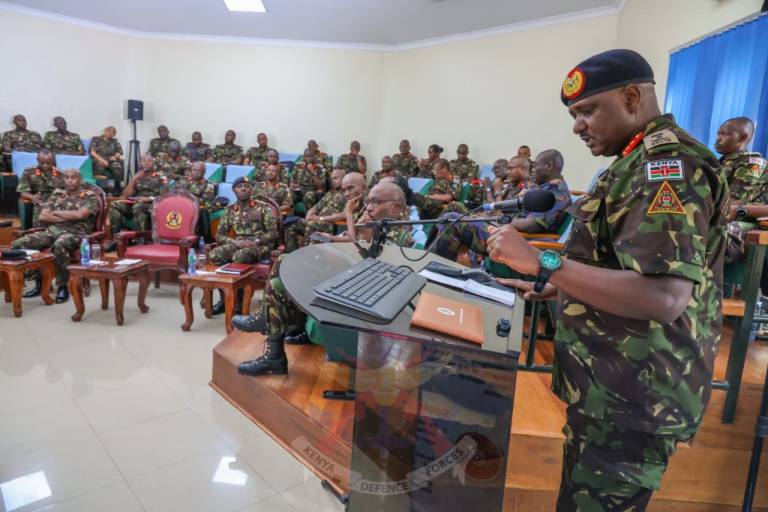
    The Army said it is deliberately investing in research, innovation and emerging technologies to enhance operational readiness, efficiency and responsiveness to contemporary and future threats. This strategic direction was highlighted during the inaugural Science, Technology, Innovation and Research (STIR) Conference held from April 28 to 30, 2026 at Kahawa Garrison, Kenya. The event brought together military personnel, researchers and innovators under the theme “Innovation for Defence: Empowering Kenya Army into the Future.”

    Opening the conference, the General Officer Commanding Western Command, Jeff Nyagah, emphasised the importance of adaptability and technological advancement in modern military operations, noting the growing influence of Artificial Intelligence in defence planning and execution.

    “Artificial Intelligence is fundamentally reshaping how we plan, execute and sustain military operations. Innovation is no longer optional but a strategic necessity,” he said, urging personnel to embrace continuous learning and technological integration.

    The conference was officially closed by the Commander of the Kenya Army, David Ketter, who praised participants for embracing innovation as a key force multiplier in modern warfare.

    He reiterated the Army’s commitment to sustained investment in research and emerging technologies to strengthen operational capability.

    “Innovation remains a key force multiplier in modern warfare. We will continue investing in research and innovative solutions that empower our troops and enhance our ability to respond effectively to evolving security threats,” he said.

    Participants included formation commanders, chiefs of branches, senior officers and defence innovators drawn from across the Kenya Defence Forces, reflecting what officials described as a unified institutional drive toward modernisation.

    A key feature of the conference was exhibitions and live demonstrations showcasing locally developed defence innovations and technological solutions designed to improve mission effectiveness.

    The successful conclusion of the inaugural STIR Conference marks a major milestone in the Kenya Army’s transformation into a technology-driven, future-ready force, reinforcing the growing role of science, research and innovation in strengthening operational effectiveness.

    Officials said the initiative signals a broader shift toward resilience, adaptability and sustained operational excellence as the nature of warfare continues to evolve.

  • Nigeria demands justice over deaths of citizens as xenophobic tensions rise in South Africa

    Nigeria demands justice over deaths of citizens as xenophobic tensions rise in South Africa

    ABUJA, Nigeria (NPA) — Bianca Odumegwu-Ojukwu, Nigeria’s Minister of Foreign Affairs, has raised concerns over renewed xenophobic tensions and anti-foreigner protests in South Africa, warning that the safety of Nigerian citizens and businesses in the country must not be endangered.

    In a situation report on the protests, the minister said the Nigerian government was closely monitoring developments following recent demonstrations in parts of Pretoria and Johannesburg marked by anti-migrant rhetoric and hostility toward foreign nationals, including Nigerians.

    According to the report, President Bola Ahmed Tinubu had been briefed on the situation and expressed grave concern, calling for stronger intervention by South African security authorities to prevent escalation.

    The ministry said disturbing images circulating on mainstream and social media platforms depicting violence, xenophobic rhetoric, and targeted attacks against foreign nationals had drawn widespread international condemnation.

    However, Nigerian authorities acknowledged recent statements by South African President Cyril Ramaphosa, Home Affairs Minister Leon Schreiber, and Police Minister Firoz Cachalia condemning extra-judicial killings, destruction of property, and anti-foreigner sentiments.

    The anti-migration protests, reportedly organised by local groups between April 27 and April 29, 2026, were largely peaceful under heavy police presence, with officers occasionally deploying teargas to prevent violence.

    The ministry said no Nigerian citizen was killed or had property destroyed during the protests. However, two Nigerian nationals were reported dead in separate incidents involving South African security personnel.

    According to the report, Amamiro Chidiebere Emmanuel died on April 25 from injuries allegedly sustained after being beaten by members of the South African National Defence Force in Port Elizabeth on April 20.

    Another Nigerian, Nnaemeka Matthew Andrew, reportedly died following an alleged encounter with officers of the Tshwane Metro Police, with his body later discovered at the Pretoria Central Mortuary on April 20.

    The Nigerian government described both incidents as “utterly condemnable and unacceptable,” adding that the Nigerian High Commission in South Africa was monitoring investigations and demanding justice.

    The ministry also disclosed that another round of demonstrations is expected between May 4 and May 8, prompting directives from President Tinubu for close monitoring of the situation.

    Nigeria’s Ministry of Foreign Affairs has summoned South Africa’s High Commissioner to Nigeria over the incidents and ongoing tensions.

    According to the statement, the Nigerian High Commission and Consulate in South Africa remain in constant contact with local authorities to minimise risks to Nigerian citizens amid ongoing consultations with senior South African officials.

    The government further announced plans for voluntary repatriation for Nigerians willing to return home due to the rising tensions.

    Officials said about 130 Nigerians had already registered with the country’s diplomatic mission in South Africa for possible evacuation flights, with the number expected to increase as consultations continue with Nigerian community associations in the country.

    The ministry noted that Nigeria played a major role in supporting South Africa’s anti-apartheid liberation struggle and stressed that such historical ties should not be forgotten.

    “It has become a repetitive wave, most especially prior to elections in South Africa, where anti-foreigner opposition parties leverage the situation to garner votes,” the statement said.

    Nigeria also referenced a recent memorandum of understanding signed with South Africa on early warning mechanisms aimed at protecting citizens of both countries during periods of tension and instability.

  • Search and rescue ongoing after U.S. service members go missing during African Lion 2026 exercise

    Search and rescue ongoing after U.S. service members go missing during African Lion 2026 exercise

    INTERNATIONAL (NPA) —Two U.S. service members have been declared missing during the African Lion 2026 exercise near the Cap Draa Training Area close to Tan Tan, Morocco, on May 2, 2026. Search and rescue operations are currently underway following their disappearance in the course of the multinational military exercise.

    According to a statement from United States Africa Command (AFRICOM), the personnel were participating in the multinational military exercise when they were reported missing, prompting an immediate coordinated response involving U.S., Moroccan, and partner forces.

    Search efforts, which began shortly after the incident, involve ground, air, and maritime assets deployed across the training area and surrounding regions. Officials said the operation remains active and ongoing as authorities work to determine the circumstances surrounding the disappearance.

    “The incident remains under investigation and the search is ongoing,” AFRICOM said in a statement, adding that the focus remains on the missing personnel and their families.

    Military officials have not released additional details regarding the identities of the service members or the specific conditions under which they went missing, citing the ongoing nature of the operation.

    Authorities said further updates will be provided as more information becomes available.

  • Nigerian Air Force strikes terrorists, destroys Abasu Aiki hideout in Katsina

    Nigerian Air Force strikes terrorists, destroys Abasu Aiki hideout in Katsina

    ABUJA, Nigeria (NPA) — The Nigerian Air Force (NAF), through the Air Component of Operation FANSAN YAMMA Sector 2, has delivered a decisive blow to terrorist elements in the North‑West, destroying a notorious hideout linked to kingpin Abasu Aiki during a precision air strike in Katsina State.

    The operation, conducted on 1 May 2026, targeted a terrorist enclave within the Dan‑Aji Forest in Faskari Local Government Area, following sustained and credible intelligence reports indicating renewed terrorist activity in the area.

    Further intelligence confirmed that the location served as a logistics hub and transit point for fighters loyal to Abasu Aiki, who have been implicated in repeated attacks on communities and security forces across the Faskari, Kankara, and Funtua axis of Katsina State. Acting on this intelligence, NAF air assets identified armed terrorists on motorcycles alongside other fighters within the enclave and executed a swift and coordinated strike on both the terrorists and their support structures.

    In a statement signed by Air Commodore Ehimen Ejodame, Director of Public Relations and Information, Headquarters Nigerian Air Force, on 3 May 2026, battle damage assessment confirmed that several terrorists were neutralised, while the logistics hub and associated structures were destroyed, triggering explosions and widespread fires.

    The successful operation significantly disrupts terrorist movement and resupply within the area and underscores the Nigerian Air Force’s sustained resolve to deny terrorists safe havens, dismantle their operational networks, and support ongoing efforts to restore peace and security across the region.

  • Nigeria summons South African envoy over xenophobic attacks, killing of African migrants

    Nigeria summons South African envoy over xenophobic attacks, killing of African migrants

    ABUJA, Nigeria (NPA) — The Federal Government has summoned the Acting High Commissioner of South Africa to Nigeria over recent anti-foreigner protests and alleged attacks targeting Nigerians and their businesses in the country.

    In a press release issued on Saturday, signed by Kimiebi Imomotimi Ebienfa, Spokesperson for the Ministry of Foreign Affairs, the Ministry of Foreign Affairs said the envoy had been invited to a meeting scheduled for Monday, May 4, 2026, at the ministry’s headquarters in Abuja.

    According to the ministry, the meeting is aimed at formally conveying Nigeria’s “profound concern” over recent developments capable of affecting the longstanding cordial relations between both countries.

    The ministry said discussions would focus on ongoing demonstrations by various groups in South Africa, documented cases of mistreatment of Nigerian citizens and attacks on businesses owned by Nigerians.

    The development comes amid growing concerns over renewed xenophobic violence in South Africa, with reports and viral videos showing attacks against African migrants and foreign-owned businesses. One of the videos circulating online allegedly showed two Ethiopian shopkeepers shot dead at close range by a suspected xenophobic attacker, further fueling outrage across the continent over the deteriorating security situation for Africans living in South Africa.

    Political leaders and activists within South Africa have also condemned the violence. Julius Malema and other public figures have called for an immediate end to attacks targeting Africans and foreign nationals in the country.

    “The Ministry is aware of the growing discontent among Nigerians concerning the treatment of their nationals in South Africa,” the statement said.

    The Federal Government, however, urged Nigerians to remain calm, while reaffirming its commitment to protecting the rights, safety and well-being of Nigerian citizens residing in South Africa.