Category: Crime Diary

  • Ogun Police warn against fake 2026 recruitment medical screening schedule

    Ogun Police warn against fake 2026 recruitment medical screening schedule

    ABEOKUTA, Nigeria (NPA) — The Ogun State Police Command has warned members of the public and applicants seeking recruitment into the Nigeria Police Force to disregard a fake “2026 Recruitment Medical Screening Schedule” currently circulating online.

    The command said no official date has been fixed for the medical screening exercise, describing the circulating notice as fraudulent and misleading.

    In a statement issued on Thursday, the police advised applicants to remain vigilant and avoid falling victim to scammers attempting to exploit the recruitment process.

    The command urged candidates to rely only on official communication channels for authentic updates regarding the recruitment exercise.

    According to the statement, verified information can only be obtained through the official Police Service Commission websites and approved social media platforms.

    Applicants were directed to monitor Police Service Commission, NPF Recruitment Portal and the official X handle, @PSCNigeria for credible announcements and further instructions.

    The command further advised candidates to await official directives through authorised channels to avoid misinformation and possible fraud.

    Police authorities reiterated their commitment to ensuring a transparent and credible recruitment process while cautioning applicants against dealing with unauthorised individuals or platforms.

  • FCCPC commends LASERC reforms to curb estimated billing in Lagos electricity market

    FCCPC commends LASERC reforms to curb estimated billing in Lagos electricity market

    LAGOS, Nigeria (Agency Report) — The Federal Competition and Consumer Protection Commission (FCCPC) has commended the Lagos State Electricity Regulatory Commission (LASERC) for ongoing reforms aimed at addressing estimated billing and strengthening consumer protection in the state’s electricity market.

    The commendation was contained in a statement issued on Tuesday in Lagos by the FCCPC Director of Corporate Affairs, Mr Ondaje Ijagwu.

    According to the commission, the reforms outlined in LASERC’s 2025 Lagos Electricity Market Report include stricter enforcement against electricity supply to unmetered consumers and a phased rollout of universal smart metering across Lagos State.

    LASERC is expected to begin compulsory metering from 2026 through a feeder-by-feeder deployment strategy for smart meters across the state’s electricity network.

    The initiative also provides for tighter regulatory oversight of electricity distribution companies, improved consumer complaint resolution processes and sanctions for operators that fail to comply with regulatory standards.

    The Executive Vice Chairman and Chief Executive Officer of the FCCPC, Mr Tunji Bello, described the reforms as a significant step toward achieving transparent billing systems and strengthening consumer confidence in the power sector.

    “Estimated billing remains one of the leading sources of consumer complaints within Nigeria’s power sector,” Bello said.

    He added that measures aimed at accelerating metering and improving billing transparency were essential to enhancing consumer protection and market accountability.

    According to him, effective metering promotes fairness, reduces billing disputes and strengthens accountability within the electricity value chain.

    Bello urged other state regulators and governments to adopt similar reforms to improve service delivery and consumer protection across the country.

    He also called on electricity distribution companies and other market operators to support ongoing metering programmes and comply with their consumer protection obligations.

    The FCCPC noted that LASERC’s report identified persistent service delivery gaps, complaint resolution challenges and electricity supply inefficiencies affecting consumers in Lagos State.

    It stated that the findings underscore the need for stronger consumer safeguards, sustained infrastructure investment and improved electricity service delivery nationwide.

    The commission reaffirmed its commitment to promoting transparency, accountability and fair market practices across Nigeria’s electricity sector.

  • Lagos CP, INEC-REC meet, strengthen collaboration ahead of 2027 elections

    Lagos CP, INEC-REC meet, strengthen collaboration ahead of 2027 elections

    LAGOS, Nigeria (NPA) — The Commissioner of Police in Lagos State, CP Tijani Fatai, has reaffirmed the commitment of the state command to collaborate with the Independent National Electoral Commission (INEC) ahead of the 2027 general elections.

    Fatai gave the assurance while receiving officials of INEC on a courtesy visit at the Lagos State Police Command Headquarters in Ikeja.

    The INEC delegation was led by the Lagos State Resident Electoral Commissioner (REC), Prof. Abayomi Salami, who congratulated the police commissioner on his appointment.

    Salami also sought continued collaboration and support from the command as preparations for the 2027 general elections gather momentum in the state.

    According to him, the partnership is necessary to ensure peaceful, free, fair and credible elections in Lagos State.

    In response, Fatai appreciated the visit and stressed the importance of inter-agency cooperation in strengthening democracy and sustaining public confidence in the electoral process.

    He reaffirmed the readiness of the Lagos State Police Command to provide adequate security support and respond positively to lawful requests from INEC in the discharge of its constitutional responsibilities.

    The development was disclosed in a statement issued on Wednesday by the Police Public Relations Officer, Lagos State Command, SP Abimbola Adebisi.

  • DHQ denies civilian casualties in Shiroro airstrike, says 70 bandits killed

    DHQ denies civilian casualties in Shiroro airstrike, says 70 bandits killed

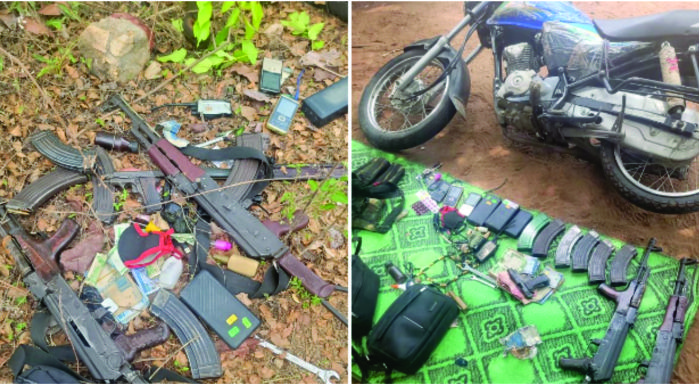
    ABUJA, Nigeria (NPA) — The Defence Headquarters (DHQ) has dismissed reports alleging civilian casualties during a recent aerial bombardment in Shiroro Local Government Area of Niger State, insisting that the operation targeted armed bandits and terrorist hideouts.

    The clarification was contained in a statement issued by the Director of Defence Media Operations, Maj.-Gen. Michael Onoja, on Wednesday.

    According to the DHQ, the airstrike was conducted following credible intelligence on the movement and gathering of armed bandits in Lukupe Village and adjoining communities within Shiroro LGA.

    The military said intelligence reports and post-strike assessments confirmed that the operation successfully neutralised several terrorists, particularly in Kusasu community, where about 70 bandits were reportedly killed.

    It added that surviving fighters were seen evacuating the bodies of their dead colleagues for burial after the operation.

    The statement further disclosed that more than 200 armed fighters mounted on motorcycles reportedly fled towards Zango following the air interdiction.

    The DHQ maintained that the operation was carefully planned and executed based on verified intelligence, stressing that civilians were not present at the targeted locations during the bombardment.

    According to the military, residents of nearby communities had relocated to Sarkin Pawa before the commencement of the operation, contrary to claims that innocent civilians were affected.

    “The operation specifically targeted armed bandits and terrorist enclaves,” the statement said.

    The Armed Forces of Nigeria reaffirmed its commitment to protecting law-abiding citizens and conducting military operations in accordance with established rules of engagement and international laws governing armed conflict.

    The DHQ also assured Nigerians that ongoing military operations across the country would continue to focus on dismantling criminal and terrorist networks threatening national security.

  • NDLEA intercepts ₦10.43bn hard drugs, busts cartel at Lagos Port

    NDLEA intercepts ₦10.43bn hard drugs, busts cartel at Lagos Port

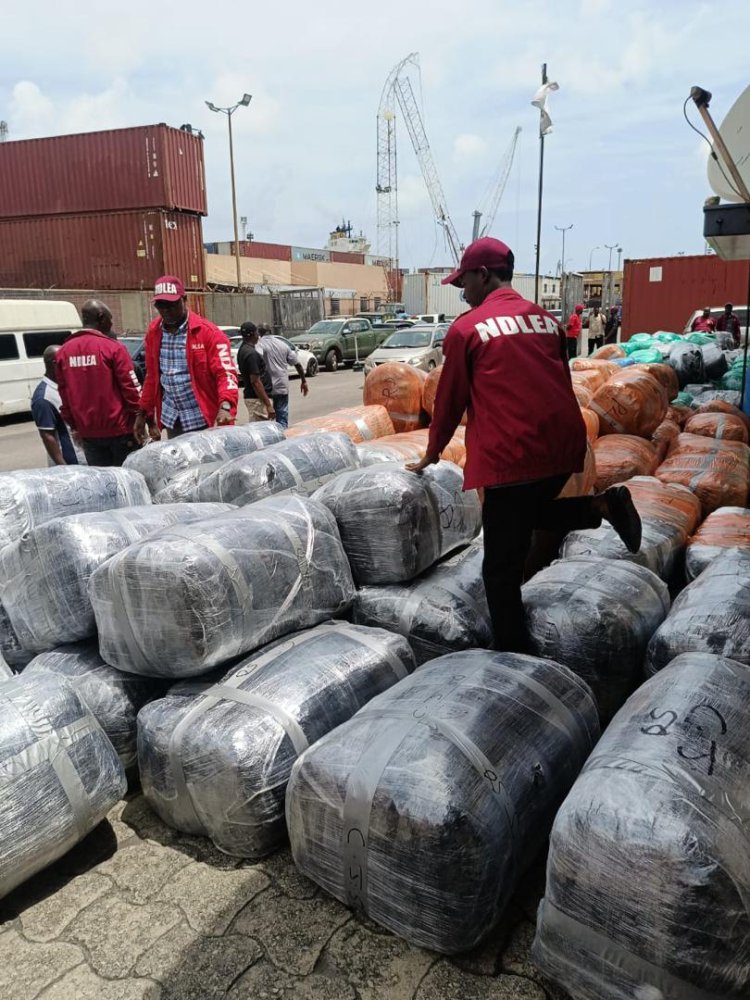
    LAGOS, Nigeria (NPA) — The National Drug Law Enforcement Agency (NDLEA) has intercepted a staggering consignment of Canadian Loud cannabis worth ₦10.43 billion at the Tincan Island Port, Lagos, dealing another heavy blow to international drug syndicates.

    The seizure — weighing 4,173.5 kilograms — followed two months of intelligence-driven surveillance, tracking the shipment from Toronto, Canada, through Montreal and Morocco’s Tanger Med Port, before it arrived in Lagos on May 9.

    NDLEA operatives, working in synergy with the Nigeria Customs Service, the UK Home Office International Operations, the US DEA, and the Royal Canadian Mounted Police, uncovered the drugs concealed inside a Ford Bus and a Mercedes-Benz C300 hidden within the shipping container.

    This breakthrough comes just days after NDLEA raided a Lekki mansion, recovering 2,326 kilograms of Loud valued at ₦5.8 billion, underscoring a coordinated attempt by cartels to flood Nigeria’s market.

    NDLEA’s Director of Seaports Operations, ACG Ibinabo ArchieAbia, hailed the bust as proof of the power of inter-agency cooperation and global collaboration.

    Reacting, NDLEA Chairman Brig. Gen. Mohamed Buba Marwa (Rtd.) praised the vigilance of officers, warning syndicates that Nigeria’s ports will not serve as gateways for their trade. “This second massive seizure in less than a week is a clear message to international syndicates. We will not rest until every link in this supply chain is broken and those behind these shipments are brought to justice,” Marwa declared.

    The back-to-back seizures highlight NDLEA’s growing capacity to dismantle transnational drug networks, while sending a strong signal to cartels that Nigeria is no longer a haven for their illicit trade.

  • EFCC explains operatives’ visit to Uyo teaching hospital

    EFCC explains operatives’ visit to Uyo teaching hospital

    ABUJA, Nigeria (NPA) — The Economic and Financial Crimes Commission (EFCC) has clarified that the visit of its operatives to the University of Uyo Teaching Hospital (UUTH), Akwa Ibom State, on Tuesday was to authenticate a medical report presented by a suspect standing trial.

    The commission’s spokesman, Dele Oyewale, disclosed this in a statement issued on Tuesday in Abuja.

    Oyewale said the suspect was remanded by Justice M.A. Onyetunu of the Federal High Court, Uyo, over alleged fraud involving multiple microfinance banks, including the University of Uyo Microfinance Bank.

    According to him, the suspect had presented a medical report which required verification by the management of the teaching hospital.

    He explained that the EFCC had earlier written two letters to the hospital management on March 11 and April 20 requesting authentication of the medical report but received no response.

    “The investigating officer handling the matter took a further step of visiting the hospital to enquire about the status of the request. Still, no response,” he said.

    Oyewale stated that EFCC operatives later visited the Chief Medical Director (CMD) of the hospital on Tuesday for further enquiries but were allegedly attacked and locked inside the facility by some staff members.

    “As a last resort, operatives of the commission visited the Chief Medical Director of the hospital on Tuesday to make further enquiries, only to be locked in with a false alarm and subjected to unprovoked attack by misguided staff of the facility who pelted them with stones and other dangerous objects,” he said.

    The spokesman, however, said there was no breakdown of law and order during the incident, adding that the operatives exercised restraint and left the premises without disrupting hospital activities.

    He further alleged that while the operatives were inside the hospital, the CMD directed that the hospital gates be shut, making lawful enquiries difficult.

    According to him, police authorities in Akwa Ibom later advised the hospital management to reopen the gates to allow the operatives leave peacefully, but the request was allegedly ignored.

    Oyewale stressed that enquiries relating to EFCC operations were lawful and urged individuals and organisations to cooperate with the commission during investigations.

    “Contrary action could be deemed as obstruction, which is criminal with attendant legal consequences,” he added.

  • Plateau Attack: COCIN leader Rev. Dachomo raises alarm as six killed in fresh attacks

    Plateau Attack: COCIN leader Rev. Dachomo raises alarm as six killed in fresh attacks

    JOS, Nigeria (NPA) — Rev. Ezekiel Dachomo, Regional Leader of the Church of Christ in Nations (COCIN), has raised concern over the killing of six persons in fresh attacks in Plateau State.

    In a statement issued on Wednesday, the cleric—who has been at the forefront of global awareness campaigns on the killing of Christians in Nigeria’s north-central—lamented that the six victims were killed on Tuesday in separate attacks across communities in the state despite repeated warnings by Gov. Caleb Mutfwang over the worsening security situation.

    Dachomo questioned the continued wave of violence and killings in the state, asking why the perpetrators appeared emboldened to carry out attacks without fear.

    “How long will blood continue to flow while families bury their loved ones in silence and fear?” he asked.

    The cleric also queried whether the attackers felt untouchable because of alleged backing from influential individuals or because narratives surrounding the attacks were often distorted.

    “Why are these terrorists so bold and fearless? Is it because they feel untouchable? Is it because there are powerful forces protecting them behind closed doors? Or because certain propaganda voices are always quick to twist the narrative, justify the killings, and confuse the world about who the real victims are?” he said.

    According to him, every life lost represented a family thrown into grief and pain.

    “Every life lost was someone’s father, mother, child, brother, or sister. These were human beings with dreams, hopes, and families waiting for them to come home,” he stated.

    Dachomo said Plateau communities were living in fear as many children were growing up amid trauma and violence instead of peace and opportunity.

    “Enough of the silence. Enough of the excuses. The people deserve protection, justice, and truth,” he added.

  • Democracy: Stakeholders raise concern over surge in political litigation in Nigeria

    Democracy: Stakeholders raise concern over surge in political litigation in Nigeria

    ABUJA, Nigeria (NPA) — Stakeholders in the South-East have expressed concern over the rising wave of litigation within Nigeria’s political parties, warning that the trend could weaken democratic stability and opposition strength ahead of the 2027 general elections.

    They made the remarks in separate interviews with the News Agency of Nigeria (NAN) on “Proliferation of Political Litigation and Its Implications for Democracy,” noting that persistent court battles over leadership, party structures and electoral disputes could undermine internal democracy and political cohesion.

    Major political parties, including the African Democratic Congress (ADC), Peoples Democratic Party (PDP), Labour Party (LP) and the All Progressives Congress (APC), are currently facing varying degrees of legal disputes and leadership crises.

    The ADC has been affected by leadership tussles and court cases over control of party structures. The PDP continues to battle recurring litigation over national leadership legitimacy and disputes in several state chapters. In the Labour Party, disagreements over leadership and structure reportedly contributed to the exit of key figures, including former presidential candidate Peter Obi and other prominent members. The APC, though relatively stable at the national level, has witnessed internal disputes in some states, particularly Rivers State.

    A recent Supreme Court decision on the ADC leadership crisis also failed to conclusively resolve the matter, returning substantive issues to the lower court and prolonging uncertainty within the party.

    Speaking in Enugu, Human Rights Lawyer, Mr Awforkansi Nnadiume, said the trend reflects a slowing democratic process. “After almost 30 years of uninterrupted democratic rule, we are still struggling with full democratic consolidation,” he said, adding that many disputes should ordinarily be resolved within party structures.

    He warned that excessive litigation over internal party affairs could distort political competition and even weaken opposition parties. “Most of these matters are internal issues that parties should resolve themselves, but the courts are increasingly drawn into them,” he said, urging stronger internal dispute resolution mechanisms.

    Also speaking, Dr Ambrose Igboke, Chairman of the Public Affairs Analysts of Nigeria (Enugu chapter), said the issue reflects weak internal democracy in political parties. “Most parties lack discipline and have structural loopholes that are often exploited,” he said. Igboke, however, noted that resort to litigation remains preferable to violence and could ultimately strengthen legal interpretation of democratic processes.

    In Ebonyi State, political analyst Chief Chinedu Okafor warned that repeated court cases within opposition parties create uncertainty and weaken public confidence in the political system. Constitutional lawyer Mr Ifeanyi Nworie also stressed that political parties must respect their constitutions to reduce unnecessary judicial intervention.

    Civil society advocate Mrs Nkechinyere Nnachi said prolonged legal battles contribute to voter apathy and public frustration, urging political leaders to prioritise dialogue, reconciliation and issue-based politics.

    In Anambra, analyst Mr Tony Okafor said excessive litigation has turned courts into political battlegrounds, weakening opposition effectiveness and public trust. He cited the Labour Party leadership crisis as an example of how prolonged disputes can fracture party unity and discourage supporters.

    Former NBA Orlu Branch chairman, Mr Chinedu Agbordike, said judicial intervention remains essential but warned against politicisation of the judiciary. He called for stronger internal conflict resolution systems within parties.

    Some analysts also alleged that certain litigations are politically motivated to destabilise opposition parties ahead of the 2027 elections.

    A political science lecturer at the University of Nigeria, Nsukka, Dr Chinedu Ejezie, described the trend as a “bad omen,” warning that weakening opposition parties could erode democratic competition. He stressed that democracy thrives on credible alternatives for voters.

    Stakeholders across regions called for electoral reforms, stronger party institutions, and improved internal democratic practices to reduce litigation and safeguard Nigeria’s democratic stability ahead of future elections.

  • Women raise alarm over rising gender-based violence cases in Mombasa

    Women raise alarm over rising gender-based violence cases in Mombasa

    MOMBASA, Kenya (NPA) — Women leaders in Mombasa have called for urgent government intervention over what they described as a disturbing rise in Gender-Based Violence (GBV) cases across the coastal city.

    The leaders warned that the growing crisis is silently destroying families and communities, while urging the government, security agencies, schools, religious institutions and community leaders to intensify efforts against all forms of abuse.

    They stressed that the response to GBV must match the scale of the challenge, particularly as cases involving women, children and vulnerable groups continue to rise.

    Advocate Fatma Bakari Barayan, who handles GBV-related cases in the region, disclosed that reported incidents had increased by 45 per cent since 2022.

    According to her, the violence cuts across gender, age and social class, affecting women, men and children alike.

    “GBV is not only about sexual harassment or sexual assault, but it extends to economic violence and emotional abuse,” Barayan said.

    “Children are being abused by the very parents meant to protect them. This is happening in our homes and in our neighbourhoods, and most of it goes unreported,” she added.

    Barayan cited Articles 27, 28 and 29 of the Kenyan Constitution, noting that citizens are guaranteed the rights to human dignity, freedom from discrimination and protection from cruel treatment.

    She, however, lamented that many vulnerable communities remain unaware of these constitutional protections.

    To address the gap, Barayan announced the launch of free legal clinics in Mombasa to provide residents with access to legal advice and justice without financial barriers.

    “Winning a case in court is not the end. What comes next for the victim? We must think about mental health counselling, economic empowerment, and long-term rehabilitation,” she said.

    Another activist, Sabrina Kanini, said Mombasa was facing social problems that were previously uncommon, including cases involving parental abuse and allegations of abuse linked to some religious institutions.

    Kanini also called for stricter controls on access to pornographic content online, arguing that unrestricted exposure among young people was contributing to sexual violence and behavioural concerns.

    She urged parents to monitor their children’s phone usage more closely, while encouraging teachers to discreetly alert parents when they notice concerning behavioural changes among pupils.

    Meanwhile, Zaina Baraka from Kisauni referenced the unresolved case involving Josephine, a woman who allegedly died following abuse by her intimate partner.

    She appealed to women in abusive relationships to prioritise their safety and leave violent homes before situations become fatal.

    “Do not wait until you end up in a mortuary; put your life first and move out of any abusive marriage,” she said.

  • Corrupt public officials fuel global human trafficking networks, UNODC warns

    Corrupt public officials fuel global human trafficking networks, UNODC warns

    VIENNA, Austria (NPA) — The United Nations Office on Drugs and Crime (UNODC) has warned that corruption remains a major driver of human trafficking worldwide, enabling criminal networks to recruit, transport and exploit victims while evading justice.

    In a new publication titled Hidden Links: ‘Corruption and Human Trafficking’, the UN agency said traffickers often rely on corrupt public officials and private sector actors who accept bribes, collude with criminal groups or deliberately ignore illegal activities.

    According to UNODC, the relationship between corruption and trafficking has created what it described as a “hidden alliance” that allows organised crime to flourish while victims remain trapped in exploitation.

    The report explained that corruption plays a role at virtually every stage of the trafficking chain, from recruitment and transportation to exploitation and obstruction of justice.

    It noted that corrupt officials may issue fraudulent documents, ignore irregularities at border crossings or facilitate the movement of victims across jurisdictions in exchange for financial inducements.

    “Without corruption, trafficking networks would struggle to move victims, conceal operations or evade justice,” the publication stated.

    UNODC further warned that corruption among law enforcement officials, labour inspectors, prosecutors and other authorities creates an environment where traffickers can operate with little fear of prosecution.

    According to the report, some officials falsify inspection outcomes, obstruct investigations or deliberately ignore exploitation taking place in industries considered high-risk for trafficking, including agriculture, construction, fisheries and domestic work.

    The agency said survivors of trafficking frequently report encounters with police officers and public officials who fail to protect them or allegedly exploit their vulnerability.

    The publication also stressed that corruption linked to human trafficking is not limited to specific countries or institutions.

    “It cuts across borders, sectors and institutions,” the report stated, adding that private recruitment agencies, transport operators and employers also contribute to trafficking networks in some cases.

    To address the growing challenge, UNODC called for stronger anti-corruption safeguards within public institutions and broader investigations that treat trafficking cases as corruption-related crimes.

    The agency also urged governments to strengthen protection mechanisms for victims and whistle-blowers, improve witness protection systems and enhance international cooperation against transnational trafficking networks.

    According to UNODC, disrupting financial flows and exposing corrupt officials are critical to dismantling trafficking operations globally.

    The organisation said it is supporting countries to strengthen legislation imposing tougher penalties on public officials involved in trafficking, while also training investigators to identify corruption and suspicious financial transactions linked to organised crime.