Category: Business

  • Tinubu: Nigeria’s creative economy key to growth and global competitiveness

    Tinubu: Nigeria’s creative economy key to growth and global competitiveness

    LAGOS, NIGERIA (Agency Report) — March 23, 2026 — President Bola Tinubu has emphasised Nigeria’s creative industry as a strategic driver of economic growth and global competitiveness, urging stronger investment and collaboration to unlock its full potential.

    In a statement made available to the News Agency of Nigeria (NAN) in Lagos, Tinubu was quoted as saying this on Thursday at the “Nigerian Modernism” exhibition at the Tate Modern, London. The event formed part of engagements concluding his official visit to the United Kingdom.

    He noted that the sector requires sustained partnerships between government, the private sector, and international stakeholders to expand access to funding, strengthen market structures, and enhance global visibility for Nigerian creatives. Tinubu described the exhibition as “a testament to a revolution.”

    Reflecting on the bold generation of Nigerian artists who, in the mid-20th century, redefined their narrative beyond colonial constructs, Tinubu said: “It is a profound honour to stand here… to witness the soul of Nigeria on display. What we see here is people who have taken the best of global techniques and infused them with the enduring rhythms of our heritage.”

    He added that the works on display demonstrate how Nigerian artists blend global techniques with indigenous heritage to create a distinct cultural expression. Tinubu said the Federal Government’s Renewed Hope agenda recognises the creative industry as a key driver of economic growth and international engagement. “Our creative industries—art, music, film, and literature—are among our greatest exports. They represent Nigeria’s soft power in an interconnected world,” he further stated.

    Addressing the international audience, Tinubu said the exhibition reflected Nigeria’s resilience and creative strength through periods of transition and nation-building. He urged Nigerians in the diaspora to continue projecting a positive image of the country and contribute to national development. “You come from a lineage of pioneers… the ability to innovate, adapt and lead,” he said.

    The president commended Access Holdings and Coronation Group for supporting the exhibition. “By bringing these works to London, you are not just hosting an exhibition; you are facilitating a vital dialogue between our past and our shared future,” he noted.

    Tinubu reaffirmed the importance of cultural diplomacy, describing art as a unifying force that fosters mutual understanding across borders. “Art has no borders. It is the language of our common humanity,” he added.

    The event, attended by dignitaries including Deputy Prime Minister David Lammy, members of the diplomatic corps, business leaders, and the Nigerian diaspora, marked the symbolic end of the President’s engagements in the UK. (NAN).

  • Edo IRS warns taxpayers to file returns before March 31

    Edo IRS warns taxpayers to file returns before March 31

    BENIN CITY, NIGERIA (News Agency) — March 23, 2026 — The Edo Internal Revenue Service (IRS) has urged taxpayers to file their annual returns before March 31 or face penalties.

    In a statement issued Sunday in Benin, Executive Chairman John Odior described tax filing as a compulsory legal obligation for eligible residents. “Filing your tax returns is a non-optional, statutory, legal and civic obligation,” he said.

    Odior explained that the directive applies to employees, business owners, professionals, online traders, and those in the informal sector. He noted that the agency has introduced an electronic filing system to simplify the process. “With the e-filing platform, taxpayers can complete their obligations from the comfort of their homes or offices,” he added.

    The requirement, he said, is backed by Section 24(f) of the 1999 Constitution and the Nigeria Tax Administration Act 2025. Odior warned that defaulters would face sanctions. “Failure to comply, refusal to file, or submission of incomplete or inaccurate information will attract administrative penalties,” he stated.

    According to him, tax payment is vital to development. “Tax filing is not just a legal requirement; it contributes to Edo’s growth and development,” he emphasised.

    The service advised taxpayers to use its official portal and seek assistance from its offices where necessary.

  • Fuel hike in Nigeria triggers soaring food prices, citizens want FG intervention

    Fuel hike in Nigeria triggers soaring food prices, citizens want FG intervention

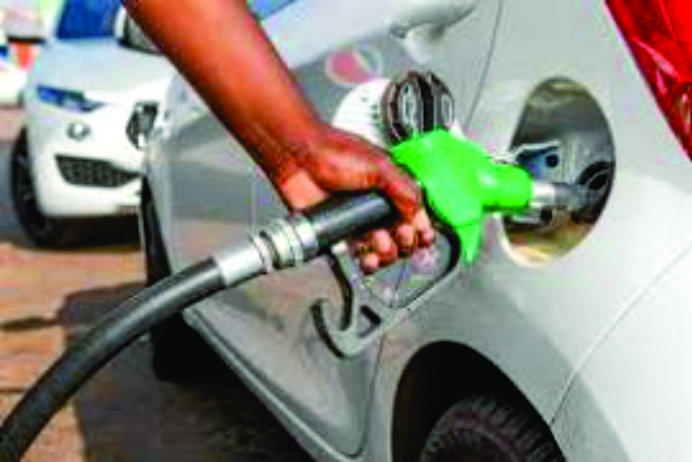
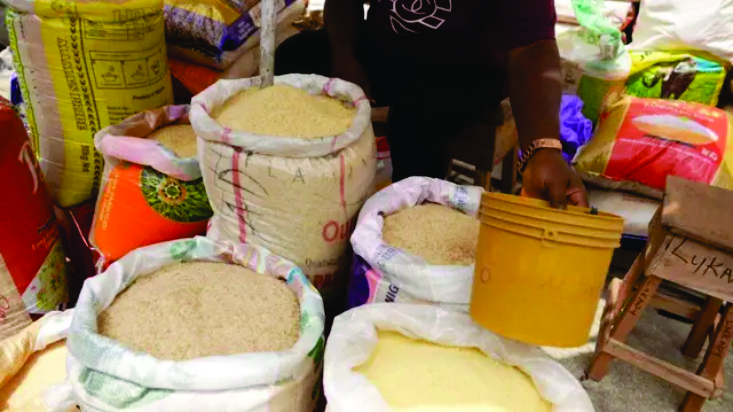
    ABUJA, NIGERIA (News Agency) — March 23, 2026 — Prices of food items, goods, and services have sharply increased across markets in the Federal Capital Territory (FCT) and surrounding areas, according to a survey by the News Agency of Nigeria (NAN).

    The NAN study in Abuja on Sunday revealed that the surge in prices is linked to the recent hike in petroleum product pump prices, driven by the ongoing Middle East crisis. The development has strained traders, business owners, and households, with many citizens reporting higher spending on feeding and basic necessities.

    Business owners, traders, and consumers alike lamented the impact of the fuel hike on their livelihoods and called for urgent government intervention to cushion the effects.

    At the Orange Market along the Abuja-Keffi road, a big basket of tomatoes that sold for N9,000–N10,000 in February now costs N30,000–N35,000. A big bag of onions, previously N15,000–N25,000, now sells for N40,000–N45,000. Similar spikes were recorded in Lugbe, Orozo, Karu, Wuse, Utako, Garki, Nyanya, and Apo markets, with yams, beans, peppers, sweet potatoes, and onions all experiencing steep increases.

    The price of sachet water and ice blocks has also risen due to poor electricity supply and reliance on diesel. Distributors now sell a bag of sachet water for N450–N500, up from N300–N350, while ice blocks have jumped from N500 to N800. Small businesses report dwindling profits as they spend heavily on fuel and diesel to power generators.

    Residents expressed frustration at the rising costs of everyday services. Haircuts for children that cost N1,400 weeks ago now cost N3,000, while bakers complain of soaring prices for baking materials. Traders noted that transportation fares for bringing goods from other states have tripled, further driving up market prices.

    Citizens appealed to the Federal Government to urgently address electricity challenges, stabilize fuel supply, and support businesses to ease the burden. Many warned that without intervention, even basic commodities like water could soon become unaffordable for ordinary Nigerians.

  • Osun State to launch Security Trust Fund April 9 amid calls for state policing

    Osun State to launch Security Trust Fund April 9 amid calls for state policing

    OSHOGBO, NIGERIA (NPA) — March 23, 2026 — The much-anticipated launch of the Osun State Security Trust Fund, aimed at strengthening business, security, and safety in the Nigeria’s southwestern state, will take place on April 9, 2026.

    According to information from the state government, investors and businesses thrive where peace and stability are assured, and security remains the foundation of economic growth.

    Governor Ademola Adeleke, in preparation for the launch, emphasised that the state is deliberately reinforcing its security architecture to attract investment, protect lives and property, and drive sustainable prosperity for its people.

    The Osun State Security Trust Fund is a public-private initiative designed to support security agencies with resources needed to keep the state safe. It will provide equipment, operational support, infrastructure, and strategic interventions.

    The launch comes at a time when the creation of state police dominates national security discussions, following perceived shortcomings of centralised policing in addressing pressing challenges such as terrorism and banditry in the north, and the spillover effects of kidnappings and agitations in the south.

  • Albanese and Singapore’s Wong unite to safeguard fuel supplies as Middle East conflict rages

    Albanese and Singapore’s Wong unite to safeguard fuel supplies as Middle East conflict rages

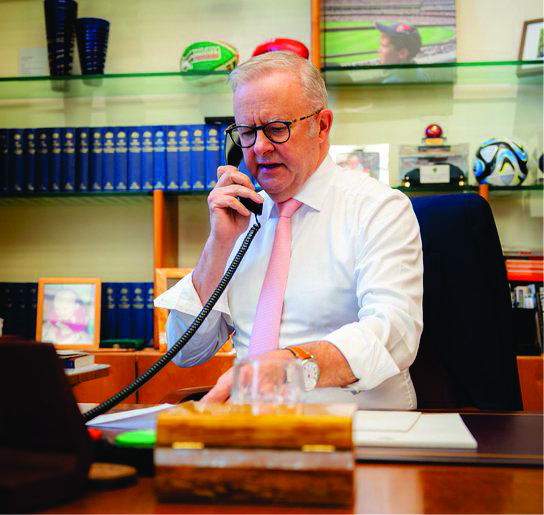
    INTERNATIONAL (NPA) — March 23, 2026 — Australian Prime Minister Anthony Albanese on Monday held talks with Singapore’s Prime Minister Lawrence Wong, who also serves as Minister for Finance and Member of Parliament for Marsiling, about strengthening cooperation to secure the fuel Australia needs with its international partners and longstanding friends.

    Albanese, in a statement, noted that he and the Singaporean leader agreed to support the flow of essential goods, including petroleum oils such as diesel, and liquefied natural gas between the two countries. He emphasised: “We’ll keep working closely as we deal with the impacts of the conflict in the Middle East. We’re working with partners around the world to make sure fuel keeps moving to where it’s needed most.”

    According to Albanese, overseas conflict is disrupting global supply chains, and Australia is taking proactive steps to manage the impacts domestically. 

    In a related effort, the Prime Minister also met with Dr Fatih Birol of the International Energy Agency to discuss strategies for working with trading partners to secure fuel supply. The ongoing war in the Middle East — involving the United States, Israel, and Iran — and the closure of the vital Strait of Hormuz has created significant instability in international oil markets.

    Australia consumes around 1.1 million barrels of oil per day, or approximately 33 million barrels per month, underscoring the importance of ensuring steady imports and reliable supply lines during this period of global uncertainty. The move by the Prime Minister is seen as a critical step in navigating a difficult period and safeguarding national energy security.

  • 50 Years On, Dr Dayo Mobereola, NIMASA boss honoured for inspiring next generation

    50 Years On, Dr Dayo Mobereola, NIMASA boss honoured for inspiring next generation

    LAGOS, NIGERIA (NPA) — March 22, 2026 — Dr Dayo Mobereola, Director General of the Nigerian Maritime Administration & Safety Agency (NIMASA), has been celebrated by his alma mater, St. Patrick’s Grammar School, Ibadan, with an Award of Recognition for his mentorship, leadership, and unwavering dedication to youth development.

    The honour was conferred during the school’s 64th Founders’ Day, a landmark event where Mobereola joined fellow alumni, dignitaries, and stakeholders to mark the institution’s enduring legacy of excellence and service.

    NIMASA, in a statement by Osagie Edward, Deputy Director/Head, Public Relations, on March 22, 2026, quoted the Director General expressing his deep gratitude for the honour while reflecting on his formative years: “Fifty years after walking through those gates, I remain deeply grateful for the friendships, guidance, and bonds that shaped me. I do not take this honour for granted,” he said.

    Mobereola reaffirmed his lifelong commitment to mentoring young people, urging students to stay focused, disciplined, and driven by excellence. He emphasised the power of mentorship and positive role models in shaping future success, stressing that today’s youth must embrace resilience and vision to achieve greatness.

  • South Africa Government and industry reassure public of fuel supply

    South Africa Government and industry reassure public of fuel supply

    AFRICA (Agency Report) — March 21, 2026 —The Department of Mineral and Petroleum Resources and the Fuels Industry Association has moved to assure South Africans of a stable fuel supply, with no need for consumers to panic buy.

    “The Department of Mineral and Petroleum Resources (DMPR) has noted with concern the circulation of statements and messages by certain organisations and individuals encouraging members of the public to rush to filling stations due to a perceived fuel shortage and anticipated fuel price increases. 

    The Department and Fuels Industry Association wish to firmly reiterate that South Africa’s fuel supply remains stable in the immediate term, and there is no basis for panic-buying,” the department and the Fuels Industry Association of South Africa said in a joint statement on Friday.

    The department said that while there may be isolated localised logistical challenges affecting the movement or availability of fuel in certain areas, these are operational in nature and do not constitute a national supply shortage. These issues are being actively managed through established industry and regulatory channels. 

    “It is therefore incorrect and misleading to link such isolated domestic logistical matters to broader geopolitical developments. Such claims risk creating unnecessary alarm and confusion among the public,” the department and association said.

    the department and association said that calls for the public to rush to the pumps are irresponsible and that such calls place undue pressure on supply systems, congestion at service stations, and anxiety among consumers. 

    “The department calls all organisations, public representatives, commentators and social media users to act responsibly and to refrain from spreading unverified or speculative claims regarding fuel supply and fuel price developments.”

    In addition, the public has been encouraged to continue purchasing fuel in the normal course and to rely on official government communication for accurate and verified information. 

    Consumers who experience fuel-related challenges or wish to lodge complaints are encouraged to report these to fuel.complaints@dmpr.gov.za, enabling the department’s inspectors to respond and intervene where necessary. 

    “The department and the Fuels Industry Association will continue to monitor the situation closely and will communicate any confirmed developments through official channels.” – SAnews.gov.za.

  • Former bank CEO pleads guilty to $25m fraud and sanctions evasion

    Former bank CEO pleads guilty to $25m fraud and sanctions evasion

    INTERNATIONAL (NPA) — March 20, 2026 — The former Chief Executive Officer of Nodus International Bank, a Puerto Rican international bank, has pleaded guilty to leading a multimillion‑dollar fraud scheme and conspiring to evade U.S. sanctions against Venezuela.

    According to the U.S. Department of Justice, Tomás Niembro Concha, 64, of Miami, Florida, admitted to siphoning at least $24.9 million from Nodus Bank between 2017 and 2023. Prosecutors said Niembro and co‑conspirators concealed illegal investments and loans that benefited him and the bank’s chairman, Juan Ramirez, ultimately contributing to the bank’s collapse in 2023.

    Niembro and Ramirez allegedly caused Nodus Bank to invest $11 million in a Miami lender, then redirected the funds for personal use. They also induced the bank to buy 47 promissory notes worth $25.3 million from a company they jointly owned, again diverting the proceeds. Regulators later placed the bank into liquidation after uncovering the sham transactions.

    In addition to fraud, Niembro admitted to violating U.S. sanctions by secretly arranging prohibited financial dealings with a Venezuelan national linked to state‑owned oil company PDVSA. The scheme involved foreclosing on a property in New York, then illegally reselling it through a front company to the sanctioned individual.

    Niembro pleaded guilty to conspiracy to commit wire fraud and conspiracy to violate the International Emergency Economic Powers Act (IEEPA). Each charge carries a maximum penalty of 20 years in prison. Sentencing is scheduled for June 8, 2026, with Niembro agreeing to forfeit at least $16.9 million.

    U.S. officials stressed that the case demonstrates accountability at the highest corporate levels. “Corporate titles don’t place anyone above the law,” said IRS Special Agent Ron Loecker. Prosecutors added that the crimes undermined financial integrity and national security.

  • WTO warns Middle East conflict could slow global trade in latest report

    WTO warns Middle East conflict could slow global trade in latest report

    INTERNATIONAL (NPA) — March 20, 2026 — The World Trade Organization (WTO) says global trade growth will slow in 2026, after stronger‑than‑expected gains last year driven by booming demand for AI‑related products.

    According to the WTO’s latest Global Trade Outlook published on March 19, merchandise trade is forecast to grow by 1.9% in 2026, down from 4.6% in 2025, before picking up slightly to 2.6% in 2027. Services trade is also expected to ease, rising 4.8% in 2026 compared with 5.3% in 2025. Together, goods and services trade will expand by 2.7% in 2026, compared with 4.7% last year.

    The slowdown is linked to the ongoing Middle East conflict, which has disrupted transport routes and raised energy prices. If oil and gas prices stay high, WTO economists warn global GDP growth could fall by 0.3 percentage points, while trade growth could drop by 0.5 points — with energy‑importing regions like Asia and Europe hit hardest.

    The conflict has already blocked traffic through the Strait of Hormuz, a vital global shipping lane. This has disrupted fertilizer exports critical for farming and raised food security concerns in countries such as India, Thailand, and Brazil. Gulf states, heavily dependent on food imports, also face rising costs. Transport disruptions have cancelled tens of thousands of flights and increased insurance premiums, adding further strain on businesses and consumers worldwide.

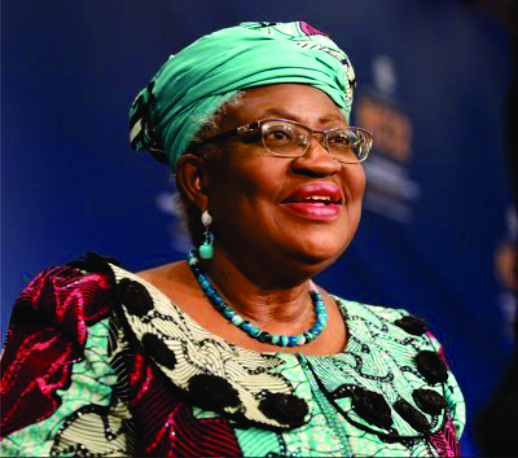
    Despite these risks, WTO Director‑General Ngozi Okonjo‑Iweala stressed that trade remains resilient, supported by high‑tech goods and digital services. She urged governments to keep trade policies predictable and strengthen supply chains to cushion the impact.

    There is some upside: if the conflict ends quickly and AI‑related spending continues, trade growth could rise to 2.4% in 2026 and 2.7% in 2027. But if energy prices remain high, the outlook will stay fragile.

    In 2025, AI‑enabling goods such as semiconductors and data equipment grew by nearly 22%, accounting for almost half of global trade growth. WTO economists say this sector could continue to offset some of the negative effects of tariffs and geopolitical tensions, offering hope that technology will remain a bright spot in otherwise uncertain times.

  • Nigeria, UK sign landmark migration and trade agreements

    Nigeria, UK sign landmark migration and trade agreements

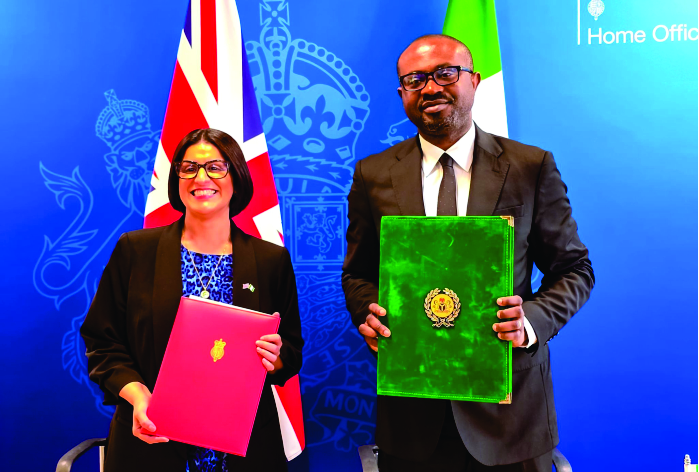
    ABUJA, NIGERIA (NPA) — March 19, 2026 — Nigeria and the United Kingdom have signed three major memoranda of understanding covering migration partnership, organised immigration crime and border security, as well as expanded business visas for UK firms operating in Nigeria.

    According to a statement by the Ministry of Interior, Interior Minister Olubunmi Tunji‑Ojo explained that the agreements reflect Nigeria’s push for a transparent, rules‑based migration system that is safe, orderly, and mutually beneficial. He stressed that the deals are designed to tackle abuse of legal pathways, strengthen border control, and ensure that migration contributes positively to national development.

    Quoting the minister, the statement noted that the agreements will boost trade, ease mobility for businesses, and support Nigeria’s drive toward a trillion‑dollar economy under President Bola Ahmed Tinubu. Tunji‑Ojo added that the new framework removes barriers linked to irregular migration and creates opportunities for legitimate travel and investment.

    The United Kingdom’s Home Secretary, Shabana Mahmood, described Nigeria as a leading bilateral partner with a shared vision for deeper cooperation. She emphasised that the partnership demonstrates the UK’s commitment to working closely with Nigeria on both security and economic fronts.

    UK Trade Envoy Florence Eshalomi highlighted that expanded visas will unlock economic growth opportunities for both countries, enabling British firms to operate more freely in Nigeria while encouraging stronger commercial ties. She noted that the agreements are expected to foster innovation, create jobs, and strengthen the long‑standing relationship between the two nations.

    Officials from both sides underscored that the memoranda represent not just technical cooperation but a strategic partnership aimed at addressing global migration challenges while advancing prosperity and stability.