Category: Business

  • Ikeja Electric explains recent drop in power supply in parts of Lagos

    Ikeja Electric explains recent drop in power supply in parts of Lagos

    LAGOS, NIGERIA (NPA) — March 24, 2026 — Nigeria’s power distribution company, Ikeja Electric, has issued a public notice to customers explaining the reason behind the recent decline in electricity supply to homes and businesses.

    In the notice dated March 23, 2026, the company clarified that the ongoing reduction in supply is primarily due to a nationwide drop in power generation, caused by limited gas availability to thermal power plants. This challenge has significantly reduced the energy available on the national grid and, consequently, the allocation to Ikeja Electric and other distribution companies across the country.

    As a result, the volume of electricity available for distribution has been severely impacted, leading to noticeable shortages in many communities. The company emphasised that the situation is beyond its direct control, as distribution companies can only share the power allocated to them from the national grid.

    While tendering its apologies for the inconvenience caused, Ikeja Electric expressed appreciation for customers’ patience and understanding during this period. It reiterated its commitment to distributing the available power as efficiently and equitably as possible, ensuring that no area is disproportionately affected.

    The company also assured customers that it is working closely with relevant stakeholders in the power sector to monitor developments and provide timely updates. Ikeja Electric reaffirmed that once gas supply improves and generation levels rise, customers will begin to experience better service delivery.
  • Tony Elumelu’s Foundation commits $16m to empower 3,200 young African entrepreneurs

    Tony Elumelu’s Foundation commits $16m to empower 3,200 young African entrepreneurs

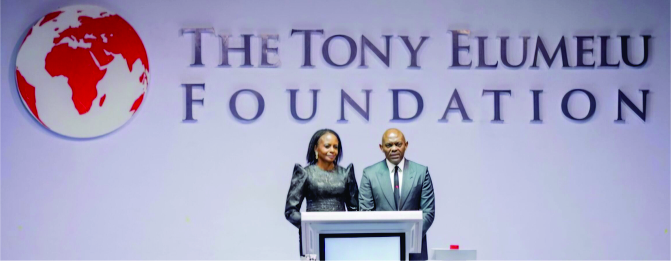
    LAGOS, NIGERIA (Agency Report) — March 24, 2026 — The Tony Elumelu Foundation (TEF) on Sunday unveiled 3,200 new beneficiaries of its 2026 cohort, each receiving a $5,000 empowerment grant for young African entrepreneurs.

    The Foundation said the entrepreneurs would be funded via Heirs Holdings Group Companies, the European Commission, Seme City Development Agency, DEG (German Development Agency), and the IKEA Foundation. Other partners include UNICEF, the Dutch Government, UNDP, and the Rwandan Ministry of Youth and Arts.

    Founder Tony Elumelu described the initiative as vital in providing access to funding, mentorship, coaching, training, and resources to catalyse businesses, drive job creation, and reduce poverty. “With policy clarity and commercial autonomy under President Bola Ahmed Tinubu’s leadership, NNPC Limited is positioned to pursue long-term, value-driven solutions,” he said, stressing that Nigeria remains a credible destination for energy and investment.

    TEF CEO Somachi Chris-Asoluka noted that since 2015, the foundation has disbursed over $100 million to 24,000 entrepreneurs, creating 1.5 million jobs, generating $4.2 billion in revenue, and lifting 3.1 million Africans above the poverty line. She added that 4.1 million households have been positively impacted.

    Chris-Asoluka said TEF will disburse $16 million to support, train, fund, and mentor the 3,200 selected entrepreneurs. Agriculture, retail, AI, ICT, green economy, recycling, education, and healthcare were highlighted as priority sectors.

    The event also introduced six high-achieving alumni from the Democratic Republic of Congo, South Africa, Kenya, Algeria, Mali, and Nigeria, who have transformed TEF’s support into leading businesses across Africa.

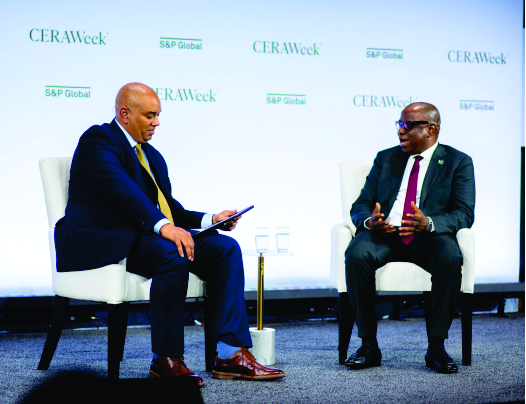
  • Nigeria-NNPC’s Ojulari shines as global energy leaders gather in Houston for CERAWeek 2026

    Nigeria-NNPC’s Ojulari shines as global energy leaders gather in Houston for CERAWeek 2026

    INTERNATIONAL (NPA) — March 24, 2026 — Engr. Bashir Bayo Ojulari, Group Chief Executive Officer of NNPC Limited, has been spotlighted at the ongoing CERAWeek 2026 in Houston, themed “Convergence and Competition: Energy, Technology and Geopolitics.”

    CERAWeek 2026, organised by S&P Global, is the world’s premier energy conference, drawing more than 10,000 participants from 89 countries, including top executives, ministers, and innovators. The five‑day event focuses on energy security, the transition to cleaner fuels, and the role of technology in reshaping global markets.

    Other key speakers include Amin Nasser of Aramco, Patrick Pouyanné of TotalEnergies, and Vicki Hollub of Occidental, alongside senior U.S. officials. Discussions highlight the impact of Middle East instability on oil supplies, the growing importance of renewables, and the integration of artificial intelligence into energy systems. The Innovation Agora segment showcases emerging technologies and startups driving the energy transition.

    Widely regarded as the “Davos of energy,” CERAWeek sets the agenda for investment, policy, and innovation at a time when global fuel markets face unprecedented volatility.

    In his presentation, Ojulari reaffirmed Nigeria’s strategic direction, stressing that the government’s approach is deliberate and grounded—anchored on realism, strengthened by partnerships, and driven by disciplined execution.

    “With the policy clarity and commercial autonomy provided under President Bola Ahmed Tinubu’s leadership, NNPC Limited is firmly positioned to pursue long‑term, value‑driven solutions,” he said. Ojulari emphasised that Nigeria today stands as a credible, competitive, and dependable destination for the energy investment the world requires.

  • Strait of Hormuz blockade forces Australia to lower diesel standards amid deepening fuel shortages

    Strait of Hormuz blockade forces Australia to lower diesel standards amid deepening fuel shortages

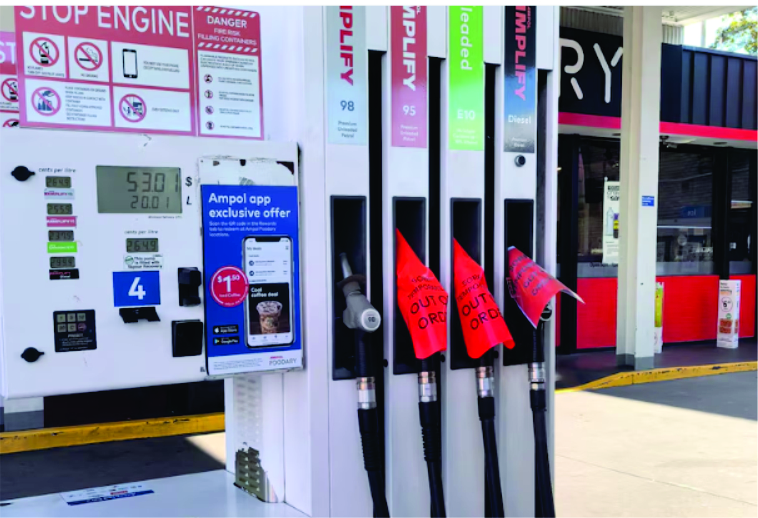
    INTERNATIONAL (NPA) — March 24, 2026 — Australia has temporarily lowered its diesel standards for six months in a bid to ease nationwide fuel shortages, as hundreds of petrol stations report running out of key fuel types.

    Energy Minister Chris Bowen confirmed that the “flashpoint” for diesel has been reduced from 61.5 to 60.5 degrees Celsius, a move designed to expand supply options from international refiners in the United States, Canada, and Europe. He stressed that the adjustment would have no impact on engines or emissions, while giving Australian refineries greater flexibility to meet demand.

    The decision comes amid mounting pressure on fuel reserves following instability in global energy markets linked to the war in the Middle East. Bowen revealed that 20 per cent of the country’s fuel reserve has already been released, but six scheduled shipments for April were cancelled, forcing reliance on alternate sources.

    Latest figures show widespread shortages: in New South Wales, 164 stations are without diesel and 289 without at least one fuel type; Queensland has 55 stations without diesel and 35 without unleaded; Victoria reports 162 stations with outages; South Australia has 46 affected, while Western Australia and Tasmania report smaller disruptions. The Northern Territory and ACT remain unaffected, though flooding has impacted supply in some areas.

    Reports of informal rationing have emerged, with service stations limiting purchases or restricting jerry can refills. The government has urged Australians to buy only the fuel they need, while the opposition has launched a website, nofuelhere.com.au, to collect community reports of shortages.

    Shadow ministers have called for biofuels to be prioritised as a backup supply, while truck drivers are set to receive new protections under amendments to the Fair Work Act to shield them from rising costs.

  • Governor Umo Eno inspects Victor Attah Airport upgrade, driving Uyo toward West Africa’s emerging aviation hub

    Governor Umo Eno inspects Victor Attah Airport upgrade, driving Uyo toward West Africa’s emerging aviation hub

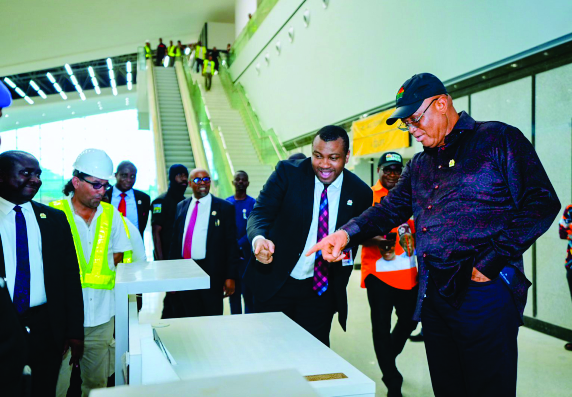
    UYO, NIGERIA (NPA) — March 24, 2026 — Pastor Umo Eno, Governor of Akwa Ibom State in Southern Nigeria, has inspected the ongoing remodelling and upgrade works at the Victor Attah International Airport, which is being prepared to commence international flight operations.

    Following the tour, Governor Eno expressed satisfaction with the steady progress achieved by the contractors. He noted: “We are putting all critical requirements of the Nigeria Civil Aviation Authority in place to ensure a smooth and successful take-off. While a few gaps have been identified, steps are already being taken to address them and fast-track completion.”

    The governor commended the contractors for their diligence and praised the officials of the state-owned airline, Ibom Air, for their strategic contributions. He described the project as a landmark effort in transforming Victor Attah International Airport into a major aviation hub in West Africa.

    Governor Eno further urged the Ibom Air team to continue deploying their expertise as the state works toward positioning the airport as a regional aviation powerhouse, emphasising that the benefits will extend beyond Akwa Ibom to the wider subregion.

  • EU announces €288m grant to Nigeria’s healthcare, agriculture, and digital sectors

    EU announces €288m grant to Nigeria’s healthcare, agriculture, and digital sectors

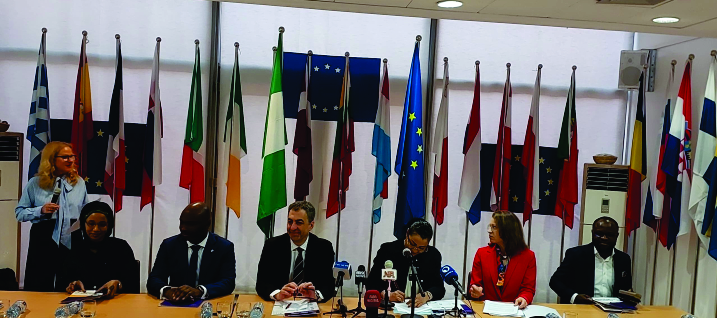
    ABUJA, NIGERIA (Agency Report) — March 24, 2026 — The European Union (EU) delegation to Nigeria and ECOWAS has announced €288 million in support for Nigeria’s healthcare, agriculture, finance, migration, climate, and digital public infrastructure sectors.

    The announcement was made at the EU-Nigeria Ministerial Conference in Abuja under the EU-Nigeria Partnership. Stefano Signore, Director-General for International Partnerships at the European Commission, said the project represents accelerated investment under the EU’s Global Gateway Strategy. He noted that health and agriculture are priorities, aimed at improving standards, infrastructure, local manufacturing, and inclusion. He also emphasised stronger cooperation on sustainable migration, providing better life options for returnee migrants.

    Minister of Budget and Economic Planning, Abubakar Bagudu, said the initiative builds on the 2023 EU-Nigeria Strategic Dialogue, which launched the EU’s Global Gateway Strategy in Nigeria. Bagudu described the partnership as a deepening of ties anchored on mutual respect, shared prosperity, and sustainable investment. Represented by Minister of State Doris Anite-Uzoka, he highlighted reforms under President Bola Tinubu to stabilise the economy, strengthen fiscal sustainability, and create an enabling environment for private-sector growth.

    Bank of Industry (BoI) CEO Olasupo Olusi said the partnership with the European Investment Bank channels long-term financing into healthcare and agriculture, central to Tinubu’s agenda for resilience and inclusive growth. Finland’s Under Secretary of State for Foreign Trade, Jarno Syrjaia, announced Finland’s lead role in strengthening Nigeria’s digital public services and training three million technical talents. Finland’s HAUS and Estonia’s ESTDEV will implement the initiative, bringing European expertise in digital government and innovation.

    Uche Amaonwu, Country Director of the Gates Foundation, stressed the importance of supporting health manufacturing. He praised the BoI and PVAC for mobilising financing facilities to meet the needs of Nigerian health manufacturers.

    Breakdown of the €288m package includes: €23m for digital infrastructure, €108m in grants and loans to government, €50m for healthcare manufacturing, €5m for health and nutrition training, €85m for agribusiness lending, €1m for climate/agriculture expertise, and €16m for migration governance.

    The initiative underscores a modern partnership focused on shared prosperity, sustainable investment, and resilience.

  • Rising debt forces 3.4 billion to spend more on loans than health or education

    Rising debt forces 3.4 billion to spend more on loans than health or education

    INTERNATIONAL (NPA) — March 23, 2026 — Calls for a fundamental shift in global economic governance dominated discussions at the Impact Exchange in Geneva, Switzerland, where representatives from nearly 90 Member States, UN agencies, civil society, and experts gathered to advance a “Human Rights Economy.”

    The event, organised by UN Human Rights and the Universal Rights Group with support from the Friedrich Naumann Foundation, came amid warnings of rising inequality, surging debt, and austerity measures that could affect 85 per cent of the world’s population. “Austerity could slash investments in social protection, health, education, and the environment,” cautioned Nada Al‑Nashif, UN Deputy High Commissioner for Human Rights.

    Speakers stressed that economic growth without access to healthcare, education, clean water, decent work, and a healthy environment risks deepening divides. The Human Rights Economy framework, they argued, prioritises people and the planet in fiscal choices, moving beyond GDP as the sole measure of progress.

    Claudia Fuentes Julio, Chile’s Permanent Representative and Vice President of the Human Rights Council, underscored how inequality erodes social cohesion and urged innovative strategies to strengthen democracies. Chile’s reforms include a universal guaranteed pension, free public health services, and gender‑responsive budgeting.

    From The Gambia, Cherno Marenah highlighted people‑centred budgeting and the removal of VAT on sanitary products, while Jawad Ali of Pakistan emphasised constitutional commitments to uplift marginalised communities. Spain’s representative, Miryam Naveiras, pointed to progressive taxation and the Sevilla Declaration as a roadmap for debt relief and climate‑sensitive economic planning.

    South Africa’s Mxolisi Nkosi called for a fairer global financial architecture, stressing that development is a right, not a privilege. Portugal and Malaysia echoed the need for reforms in taxation, trade, and education, while civil society voices urged the adoption of metrics that reflect well‑being, equality, and sustainability.

    Throughout the Exchange, participants agreed that even in tight fiscal times, progress is possible when human rights guide economic choices. OHCHR announced the expansion of its ESCR Knowledge Hub, showcasing promising practices from 2020–2024 to help countries operationalise the Human Rights Economy.

    The message was clear: systemic reform rooted in human rights is essential to confront inequality and achieve the 2030 Agenda.

  • Governor Mbah showcases Enugu’s investment potential to UK investors

    Governor Mbah showcases Enugu’s investment potential to UK investors

    LAGOS, NIGERIA (NPA) — March 23, 2026 — The Governor of Enugu State, Dr Peter Ndubuisi Mbah, has unveiled the state’s vast and profitable investment opportunities to investors in the United Kingdom.

    Highlighting sectors such as energy, infrastructure, healthcare, agriculture, technology, education, housing, and tourism, Mbah emphasised that “Enugu is open for business” under his administration’s “Tomorrow is Here” agenda. He noted that the state is building a private sector-driven economy anchored on ease of doing business, infrastructure expansion, and strong institutional frameworks that protect investments.

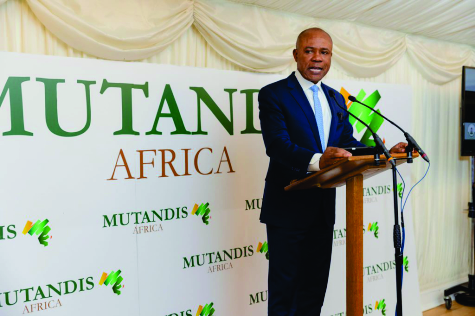
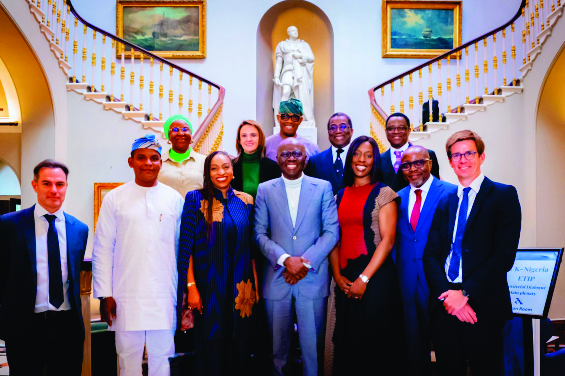
    Speaking at the UK–Nigeria Project Agglomeration Compact Dinner held at the House of Lords, London, on the sidelines of President Tinubu’s state visit, Mbah described the engagement as a platform to present Enugu as a credible investment destination. The session was convened by Mutandis Africa.

    “We highlighted our ongoing reforms and a strong pipeline of bankable opportunities across key sectors,” Mbah said, reaffirming his administration’s commitment to sustainable growth.

    Since assuming office, Governor Mbah has pursued ambitious projects, including the Enugu Air project, smart schools, innovation hubs, and infrastructure expansion. In February 2025, he commissioned a $20 million Haier Group factory in Enugu, underscoring his drive for industrialisation.

    Mbah’s broader vision is to transform Enugu into a leading hub for business, tourism, and quality living, with a target of raising the state’s Gross Domestic Product (GDP) from $4.4 billion to at least $30 billion within 4 to 8 years.

  • SASSA releases 2026/27 social grant payment dates

    SASSA releases 2026/27 social grant payment dates

    AFRICA (NPA) — March 23, 2026 — The South African Social Security Agency (SASSA) has released the official payment schedule for social grants for the 2026/2027 financial year, giving beneficiaries clarity on when to expect monthly payments.

    In a statement on Monday, the agency said the schedule follows approval by the National Treasury on March 20. For April, older persons will be paid on 2 April, disability grant beneficiaries on 7 April, and children’s grant recipients on 8 April. In May, older persons will receive grants on 5 May, disability grants on 6 May, and children’s grants on 7 May.

    “The principle for determining payment dates is to ensure grants are paid early in the month, staggered over three days. In most months, the old age grant is paid on the 2nd, disability on the 3rd, and children’s grants on the 4th,” SASSA said.

    To ensure smooth functioning of the National Payment System, the agency avoids payments on the 1st of the month, Mondays, weekends, or directly after holidays. If a date falls on a weekend or public holiday, payment will move to the next working day.

    As announced by the Minister of Finance in his Budget Speech, social grants will increase from April:

    • Older Persons, Disability, and Care Dependency Grants rise by R80 to R2,400.
    • War Veterans Grant rises by R80 to R2,420.
    • Foster Child Grant rises by R40 to R1,290.
    • Child Support Grant and Grant-In-Aid rise by R20 to R580.

    SASSA reiterated its commitment to timely payments and urged beneficiaries who experience delays to visit their nearest local office for assistance. Full payment dates are available on the agency’s website. – SAnews.gov.za.

  • Sanwo-Olu seals deal to revolutionize digital learning in Lagos schools

    Sanwo-Olu seals deal to revolutionize digital learning in Lagos schools

    LAGOS, NIGERIA (NPA) — March 23, 2026 — Lagos State Governor Babajide Sanwo-Olu has announced a groundbreaking development: the state has signed a Memorandum of Understanding with Estar, an organization specializing in digital learning, to introduce modern platforms and infrastructure into public primary and secondary schools.

    According to the governor, the partnership will provide Lagos students with curriculum-based tools designed to strengthen critical thinking, communication, decision-making, leadership, and AI skills. It will also enhance reading, comprehension, confidence, and classroom participation.

    With the agreement now in motion, the state has begun investing in teacher training to ensure educators can effectively use the new tools and deliver more engaging lessons. The initiative is aimed at preparing students for the future while improving learning outcomes across the board.

    The introduction of these advanced learning and teaching aids marks another first for Lagos State, which continues to lead in innovation and the application of technology to social and economic development in Nigeria.