Category: Africa

  • Customs Seize Four Live Pangolins in Ogun

    Customs Seize Four Live Pangolins in Ogun

    The Nigeria Customs Service (NCS), Ogun 1 Area Command, Idiroko, says it intercepted four live Pangolins, an endangered species, along the Yemoamota-Abule-Igboora axis of the state.

    The Deputy Superintendent of NCS, Chado Zakari, also the Command’s Spokesperson, disclosed this in a statement made available to newsmen on Saturday in Ota.

    Zakari explained that the seizure underscored the service’s unwavering commitment to the Convention on International Trade in Endangered Species of Wild Fauna and Flora (CITES).

    According to him, at about 3.00 a.m. on Thursday, a patrol team acting on credible intelligence intercepted a motorcycle in the Yemoamota-Abule-Igboora, and Ebute Igboora axis of the command.

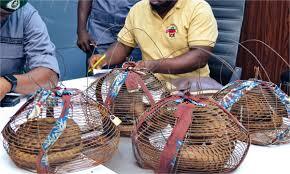
    “Upon inspection, officers discovered four pangolins confined in wire mesh cages and concealed within a sack.

    “The sophisticated nature of the packaging suggests the involvement of an organised smuggling syndicate.

    “To evade arrest, the suspects abandoned their motorcycle and the endangered species, vanishing into the thick terrain as the evening fog rolled in,” he said.

    Zakari said that prioritising the animals’ welfare after the seizure, the Command officially transferred the pangolins to the Wildlife Conservation Centre on Feb. 13, 2026.

    He said that the handover was conducted by Assistant Comptroller Tajjudeen Bello (Acting Deputy Comptroller for Administration), on behalf of the Acting Customs Area Comptroller, Oladapo Afeni.

    The area comptroller noted that the officers acted with remarkable courage and professionalism throughout the covert operations.

    The comptroller reiterated the command’s commitment to be steadfast in its vigilance against trans-border crime and to collaborate with its partners to eliminate the illegal trade in endangered species.

    Afeni issued a stern warning to smugglers and traffickers of endangered wildlife, urging them to desist from the act.

    He emphasised that the command remained ‘battle-ready’ and fully equipped to track down and apprehend anyone undermining the law.
  • African Union Welcomes DRC–AFC/M23 Peace Agreement, Urges Implementation

    African Union Welcomes DRC–AFC/M23 Peace Agreement, Urges Implementation

    ADDIS ABABA, ETHIOPIA — The African Union Commission has welcomed the peace agreement signed on 3 February 2025 in Doha between the Government of the Democratic Republic of the Congo (DRC) and the Alliance Fleuve Congo/M23 (AFC/M23). AU Commission Chairperson H.E. Mahmoud Ali Youssouf described the accord as “an important step” toward de-escalating hostilities and restoring peace and security in eastern DRC.

    In a statement issued on 12 February 2026, the Chairperson commended the parties’ commitment to peace, urging them to respect the “mutually agreed ceasefire mechanism” as a means of building trust and protecting civilian populations. He emphasised that the establishment of a clear monitoring framework is essential to ensure compliance and foster confidence between the parties.

    The African Union expressed gratitude to the State of Qatar and the United States for their efforts in facilitating the agreement, noting that the initiative aligns with the AU-led mediation process under the leadership of H.E. Faure Essozimna Gnassingbé, President of the Council of Ministers of the Republic of Togo and AU-designated Lead Mediator on eastern DRC, supported by the AU Panel of Facilitators.

    The AU also acknowledged the role of regional organisations, including the International Conference on the Great Lakes Region, in operationalising the Expanded Joint Verification Mechanism (EJVM+) to support the permanent ceasefire.

    The conflict between the DRC and M23 rebels has persisted since 2009, rooted in ethnic tensions, unfulfilled peace agreements, and regional rivalries. M23, formed by former Congolese army members, accuses the government of failing to honour commitments related to political representation, protection of Tutsi communities, and reintegration benefits. The group demands greater autonomy, security guarantees, and political inclusion. The DRC government, however, views M23 as an illegitimate armed movement backed by external actors, particularly Rwanda, and seeks to reassert state authority, safeguard civilians, and preserve territorial integrity.

    The AU Chairperson underscored that the Doha agreement represents a significant confidence-building measure. He encouraged both parties to fully implement the agreed Terms of Reference and remain engaged in ongoing political and security processes. The African Union Commission reaffirmed its readiness to support the parties, in collaboration with regional mechanisms, to advance a permanent ceasefire, lasting peace, reconciliation, and stability in the region.

  • INEC Releases Timetable for 2027 General Elections, Vows Strict Enforcement of Electoral Laws

    INEC Releases Timetable for 2027 General Elections, Vows Strict Enforcement of Electoral Laws

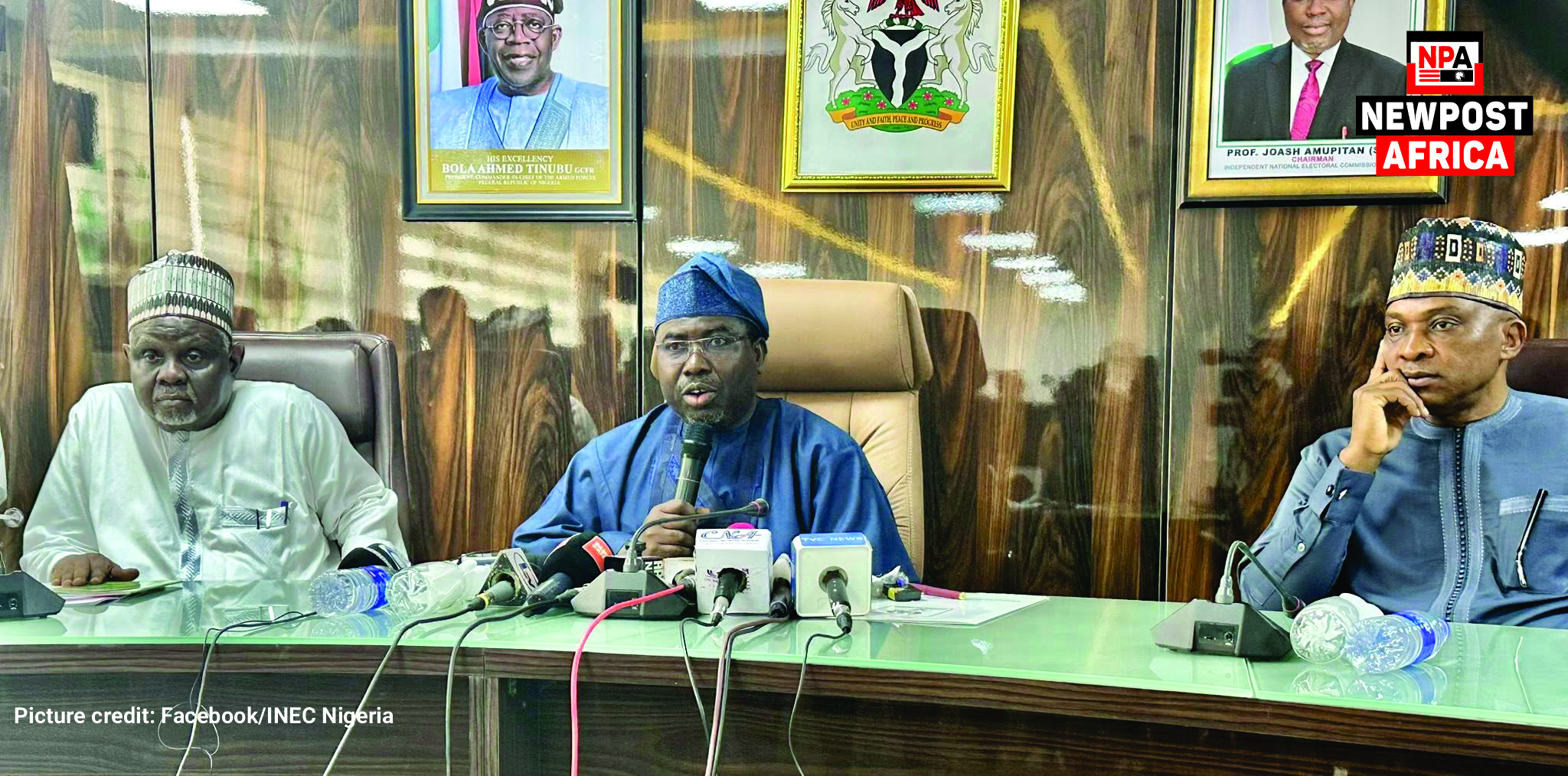
    ABUJA, NIGERIA — The Independent National Electoral Commission (INEC), Nigeria’s apex electoral body, has released the official timetable for the 2027 general elections. In a statement issued on Friday, the Commission announced that the presidential and National Assembly elections will take place on Saturday, February 20, 2027, marking the start of the electoral cycle in Africa’s largest democracy and leading oil producer.

    INEC Chairman, Prof. Joash Ojo Amupitan, described the announcement as “a significant milestone in our democratic journey and a constitutional obligation aimed at consolidating Nigeria’s democracy.”

    According to the timetable, the Governorship and State Houses of Assembly elections are scheduled for Saturday, March 6, 2027. Prof. Amupitan emphasized that the notice was issued in line with constitutional provisions, which require publication of election dates not later than 360 days before polling.

    “The timely announcement of the election date allows political parties, civil society organisations, and the electorate to prepare adequately,” he said.

    The INEC Chairman also welcomed ongoing amendments to the Electoral Act, 2022, currently under consideration at the National Assembly, noting that such reforms would strengthen Nigeria’s electoral framework.

    Under the released timetable, political parties are expected to:

    • Conduct primaries within the statutory period.
    • Submit nomination forms within the approved window.
    • Commence campaigns as provided by law, ending 24 hours before Election Day.

    Prof. Amupitan warned that the Commission would strictly enforce compliance with electoral laws and timelines, reiterating INEC’s commitment to independence and neutrality.

  • Mbah Hosts Chartered Institute of Taxation, Vows to Convert Revenue into Visible Development

    Mbah Hosts Chartered Institute of Taxation, Vows to Convert Revenue into Visible Development

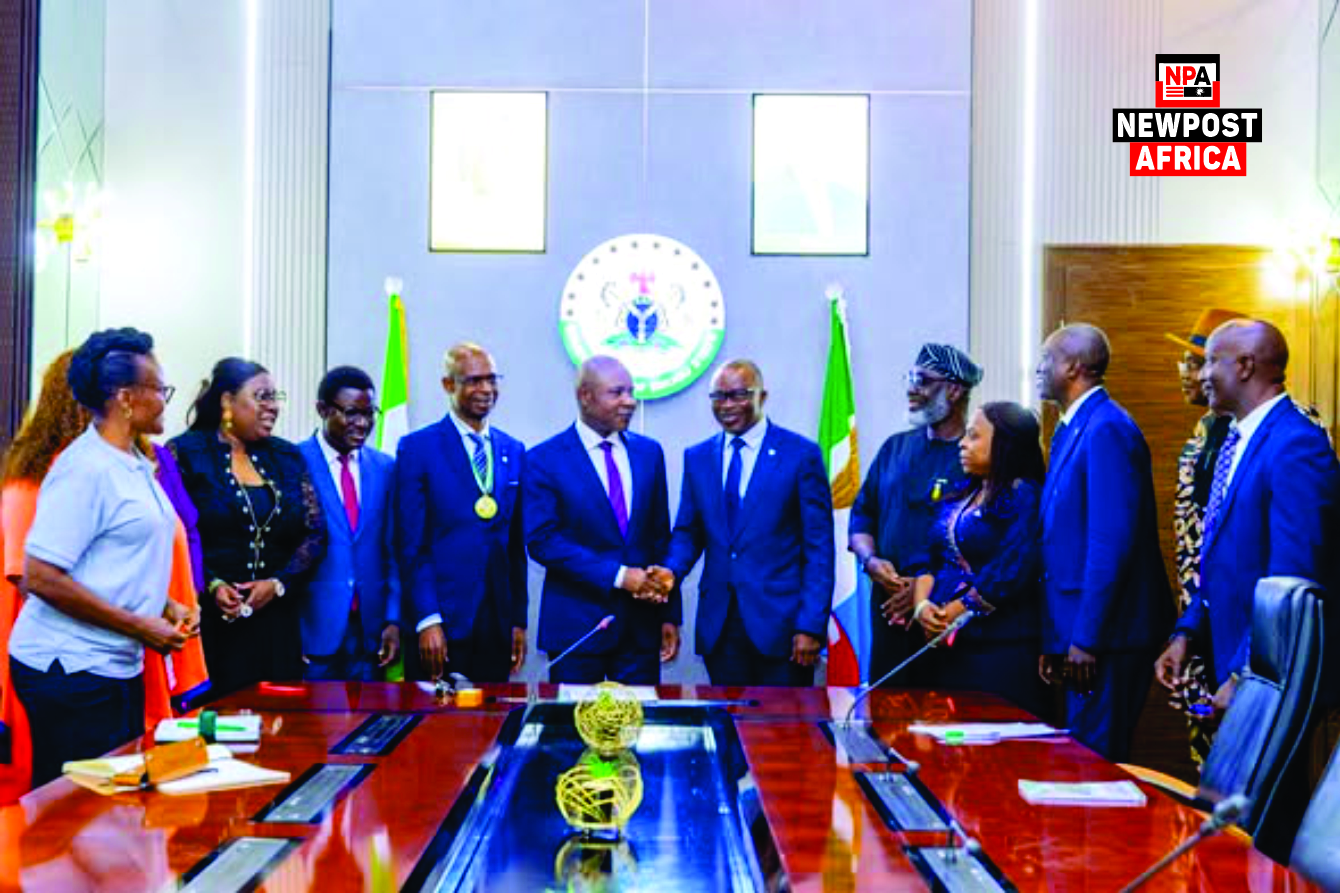
    ENUGU, NIGERIA: Governor Peter Mbah of Enugu State has reaffirmed his administration’s readiness to collaborate with the Chartered Institute of Taxation of Nigeria (CITN) in driving the effective implementation of the recently introduced Tax Reform Acts by the federal government.

    Hosting the CITN leadership, led by its president, Innocent C. Ohagwa, at the Government House, Enugu, on Thursday, the governor emphasised the importance of ensuring that the new tax laws are fully operational in the state.

    The visit formed part of the institute’s nationwide sensitisation programme aimed at educating citizens on the new tax reform policies. The South-East sensitisation exercise was jointly organised by CITN and the Enugu State Internal Revenue Service.

    According to Governor Mbah, “Strengthening our tax system is about fairness, accountability, and building a state that works for everyone.”

    Between 2023 and 2025, Enugu State’s internally generated revenue (IGR) witnessed unprecedented growth. In 2023, the state recorded about ₦37.4 billion, which rose sharply to ₦180.5 billion in 2024 following reforms that expanded the tax net and introduced technology-driven revenue collection. By 2025, the figure had climbed to ₦406.8 billion, representing a 125% increase from the previous year and achieving 80% of the ₦509.9 billion target set for that fiscal year. This remarkable turnaround was largely driven by non-tax revenue sources and structural reforms aimed at building fiscal resilience and sustainability.

    Governor Mbah reiterated his commitment to transparency and innovation in revenue management, stating: “We remain committed to a transparent, technology-driven revenue system that eliminates leakages, broadens the tax base fairly, and converts revenue into visible development for our people.”

  • Maureen Badejo vs. Daniel Olukoya: Sowore Accuses Police of Collusion

    Maureen Badejo vs. Daniel Olukoya: Sowore Accuses Police of Collusion

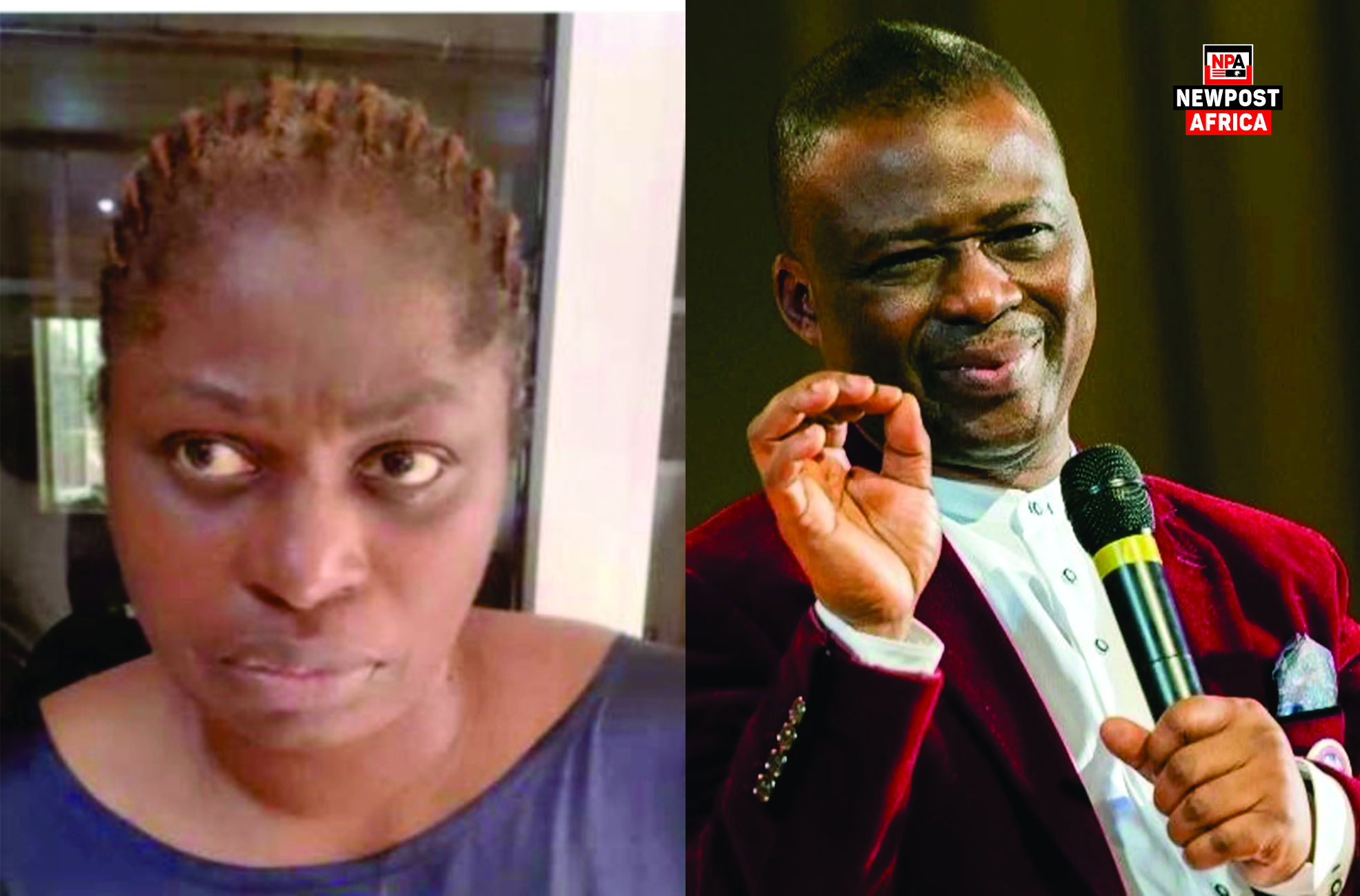
    LAGOS, NIGERIA: Nigerian human rights activist and #RevolutionNow convener, Omoyele Sowore, has accused the police of colluding with Dr Daniel Olukoya, founder and General Overseer of the Mountain of Fire and Miracles Ministries (MFM), in the detention and trial of UK-based blogger Maureen Badejo.

    In a post on his verified Facebook page, Sowore described Badejo’s continued detention and delays in bail processing as “persecution, abuse of office, and a coordinated scheme between the police and a powerful General Overseer to unlawfully silence her.” He alleged that police officials had sought a 14-day detention warrant, despite the charges being outside the jurisdiction of a magistrate’s court, and accused them of employing the controversial “holding charge” tactic to prolong her custody.

    Sowore further claimed that while a magistrate granted Badejo bail, police manoeuvred to shift proceedings to the Federal High Court, where the case was assigned to Justice Aluko but stalled due to bureaucratic delays.

    The broader case stems from allegations of defamation against Badejo, who was found liable by the UK High Court in 2021 and ordered to pay £100,000 in damages to Olukoya and his wife. Her appeal was dismissed in 2026. In Nigeria, she faces parallel proceedings, where she was granted bail of ₦10 million.

    The controversy underscores growing concerns about freedom of expression, judicial integrity, and the use of defamation laws by powerful figures to protect reputations.

  • Dangote Refinery Achieves 650,000 bpd Capacity, Becomes World’s Largest

    Dangote Refinery Achieves 650,000 bpd Capacity, Becomes World’s Largest

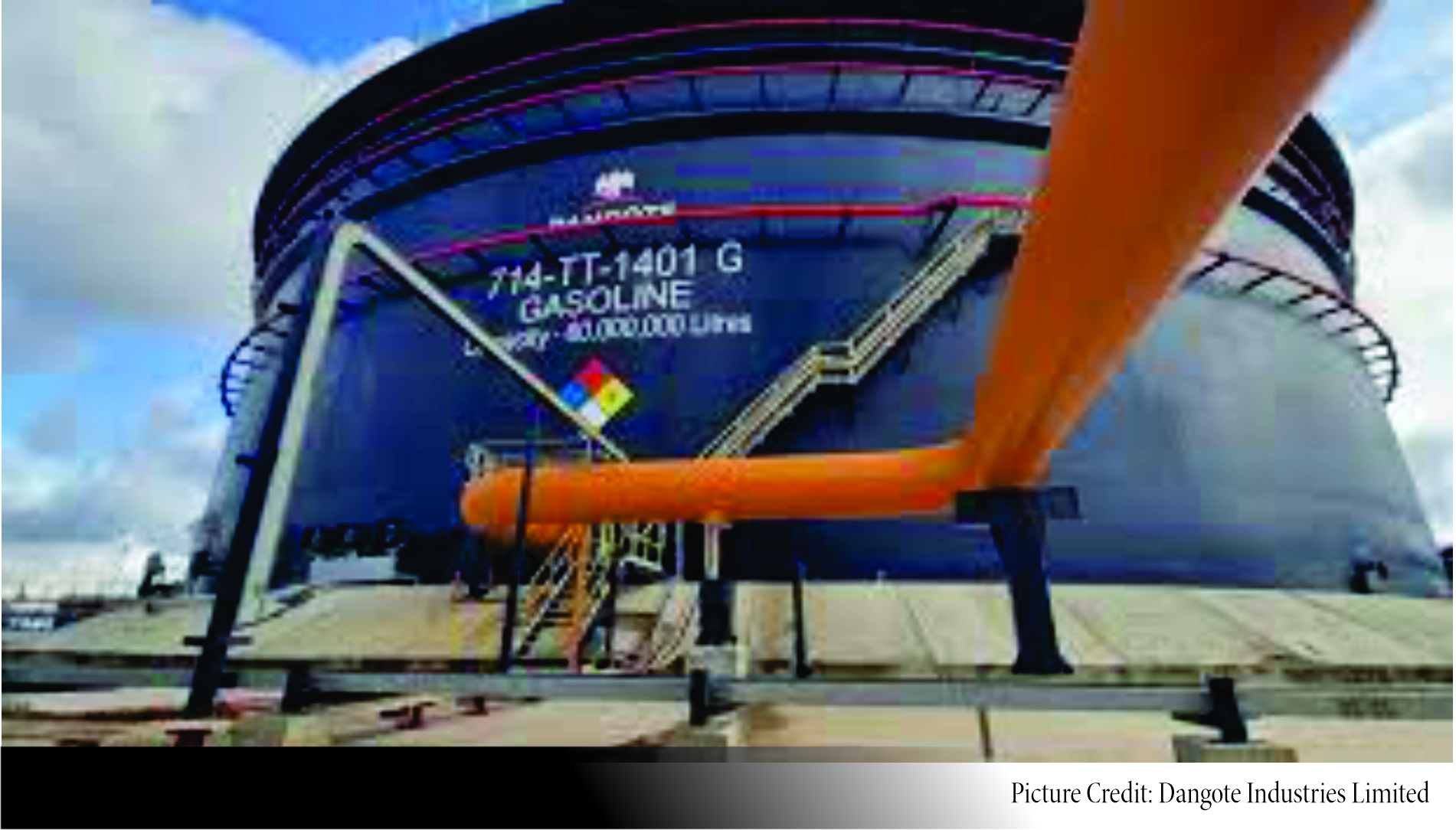
    LAGOS, NIGERIA: The Dangote Refinery has announced a major milestone in Nigeria’s quest for energy security, confirming that it has reached full operational capacity of 650,000 barrels per day (bpd). With this achievement, the Lagos-based facility is now recognised as the world’s largest oil refinery.

    In a statement released Wednesday, July 11, 2026, the company said the milestone was attained after the refinery successfully scaled up to full operations.

    The Dangote Refinery, conceived in 2013 by Nigerian industrialist Aliko Dangote with initial financing of $3.3 billion, was designed to reduce Nigeria’s dependence on imported petroleum products. Construction began in 2016 at the Lekki Free Trade Zone near Lagos, with total investment eventually exceeding $19 billion.

    Built as the world’s largest single-train refinery, the project faced years of delays due to financing challenges, equipment logistics, and regulatory hurdles. In 2021, the Nigerian National Petroleum Company (NNPC) acquired a 20% stake to secure crude supply agreements. By December 2023, the refinery received its first crude shipment, and in May 2023 it was officially inaugurated. Operations commenced in early 2024, marking a turning point in Nigeria’s energy sector.

    With its current capacity, the refinery is expected to meet Nigeria’s domestic fuel demand and export surplus products, positioning the country as a key player in global energy markets.

    PICTURE CREDIT: Dangote Industries Limited

  • AU 48th Ordinary Session Calls for Unity, Sustainable Water Management, and Accelerated Continental Integration

    AU 48th Ordinary Session Calls for Unity, Sustainable Water Management, and Accelerated Continental Integration

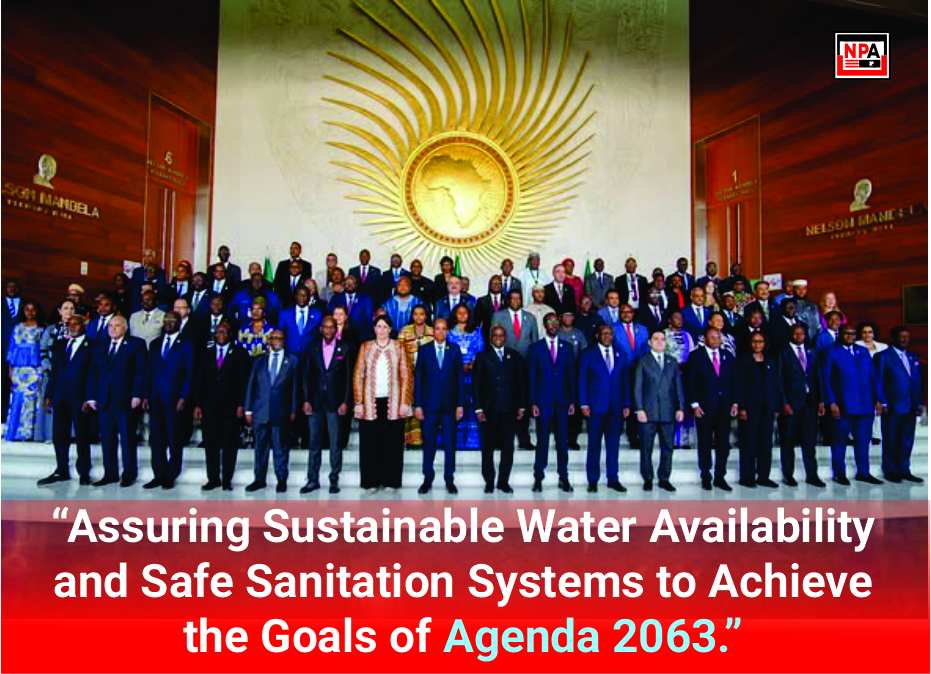
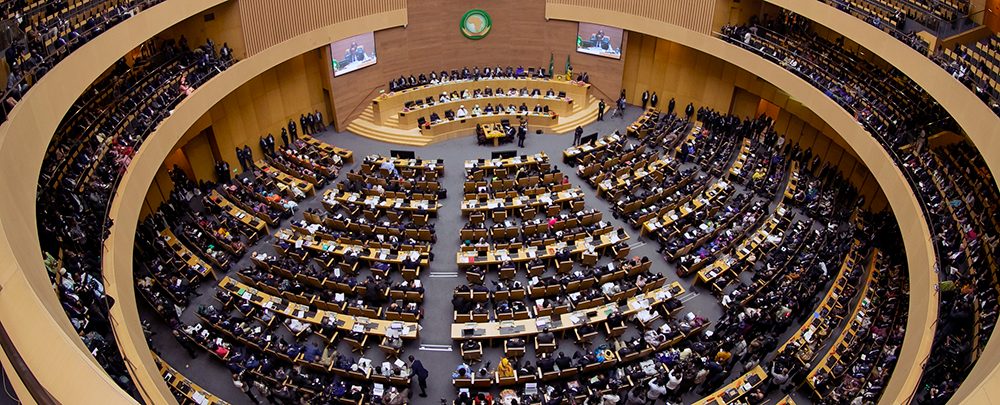
    ADDIS ABABA, ETHIOPIA: The African Union Executive Council has opened its 48th Ordinary Session in Addis Ababa with a strong call for unity among member states, sustainable water management, and accelerated continental integration. The meeting comes against the backdrop of political instability and leadership changes across several African countries, as well as renewed debates over regional power blocs.

    The two-day session, which began Wednesday at the AU headquarters, is being held under the Union’s 2026 theme: “Assuring Sustainable Water Availability and Safe Sanitation Systems to Achieve the Goals of Agenda 2063.” The theme reflects growing concerns over water security, particularly disputes along the River Nile, where Ethiopia’s recent inauguration of a major hydropower dam has raised tensions with downstream nations such as Egypt.

    AU Commission Chairperson H.E. Mahmoud Ali Youssouf underscored the importance of water as a collective resource, urging member states to view it as a tool for peace and cooperation amid climate change. He also expressed concern over political instability, unconstitutional changes of government, and persistent security threats in the Sahel and Horn of Africa, noting both progress and setbacks in countries such as Gabon, Guinea, Madagascar, and Guinea-Bissau.

    On continental integration, Youssouf highlighted the African Continental Free Trade Area (AfCFTA) as a cornerstone for economic transformation. He called for innovative financing mechanisms and greater involvement of specialized agencies, the private sector, civil society, and philanthropic foundations. “More than ever, the continent needs to capitalize on its instruments to boost the momentum of development and integration, reflecting on innovative sources of financing and involving all actors, however marginal they may seem,” he said.

    According to the Council, the 48th Ordinary Session reaffirms the AU’s commitment to strengthening governance, advancing peace and security, and accelerating the implementation of Africa’s shared development agenda under Agenda 2063.

  • South Sudan capital under heavy gunfire

    South Sudan capital under heavy gunfire

    H

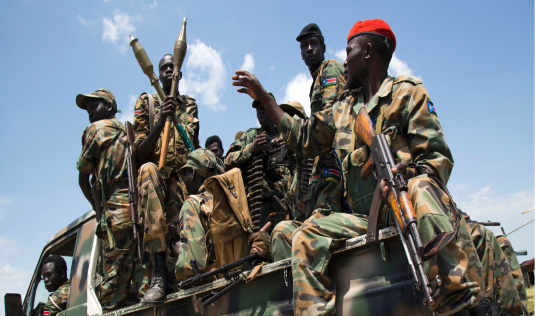
    eavy gunfire erupted in South Sudan’s capital Juba on Thursday evening after security forces moved to arrest the former head of the intelligence service, according to Reuters reporters and an alert sent to United Nations staff.

    The gunfire began around 7 p.m. local time (1700 GMT) and continued sporadically for more than an hour before dying down, Reuters reporters said.

    A U.N. safety alert to staff members in Juba, seen by Reuters, said the shooting was related to the arrest of the former head of the National Security Service (NSS). It urged U.N. staff to shelter in place.

    In early October, President Salva Kiir dismissed Akol Koor Kuc, who had led the NSS since the country’s independence from Sudan in 2011, and appointed a close ally to replace him.

    Army spokesperson Major General Lul Ruai Koang said Akol Kuur had not been arrested and had stayed in his house throughout the shooting. Koang said he would address reporters later on Friday after a meeting with other security officials.

    Analysts said the sacking of Akol Koor reflected a power struggle at the highest levels of government. It came weeks after the transitional government that Kiir leads announced that elections expected in December would be postponed for a second time.

    Rival factions loyal to Kiir and First Vice President Riek Machar fought a civil war from 2013 to 2018 that resulted in hundreds of thousands of deaths.

    The two have governed together since then as part of a transitional government. There has been relative peace, but the opposing forces clash periodically in addition to frequent fighting among a patchwork of armed groups in rural areas.

    –Reuters

  • BIAFRA: Simon Ekpa’s Extradition Almost Impossible —Vince Onyekwelu

    BIAFRA: Simon Ekpa’s Extradition Almost Impossible —Vince Onyekwelu

    A

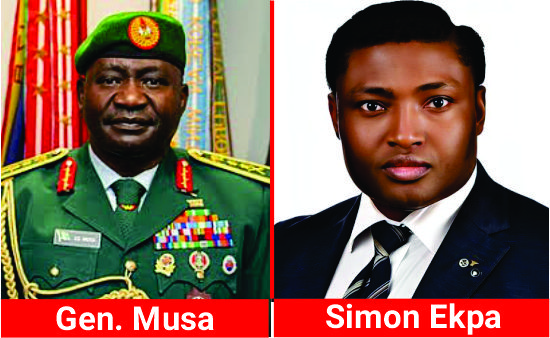
    former British Police Officer and National Security Risk Strategist has cautioned Nigeria not to be optimistic about the extradition of Simon Ekpa. This follows the raging media storm over his arrest by the Finish authorities, with the Nigeria military pushing for his extradition to face yet-to-be-calibrated criminal charges.

    Speaking on Arise News, on Friday, monitored by New Post Africa, Onyekwelu said he is not convinced that the extradition will happen soon because there is no treaty between Nigeria and the Scandinavian country in that aspect.

    “Professionally speaking, the Finnish Authorities have done their due diligence and they have every reasonable ground to arrest Mr Simon Ekpa,” he said.

    On what we determine if his extradition will happen or not, he opined that the matter is “now left for the court in Finland to now look into the request by the Chief of Defence Staff to extradite Simon Ekpa to Nigeria. Professionally speaking, the chances are possible to extradite Simon Ekpa. However, in my opinion, it is almost, almost impossible,” he reiterated.

    Further assessing the complexity of the situation, he stated that the case will go through the European Union Criminal Justice system. Because Ekpa is a citizen of the EU and will defend himself and the reason he is fighting for self-determination for Biafra.

    The security expert also accessed the human rights records of Nigeria, describing it as “nothing to boast about,” and cited instances of several alleged human rights abuses in the country and the latest alleged abuse of a couple by officers of the Nigeria military in the Nigeria’s capital, Abuja. All of which he said can weaken Ekpa’s extradition request.

    The man, Simon Ekpa, born on March 21, 1985, is a member of the ruling National Coalition Party of Finland. Since 2022, he and his Biafran Republic Government in Exile, which he serves as its Prime Minister, have actively propagated the restoration of the Biafran Republic from his base in Finland.

    In the last two years, following the arrest of Mazi Nnamdi Kanu, the leader of the Indigenous People of Biafra (IPOB) in Kenya and his detention at the Nigeria spy police facility in Abuja, Ekpa has taken the centre stage of the Biafran movement. Unlike Kanu, his approach to the struggle has been offensive. His sit at home orders has been of great concern to the authorities, who accused him of creating insecurity and destabilising the southeast region, which he denies.

  • 40 Killed In Sudan War Between Government and RSF Forces

    40 Killed In Sudan War Between Government and RSF Forces

    The latest killing is a reminder that the conflict in Sudan is far from over and a need for an urgent peaceful resolution.

    A suspected attack by the Rapid Support Forces (RSF), a Sudanese paramilitary force, has reportedly left 40 people dead, a medic told AFP from a central Sudan village.

    “All 40 people suffered direct gunshot wounds,” the medic from Wad Rawah Hospital, north of Wad Oshaib village in Al-Jazira State, who requested anonymity over safety concerns, said.

    “The attack resumed this morning,” one eyewitness told AFP by phone on Wednesday, adding that fighters were “looting property.

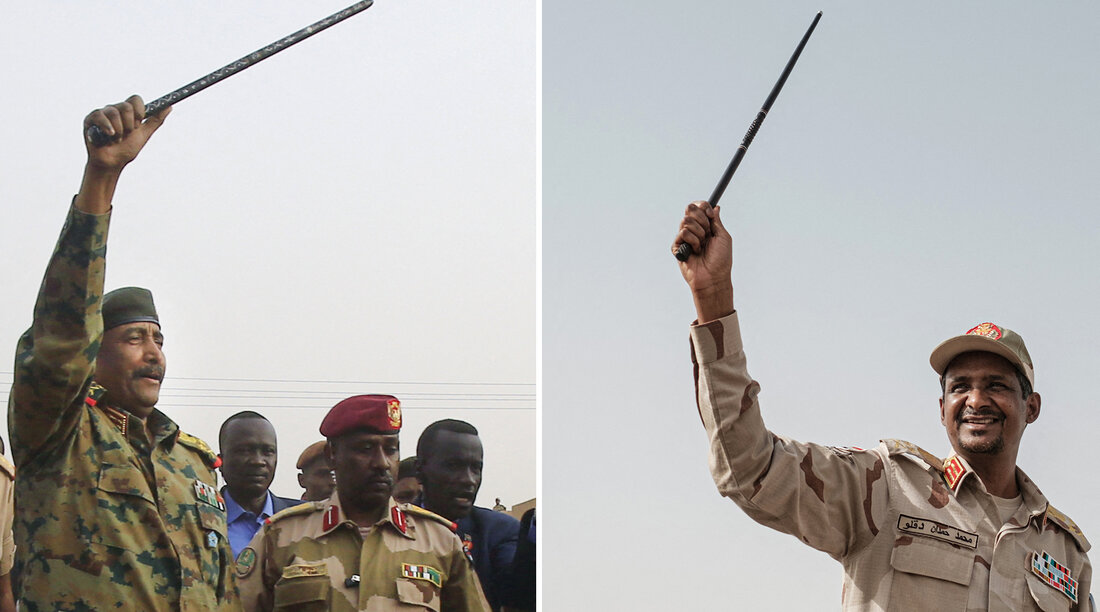
    The conflict between the Rapid Support Forces (RSF) and the Sudanese army stems from a power struggle that began in April 2023. The RSF, led by General Mohamed Hamdan Dagalo (also known as Hemedti), and the Sudanese army, led by General Abdel Fattah al-Burhan, have been vying for control over the country’s major institutions1.

    The fighting is primarily about control over the country’s political and military institutions, with both sides accusing each other of initiating the conflict.

    The conflict has caused a dire humanitarian crisis, with thousands of civilians killed and millions displaced. Hospitals and other critical infrastructure have been targeted, exacerbating the suffering of the people of Sudan.

    The international community, including the United States, has condemned the violence and called for a ceasefire. Efforts to mediate peace talks are ongoing, but the situation remains volatile and unpredictable.