Category: Africa

  • Museveni defends Uganda Sovereignty Bill, reaffirms commitment to free economy

    Museveni defends Uganda Sovereignty Bill, reaffirms commitment to free economy

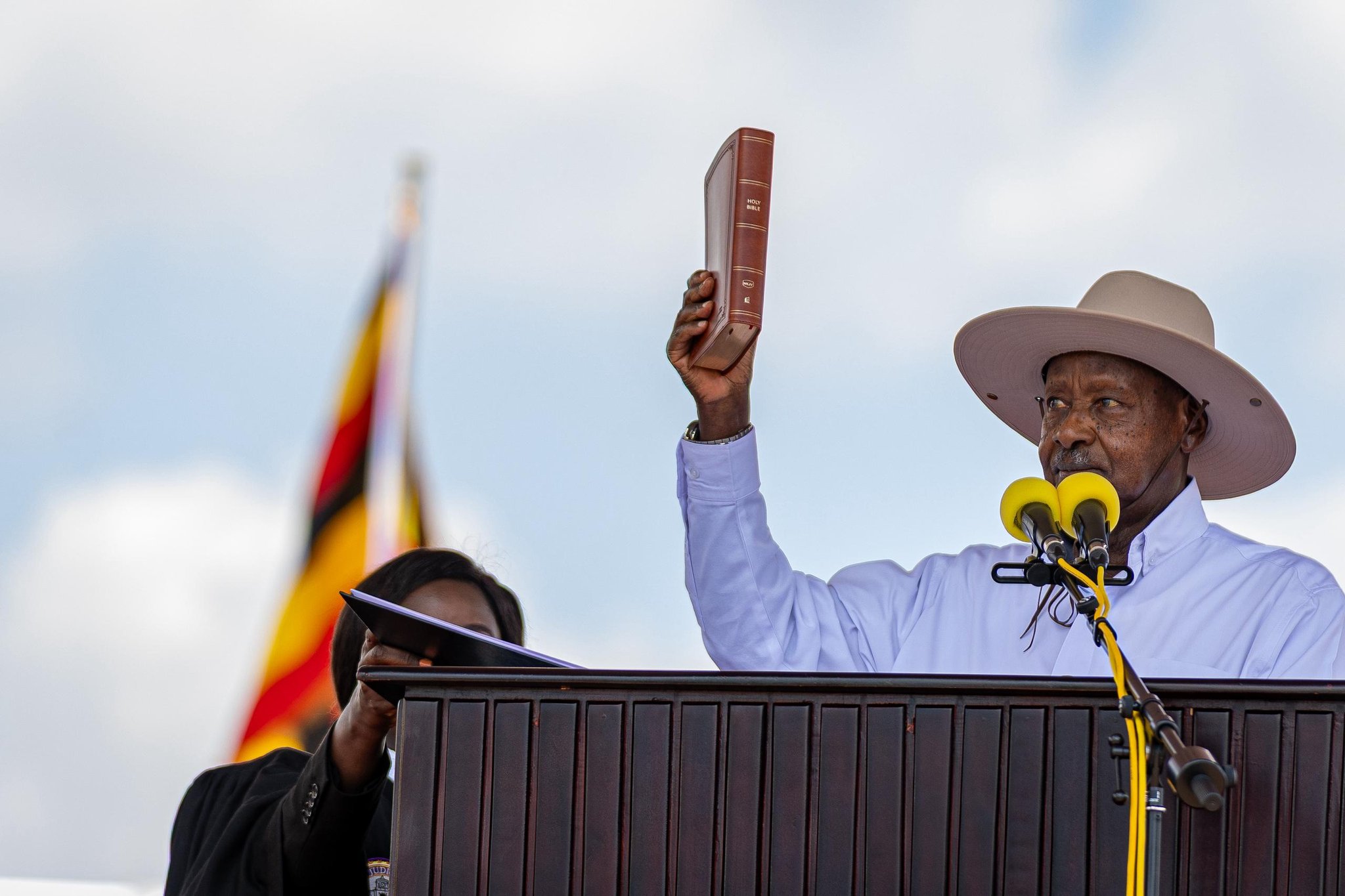
    KAMPALA, Uganda (NPA) — President Yoweri Kaguta Museveni has defended Uganda’s proposed Sovereignty Bill, insisting that the legislation is aimed solely at protecting the country’s independence in policy decision-making and not restricting economic freedoms, investments or legitimate financial transactions.

    In a statement released Thursday by the Government of Uganda, Museveni reiterated Uganda’s commitment to maintaining a free and open economy, stressing that there was no government policy preventing Ugandans or foreign investors from sending or receiving legally earned money anywhere in the world.

    “We run a free economy. Forex is bought and sold in privately run Forex bureaus,” Museveni said.

    “None of our policies says: do not send to Uganda or take out of Uganda money you have earned legally anywhere in the world,” he added.

    The Ugandan leader described private sector freedom as one of the pillars sustaining the country’s economic resilience and growth.

    “This is the strength of the Ugandan economy. The freedom of the private sector compensates for the obstructions of corrupt or non-patriotic public servants,” he stated.

    Clarifying the objective of the proposed Sovereignty Bill, Museveni said the legislation was designed to safeguard Uganda’s ability to independently determine its political, social, economic and diplomatic policies without foreign interference.

    “Sovereignty means: ‘Please, muteleke (leave us alone), so that we make our own decisions,’” the president said.

    “The Bill I initiated was about what we fought for — sovereignty in policy decision-making,” he added.

    Museveni also cautioned external actors against funding groups aimed at influencing Uganda’s national direction and domestic decisions. “Do not fund groups to influence our decisions as a country,” he warned.

    The president further emphasized that Uganda’s sovereignty would continue to be exercised constitutionally through democratic mechanisms including elections and referenda.

    Reflecting on Africa’s political history, Museveni noted that the continent’s struggle for independence was deliberate and hard-fought, stressing that political sovereignty also includes the freedom for nations to learn from their own decisions.

    “Independence means the right to make our own mistakes if necessary and learn from them,” he said.

    Museveni, however, assured stakeholders and investors that the proposed bill would be refined to avoid interference with private enterprise, remittances and lawful business operations.

    “The Bill will concentrate on the sovereignty of policy decision-making and not meander into areas of private enterprise or money transfers,” he stated.

    The president concluded by calling for international engagement based on positive example rather than coercion or manipulation. “Influence people by example and not by coercion or manipulation,” he said.

  • UN delegation trains Ghanaian peacekeepers in Abyei on information integrity, strategic communication

    UN delegation trains Ghanaian peacekeepers in Abyei on information integrity, strategic communication

    ATHONY, Sudan-South Sudan (NPA) — A delegation from United Nations Headquarters in New York has conducted a training programme on information integrity for personnel of the United Nations Interim Security Force for Abyei Ghana Battalion Four (GHANBATT 4), aimed at strengthening peacekeeping operations in the disputed Abyei region.

    According to a statement issued on April 30, 2026, by the Department of Public Relations of the Ghana Armed Forces, the training was held on Wednesday at the Battalion Headquarters in Sector South, Athony, in the disputed Abyei region between Sudan and South Sudan, which serves as the headquarters of Sector South for the United Nations Interim Security Force for Abyei (UNISFA) peacekeeping mission.

    The three-member UN delegation was led by Naomi Miyashita and focused on the role of information integrity in mandate implementation, as well as its implications for the safety and security of peacekeepers operating in Abyei.

    During the session, personnel were briefed on emerging trends within the UN peacekeeping environment, particularly the growing threats posed by misinformation, disinformation and hate speech within local communities.

    The delegation also outlined key elements of the UN’s information integrity policy, emphasizing the importance of adopting a multidisciplinary, proactive and people-centered approach to communication in conflict and post-conflict environments.

    Facilitators further equipped GHANBATT personnel with practical tools and response mechanisms for managing information-related risks and countering harmful narratives capable of undermining peacekeeping operations.

    The training additionally covered core principles of strategic communication, including accuracy, impartiality, operational security and consistency, which officials said were critical to maintaining credibility and public trust during peacekeeping missions.

    The session concluded with renewed emphasis on community engagement, with the UN delegation stressing that building trust and fostering open communication with local populations remain essential to improving mission effectiveness and sustaining peace in Abyei.

  • Eritrea expands outreach vaccination programme to reach remote, nomadic communities

    Eritrea expands outreach vaccination programme to reach remote, nomadic communities

    ASMARA, Eritrea (NPA) — World Health Organization has highlighted Eritrea’s expanding immunization outreach programme targeting hard-to-reach and nomadic communities in the country’s mountainous central region, where geographic isolation and seasonal migration have historically limited access to healthcare services.

    According to the WHO, Eritrea’s nomadic populations, particularly women and children, face heightened health risks including maternal mortality and immunization gaps due to mobility challenges, difficult terrain and cultural barriers.

    A 2020 Expanded Programme on Immunization assessment found that 18 of Eritrea’s 58 sub-regions faced significant physical barriers to vaccine access, including rocky and mountainous landscapes that complicated healthcare delivery.

    In response, Eritrean health authorities, with support from WHO, UNICEF, civil society groups and local health management teams, developed a nationwide strategy to improve routine immunization coverage among children under two years old, girls aged nine and women of childbearing age.

    The initiative involves the deployment of about 90 vaccinators and more than 200 community workers and supervisors operating alongside Eritrea’s “barefoot doctors” — frontline health workers serving remote rural communities.

    The barefoot doctor model, which originated in China in the 1960s, was adapted by Eritrea during and after the Eritrean War of Independence to provide basic medical and preventive healthcare services in underserved communities.

    “Our barefoot doctors make house calls to educate families about our vaccination efforts. They also escort children who have missed their appointments to health stations or guide our team to those in need,” said Milkias Negash.

    Health authorities say the outreach efforts have significantly improved immunization coverage nationwide, including in remote communities.

    According to official country data cited by WHO, Eritrea recorded vaccination coverage rates of 95 percent and 97 percent for all 13 antigens recommended for routine childhood immunization among children under 12 months and those aged between 24 and 35 months at the end of 2024 and 2025 respectively.

    The programme has also expanded access to maternal healthcare services, with 95 percent of caregivers reportedly receiving health education while a similar percentage of pregnant women and women of childbearing age received tetanus-diphtheria vaccinations.

    “The government’s programme shields our children from disease. They are healthier now, and for that we are grateful,” said Amna Omar Mohammed.

    Tedros Yehdego attributed the progress to strong government commitment and international support.

    “We also have partners in our country that are closely working with us, that is WHO and UNICEF. As a result of this joint work, the immunization coverage has increased at this time,” Yehdego said.

    Gavi, the Vaccine Alliance currently finances the annual vaccine costs for 12 vaccines procured through UNICEF’s supply division, while WHO funded operational costs for four rounds of intensified routine immunization campaigns in 2024 and 2025 through support from Gavi and the United Nations Central Emergency Relief Fund.

    WHO said its support also included technical assistance, development of outreach management protocols, planning tools, field guides, supervisory checklists and monitoring systems distributed across all regions of the country.

    “Every two months, we organize outreach activities to serve seven remote villages,” said Saidia Ibrahim Suleman.

    “While four of these can be accessed by vehicle, albeit with difficulty, the remaining three are only reachable on foot or by camel. Despite these challenges, we are ensuring that no child is left behind,” Suleman added.

    Healthcare workers involved in the programme say the initiative has also improved morale among frontline staff.

    “There’s no greater joy than knowing every child is protected,” said Daniel Haile. “Our ultimate goal is to ensure each child receives their vaccines, overcoming any obstacle in our path.”

  • South Africa steps up fight against illegal migration, advances SoNA commitments

    South Africa steps up fight against illegal migration, advances SoNA commitments

    PRETORIA, South Africa (NPA) — The South African government says it is delivering on commitments made in the 2026 State of the Nation Address (SoNA) to combat illegal immigration by strengthening border control and workplace compliance, as part of efforts to safeguard sovereignty, security, and the rule of law.

    According to a statement issued on April 29 by William Baloyi, the Deputy Government Spokesperson, the government reaffirmed its determination to combat illegal immigration, illicit trade, and fraudulent activities undermining revenue collection. Measures include tighter border controls, the introduction of an Electronic Travel Authorisation (ETA) system, and redevelopment of major land ports through strategic public‑private partnerships. Six key ports — Lebombo, Beitbridge, Oshoek, Kopfontein, Maseru Bridge, and Ficksburg — are slated for demolition and rebuilding to improve security and efficiency.

    Government disclosed that deportations have increased by 46%, with the Border Management Authority deporting 500,000 people since April 2023. It also announced plans to hire 10,000 additional permanent labour inspectors this year to strengthen enforcement of labour laws, combat exploitation, and ensure compliance, expanding the current workforce of about 2,300 inspectors.

    Officials emphasized that South Africa remains a peaceful and responsible member of the international community, guided by cooperation and mutual respect, but firmly committed to upholding the rule of law within its borders. Citizens were urged to report concerns about illegal immigration to law enforcement agencies and not to take the law into their own hands.

    The government said these reforms will modernise immigration management, protect national interests, and promote economic growth while maintaining social cohesion.

  • NIDCOM urges South Africa to protect Nigerians as xenophobic attacks worsen

    NIDCOM urges South Africa to protect Nigerians as xenophobic attacks worsen

    ABUJA, Nigeria (NPA) — The Nigerians in Diaspora Commission has urged the South African government to take immediate steps to protect Nigerian citizens and other black immigrants amid rising xenophobic attacks in parts of the country.

    In a press statement issued on April 29, 2026, and signed by its Chairman/CEO, Abike Dabiri-Erewa, the commission expressed deep concern over what it described as worsening persecution and intimidation of foreign nationals.

    “While many expected a de-escalation of tensions following earlier engagements between both governments, the situation on the ground is deteriorating,” Dabiri-Erewa said.

    According to the commission, reports indicate that pupils of Nigerian descent are increasingly afraid to attend school, while business owners are reluctant to open their shops due to fears of targeted attacks, looting and harassment. Community leaders have also documented fresh incidents of violence and intimidation within the last 72 hours.

    NIDCOM called on the Government of the Republic of South Africa to take urgent and visible measures to safeguard all foreign nationals, in line with international law and African Union protocols on free movement and human rights.

    The commission rejected what it described as the profiling and generalisation of Nigerians, stressing that criminality should not be linked to nationality.

    “Crime has no nationality. Any individual, regardless of origin, who commits an offence should be investigated and made to face the full penalty of South African law. However, collective punishment and blanket labelling of an entire nationality are unacceptable and dangerous,” the statement said.

    NIDCOM outlined key demands, including increased police presence in flashpoint communities, prompt arrest and prosecution of perpetrators of xenophobic violence, and the establishment of a joint Nigeria–South Africa community safety forum involving law enforcement, government officials and diaspora leaders.

    It also called for clear public messaging from South African authorities condemning xenophobia and discouraging stereotyping.

    The commission advised Nigerians in South Africa to remain law-abiding and avoid high-risk areas, particularly at night.

    NIDCOM said it is in contact with the Nigerian High Commission in Pretoria, the Consulate in Johannesburg, and the Ministry of Foreign Affairs to monitor the situation.

    While condemning the attacks, the commission commended the majority of South Africans who continue to coexist peacefully with other Africans, urging calm, restraint and respect for human life.

    It added that Nigeria will continue diplomatic engagement with South Africa to ensure the safety, dignity and rights of its citizens abroad.

  • Russia details April 25 Mali terror attacks, blames Europe and Ukraine for training militants

    Russia details April 25 Mali terror attacks, blames Europe and Ukraine for training militants

    MOSCOW, Russia (NPA) — Russia has presented an account of the challenges faced by its military personnel in Mali during the April 25, 2026 terrorist assault, when militants nearly overran the country in a coordinated attack. According to a statement issued by the Russian Ministry of Foreign Affairs on Tuesday via its Telegram channel, the Ministry of Defence reported that at around 5:30 a.m., illegal armed groups of Jama’at Nusrat al‑Islam wal‑Muslimin (JNIM) and the Azawad Liberation Front (FLA), under joint command, attempted to carry out an armed coup d’état in Mali.

    Four major populated areas — Bamako, Sevare, Gao, and Kidal — were attacked simultaneously by an estimated 12,000 fighters, reportedly trained with the involvement of Ukrainian and European mercenary instructors using Western‑made Stinger and Mistral MANPADS.

    Russia said in Bamako, militants attempted to seize key facilities, including the presidential palace. Mali’s Defence Minister was killed when a suicide vehicle‑borne explosive device detonated near his residence.

    It noted that units of Russia’s African Corps engaged the enemy forces in fierce fighting, inflicting heavy losses and forcing militants to abandon their plans. Russian forces carried out UAV airstrikes, helicopter sorties, and Su‑24 combat missions, destroying hundreds of militants, vehicles, and equipment. The Ministry reported that enemy losses amounted to more than 2,500 fighters, 102 vehicles, 152 motorcycles, and multiple mortars.

    The African Corps detachment in Kidal fought encircled for over 24 hours, repelling four massive attacks before withdrawing alongside Malian forces.

    Russia emphasized that its intervention prevented a coup d’état, preserved Mali’s legitimate government, and averted mass civilian casualties. Medical specialists are providing aid to wounded civilians, while Russian units continue reconnaissance and strikes against regrouping militant forces.

    The Ministry warned that the situation in Mali remains difficult, with militants regrouping and maintaining aggressive intentions.

    Newpost Africa reported earlier that the African Union, Ghana and Senegal condemned the terrorists’ attacks with the President of the Confederation of Sahel States, Ibrahim Traoré, issuing a communiqué denouncing it.

    Yesterday, Mali’s Prime Minister, General Abdoulaye Maïga, said in a press conference that the ultimate goal of the terrorists was to seize power by dismantling the institutions of the Republic and halting the Transition process. He noted, however, that this had failed, stressing that the country remains on the path of progress.

  • Uganda assures citizens of stable fuel supply, warns against hoarding

    Uganda assures citizens of stable fuel supply, warns against hoarding

    KAMPALA, Uganda (NPA) — The Government of Uganda has assured citizens that the country’s fuel supply remains stable, secure, and firmly under control.

    This assurance was given by Ruth Nankabirwa Ssentamu, Minister of Energy and Mineral Development, in a statement on Tuesday. She noted that Uganda’s fuel supply is managed through her ministry and the Uganda National Oil Company (UNOC), which is mandated to sustainably develop and manage the state’s commercial interests in the petroleum sector.

    Ssentamu said Uganda maintains robust stock levels and a strong import pipeline, with more than 385 million litres of fuel scheduled between May and mid‑June.

    She reminded Oil Marketing Companies (OMCs) that isolated station‑level stock‑outs are operational issues, not national shortages, warning that any OMC found hoarding fuel will have its license revoked.

    The minister reiterated that compliance with distribution guidelines, pricing discipline, and responsible stock management is mandatory. “Government will continue strict enforcement against hoarding, speculative pricing, and illicit trade to protect market stability,” she said.

  • US Embassy warns of possible terrorist movements in Bamako

    US Embassy warns of possible terrorist movements in Bamako

    BAMAKO, Mali (NPA) — The United States Embassy in Bamako has reported receiving information on possible terrorist movements within the capital, including reports of forced school closures.

    The mission urged US citizens to shelter in place and avoid unnecessary travel.

    Mali is still reeling from the April 25, 2026 terrorist attacks, in which senior military officer General Sadio Camara was killed alongside military and civilian victims during coordinated assaults across several localities.

    The Malian military continues to fight on multiple fronts to restore the country’s territorial integrity.

    The African Union, Ghana, Senegal, and the President of the Confederation of Sahel States, Ibrahim Traoré, issued a communiqué following the large‑scale attacks by militants linked to Jama’at Nusrat al‑Islam wal‑Muslimin (JNIM), alongside Tuareg separatist fighters from the Azawad Liberation Front (FLA).

    Yesterday, Mali’s Prime Minister, General Abdoulaye Maïga, said in a press conference that the ultimate goal of the terrorists was to seize power by dismantling the institutions of the Republic and halting the Transition process. He noted, however, that this had failed, stressing that the country remains on the path of progress.

  • SADC warns against unauthorised use of name, logo

    SADC warns against unauthorised use of name, logo

    GABORONE, Botswana (NPA) — The Southern African Development Community (SADC) has issued a public notice warning against the unauthorised use of its name, acronym, and official logo.

    In the notice, the SADC Secretariat stated that the name “Southern African Development Community,” the acronym “SADC,” and the organisation’s logo are registered and legally protected trademarks.

    It stressed that any unauthorised use of these marks constitutes an infringement of its intellectual property rights and may attract legal action.

    The Secretariat further clarified that operating within the Southern African region does not grant any organisation or entity the right to adopt the SADC name or use its brand identity in any form.

    Members of the public, institutions, and organisations were urged to refrain from unauthorised use of the protected marks, noting that they are strictly reserved for official SADC programmes, activities, and events.

    For clarification or authorisation requests, the Secretariat advised contacting its Communication and Public Relations Unit.


    The mission of the sixteen‑member state organisation is to promote sustainable and equitable economic growth and socio‑economic development across its members through deeper regional integration. The organisation works to alleviate poverty, enhance the standard and quality of life of the people of Southern Africa, and support the socially disadvantaged through coordinated policies and programmes. It also focuses on maintaining peace, security, and political stability, which are regarded as essential foundations for development and cooperation in the region.

    SADC’s vision is to build a common future within a regional community that ensures economic well-being, improved standards of living and quality of life, freedom, and social justice for its people. It aspires to achieve this through strong regional solidarity, efficient institutions, and shared values, creating a competitive and globally integrated Southern African region that benefits all its citizens.

  • Ghanaian military repels attack on civilian convoy, seven assailants killed

    Ghanaian military repels attack on civilian convoy, seven assailants killed

    ACCRA, Ghana (NPA) — The Ghana Armed Forces (GAF) has confirmed that an escort convoy protecting 140 civilians came under attack by unknown gunmen in Binduri on Monday, April 27, 2026.

    According to a statement issued by the Department of Public Relations at General Headquarters, Burma Camp, Accra, the convoy, which was traveling from Bawku to Bolgatanga, was shot at multiple times, resulting in the death of three civilians and leaving one other injured.

    According to a statement signed by Captain Veronica Adzo Arhin of the Ghana Navy, Acting Director General, Public Relations, the military said troops successfully repelled the attack, killing seven of the assailants during the ensuing gun battle.

    “In pursuit, the military discovered and retrieved from an escapee who went to a mosque, a G3 automatic rifle, two filled magazines of 20 rounds each and 176 rounds of additional ammunition,” the statement said, adding that 10 suspects have been arrested and are assisting with ongoing investigations.

    The Armed Forces cautioned the public against interfering with military operations and urged full cooperation with security agencies.

    It also extended condolences to the families of the deceased and wished the injured a speedy recovery.

    Binduri is a district and town in the northeastern part of Ghana, located in the Upper East Region, close to the border with Burkina Faso. It lies near Bawku, an area that has experienced periodic security tensions.