

Ex-IPOB lawyer urges truth and justice as Igbos honour Biafra Remembrance Day
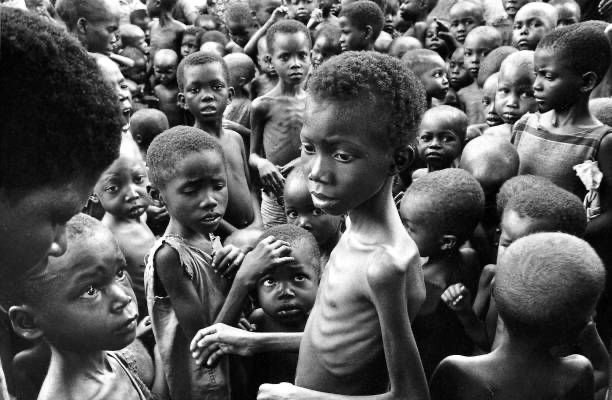
ENUGU, Nigeria (NPA) — Former counsel to the leader of the proscribed Indigenous People of Biafra (IPOB), Ifeanyi Ejiofor, has called on Nigeria to confront the legacy of the Biafra War with honesty, justice and historical truth as Igbos across the world marked Biafra Remembrance Day on May 30.
Ejiofor made the call in a statement issued on Saturday titled “Remembering Our Heroes and Heroines of Biafra (1967–1970): A Day of Remembrance, A Day of Conscience.”
The lawyer said remembrance was necessary not to perpetuate grievances or seek revenge, but to preserve historical truth and promote genuine reconciliation. According to him, history imposes a moral obligation on nations to acknowledge painful chapters of their past rather than bury them in silence.

“A society achieves greatness not by burying its tragedies beneath silence, but by courageously acknowledging them, learning from them and ensuring that such suffering never again befalls any people,” he said.
Ejiofor paid tribute to the over five million lives lost during the Nigerian Civil War, remembering fathers who never returned home, mothers who endured unimaginable hardship and children whose lives were cut short by war, hunger, disease and displacement.
“Above all, we remember a people who, despite unimaginable suffering, refused to surrender their dignity, their identity and their hope,” he said.
He described May 30 as more than a symbolic date, noting that it serves as a solemn reminder of one of the darkest chapters in Nigeria’s history.
According to him, the memories of the war remain vivid for many survivors and their descendants, with entire communities uprooted, families separated, and villages destroyed during the conflict.
Ejiofor recalled that before the outbreak of full-scale hostilities in 1967, many Eastern Nigerians, particularly Igbos, were victims of violence following the political crises and military coups of 1966.
He said thousands fled to Eastern Nigeria carrying the trauma of survival and memories of loved ones lost during the unrest.
The former IPOB lawyer noted that the war, which began in July 1967, evolved into one of Africa’s worst humanitarian crises.
He said images of malnourished children suffering from starvation shocked the international community, while restrictions on food and humanitarian supplies contributed significantly to civilian suffering.
“History records that millions were displaced. History records that countless lives were lost. History records that entire generations were scarred by the horrors of war. And history must never be forgotten,” he said.
Ejiofor also reflected on the October 1967 Asaba Massacre, describing it as one of the most painful episodes of the conflict.
According to him, the scars of the tragedy remain deeply embedded in the collective memory of the people of Asaba and the wider Igbo nation.
“The dead cannot speak. The starving children cannot testify. The mothers who died in agony cannot return to tell their stories. Yet the silence of their graves continues to speak to humanity,” he said.
He argued that the tragedy of Biafra should not be viewed solely through an ethnic lens, describing it as a universal human story about the consequences of political conflict, dehumanisation and collective punishment.
“The tragedy of Biafra is not merely an Igbo story. It is a human story. It is a reminder of what occurs when political disagreements are allowed to descend into dehumanisation and the abandonment of our common humanity,” he said.
Ejiofor noted that although the war officially ended in January 1970 with the declaration of “No Victor, No Vanquished,” many survivors continued to grapple with its consequences for decades.
He cited destroyed homes, lost businesses, economic hardship and diminished opportunities as some of the realities faced by many families after the conflict.
According to him, generations of Igbos grew up hearing stories of displacement, sacrifice, resilience and loss, not as instruments of bitterness but as reminders of a painful chapter in the nation’s history. He maintained that genuine healing requires acknowledgement, compassion, justice and historical honesty.
“A wound that is denied cannot heal. A tragedy that is forgotten can be repeated. A people whose suffering is ignored can never experience complete reconciliation,” he said.
Ejiofor urged Nigerians to preserve the memory of those who died during the conflict while committing themselves to truth, justice and lasting peace.
“The war officially ended in 1970, but the obligation to remember remains. The obligation to seek truth remains. The obligation to pursue justice remains. Today, we mourn. Today, we remember. Today, we honour. And today, we reaffirm that the memories of those who perished shall never be erased from the pages of history.”
He concluded by expressing hope that justice, truth and peace would ultimately prevail. “Ozo-emezina,” he said.
Biafra activist Simon Ekpa awaits Finnish Appeal Court ruling on six-year jail term tomorrow

Kano police arrest four suspects, recover three stolen vehicles
Amnesty International condemns police blocking of ‘Tinubu Must Go’ protest in Kano

SERAP sues CBN over alleged unaccounted $6.23m election funds, ₦1.63tn in other public funds

Abia police arrest 40-year-old suspect, recover fake ₦200 notes in Aba
Media Freedom Coalition demands justice 20 years after Anna Politkovskaya’s assassination
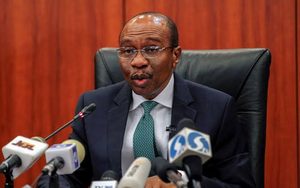
Finance Ministry Unaware of N124.86bn CBN withdrawal, witness tells court in Emefiele trial

Former US federal employee pleads guilty to $194 million government fraud scheme
- Tinubu commissions NRS Headquarters, says new tax reforms will drive prosperity
- Tinubu assures investors of regulatory stability as Ogun, DP World sign $7bn port, SEZ MoUs
- Climate change anxiety is rising — and so is the willingness to act on it
- Ohaukwu LG Chairman Ituma breaks ground for modern diagnostic centre, blood bank
- Baseball boosts TBS, NFL gives ESPN a kick and streamers love ‘Squid’
Community Discussion