

Democracy: Stakeholders raise concern over surge in political litigation in Nigeria

ABUJA, Nigeria (NPA) — Stakeholders in the South-East have expressed concern over the rising wave of litigation within Nigeria’s political parties, warning that the trend could weaken democratic stability and opposition strength ahead of the 2027 general elections.
They made the remarks in separate interviews with the News Agency of Nigeria (NAN) on “Proliferation of Political Litigation and Its Implications for Democracy,” noting that persistent court battles over leadership, party structures and electoral disputes could undermine internal democracy and political cohesion.
Major political parties, including the African Democratic Congress (ADC), Peoples Democratic Party (PDP), Labour Party (LP) and the All Progressives Congress (APC), are currently facing varying degrees of legal disputes and leadership crises.
The ADC has been affected by leadership tussles and court cases over control of party structures. The PDP continues to battle recurring litigation over national leadership legitimacy and disputes in several state chapters. In the Labour Party, disagreements over leadership and structure reportedly contributed to the exit of key figures, including former presidential candidate Peter Obi and other prominent members. The APC, though relatively stable at the national level, has witnessed internal disputes in some states, particularly Rivers State.
A recent Supreme Court decision on the ADC leadership crisis also failed to conclusively resolve the matter, returning substantive issues to the lower court and prolonging uncertainty within the party.
Speaking in Enugu, Human Rights Lawyer, Mr Awforkansi Nnadiume, said the trend reflects a slowing democratic process. “After almost 30 years of uninterrupted democratic rule, we are still struggling with full democratic consolidation,” he said, adding that many disputes should ordinarily be resolved within party structures.
He warned that excessive litigation over internal party affairs could distort political competition and even weaken opposition parties. “Most of these matters are internal issues that parties should resolve themselves, but the courts are increasingly drawn into them,” he said, urging stronger internal dispute resolution mechanisms.
Also speaking, Dr Ambrose Igboke, Chairman of the Public Affairs Analysts of Nigeria (Enugu chapter), said the issue reflects weak internal democracy in political parties. “Most parties lack discipline and have structural loopholes that are often exploited,” he said. Igboke, however, noted that resort to litigation remains preferable to violence and could ultimately strengthen legal interpretation of democratic processes.
In Ebonyi State, political analyst Chief Chinedu Okafor warned that repeated court cases within opposition parties create uncertainty and weaken public confidence in the political system. Constitutional lawyer Mr Ifeanyi Nworie also stressed that political parties must respect their constitutions to reduce unnecessary judicial intervention.
Civil society advocate Mrs Nkechinyere Nnachi said prolonged legal battles contribute to voter apathy and public frustration, urging political leaders to prioritise dialogue, reconciliation and issue-based politics.
In Anambra, analyst Mr Tony Okafor said excessive litigation has turned courts into political battlegrounds, weakening opposition effectiveness and public trust. He cited the Labour Party leadership crisis as an example of how prolonged disputes can fracture party unity and discourage supporters.
Former NBA Orlu Branch chairman, Mr Chinedu Agbordike, said judicial intervention remains essential but warned against politicisation of the judiciary. He called for stronger internal conflict resolution systems within parties.
Some analysts also alleged that certain litigations are politically motivated to destabilise opposition parties ahead of the 2027 elections.
A political science lecturer at the University of Nigeria, Nsukka, Dr Chinedu Ejezie, described the trend as a “bad omen,” warning that weakening opposition parties could erode democratic competition. He stressed that democracy thrives on credible alternatives for voters.
Stakeholders across regions called for electoral reforms, stronger party institutions, and improved internal democratic practices to reduce litigation and safeguard Nigeria’s democratic stability ahead of future elections.
Biafra activist Simon Ekpa awaits Finnish Appeal Court ruling on six-year jail term tomorrow

Kano police arrest four suspects, recover three stolen vehicles

Amnesty International condemns police blocking of ‘Tinubu Must Go’ protest in Kano
SERAP sues CBN over alleged unaccounted $6.23m election funds, ₦1.63tn in other public funds

Abia police arrest 40-year-old suspect, recover fake ₦200 notes in Aba

Media Freedom Coalition demands justice 20 years after Anna Politkovskaya’s assassination
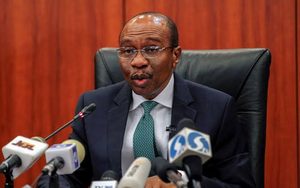
Finance Ministry Unaware of N124.86bn CBN withdrawal, witness tells court in Emefiele trial

Former US federal employee pleads guilty to $194 million government fraud scheme
- Tinubu commissions NRS Headquarters, says new tax reforms will drive prosperity
- Tinubu assures investors of regulatory stability as Ogun, DP World sign $7bn port, SEZ MoUs
- Climate change anxiety is rising — and so is the willingness to act on it
- Ohaukwu LG Chairman Ituma breaks ground for modern diagnostic centre, blood bank
- Baseball boosts TBS, NFL gives ESPN a kick and streamers love ‘Squid’
Community Discussion