

SERAP urges Tinubu to withdraw NBC directive to broadcaster, warns of threat to press freedom
ABUJA, Nigeria (NPA) — The Socio-Economic Rights and Accountability Project (SERAP) has urged President Bola Tinubu to order the immediate withdrawal of a recent directive issued by the National Broadcasting Commission (NBC), warning that it poses a threat to press freedom and democratic discourse.
SERAP, a nonpartisan advocacy organisation, said the NBC’s “Formal Notice” to broadcasters, issued on April 17, 2026, imposes vague and unjustified restrictions on journalists and media houses, including sanctions over the expression of personal opinions, alleged intimidation of guests and failure to maintain neutrality.
In a letter dated April 18 and signed by its Deputy Director, Kolawole Oluwadare, the organisation called on the president to direct the Minister of Information and National Orientation, Mohammed Idris Malagi, and the NBC to withdraw the notice and refrain from imposing what it described as prior censorship on the media.

The group also urged the government to review and amend sections of the Nigeria Broadcasting Code cited in the directive to ensure compliance with the 1999 Constitution (as amended) and Nigeria’s international human rights obligations.
SERAP argued that the NBC’s directive represents an attempt to suppress legitimate journalistic expression, particularly ahead of the 2027 general elections, warning that it could undermine Nigerians’ right to access diverse information and engage in open debate.
According to the organisation, the provisions relied upon by the NBC are vague, overly broad and open to arbitrary interpretation, failing to meet the legal standards of necessity, proportionality and legitimacy required in a democratic society.
It noted that the Nigerian Constitution, alongside international instruments such as the African Charter on Human and Peoples’ Rights and the International Covenant on Civil and Political Rights, guarantees the right to receive and impart information without interference, including the expression of opinions.
SERAP maintained that journalistic opinion, commentary and analysis are essential elements of media practice and democratic engagement, stressing that a blanket restriction on presenters expressing personal views amounts to prior restraint.
The organisation also raised concerns over provisions relating to “bullying” or “intimidation,” arguing that the lack of clear definitions could criminalise legitimate and critical questioning, a core feature of investigative journalism.
It warned that the threat of sanctions for broadly defined infractions could create a chilling effect on journalists, encourage self-censorship and weaken the media’s role as a public watchdog.
SERAP gave the Federal Government 48 hours to act on its recommendations or risk legal action, reiterating that any regulatory framework must balance accountability with the protection of fundamental rights and freedom of expression.
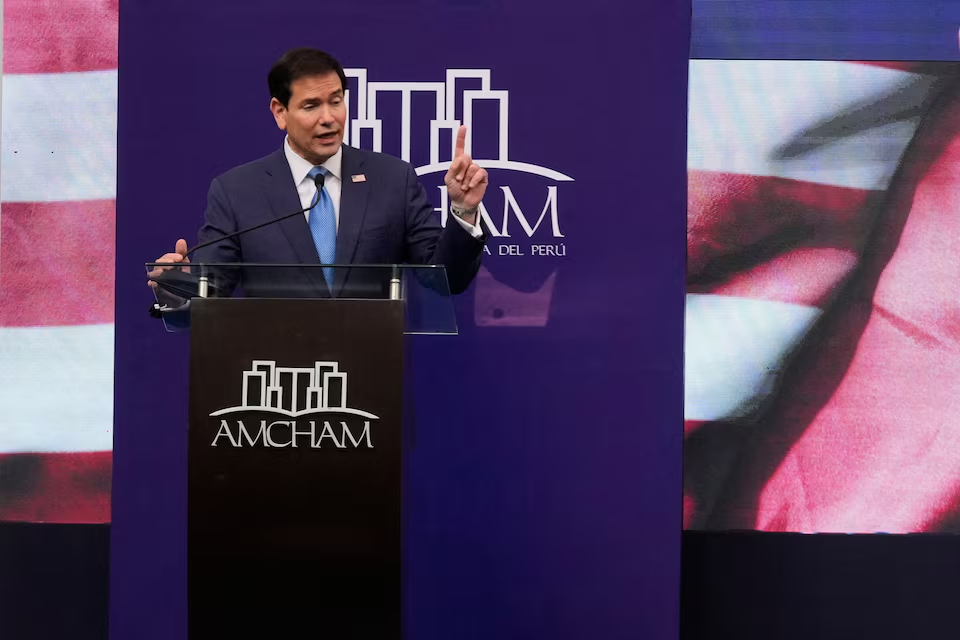
US announces visa restrictions targeting some South Africans
Ghana reaffirms Western Sahara position, welcomes UN Security Council Resolution 2797

Ebola cases in DR Congo rise to 7,022 as outbreak spreads to seventh province

South Africa extradites six Nigerians linked to Black Axe cyberfraud syndicate to the U.S.

Nigeria parliament cancels official trips to South Africa over xenophobia attacks on citizens

King Oyo, the monarch who walked in faith
Eswatini begins government-wide induction for SADC security organ chairship
African Union chairperson calls for renewed unity, solidarity on AU Day
- Tinubu commissions NRS Headquarters, says new tax reforms will drive prosperity
- Akwa Ibom governor approves appointment letters for 4,000 civil service recruits
- Climate change anxiety is rising — and so is the willingness to act on it
- Golden Globes want to make a comeback this year. Hollywood isn’t buying
- Baseball boosts TBS, NFL gives ESPN a kick and streamers love ‘Squid’
Community Discussion