

EU urges tougher pressure on Russia, stronger maritime security
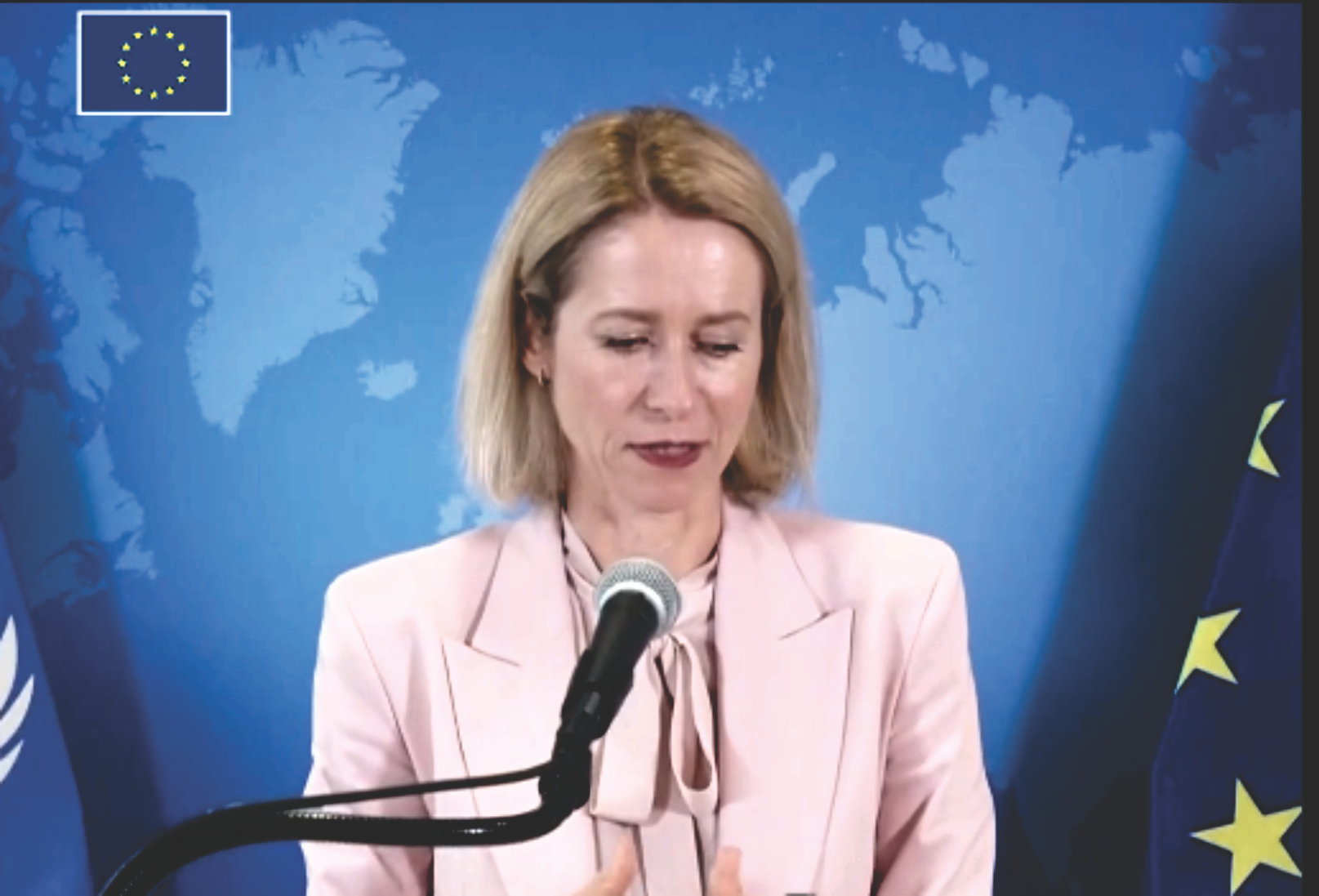
NEW YORK, United States (NPA) — European Union foreign ministers have discussed increasing pressure on Russia, strengthening maritime security and deepening security cooperation with Indo-Pacific partners amid ongoing conflicts and growing global security challenges.
EU High Representative for Foreign Affairs and Security Policy and Vice-President of the European Commission, Kaja Kallas, disclosed this on Monday, September 21, 2026, after chairing an informal Foreign Affairs Council meeting in New York.
The meeting focused on Russia’s war against Ukraine, the Middle East, global food security, accountability, maritime security and the effectiveness of the multilateral system.

Kallas said Europe was facing an increase in sabotage attacks and airspace violations, which she attributed to Moscow’s efforts to pressure European countries over their support for Ukraine.
“As Russia is willing to take greater risks, we also need to impose greater costs,” she said.
She identified stronger measures against Russia’s shadow fleet and tougher action targeting its military-industrial complex as among the options being considered.
Kallas said EU ministers also discussed the renewal of the bloc’s sanctions against Russia, describing sanctions as a core element of the EU’s response to the war.
She said the EU’s sanctions regime currently covers more than 3,000 listings, with discussions on their renewal ongoing.
“We are doing two things at the same time. One is the renewal of all the sanctions that we have in place right now, and the other side is putting in place new sanctions,” Kallas said.
Maritime security
On the Middle East, Kallas said ministers discussed the worsening security situation in the Red Sea and its implications for European interests and global trade.
She said attacks by Yemen’s Houthi movement were affecting the global economy and stressed the importance of maritime security around critical waterways.
The EU’s Operation ASPIDES, she said, was contributing to regional and global shipping security but required additional naval and air assets because of the increased level of threats.
Kallas identified the Black Sea, Strait of Hormuz and Strait of Bab el-Mandeb as critical maritime chokepoints whose disruption could have consequences beyond their immediate regions.
“Freedom of navigation and maritime security are essential for trade, food security, and our economies,” she said.
She said the ASPIDES mission initially indicated a need for at least 10 ships but that the current security situation could require more.
EU, Indo-Pacific partners deepen cooperation
Foreign ministers from Australia, India, Japan and South Korea also joined the second part of the meeting, with discussions focusing on security and defence cooperation.
Kallas said the talks centred on three broad areas: strengthening the multilateral system, closer security cooperation between Europe and the Indo-Pacific, and reducing economic dependencies.
On the multilateral system, she said the EU remained committed to the United Nations but argued that reforms were needed to make the organisation more effective in preventing and resolving conflicts.
She also said the next selection of the UN Secretary-General would be important in providing leadership for UN reform and defending the UN Charter.
Kallas said stronger international cooperation was also needed in areas where global rules were under pressure or still developing, including maritime security and artificial intelligence.
On Europe’s security relationship with the Indo-Pacific, she said Russia and North Korea’s actions affected both regions.
Kallas said North Korean troops had supported Russia’s war in Ukraine, while China remained, in her assessment, a key enabler of Russia’s war through the supply of dual-use goods.
She said a free, open and rules-based Indo-Pacific was important to global stability and prosperity, adding that the EU and its partners supported international law, freedom of navigation and overflight, and the peaceful settlement of disputes.
Economic security and accountability
Kallas said EU and Asia-Pacific partners also faced common challenges relating to economic security and agreed that closer cooperation to diversify supply chains and reduce dependencies was in their mutual interest.
On accountability, she defended EU support for international justice mechanisms, including the International Criminal Court (ICC).
She distinguished between war crimes and the crime of aggression, explaining that the proposed Special Tribunal for the Crime of Aggression against Ukraine was intended to address the responsibility of leaders for launching a war against another country.
Kallas said the EU would continue supporting the ICC and called accountability an essential component of the international system.
“The European stance has been very clear. We have been supportive of the ICC. It is fundamental that its accountability for the international law functions properly, and therefore we stand behind ICC,” she said.
On Ukraine’s request for additional air-defence systems, including Patriot missiles, Kallas said the issue was not discussed during the meeting because of limited time. She said some EU countries had previously indicated that they were providing air-defence systems to Ukraine and expressed hope that those commitments would be implemented.
Kallas also said the EU was continuing diplomatic outreach on the Black Sea, particularly because of the implications for global food security and countries in Africa and Asia.
She called for an end to attacks on civilians, civilian infrastructure and grain vessels in the Black Sea.
On a proposed US agreement with Denmark and Greenland, Kallas said she did not know the details but welcomed any agreement that could increase security in the Arctic.
The EU foreign policy chief also said the United Nations remained relevant despite concerns about its effectiveness, arguing that most countries continued to support a rules-based international system.
She said the EU would continue working with partners to strengthen that system and promote accountability.
Von der Leyen outlines vision for a stronger, more independent Europe in 2026 State of the Union address
Scotland, Wales, and Northern Ireland leaders intensify push to break away from UK
Scotland, Wales and Northern Ireland leaders plan fresh push for self-determination
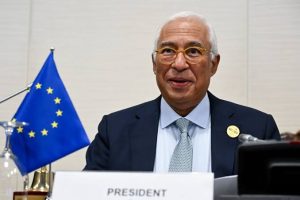
EU unity crucial as bloc prepares for 2028-2034 budget, President Costa says

France’s top court blocks social media ban for under-15s
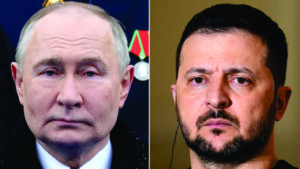
JUST IN: EU releases €1.4bn from frozen Russian assets to support Ukraine
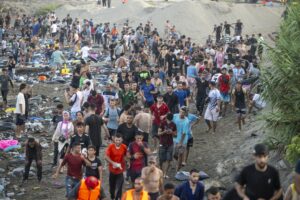
Spain warns irregular entry through Ceuta, Melilla does not grant right to stay or access EU
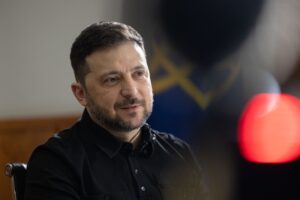
Zelenskyy calls for tougher sanctions on Russian missile industry, unveils European anti-ballistic shield initiative
- Tinubu commissions NRS Headquarters, says new tax reforms will drive prosperity
- Onanuga hails CBN figures, says economic reforms are strengthening Nigeria’s economy
- Climate change anxiety is rising — and so is the willingness to act on it
- Golden Globes want to make a comeback this year. Hollywood isn’t buying
- Baseball boosts TBS, NFL gives ESPN a kick and streamers love ‘Squid’
Community Discussion