
EU unity crucial as bloc prepares for 2028-2034 budget, President Costa says
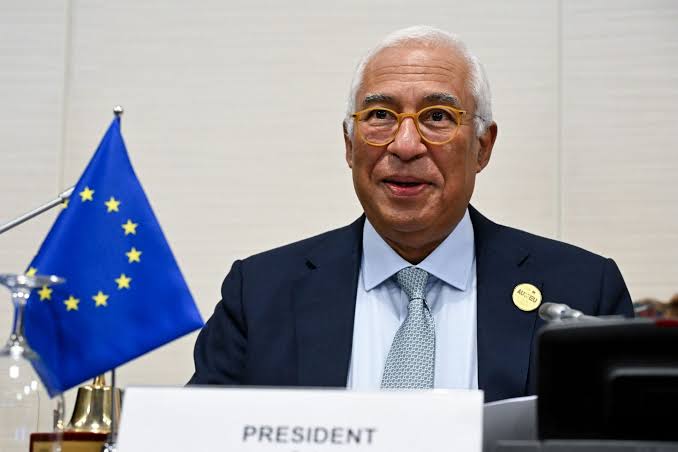
VALLETTA, Malta (NPA) — European Council President António CostaEU unity crucial as bloc prepares for 2028-2034 budget, President Costa says
VALLETTA, Malta (NPA) — European Council President António Costa has stressed the importance of unity among European Union member states as the bloc prepares to negotiate its next long-term budget for 2028 to 2034.
Costa made the remarks following a meeting with Malta’s Prime Minister, Robert Abela, in Valletta on September 10, 2026, as part of his consultations with European leaders ahead of key decisions facing the EU.

He said engaging directly with EU leaders in their home countries was important for understanding different perspectives and building consensus within the European Council.
“It is very important for me to engage directly with all European leaders regularly, including their home country, and to listen to and understand all perspectives. This will help the European Council to achieve unity. Because unity cannot be taken for granted, we build it every day, at every meeting.”
Costa said the EU was preparing for a major budget decision that would determine the bloc’s ability to respond to its priorities between 2028 and 2034.
“We will need it again for a decision that will define what Europe is able to do between 2028 and 2034: on our next long-term budget.”
According to Costa, the geopolitical environment facing Europe has fundamentally changed since the previous long-term budget was negotiated in 2020, requiring a different approach to the structure and allocation of EU resources.
“We are now operating in a fundamentally different geopolitical environment from the one we faced when we last negotiated the budget in 2020. This new reality calls for a new approach to our budget, with a new structure and a new way of allocating our resources.”
He said the next budget must be capable of funding strategic priorities such as competitiveness, defence, security and strategic resilience.
“At the same time, the next budget should ensure funding for our cohesion and agriculture policies. They pull our regions upwards and support growth and jobs locally. In a nutshell, they have a direct impact on the prosperity of our citizens.”
Costa said reaching an agreement before the end of 2026 would be important to ensure continuity of funding for farmers, fishermen, students, researchers and businesses.
“Reaching agreement by the end of the year is key. Because we need to ensure that funding keeps flowing without interruption. For our farmers and fishermen, for our students and researchers, for our businesses.”
He outlined the proposed timeline as: “agree in 2026, legislate and prepare in 2027, deliver in 2028.”
EU budget requires new revenue sources
Costa described the size of the next EU budget as a critical issue, noting that the bloc, like national governments, must finance its priorities within limited resources.
He said most EU funding comes from national contributions by member states, which he argued must remain within reasonable limits.
“Therefore, we need new European revenues, the so-called new own resources, in order to reduce the pressure on national budgets. This will be a key component of an overall agreement.”
Costa discusses Mediterranean, Middle East
Beyond the long-term budget, Costa said he and Abela discussed issues expected to feature prominently at the upcoming European Council meeting, including developments in the Eastern Mediterranean and the Middle East.
He said the developments had implications for Europe’s peace and stability, migration flows and energy security.
“We need to remain engaged in the region and I am grateful for your active role in this regard, dear Robert. The European Union will continue to work, including with regional and global partners, on the path towards a long-lasting peace, based on the two-state solution.”
Costa said recent geopolitical developments had demonstrated the need for Europe to accelerate efforts towards greater strategic autonomy.
“The geopolitical developments of recent years have shown us one thing clearly: Europe needs to accelerate its path towards greater strategic autonomy. And we are on the right track.”
He, however, stressed that greater European autonomy depended fundamentally on unity among member states.
“The most important condition for greater European autonomy is our own unity.”
Costa said strengthening unity was the main purpose of his meeting with Abela and would remain central to his consultations with other European leaders in the coming weeks.
“And that was the main purpose of today’s meeting with the Prime Minister Robert Abela, and of the talks I will continue to have with European leaders in the next weeks – to foster unity.”
He thanked Abela for the meeting and expressed confidence in continued cooperation ahead of the next European Council meeting.
“Dear Robert, I look forward to our work together at the next European Council.” has stressed the importance of unity among European Union member states as the bloc prepares to negotiate its next long-term budget for 2028 to 2034.
Costa made the remarks following a meeting with Malta’s Prime Minister, Robert Abela, in Valletta on September 10, 2026, as part of his consultations with European leaders ahead of key decisions facing the EU.
He said engaging directly with EU leaders in their home countries was important for understanding different perspectives and building consensus within the European Council.
“It is very important for me to engage directly with all European leaders regularly, including their home country, and to listen to and understand all perspectives. This will help the European Council to achieve unity. Because unity cannot be taken for granted, we build it every day, at every meeting.”
Costa said the EU was preparing for a major budget decision that would determine the bloc’s ability to respond to its priorities between 2028 and 2034.
“We will need it again for a decision that will define what Europe is able to do between 2028 and 2034: on our next long-term budget.”
According to Costa, the geopolitical environment facing Europe has fundamentally changed since the previous long-term budget was negotiated in 2020, requiring a different approach to the structure and allocation of EU resources.
“We are now operating in a fundamentally different geopolitical environment from the one we faced when we last negotiated the budget in 2020. This new reality calls for a new approach to our budget, with a new structure and a new way of allocating our resources.”
He said the next budget must be capable of funding strategic priorities such as competitiveness, defence, security and strategic resilience.
“At the same time, the next budget should ensure funding for our cohesion and agriculture policies. They pull our regions upwards and support growth and jobs locally. In a nutshell, they have a direct impact on the prosperity of our citizens.”
Costa said reaching an agreement before the end of 2026 would be important to ensure continuity of funding for farmers, fishermen, students, researchers and businesses.
“Reaching agreement by the end of the year is key. Because we need to ensure that funding keeps flowing without interruption. For our farmers and fishermen, for our students and researchers, for our businesses.”
He outlined the proposed timeline as: “agree in 2026, legislate and prepare in 2027, deliver in 2028.”
EU budget requires new revenue sources
Costa described the size of the next EU budget as a critical issue, noting that the bloc, like national governments, must finance its priorities within limited resources.
He said most EU funding comes from national contributions by member states, which he argued must remain within reasonable limits.
“Therefore, we need new European revenues, the so-called new own resources, in order to reduce the pressure on national budgets. This will be a key component of an overall agreement.”
Costa discusses Mediterranean, Middle East
Beyond the long-term budget, Costa said he and Abela discussed issues expected to feature prominently at the upcoming European Council meeting, including developments in the Eastern Mediterranean and the Middle East.
He said the developments had implications for Europe’s peace and stability, migration flows and energy security.
“We need to remain engaged in the region and I am grateful for your active role in this regard, dear Robert. The European Union will continue to work, including with regional and global partners, on the path towards a long-lasting peace, based on the two-state solution.”
Costa said recent geopolitical developments had demonstrated the need for Europe to accelerate efforts towards greater strategic autonomy.
“The geopolitical developments of recent years have shown us one thing clearly: Europe needs to accelerate its path towards greater strategic autonomy. And we are on the right track.”
He, however, stressed that greater European autonomy depended fundamentally on unity among member states.
“The most important condition for greater European autonomy is our own unity.”
Costa said strengthening unity was the main purpose of his meeting with Abela and would remain central to his consultations with other European leaders in the coming weeks.
“And that was the main purpose of today’s meeting with the Prime Minister Robert Abela, and of the talks I will continue to have with European leaders in the next weeks – to foster unity.”
He thanked Abela for the meeting and expressed confidence in continued cooperation ahead of the next European Council meeting.
“Dear Robert, I look forward to our work together at the next European Council.”
Ghana, UK review bilateral ties ahead of Mahama’s official visit
Russia accuses Ukraine of attacks on Zaporizhzhia nuclear power plant
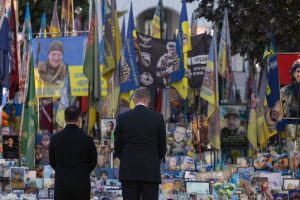
German Chancellor Friedrich Merz visits Kyiv as Zelenskyy reports Russian drone strikes across Ukraine

27% of EU young people lived in overcrowded homes in 2025 — Eurostat

Almost 1 in 3 EU deaths linked to circulatory system diseases
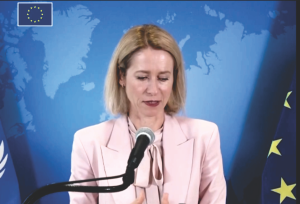
EU urges tougher pressure on Russia, stronger maritime security
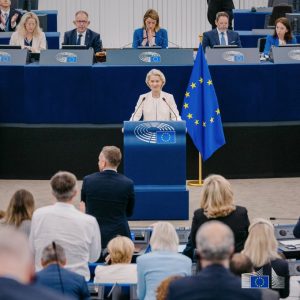
Von der Leyen outlines vision for a stronger, more independent Europe in 2026 State of the Union address
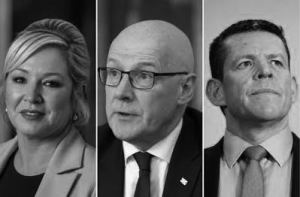
Scotland, Wales, and Northern Ireland leaders intensify push to break away from UK
- Tinubu commissions NRS Headquarters, says new tax reforms will drive prosperity
- Tinubu assures investors of regulatory stability as Ogun, DP World sign $7bn port, SEZ MoUs
- Climate change anxiety is rising — and so is the willingness to act on it
- Ohaukwu LG Chairman Ituma breaks ground for modern diagnostic centre, blood bank
- Baseball boosts TBS, NFL gives ESPN a kick and streamers love ‘Squid’
Community Discussion