Category: Uncategorized

  • Trump imposes tariffs on imported pharmaceuticals, citing national security threat

    Trump imposes tariffs on imported pharmaceuticals, citing national security threat

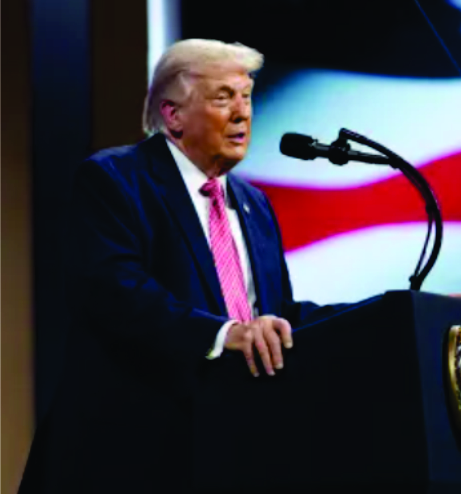
    INTERNATIONAL, April 3, 2026 (NPA) — President Donald J. Trump has issued a sweeping proclamation imposing tariffs on imported patented pharmaceuticals and their active ingredients, citing heavy reliance on foreign supply chains as a threat to U.S. national security.

    The move follows a report by the Secretary of Commerce under Section 232 of the Trade Expansion Act of 1962, which concluded that imports of pharmaceuticals and pharmaceutical ingredients “are being imported into the United States in such quantities and under such circumstances as to threaten to impair the national security.” According to the report, only 15 percent of patented active pharmaceutical ingredients (APIs) are produced domestically, while 53 percent of patented drugs distributed in the U.S. are manufactured abroad.

    Trump’s proclamation sets a 100 percent ad valorem duty on patented pharmaceuticals and associated ingredients, with exceptions for companies that commit to onshoring production. Firms with approved onshoring plans will face a reduced 20 percent tariff, which will rise to 100 percent after four years. Companies that enter into Most-Favored-Nation (MFN) pricing agreements and onshoring commitments with the Departments of Commerce and Health and Human Services may qualify for zero tariffs until 2029.

    The proclamation also outlines preferential treatment for imports from allied trade partners. Products from Japan, the European Union, South Korea, and Switzerland will face a 15 percent tariff, while imports from the United Kingdom will be subject to a 10 percent tariff, eventually dropping to zero under a forthcoming bilateral pharmaceutical agreement. Certain specialty drugs, including orphan-designated medicines, nuclear therapies, plasma-derived treatments, and medical countermeasures, will be exempt from tariffs altogether.

    Generic pharmaceuticals and biosimilars are excluded from the tariff measures for now, though the Commerce Department will review their status within a year.

    Trump emphasized that the tariffs are designed to strengthen domestic pharmaceutical manufacturing, safeguard military and civilian healthcare, and reduce vulnerability to global supply chain disruptions. “A self-sufficient domestic manufacturing base is vital for national defense and public health security,” the proclamation stated.

    The tariffs will take effect beginning July 31, 2026, for select companies, and September 29, 2026, for all others.

  • Fuel hike in Nigeria triggers soaring food prices, citizens want FG intervention

    Fuel hike in Nigeria triggers soaring food prices, citizens want FG intervention

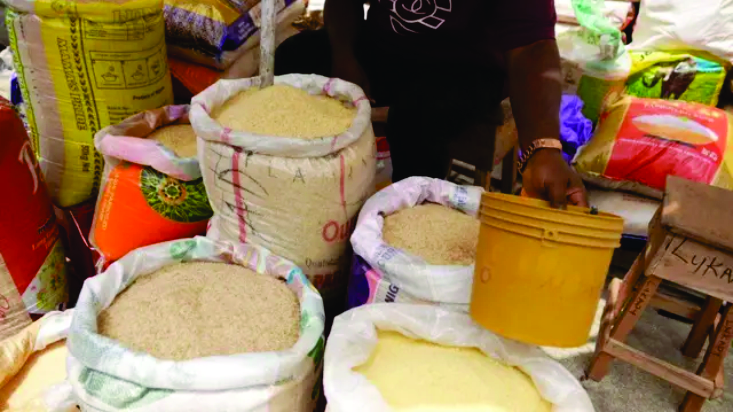
    ABUJA, NIGERIA (News Agency) — March 23, 2026 — Prices of food items, goods, and services have sharply increased across markets in the Federal Capital Territory (FCT) and surrounding areas, according to a survey by the News Agency of Nigeria (NAN).

    The NAN study in Abuja on Sunday revealed that the surge in prices is linked to the recent hike in petroleum product pump prices, driven by the ongoing Middle East crisis. The development has strained traders, business owners, and households, with many citizens reporting higher spending on feeding and basic necessities.

    Business owners, traders, and consumers alike lamented the impact of the fuel hike on their livelihoods and called for urgent government intervention to cushion the effects.

    At the Orange Market along the Abuja-Keffi road, a big basket of tomatoes that sold for N9,000–N10,000 in February now costs N30,000–N35,000. A big bag of onions, previously N15,000–N25,000, now sells for N40,000–N45,000. Similar spikes were recorded in Lugbe, Orozo, Karu, Wuse, Utako, Garki, Nyanya, and Apo markets, with yams, beans, peppers, sweet potatoes, and onions all experiencing steep increases.

    The price of sachet water and ice blocks has also risen due to poor electricity supply and reliance on diesel. Distributors now sell a bag of sachet water for N450–N500, up from N300–N350, while ice blocks have jumped from N500 to N800. Small businesses report dwindling profits as they spend heavily on fuel and diesel to power generators.

    Residents expressed frustration at the rising costs of everyday services. Haircuts for children that cost N1,400 weeks ago now cost N3,000, while bakers complain of soaring prices for baking materials. Traders noted that transportation fares for bringing goods from other states have tripled, further driving up market prices.

    Citizens appealed to the Federal Government to urgently address electricity challenges, stabilize fuel supply, and support businesses to ease the burden. Many warned that without intervention, even basic commodities like water could soon become unaffordable for ordinary Nigerians.

  • Nigeria and China: Shared future, shared journey, building eco-friendly modernisation together

    Nigeria and China: Shared future, shared journey, building eco-friendly modernisation together

    Yu Dunhai, China’s Ambassador to Nigeria

    OPINION (NPA) — March 21, 2026 — Balancing development with environmental protection is a major common challenge for the world today.

    It is also an eternal task for the sustainable development of human society.

    As the world’s largest developing country, China has achieved a green development miracle that has captured global attention.

    This has contributed Chinese wisdom, solutions, and strength to global ecological and environmental governance and the building of a clean and beautiful world.

    The year 2026 marks the beginning of China’s 15th Five-Year Plan period.

    The recently concluded “Two Sessions”, the annual sessions of China’s top legislature and political advisory body, reviewed and approved the Outline of the 15th Five-Year Plan and the Ecological and Environmental Code of the People’s Republic of China.

    This paints a blueprint for China’s high-quality economic and social development and comprehensive green transition.

    The 15th Five-Year Plan sets the development goals for the next five years, and explicitly calls for accelerating the comprehensive green transition of economic and social development, and actively participating in and leading global climate governance.

    This also demands adherence to the principle of common but differentiated responsibilities, and fully implementing the United Nations Framework Convention on Climate Change and its Paris Agreement, and continuously deepening South-South cooperation on climate change.

    The Ecological and Environmental Code directly addresses global environmental challenges. Notably, it features a standalone section on “Green and Low-Carbon Development,” a pioneering initiative in global legislative practice.

    When green development becomes a national strategic goal, and the vision of harmonious coexistence between humanity and nature is enshrined in law, the path towards sustainable development for mankind is bound to become clearer and broader, thanks to China’s green commitment.

    China has always been a steadfast practitioner of ecological civilisation, and has integrated ecological progress into the overarching plan for national development, taking concrete actions to fight pollution.

    It became the first developing country to implement systematic PM2.5 pollution control, and has taken the lead in establishing and implementing an “ecological conservation red line” system, accelerating the development of the world’s largest national park system.

    China has achieved consecutive years of “double reduction” in desertified and sandified land, and currently contributes one-quarter of the world’s newly increased green area, making it the fastest and most effective country in “greening” the planet.

    Every patch of green across the land of China vividly testifies to its practice of the concept of ecological civilisation.

    China has always been a pragmatic actor in global climate governance, conscientiously fulfilling its obligations under the Convention.

    It has solidly advanced its goals of peaking carbon emissions and achieving carbon neutrality, by committing to achieving the largest reduction in carbon emission intensity in the shortest time globally.

    China continues to optimise its energy structure, having built the world’s largest and fastest-growing renewable energy system and the most complete new energy industrial chain.

    For ten consecutive years, China has ranked first globally in installed capacity for photovoltaic and wind power; its hydropower and biomass power generation installed capacities remain the largest worldwide.

    It currently supplies over 80 per cent of the world’s photovoltaic components and 70 per cent of wind power equipment.

    These tangible figures amply demonstrate that China is not just an active advocate but a down-to-earth implementer in climate governance.

    China has always been an active leader in global environmental governance, as a participant, contributor, and leader in the global endeavor for ecological civilisation.

    The country firmly upholds multilateralism and strives to build a fair, reasonable, and mutually beneficial global environmental governance system.

    It vigorously promotes green development under the Belt and Road Initiative, deeply engages in global ecological and environmental governance, and works tirelessly to build a clean and beautiful world.

    China actively advances South-South cooperation on climate change, increasing support for countries and regions with fragile ecosystems and weak green development capacities.

    It has collaborated on green energy projects with over 100 countries and regions. As the world’s largest exporter of clean technology, China has created 46 per cent of global jobs in the renewable energy sector, injecting strong momentum into worldwide green development.

    China and Africa have always been like-minded companions on the journey to address climate change and promote green development.

    African countries have drawn on China’s experience with the Three-North Shelterbelt Forest Program to implement the Great Green Wall Initiative, effectively advancing efforts to combat desertification in the Sahara.

    In the clean energy sector, China has implemented hundreds of cooperative projects in Africa. The installed capacity of photovoltaic power stations built through China-Africa cooperation alone has exceeded 1.5 gigawatts.

    China’s Juncao technology has been introduced to Africa, becoming an exemplary model of “small and beautiful” livelihood cooperation.

    Cooperation on green technologies like wind power, geothermal energy, and solar power assists African nations in their energy transition.

    Through these tangible practices of green cooperation, China and Africa are setting a prime example of solidarity, cooperation, and shared development for the Global South.

    The new journey of the 15th Five-Year Plan period has commenced, opening a new chapter in China’s ecological civilisation development.

    Standing at this new historical starting point, China is promoting a comprehensive green transition of its economic and social development with unprecedented determination and effort.

    Building an ecological civilisation concerns the common future of humanity. China will unwaveringly pursue a path of green, low-carbon, and high-quality development.

    It will continue to contribute wisdom and solutions to global green development, and work hand in hand with countries around the world on the new journey towards an eco-friendly modernisation.

    As a major African country and an important global economy, Nigeria plays an irreplaceable role in addressing climate change and promoting regional green development.

    China is ready to work with Nigeria to strengthen policy dialogue, share governance experience, and deepen practical cooperation in areas such as clean energy, disaster prevention and mitigation, desertification control, and green finance.

    Together, we can jointly paint a beautiful picture of harmonious coexistence between humanity and nature.

    This can be done by making the Niger River clearer, the Gulf of Guinea bluer, and ensuring that the green bond of China-Nigeria friendship is passed on with everlasting vitality from generation to generation.(NAN).

  • European Commission-funded Sentimental Value wins Oscar for Best International Feature

    European Commission-funded Sentimental Value wins Oscar for Best International Feature

    INTERNATIONAL — (NPA) March 16, 2026 — The European Commission has celebrated Joachim Trier’s Sentimental Value (2025) after the Norwegian family drama won the Oscar for Best International Feature Film. The film, which explores themes of estrangement, reconciliation, and the fragile bonds of memory, was supported by the Commission through its Creative Europe MEDIA programme, part of a €2.44 billion investment in cultural diversity across the bloc.

    In a statement on Monday, the European Commission wrote: “Congratulations to ‘Sentimental Value’ on winning the Oscar for Best International Feature Film. Supported by our Creative Europe MEDIA programme, this win reflects our €2.44 billion investment in cultural diversity for the benefit of all.”

    The story follows Gustav Borg, an aging filmmaker portrayed by Stellan Skarsgård, who reappears at his ex-wife’s funeral after years of absence. His return forces his daughters, Nora (Renate Reinsve) and Agnes (Inga Ibsdotter Lilleaas), to confront the emotional scars of abandonment. Nora, a troubled actress, is offered the lead role in Gustav’s new film, blurring the lines between art and life.

    Awarded the Oscar for Best International Feature Film in 2026, Sentimental Value resonates as a broader reflection on how art can both heal and reopen wounds. With Trier’s collaboration with longtime co-writer Eskil Vogt, Kasper Tuxen’s evocative cinematography, and Hania Rani’s haunting score, the film marks Norway’s first-ever Oscar win in this category, cementing Trier’s reputation as one of Europe’s most compelling contemporary filmmakers.

  • Nigeria Police boost counter-terrorism capacity with new training, bases, and deployments

    Nigeria Police boost counter-terrorism capacity with new training, bases, and deployments

    CRIME DIARY (NPA) — March 7, 2026 — The Nigeria Police Force (NPF) has strengthened its counter-terrorism capacity through a specialised training programme and the establishment of new Counter Terrorism Unit (CTU) bases across the country.

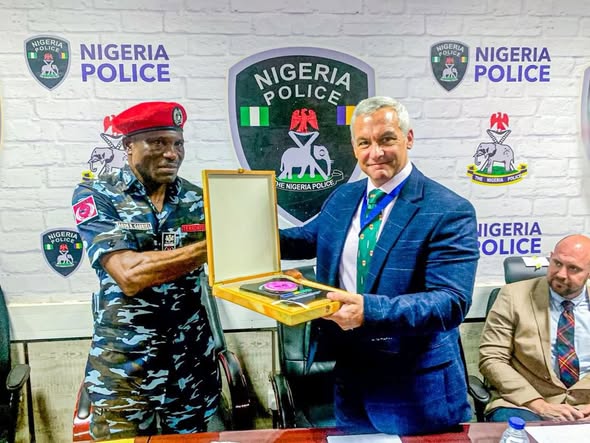
    The training, conducted in collaboration with the British High Commission in Nigeria through the Office of the Counter Terrorism Regional Coordinator for West Africa, is part of efforts to enhance the Force’s ability to combat terrorism, banditry, and other serious crimes threatening national security.

    In a statement issued Saturday, Acting ACP Benjamin Hundeyin, Force Public Relations Officer, said the expanded capacity includes new CTU bases and additional deployments.

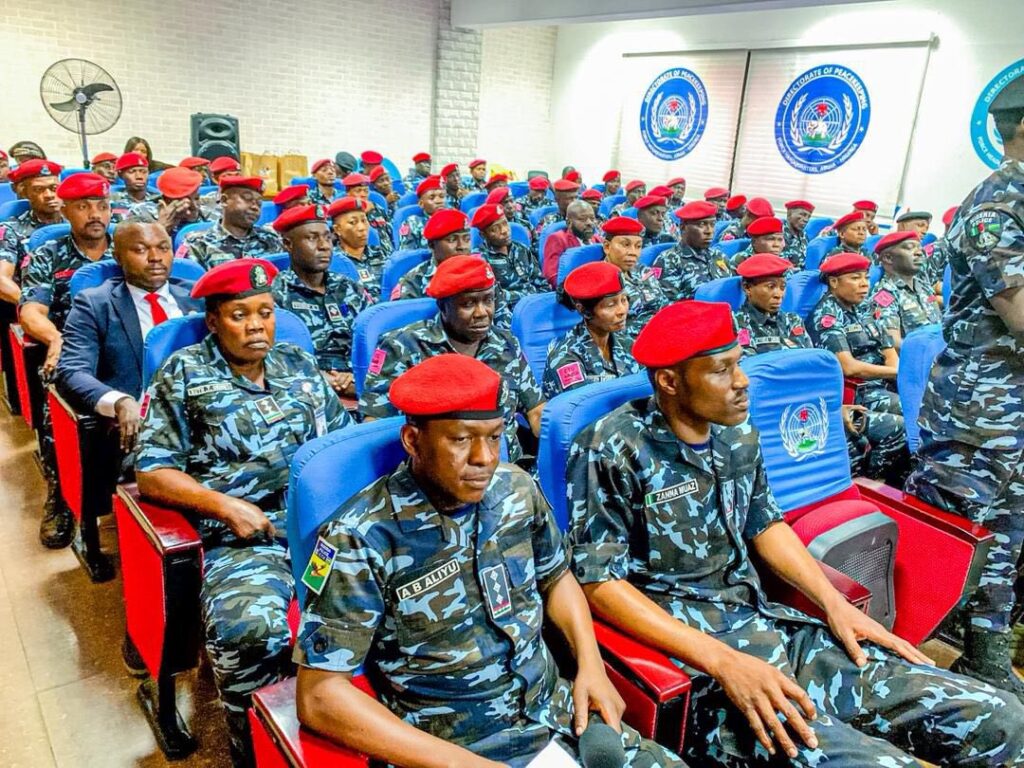
    “The two-week Close Quarter Battle and Intelligence Analysis training programme featured fifty-six (56) participants drawn from the Counter Terrorism Units of the Nigeria Police Force. The officers were exposed to contemporary counter-terrorism tactics, intelligence analysis, and operational best practices aimed at strengthening coordinated responses to emerging security threats,” the statement read.

    At the closing ceremony in Abuja, Lt. Col. Ian Tyler of the British High Commission commended the professionalism of participants and reaffirmed the UK’s commitment to supporting Nigeria’s counter-terrorism operations.

    Inspector-General of Police Olatunji Rilwan Disu, represented by AIG Akoh Gabriel, said the initiative reflects his administration’s determination to continually upscale the operational capacity of officers. He expressed appreciation to the British Government for its sustained partnership.

    As part of broader measures, the IGP approved the establishment of new CTU bases in Madagali (Adamawa State), Ikot Odo (Akpabuyo, Cross River State), and Ode-Remo (Ogun State), alongside additional deployments to strategic locations nationwide to enhance rapid response capability.

    “The Nigeria Police Force remains committed to strengthening partnerships, building operational capacity, and deploying strategic resources to combat terrorism and other emerging security threats across the country,” the statement added.

  • The Opportunity is here: Netanyahu urges Iranians to push for freedom

    The Opportunity is here: Netanyahu urges Iranians to push for freedom

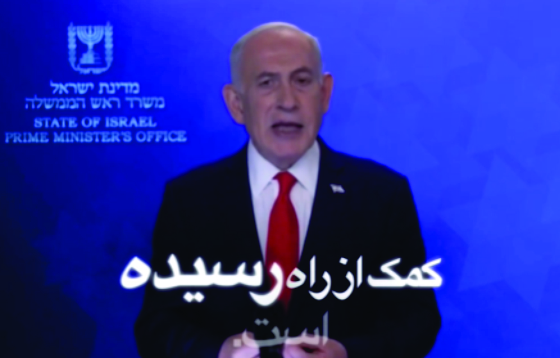
    JERUSALEM, ISRAEL (NPA): Israeli Prime Minister Benjamin Netanyahu has called on the people of Iran to unite in pursuit of political change, urging mass demonstrations against the government.

    In a televised broadcast on March 1, 2026, Netanyahu described the moment as “historic,” encouraging Iranians from diverse communities to “take to the streets” and “secure their future.” He emphasized that the opportunity for freedom “comes once in a generation” and urged citizens not to remain idle.

    He said, “In the coming days, we will strike thousands of targets of the terrorist regime.  We will create the conditions for the brave people of Iran to free themselves from the chains of tyranny.  

    “And for this reason, I address you once again:  O citizens of Iran, do not let this opportunity slip away.  This is an opportunity that comes only once in every generation.” 

    “Do not sit idle, because your moment will arrive soon.  The moment when you must take to the streets, come to the streets in your millions to finish the job, to overthrow the regime of terror that has embittered your lives.  Your suffering and sacrifices will not be in vain.” 

    The help you have longed for has now arrived.  Help has arrived, and now the time has come to unite for a historic mission.  O citizens of Iran, Persians, Kurds, Azeris, Ahwazis, and Baluchis—  Now is the time to unite your forces to overthrow the regime and secure your future.”

    Netanyahu’s remarks come amid heightened regional tensions and the ongoing military operations targeting elements of Iran’s ruling establishment.

  • Master AI, Embrace Cybersecurity, Build Solutions: Governor Mbah Urges Enugu Youths

    Master AI, Embrace Cybersecurity, Build Solutions: Governor Mbah Urges Enugu Youths

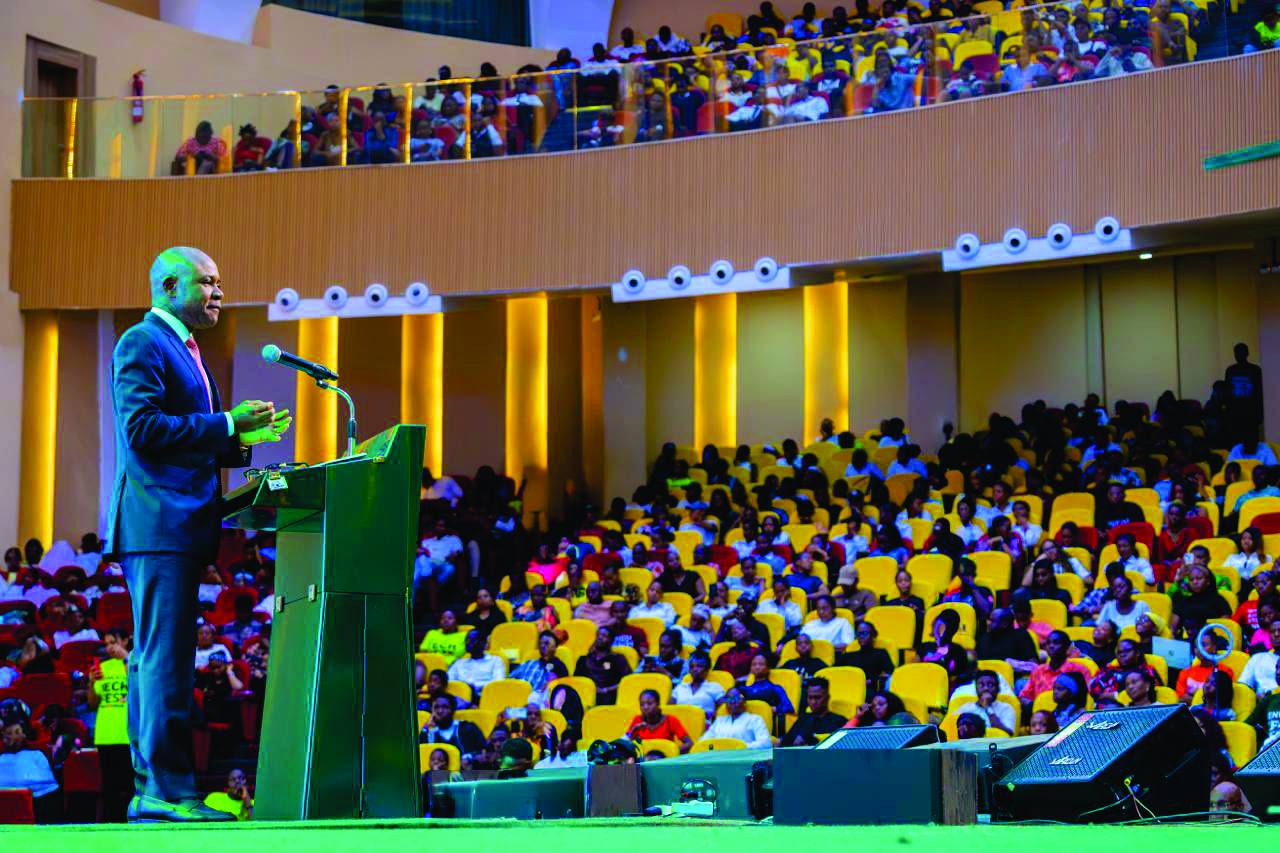
    ENUGU, NIGERIA (NPA): Enugu State Governor, Peter Ndubuisi Mbah, has called on the youths of the state to embrace technology and innovation as critical drivers of development. He made the remarks in his opening address at the second edition of the Enugu Tech Festival.

    Governor Mbah emphasized that “technology and innovation are not accessories to development; they are the operating system of modern progress. Across the world, ideas, code, and creativity are redefining economies. Here in Enugu, we have made a deliberate decision — we will not be spectators in this revolution. We will be producers.”

    Highlighting his administration’s policy focus on advancing school infrastructure and redefining learning, he outlined initiatives designed to build a new ecosystem where innovation can thrive. These include:

    •             Smart Green Schools equipped with robotics, artificial intelligence, and applied engineering.

    •             Digital governance platforms to improve transparency and efficiency.

    •             GIS-driven land administration to restore credibility in the real estate sector.

    •             Expanded digital infrastructure to power a knowledge-based economy.

    The governor urged young people in Enugu and beyond to seize the opportunities available: “Master artificial intelligence. Learn cybersecurity. Build solutions. The tools are here. The environment is here. The opportunity is here.”

    Reflecting on the state’s history, he noted: “A century ago, Enugu was known for what it extracted. This generation will be known for what it designs.”

    Earlier, Newpost Africa reported that under the administration’s “Tomorrow is Here” mantra, Enugu inaugurated the Haier Factory — a $20 million Foreign Direct Investment (FDI) project by China’s Haier Global Business Group in partnership with the state government. The facility, located in Enugu city, positions the state as a hub for the production of smartphones, tablets, computers, smart boards, Android televisions, education and health technologies, as well as renewable energy solutions for electricity, agriculture, and transportation.

  • Tinubu Signals Plan for State Police Now to Tackle Insecurity, Urges Governors to Prepare

    Tinubu Signals Plan for State Police Now to Tackle Insecurity, Urges Governors to Prepare

    Abuja, Nigeria (NPA) – President Bola Ahmed Tinubu on Monday hosted state governors at an interfaith fast-breaking event that brought together Muslims observing Ramadan and Christians marking the Lenten season.

    In a statement released after the gathering on his verified X account monitored by our correspondence, the president emphasized that the motive was not political but an acknowledgment of “the sacred season for two of the major faiths in our dear country.” He described the event as a reminder that “beyond politics and policy, we are first a people of conscience.”

    Addressing the governors, Tinubu urged them to focus on grassroots development and inclusivity. “Reach the young man who feels forgotten. Lift the woman who carries her family on tired shoulders. Touch the communities at the grassroots where hope sometimes flickers. Development must not recognize religion,” he said.

    Reaffirming his commitment to leadership and reform, Tinubu declared: “I am determined to rescue this country. And as long as we work together in delivering hope to our citizens, the best is yet to come for Nigeria.”

    On security, the president reiterated his administration’s determination to act decisively. “Security is the foundation of prosperity. Without it, farms cannot flourish, businesses cannot grow, and families cannot sleep in peace. We will establish state police to curb insecurity,” he announced.

    Tinubu stressed that the proposal for state police was not about politics but about practicality. “It is about empowering states with the tools to protect their people while strengthening our national framework. This requires boldness to reform what is not working,” he said.

  • Bandits Kill Ondo State Monarch in Palace Attack

    Bandits Kill Ondo State Monarch in Palace Attack

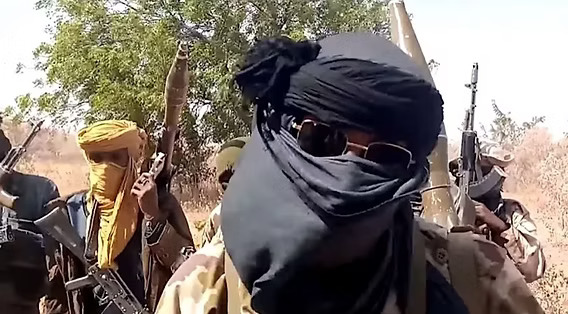
    ONDO STATE, NIGERIA (NPA): Suspected armed bandits attacked the Agomo community in Akure North Local Government Area of Ondo State, southwest Nigeria, killing the traditional ruler, Oba Kehinde Falodun, on Wednesday.

    Eyewitnesses reported that more than ten heavily armed assailants stormed the monarch’s palace and fatally assaulted him during the raid.

    The Ondo State Police Command confirmed the incident in a statement issued Thursday by its spokesperson, Mr. Abayomi Jimoh. He said the command had launched an investigation to determine the circumstances surrounding the attack.

    “Upon receipt of the report, the Divisional Police Officer (DPO), alongside tactical teams from the command, promptly mobilised officers in collaboration with local security outfits,” Jimoh stated.

    He added that Atuluse Security, local hunters, and Amotekun operatives joined in combing nearby bushes and surrounding areas to apprehend the perpetrators. “Efforts are ongoing to track down and arrest the fleeing suspects. Monitoring and surveillance activities have been intensified across the area to ensure the safety of residents and prevent further breakdown of law and order. The public is assured that no stone will be left unturned in bringing those responsible for the heinous act to justice,” he said.

    Banditry in Nigeria began with sporadic attacks by cattle rustlers and armed gangs around 2011, particularly in Zamfara State. It has since evolved into widespread rural violence, kidnappings, and extortion across the North-West, North-Central, and now increasingly in the South-West.

    The tactics of these groups include mass abductions of schoolchildren and worshippers, burning of villages, and ransom-driven extortion.

    A recent report (January 2026) estimated that 600,000 people were killed in just 11 months, with more than two million kidnappings and ransom payments exceeding ₦2 trillion. In February 2026, one of the deadliest single attacks occurred in Woro village, Kwara State, where 35 people were killed and homes were set ablaze.

    By late 2025, analysts described Nigeria as being “under siege,” with banditry reshaping daily life, destabilizing rural economies, and undermining national security.

  • 40 Killed In Sudan War Between Government and RSF Forces

    40 Killed In Sudan War Between Government and RSF Forces

    The latest killing is a reminder that the conflict in Sudan is far from over and a need for an urgent peaceful resolution.

    A suspected attack by the Rapid Support Forces (RSF), a Sudanese paramilitary force, has reportedly left 40 people dead, a medic told AFP from a central Sudan village.

    “All 40 people suffered direct gunshot wounds,” the medic from Wad Rawah Hospital, north of Wad Oshaib village in Al-Jazira State, who requested anonymity over safety concerns, said.

    “The attack resumed this morning,” one eyewitness told AFP by phone on Wednesday, adding that fighters were “looting property.

    The conflict between the Rapid Support Forces (RSF) and the Sudanese army stems from a power struggle that began in April 2023. The RSF, led by General Mohamed Hamdan Dagalo (also known as Hemedti), and the Sudanese army, led by General Abdel Fattah al-Burhan, have been vying for control over the country’s major institutions1.

    The fighting is primarily about control over the country’s political and military institutions, with both sides accusing each other of initiating the conflict.

    The conflict has caused a dire humanitarian crisis, with thousands of civilians killed and millions displaced. Hospitals and other critical infrastructure have been targeted, exacerbating the suffering of the people of Sudan.

    The international community, including the United States, has condemned the violence and called for a ceasefire. Efforts to mediate peace talks are ongoing, but the situation remains volatile and unpredictable.