Category: Food

  • NPA EDITORIAL: World Food Safety Day and the imperative of safe food for all

    NPA EDITORIAL: World Food Safety Day and the imperative of safe food for all

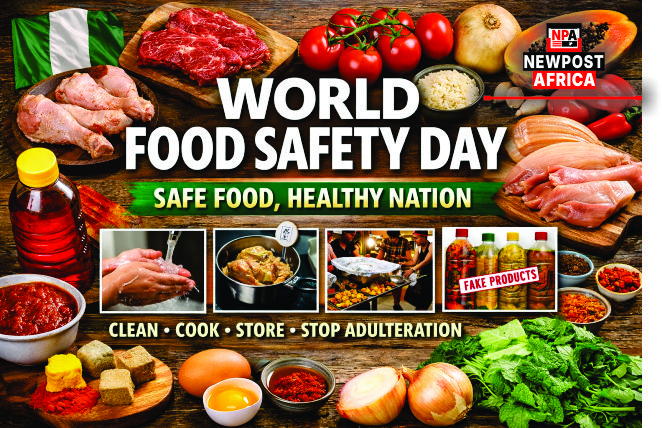
    Every year, World Food Safety Day reminds us that the food we eat must not only nourish but also protect us. The World Health Organisation estimates that unsafe food causes more than 600 million cases of foodborne illness annually, with developing countries bearing the heaviest burden. For Nigeria, where food is central to culture, economy, and daily survival, food safety is not a luxury — it is a necessity.

    The Nigerian government has taken steps, including the National Policy on Food Safety and Quality, to strengthen regulation and awareness. Yet, the responsibility does not rest with the government alone. It begins in our homes, markets, and streets. Nigerians must embrace safe food handling practices — from washing hands before cooking, to proper storage of perishables, and ensuring meat and fish are cooked thoroughly. These simple acts prevent contamination and protect families from diseases like cholera, typhoid, and diarrhoea.

    Street food, a beloved part of Nigerian life, also demands vigilance. Vendors must cover food, maintain clean stalls, and use safe water. Consumers, in turn, should patronise only those who demonstrate hygiene. In markets, butchers and farmers must adopt global best practices, while authorities must sustain inspections and training. Food safety is not just about avoiding illness; it is about protecting livelihoods, reducing healthcare costs, and ensuring productivity.

    Households play a critical role. Utensils must be cleaned immediately after use, leftovers stored in airtight containers, and waste disposed of properly to avoid attracting pests. Safe water is essential for washing produce and cooking. These practices, though basic, are powerful shields against contamination.

    Yet beyond unsafe handling, Nigeria faces another grave challenge: adulterated food products. Fake palm oil, fake seed oil, counterfeit tomato pastes, harmful confectionery products, and substandard seasonings have infiltrated markets, posing serious risks to public health. These adulterated items often contain harmful chemicals or are produced under unhygienic conditions, leading to long‑term health complications. Combined with poor handling, they create a dangerous cycle that undermines food safety and erodes consumer trust. Tackling this menace requires stronger enforcement, consumer awareness, and accountability across supply chains.

    The risks of ignoring food safety are grave. Beyond illness, unsafe and adulterated food undermines Nigeria’s progress toward the 2030 Agenda for Sustainable Development. A nation cannot thrive if its people are weakened by preventable diseases. Food safety is therefore a matter of national security, economic stability, and social well-being.

    As we mark World Food Safety Day, the Newpost Editorial Board calls on Nigerians to see food safety as a shared responsibility. Government must enforce standards, vendors must uphold hygiene, and citizens must demand accountability. Safe food is not a privilege for the few; it is a right for all.

    Nigeria’s future health and prosperity depend on how we handle the food we eat today. Let us commit to safe practices, support clean markets, and embrace innovation in food handling. In doing so, we protect not only ourselves but generations to come.

    Safe food, healthy nation — Nigeria must act now.

  • FG inaugurates agriculture, cooperative reform technical committee to boost food security, economic growth

    FG inaugurates agriculture, cooperative reform technical committee to boost food security, economic growth

    ABUJA, Nigeria (NPA) — The Federal Ministry of Agriculture and Food Security (FMAFS) has inaugurated a Ministerial Technical Committee for the implementation of the Renewed Hope Cooperative Reform and Revamp Programme (RH-CRRP) aimed at strengthening Nigeria’s cooperative sector and boosting socio-economic development.

    According to a statement issued by Ezeaja Ikemefuna, Head, Department of Information, the programme, scheduled to run from 2025 to 2030, is designed to reposition cooperative societies as drivers of inclusive growth, food security, rural development and agricultural transformation in line with national development priorities.

    Speaking during the inauguration ceremony held at the ministry’s conference room in Abuja on Thursday, the Minister of State for Agriculture and Food Security and Supervising Minister of Cooperative Affairs, Senator Aliyu Sabi Abdullahi, said the initiative was a strategic response to challenges confronting Nigeria’s cooperative and agricultural sectors.

    The minister, represented by the Permanent Secretary of the ministry, Dr Marcus Olaniyi Ogunbiyi, noted that the cooperative sector remains critical to economic growth, poverty reduction, social cohesion and job creation.

    According to him, the programme is expected to strengthen institutions within the sector and improve the livelihoods of millions of Nigerians through enhanced agricultural productivity and cooperative development.

    “By addressing the sector’s challenges and strengthening its institutions, the programme will enhance the sector’s contribution to Nigeria’s economic development and improve the lives of millions of Nigerians,” he stated.

    Abdullahi identified seven strategic pillars of the reform programme, including cooperative governance and institutional reforms, establishment of the Cooperative Bank of Nigeria, digitalisation and data management systems, capacity building and cooperative education.

    Other pillars include value chain development, enterprise growth and market access, inclusion of youths, women and persons with disabilities, as well as strategic partnerships and global cooperative competitiveness.

    The minister said the expected outcomes of the initiative include improved food security, increased access to funding and technology for cooperative societies, stronger partnerships among stakeholders and enhanced economic opportunities for rural communities.

    He also charged members of the technical committee to work diligently toward achieving the objectives of the programme in line with President Bola Ahmed Tinubu’s agricultural development agenda and the administration’s target of building a one-trillion-dollar economy within the decade.

    Abdullahi explained that the committee would serve as the lead coordinating body within the ministry for the implementation of the programme and would also support policy execution, inter-ministerial collaboration and agricultural financing initiatives.

    Earlier in his remarks, the Director of the Federal Department of Cooperative, Dr Mohammed Abdulkadir, said the programme was approved during the 8th Regular Meeting of the National Council on Cooperative Affairs (NCCA).

    He described the initiative as Nigeria’s official framework for cooperative transformation, digitalisation and economic revitalisation under the Renewed Hope Agenda.

    Abdulkadir added that the implementation plan also provided for the establishment of the ministerial technical committee to coordinate and drive the programme across relevant departments and agencies within the ministry.

  • Extreme heat threatens global agrifood systems, FAO-WMO Warn

    Extreme heat threatens global agrifood systems, FAO-WMO Warn

    INTERNATIONAL (NPA) — Extreme heat events are pushing agrifood systems to the brink, threatening the livelihoods, health, and productivity of more than a billion people, according to a new joint report released by the Food and Agriculture Organization of the United Nations (FAO) and the World Meteorological Organization (WMO).

    The report, Extreme Heat and Agriculture, launched on Earth Day, warns that rising temperatures are exerting mounting pressure on crops, livestock, fisheries, forests, and the communities that depend on them. FAO Director-General QU Dongyu described extreme heat as a “major risk multiplier,” stressing its compounding effects on agrifood systems. WMO Secretary-General Celeste Saulo added that extreme heat is no longer an isolated climatic hazard but a defining condition for agriculture, noting that early warnings and climate services are vital to adaptation.

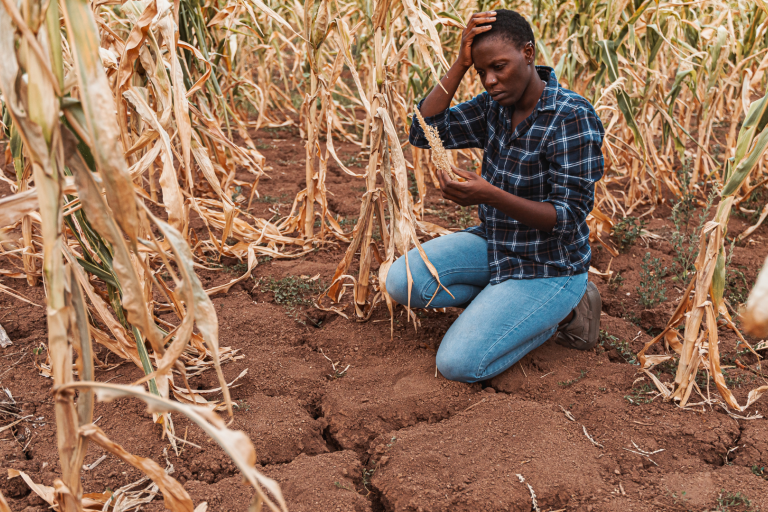
    The report outlines how extreme heat affects plants, animals, fish, and humans. For livestock, stress begins at temperatures above 25°C, with chickens and pigs particularly vulnerable. Fish are also at risk, suffering cardiac failure in overheated waters with reduced oxygen levels.

    WMO’s State of the Global Climate 2025 found that more than 90 percent of the global ocean experienced at least one marine heatwave last year. For crops, yield declines typically begin above 30°C, with sensitive crops such as potatoes and barley affected at even lower thresholds. Heat waves also correlate strongly with wildfires, extending fire seasons and intensifying their impacts.

    Human labour is equally endangered. Agricultural workers face rising health risks and productivity losses, with the report warning that in regions such as South Asia, tropical Sub-Saharan Africa, and parts of Central and South America, the number of days too hot to work could rise to 250 annually.

    The danger of extreme heat lies not only in direct impacts but also in its role as a risk multiplier, exacerbating water stress, triggering flash droughts, fueling wildfires, and fostering the spread of pests and diseases.

    To counter these threats, the FAO-WMO report calls for innovation and adaptive measures. Recommendations include selective breeding of heat-resistant livestock, crop choices adjusted to new climate realities, shifting planting windows, and altering management practices to shield crops and agricultural activities.

    Early warning systems are emphasised as critical tools to help farmers prepare for extreme heat, while access to financial services such as cash transfers, insurance, and social protection schemes is highlighted as essential to recovery.

    The report urges governments and international institutions to strengthen resilience at both farm and systemic levels. It calls for collective political will to share risks and transition decisively away from high-emission futures. “Protecting the future of agriculture and ensuring global food security will require not only building on-farm resilience but also exercising international solidarity and collective political will for risk sharing, and a decisive transition away from a high-emissions future,” the report concludes.

    Released on Earth Day, the findings establishes the interconnectedness of climate change, food security, and ecosystem health. With extreme heat already reshaping the conditions under which agriculture operates, FAO and WMO stress that adaptation is not optional but essential to sustaining food production and protecting vulnerable populations.