Category: Europe-Asia

  • BREAKING: Tinubu resolves OPL 245 dispute, ending Nigeria’s longest-running oil block battle

    BREAKING: Tinubu resolves OPL 245 dispute, ending Nigeria’s longest-running oil block battle

    Abuja, Nigeria — March 8, 2026 — President Bola Ahmed Tinubu has brought closure to Nigeria’s longest-running and most controversial oil block ownership dispute, announcing a landmark settlement over Oil Prospecting Licence (OPL) 245 with ENI and Nigerian Agip Exploration Limited (NAEL).

    In a statement issued Sunday by Bayo Onanuga, Special Adviser to the President on Information and Strategy, the resolution was described as a turning point that will reposition Nigeria’s economy and strengthen its fiscal capacity.

    Attorney-General and Minister of Justice, Lateef Fagbemi, praised President Tinubu’s leadership, calling the agreement “a milestone in repositioning Nigeria’s economic landscape.”

    “The agreement marks a turning point for Nigeria’s oil and gas sector after more than two decades of legal battles and international arbitration,” Fagbemi said. “The clear vision and deep commitment of President Tinubu provided the political will required to bring closure to this protracted dispute. The agreement demonstrates Nigeria’s commitment to transparency, accountability, and the rule of law.”

    According to the Attorney-General, the settlement will culminate in a Consent Arbitral Award, resolving a complex international dispute and restoring Nigeria’s credibility as a responsible global business partner.

    Fagbemi emphasized that the deal will pave the way for large-scale investments, stimulate job creation, and reinforce Nigeria’s position as a leading energy producer in Africa. He noted that projected revenues from OPL 245 can now be factored into Nigeria’s medium-term fiscal framework, supporting budget stability, long-term planning, and debt sustainability.

    He further highlighted that resolving the matter through negotiation rather than prolonged arbitration underscores Nigeria’s commitment to alternative dispute resolution and enhances its standing in international commercial and arbitration circles.

    “This settlement sends a clear signal to the global community that Nigeria is open for business and committed to fairness and respect for contractual obligations,” Fagbemi said, commending the Ministry of Petroleum Resources, the Nigerian Upstream Petroleum Regulatory Commission, Nigerian National Petroleum Company Limited, the Economic and Financial Crimes Commission, and international partners including ENI and Shell for their roles in achieving the resolution.

    “With this agreement, Nigeria can now move forward with confidence, ensuring that the development of OPL 245 becomes a source of prosperity for the nation and future generations,” he added.

    Background on OPL 245

    OPL 245 is a deepwater oil block located offshore Nigeria, widely regarded as one of the country’s most valuable reserves. It was originally awarded in 1998 to Malabu Oil and Gas, a company linked to former Petroleum Minister Dan Etete.

    Over the years, disputes over ownership, licensing rights, and allegations of bribery involving multinational oil companies ENI (Italy) and Shell (UK/Netherlands) led to decades of litigation in Nigeria and abroad. Former officials, including ex-Attorney General Mohammed Adoke, faced prosecution but maintained their actions were lawful. Adoke recently demanded an apology from the government, claiming he was persecuted despite efforts to resolve the matter.

    The prolonged controversy stalled development of the block, preventing Nigeria from exploiting its estimated billions of barrels of crude oil.

  • “We don’t need people that join wars after we’ve already won,” Trump tells UK

    “We don’t need people that join wars after we’ve already won,” Trump tells UK

    INTERNATIONAL (NPA) — March 8, 2026— U.S. President Donald Trump has rejected a proposal from the United Kingdom to deploy two aircraft carriers to the Middle East in support of ongoing American and Israeli military operations against Iran. 

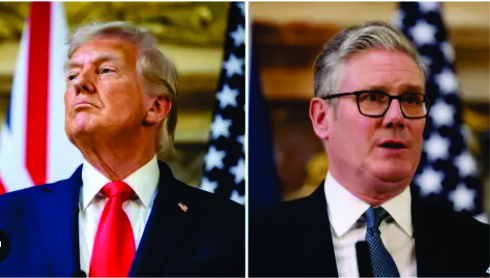
    In a post on his Truth Social account Sunday, Trump dismissed the offer, writing: “The United Kingdom, our once Great Ally, maybe the Greatest of them all, is finally giving serious thought to sending two aircraft carriers to the Middle East. That’s OK, Prime Minister Starmer, we don’t need them any longer — but we will remember. We don’t need people that join wars after we’ve already won!”

    The remarks come amid tensions between Washington and London over Britain’s limited role in the conflict. Prime Minister Keir Starmer has emphasized that the UK’s priority is protecting British citizens in the region and avoiding escalation into a wider Middle East war. 

    Britain has confined its involvement to defensive operations, including intercepting Iranian drones and missiles and evacuating nationals. UK officials argue that joining direct strikes against Iran could risk expanding the conflict into a full-scale regional war. Instead, London has pursued a dual-track strategy of military readiness and diplomatic engagement aimed at de-escalation.

  • Ukraine offers support to Saudi Arabia against Iranian Shahed drone attacks

    Ukraine offers support to Saudi Arabia against Iranian Shahed drone attacks

    INTERNATIONAL (NPA) — March 7, 2026 — Ukrainian President Volodymyr Zelenskyy has announced that his country is prepared to assist Saudi Arabia in intercepting Iranian “Shahed” drones launched against the Gulf kingdom. The pledge followed his conversation with Saudi Crown Prince Mohammed bin Salman Al Saud.

    According to Zelenskyy, the two leaders discussed the security situation in the Middle East and Gulf region, focusing on challenges posed by Iran and strategies to counter emerging threats.

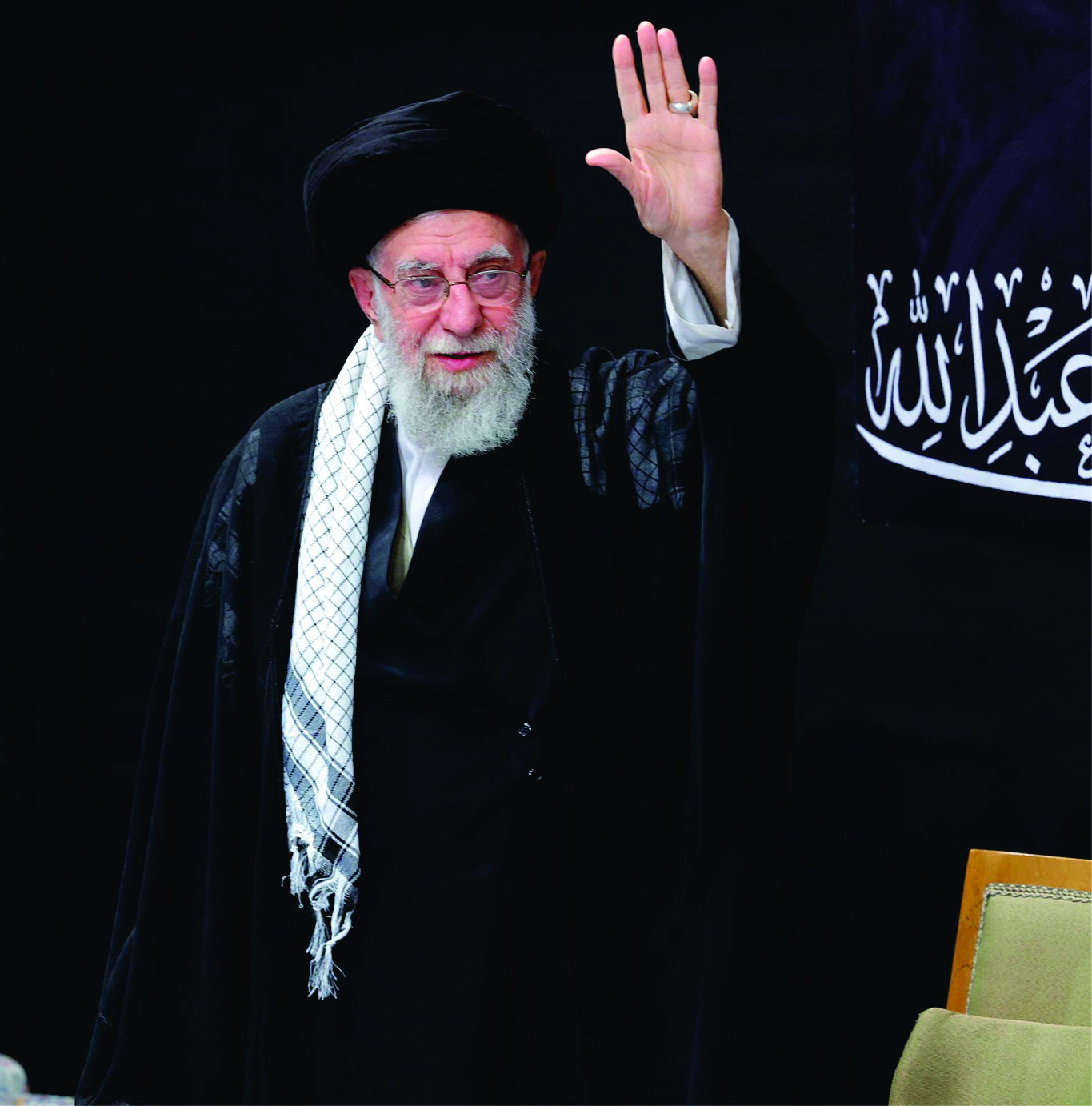
    The development comes amid escalating tensions, as Iran retaliated for recent U.S. and Israeli strikes — including the killing of Supreme Leader Ayatollah Ali Khamenei — by firing missiles and drones at Gulf states, heavily impacting Saudi Arabia.

    In a statement on Saturday, Zelenskyy highlighted Ukraine’s unique experience in combating Iranian drones: “Ukrainians have been fighting against ‘Shahed’ drones for years now, and no other country in the world has this kind of experience. We are ready to help, and we expect that our people will also receive the support they need. Protecting life must be a shared priority, and it is very important to coordinate for security both in Europe and in the Middle East.”

    He added that discussions also covered expanding bilateral cooperation and joint projects, noting: “We will continue working on further development.”

  • 7 dead as Russia launches massive missile and drone strikes across Ukraine

    7 dead as Russia launches massive missile and drone strikes across Ukraine

    Lagos, Nigeria (NPA) — March 7, 2026 — At least seven people were killed and more than ten injured as Russia unleashed waves of ballistic missiles and drone swarms against cities across Ukraine overnight, Ukrainian officials said Saturday.

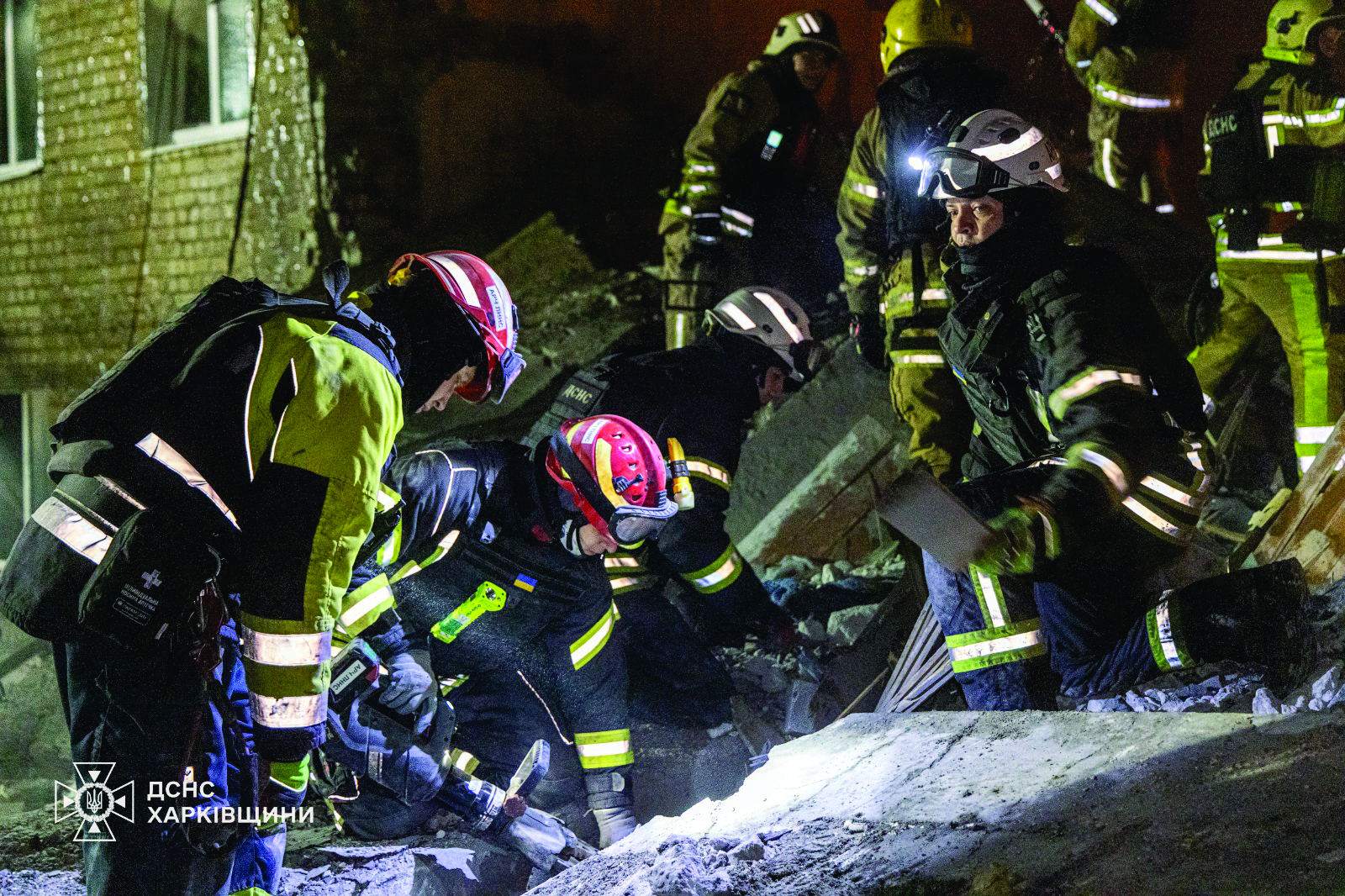
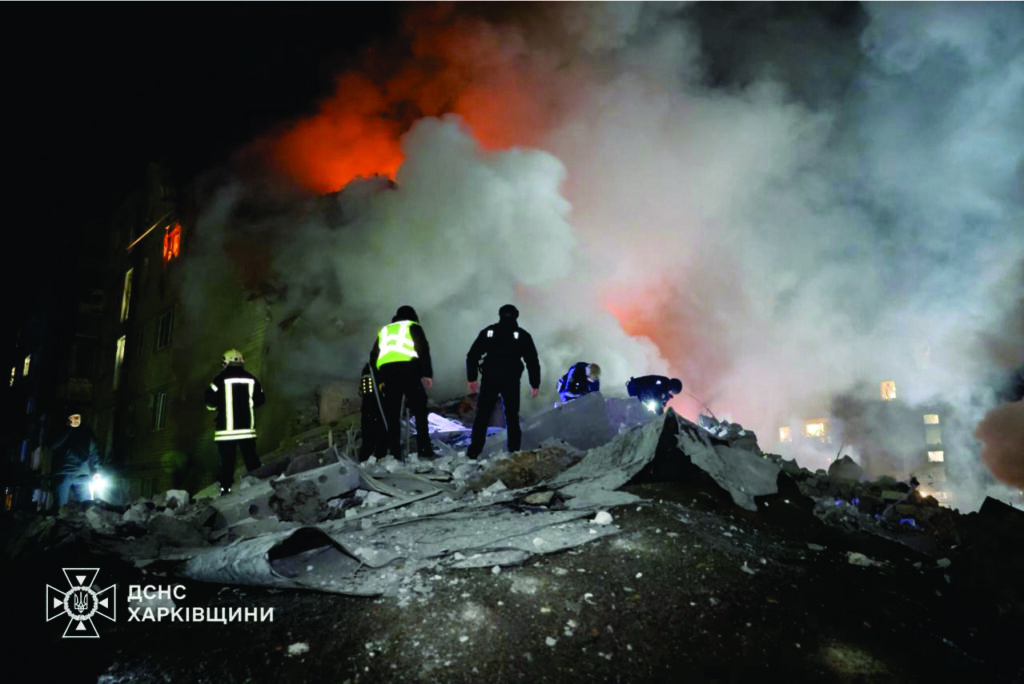
    The strikes hit multiple regions, including Kyiv, Khmelnytskyi, Chernivtsi, Zhytomyr, Dnipro, Zaporizhzhia, Vinnytsia, Odesa, Poltava, Sumy, and Cherkasy. In Kharkiv, a residential building was destroyed by a ballistic missile, leaving several people trapped under rubble. Rescue operations are ongoing.

    President Volodymyr Zelenskyy confirmed the casualties in a statement, noting that children were among the injured. “Unfortunately, as of now, 7 people have been killed. More than 10 have been injured, including children. People may still be trapped under the rubble. All necessary services are working at the scene,” he said.

    According to Zelenskyy, Russia launched 29 missiles — nearly half of them ballistic — and 480 drones, most of them Shahed models, targeting energy infrastructure in Kyiv, Khmelnytskyi, and Chernivtsi, as well as railway facilities in Zhytomyr. Damage was also reported across several other regions.

    The president urged Ukraine’s international partners to respond to what he described as “savage strikes against life.” He stressed that Russia has not abandoned its attempts to destroy Ukraine’s residential and critical infrastructure, calling for continued support from allies.

    Zelenskyy highlighted ongoing cooperation with the European Union and initiatives such as PURL, aimed at strengthening Ukraine’s defences. “We count on active work with the European Union to guarantee greater protection for our people. I am grateful to everyone who helps strengthen our protection,” he added.

  • Ukraine welcomes 300 soldiers home after prisoner swap with Russia

    Ukraine welcomes 300 soldiers home after prisoner swap with Russia

    Kyiv, Ukraine (NPA) — March 6, 2026 — Ukraine has secured the release of 300 soldiers and two civilians from Russian captivity following a prisoner exchange under the “500-for-500” deal negotiated in Geneva. In return, Russia received 200 of its servicemen held by Ukraine.

    President Volodymyr Zelenskyy, in a statement on Friday titled “Another 300 Ukrainian defenders are returning home from Russian captivity,” expressed joy over the development. He confirmed that the freed Ukrainians include members of the Armed Forces, the National Guard, and the State Border Guard Service, ranging from privates to officers.

    “These are warriors who defended Ukraine in Donetsk, Luhansk, Kharkiv, Zaporizhzhia, Kherson, and Mariupol. Most of them had been in captivity for more than a year, some since 2022,” Zelenskyy noted.

    The President extended gratitude to all parties involved in facilitating the exchange, particularly the United States for its mediation role. “I thank all our warriors who ensure this result by replenishing the exchange fund for Ukraine. I thank the entire team that worked to achieve this result. I am grateful to the United States for their mediation. It is important that the agreements have worked. We remember everyone, and we must bring all our people home,” he said.

  • Azerbaijan warns of retaliation after drone strike blamed on Iran

    Azerbaijan warns of retaliation after drone strike blamed on Iran

    Baku, Azerbaijan, March 5, 2026 (Agency Report) — Azerbaijan said Thursday it is preparing retaliatory measures after four Iranian drones allegedly crossed its border into the Nakhchivan exclave, injuring four people and striking civilian infrastructure. The incident has heightened fears that the Middle East war could spill further into the Caucasus.

    President Ilham Aliyev, addressing his Security Council, condemned the attack as “an unprovoked act of terror and aggression against Azerbaijan.” He ordered the armed forces to prepare a response, warning Tehran: “We are ready to demonstrate our strength against any hostile force — and they should not forget this in Iran.”

    Iran’s Deputy Foreign Minister Kazem Gharibabadi rejected the accusation, telling local media: “We do not attack our neighbouring countries.” Azerbaijani officials said investigations are underway to identify the drones, noting that one struck the terminal at Nakhchivan International Airport, another landed near a school, a third was shot down by the army, and a fourth damaged civilian infrastructure.

    The Foreign Ministry has demanded clarification from Tehran and lodged a formal protest with Iran’s ambassador. Officials warned that any threat to Azerbaijan’s energy infrastructure — a major supplier to Turkey and Europe via the Baku-Tbilisi-Ceyhan pipeline — could further drive up global oil prices already rattled by the U.S.–Iran war.

    Relations between Baku and Tehran have long been strained, with Azerbaijan deepening ties to Turkey and Israel. There is a growing fear that the conflict risks igniting violence between the neighbours, particularly given the presence of nearly 20 million ethnic Azerbaijanis inside Iran, the country’s largest minority group.

  • BREAKING: Over 100 Missing After Reported Submarine Strike on Iranian Vessel Near Sri Lanka

    BREAKING: Over 100 Missing After Reported Submarine Strike on Iranian Vessel Near Sri Lanka

    COLOMBO, Sri Lanka (NPA) — March 4, 2026 — More than 100 people are reported missing and 80 others wounded on Wednesday,  following what officials described as a submarine strike on an Iranian vessel off the coast of Sri Lanka, according to sources within the country’s navy and defence ministry.

    Authorities have not confirmed the country that deployed the submarine, and whether the vessel was carrying personnel linked to the Islamic Republic of Iran’s government.

    Investigations are ongoing, and further details are expected as the situation develops.

  • U.S. Forces Destroy Iran’s Command Facilities, Air Defences, and Launch Sites

    U.S. Forces Destroy Iran’s Command Facilities, Air Defences, and Launch Sites

    LAGOS, NIGERIA (NPA), March 3, 2026 — The U.S. Central Command (CENTCOM) announced Tuesday that American forces, operating under Operation Epic Fury, have significantly degraded Iran’s military capabilities.

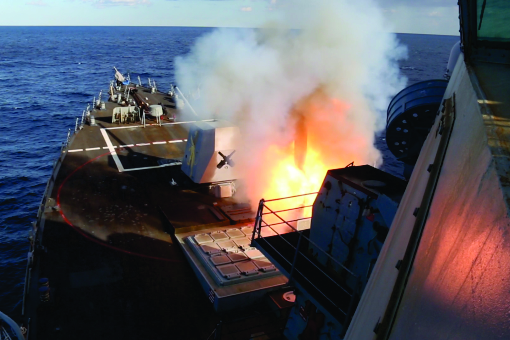
    In a statement, CENTCOM said: “U.S. forces have destroyed Islamic Revolutionary Guard Corps command-and-control facilities, Iranian air defence systems, missile and drone launch sites, and military airfields during sustained operations. We will continue to take decisive action against imminent threats posed by the Iranian regime.”

    The campaign, launched jointly by the United States and Israel on February 28, 2026, has included targeted strikes against senior Iranian officials, among them Supreme Leader Ali Khamenei. Employing a “Shock and Awe” strategy, the coalition has focused on precision bombing designed to cripple Iran’s military infrastructure while minimising civilian casualties.

    According to military analysts, the strikes have weakened Iran’s command networks and disrupted its coordination with proxy groups such as Hezbollah and the Popular Mobilisation Forces. The offensive has also destabilised Iran’s leadership, creating uncertainty and diminishing its regional influence.

    Despite these gains, Washington faces the daunting challenge of preventing a wider escalation across the Middle East. Experts warn that the conflict could have severe repercussions for regional stability and global security.

  • BREAKING: TRUMP ANNOUNCES DEATH OF IRAN’S SUPREME LEADER KHAMENEI

    BREAKING: TRUMP ANNOUNCES DEATH OF IRAN’S SUPREME LEADER KHAMENEI

    WASHINGTON D.C. (NPA): United States President Donald Trump has announced the death of Iran’s Supreme Leader, Ayatollah Ali Khamenei, during the first day of U.S. and Israeli strikes in the Persian Gulf nation.

    Trump made the announcement on January 28, 2026, in a post on his Truth Social account. He wrote:

    “Khamenei, one of the most evil people in history, is dead. This is not only justice for the people of Iran, but for all great Americans, and those people from many countries throughout the world that have been killed or mutilated by Khamenei and his gang of bloodthirsty thugs. He was unable to avoid our intelligence and highly sophisticated tracking systems and, working closely with Israel, there was not a thing he, or the other leaders that have been killed along with him, could do.”

    In his statement, Trump urged Iranians to seize the opportunity to reclaim their country amid what he described as a power vacuum. He added:

    “We are hearing that many of their IRGC, military, and other security and police forces no longer want to fight, and are looking for immunity from us. As I said last night, ‘Now they can have immunity, later they only get death!’ Hopefully, the IRGC and police will peacefully merge with the Iranian patriots and work together as a unit to bring back the country to the greatness it deserves.”

    Trump further warned that the bombing campaign would continue “uninterrupted throughout the week, or as long as necessary to achieve our objective of peace throughout the Middle East and, indeed, the world.”

    As of the time of filing this report, Iranian authorities have not confirmed the death of the Supreme Leader.

  • White House Press Secretary Leavitt Highlights Trump Administration’s First-Year Achievements

    White House Press Secretary Leavitt Highlights Trump Administration’s First-Year Achievements

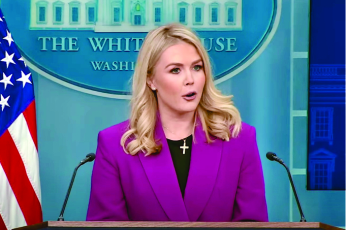
    LAGOS, NIGERIA (NPA)–White House Press Secretary Karoline Leavitt has praised the performance of U.S. President Donald Trump, describing his first year in office as marked by “undeniable results.”

    In a statement posted on X on Friday, Leavitt asserted that the United States now has “the most secure border in history,” citing the removal of tens of thousands of undocumented immigrants accused of violent crimes. She noted that this has contributed to the murder rate reaching “the lowest level in recorded history.”

    Leavitt also pointed to economic indicators, clarifying that gas prices had fallen below $3 per gallon nationwide, mortgage rates dropped to four-year lows, and inflationary pressures were easing. “Mortgage rates fell below 6% this week for the first time in more than three years, welcome news for house hunters heading into the busy spring home-buying season,” she said.

    Additional measures highlighted included tax reforms, such as exemptions on tips, overtime, and Social Security contributions, as well as lower prescription drug costs under the “Trump Rx” initiative. According to Leavitt, these policies have led to “a nearly $1,500 increase in real wages” and positioned American patients to pay “the lowest prices for prescription drugs anywhere in the world.”

    On financial markets, she emphasized that “the stock market [is] breaking record after record” with “trillions of dollars in investments secured.”

    Leavitt further claimed progress in foreign and social policy, stating that “eight global conflicts ended,” women’s and girls’ sports were “protected,” religious liberty was “respected once again,” and new trade deals were revitalizing U.S. manufacturing.

    She criticized media outlets for allegedly failing to report these developments, framing it as part of a broader dispute between the administration and press organizations.

    Independent data also points to several measurable outcomes during Trump’s second term. U.S. border apprehensions reportedly declined by more than 90%, while refugee admissions fell by nearly 98% compared to previous years. Crime statistics indicated a reduction in homicide rates. Economically, real weekly earnings for private-sector workers rose by 1.4%, outpacing inflation, while GDP grew at an estimated 1.8%. Growth was supported by increased domestic energy production, reinforcing U.S. energy independence.

    In trade and investment, trillions of dollars in capital were reshored to the U.S., accompanied by new trade agreements aimed at strengthening manufacturing. These measures were associated with moderating inflation.

    On foreign policy, the administration engaged in Middle East conflict resolution, including those involving Israel and Hamas, and sought to restrict Iran’s nuclear and ballistic missile programs. However, the Iran issue remains unresolved, with diplomacy at times strained and edging toward military confrontation.